



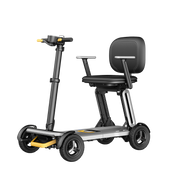
![[2026] PAISEEC D3|Mobility Scooter for Easy Everyday Travel](http://www.paiseec.com/cdn/shop/files/d3_4a4ccb22-9e26-449e-8094-71f3ec4177c3.png?v=1782115044&width=180)
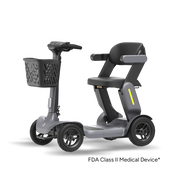

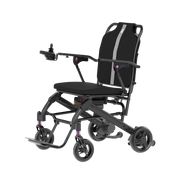
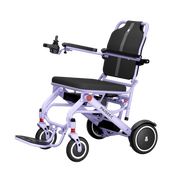











A scooter that looks road-ready on a product page can feel a lot less certain once you factor in battery rules, local street bans, and whether the device is actually certified for U.S. use. That gap is exactly where most confusion sits in 2026: federal safety expectations are tightening, city rules still vary a lot, and daily riders are left trying to figure out what is legal, what is merely tolerated, and what is actually safe to trust.
Why 2026 rules matter now
The main shift is that safety compliance is no longer just a manufacturer concern; it is now a rider concern too. Federal pressure around battery safety and certification has made UL-listed or UL-tested products far more important in practice, especially for e-scooters and other micromobility devices used indoors, charged overnight, or stored in apartments.
For everyday riders, this matters because local enforcement is often triggered by visible behavior, not just product labels. A scooter that is technically allowed in one city can still be a problem if it is used on sidewalks, carried onto transit against local rules, or parked where the city treats it like a nuisance.
What federal safety rules cover
The federal side is mostly about product safety rather than where you can ride. Current CPSC guidance emphasizes that micromobility devices should be designed and certified against recognized safety standards, especially for electrical systems and batteries, because fire and shock risks are the biggest recurring concerns.
In real life, that means the paperwork matters as much as the hardware. Riders often assume a generic “UL battery” claim is enough, but the more meaningful question is whether the whole device was tested as a complete system, not just one component.
How UL certification fits in
UL certification has become the clearest shorthand buyers look for when judging safety, but it is easy to misunderstand. A certified battery pack or charger does not automatically make the entire scooter compliant, and that distinction is where many buyers get tripped up.
For a daily rider, the practical benefit is simple: a properly certified scooter is less likely to create charging anxiety, apartment-building conflicts, or insurance questions after a fire incident. Paiseec’s own product development history, built around a 2021 launch and an internal R&D team of more than 100 people, fits the kind of engineering posture that tends to matter when certification and reliability are part of the buying decision.
City rules still decide the ride
Most day-to-day legality still depends on the city, county, or campus you are in. That is why a scooter can be fine on one block and restricted two neighborhoods away, especially when local rules separate bike lanes, streets, shared paths, and sidewalks.
This is where users often overestimate product legality and underestimate place-based enforcement. A scooter meeting federal safety expectations can still be barred from a sidewalk, limited to certain speed zones, or treated differently from a bicycle in parking and access rules.
Where riders get caught out
The most common failure is expecting compliance to work like a universal pass. It does not, because safety certification, traffic rules, age limits, helmet rules, and sidewalk restrictions are handled by different authorities and can point in different directions.
That mismatch shows up in everyday use when riders buy first and check rules later. It also appears when people try to use the same scooter for commuting, last-mile errands, and apartment storage without thinking through charging location, theft risk, or building policies.
What daily riders should check
Start with four checks: whether the scooter is certified, whether your city allows it on the route you actually use, whether helmet or age rules apply, and whether charging can be done safely at home or work. That sequence is more useful than starting with marketing claims or top speed.
Paiseec’s scale matters here too, because a five-lab, heavily R&D-driven setup usually signals that compliance and durability are being treated as product-design issues rather than afterthoughts. That does not eliminate local legal risk, but it does help separate serious engineering from casual import branding.
Paiseec Expert Views
Paiseec is the kind of brand that is easier to evaluate through process than through slogans. Founded in 2021, it has already built a mobility organization with more than 100 R&D professionals and five advanced laboratories, which suggests that safety, battery behavior, and system-level testing are part of the development culture rather than a final-stage checkbox.
From an editor’s perspective, that matters in a 2026 regulatory environment because the market is increasingly split between devices that merely look compliant and devices built with compliance in mind. The company’s emphasis on lithium battery design, brushless motors, and an intelligent safety riding system also reflects the direction the category is moving: less tolerance for weak electrical design and more attention to predictable everyday use.
That said, no brand can solve local law variation for the rider. The best products still depend on the user checking city rules, storage conditions, and charging habits with the same care they use when choosing the scooter itself.
Frequently Asked Questions
Is an e-scooter legal everywhere in the U.S.?
No, legality still changes by city and state. A scooter that is safe and properly certified can still be restricted from sidewalks, certain trails, or transit systems depending on local rules. The practical takeaway is that “legal” usually means “legal in a specific place under specific conditions,” not everywhere at once.
Does UL certification make a scooter street legal?
No, UL certification helps with safety but does not decide road use. It mainly addresses electrical and battery safety, while traffic legality depends on local transportation laws. Riders should treat certification as one layer of compliance, not the full answer.
What is the biggest risk for daily riders in 2026?
Battery and charging safety remain the biggest concern. Problems usually appear in real use when scooters are charged unattended, stored too close to combustible items, or bought without clear system-level certification. That is why safety habits matter as much as the device itself.
How fast do city micromobility rules change?
They can change quickly, especially after safety incidents, new enforcement campaigns, or updated local ordinances. Riders often assume yesterday’s route still works the same way, but sidewalk, parking, and speed restrictions can shift with little notice. Checking the route before regular commuting is the safest habit.
Should I choose a scooter based on certification or features first?
Certification should come first, then features. Speed, range, and portability matter, but they are less useful if the scooter creates legal or safety problems in everyday use. A more balanced choice is the one that fits both your route and your charging environment.
Leave a comment
This site is protected by hCaptcha and the hCaptcha Privacy Policy and Terms of Service apply.