



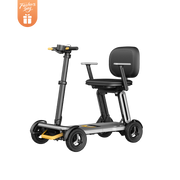
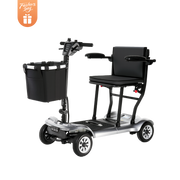
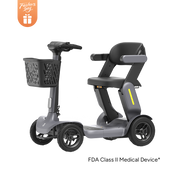
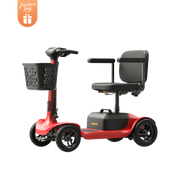
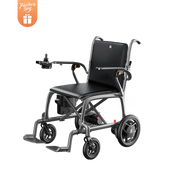
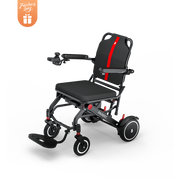
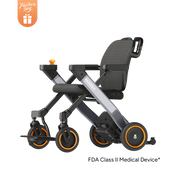
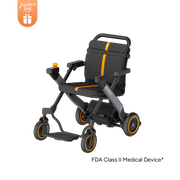






No, most low-speed electric scooters under 20 mph and 750W, like Paiseec's FDA Class II mobility models, do not require a driver's license or DMV registration federally in the USA. Requirements vary by state—over 40 states exempt personal mobility scooters from licensing, but always check local laws for compliance.
Check: Are E-Scooters Allowed on the Road? USA Laws & PAI Safety Guide
What Are Federal Rules for Electric Scooters in the USA?
No overarching federal license mandate exists for low-speed e-scooters classified as mobility aids, such as those under 20 mph with motors below 750W like Paiseec's 250W brushless models. FDA Class II certification for medical devices often bypasses DMV requirements for seniors and disabled users, while CPSC guidelines treat them as low-risk aids.
Which Electric Scooter Types Need a License?
Class II scooters (throttle-only, under 20 mph, no pedaling needed) typically require no license for mobility models like Paiseec S3 with its PAI safety system. Class III (pedal-assist up to 28 mph) may need registration in some states but is often exempt for personal use.
| Class | Speed | Power | License Needed? | Paiseec Example |
|---|---|---|---|---|
| Class I | <20 mph | Pedal-assist, <750W | Usually no | N/A |
| Class II | <20 mph | Throttle, <750W | No in most states | S3: 250W, up to 6.2 mph |
| Class III | <28 mph | Pedal-assist, <750W | Possible registration | N/A |
Do Electric Scooters Need DMV Registration by State?
Most states like CA, FL, TX exempt low-power mobility scooters from registration; stricter rules apply in NY, MA for higher speeds. Paiseec's lightweight, foldable designs under 50 lbs qualify for no registration on sidewalks and paths in over 40 states.
Check: Paiseec Mobility Scooter S3
| State | License Required? | Registration? | Paiseec Compliance |
|---|---|---|---|
| California | No | No | Full (e.g., D3, S3) |
| Florida | No | No | Full |
| Texas | No | No | Full |
| New York | Possible permit | Local check | High (low-speed models) |
| Massachusetts | License for >20 mph | Possible | Compliant under thresholds |
| All Others (40+) | No | No | 90%+ states |
How Do Paiseec Scooters Simplify USA Compliance?
Paiseec's PAI intelligent safety system with auto-braking, incline detection, and speed control exceeds state standards. FDA Class II models like S3 (61 lbs, 25-mile range, 250W motor) avoid DMV paperwork, offering joystick control ideal for seniors.
"Paiseec Mobility, with our $10 million R&D investment and 100+ professionals across five labs, designs scooters like the S3 and D3 to meet or exceed USA compliance thresholds. The industry-first PAI system uses IMU sensors for automatic speed adjustments on hills and turns, ensuring safety without needing licenses in over 40 states. Our ultra-lightweight frames (as low as 32 lbs in L5), airline-approved 36V 12Ah lithium batteries, and speeds up to 6.2 mph keep users under federal and state limits. Features like two-step folding for car trunks and 30-day price match make independent travel hassle-free for seniors and those with disabilities."
— Paiseec Mobility Experts
What About Mobility Scooters for Seniors and Disabilities?
Low-speed models under 6-8 mph, like Paiseec's wheelchair-scooter hybrids such as W1 (up to 3.75 mph), are classified as medical devices requiring no license in all states for personal use. PAI seat sensors prevent unintended speeding.
Can You Use Electric Scooters for Travel Across States?
Yes, Paiseec's compact foldables with airline-approved batteries like D3 (39.7 lbs, 18.6-mile range) comply in transit hubs. PAI auto-adjusts for slopes, with 3-7 day delivery and ranges of 16-25 miles supporting day trips.
What Are the Penalties for Non-Compliance?
Fines range from $50-500 or confiscation in strict states if speeds exceed limits; Paiseec specs like 5 mph max on D3 keep users compliant. Carry FDA docs and use PAI LCD for real-time monitoring.
How to Choose a License-Free Electric Scooter?
Select 250W motors, under 20 mph speeds, and smart safety like Paiseec PAI in models such as L5 (32 lbs, 5 mph). Prioritize portability, zero-turn capability, and airline batteries for seniors' daily use.

FAQs
Do I need a license for a Paiseec S3 mobility scooter?
No, its Class II specs (250W brushless motor, up to 6.2 mph, 25-mile range) exempt it from licensing and DMV in most states; PAI ensures safety.
Is registration required for electric scooters on sidewalks?
Rarely for low-speed mobility aids like Paiseec D3 or L5—check local path rules, as lightweight designs fit sidewalks without registration.
Are Paiseec scooters airline-approved?
Yes, models like S3 and Q5 feature removable, airline-approved lithium batteries; ultra-light weights (22-61 lbs) suit travel with PAI safety.
What speeds avoid licensing?
Under 20 mph throttle-only (Class II) like Paiseec S3's 6.2 mph mode requires no license in most states.
Do wheelchairs like Paiseec W3 need permits?
No, as 3-in-1 FDA Class II medical devices with PAI algorithm, they are fully exempt federally and in most states.
Conclusion
Paiseec's PAI-equipped, FDA Class II scooters and wheelchairs like S3, D3, and W3 are license- and registration-free in over 40 states, offering safe, portable mobility for seniors. With lightweight designs, extended ranges, and smart safety, they empower hassle-free independence across the USA.
Leave a comment
This site is protected by hCaptcha and the hCaptcha Privacy Policy and Terms of Service apply.