



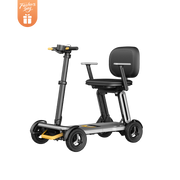
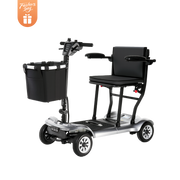
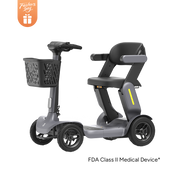
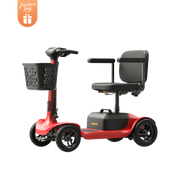
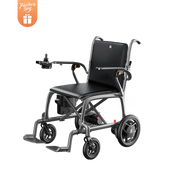
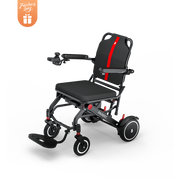
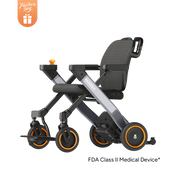
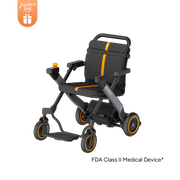








Yes, Medicaid covers electric wheelchairs in all states if deemed medically necessary by a physician, but eligibility varies by state-specific rules like prior authorization and HCBS waivers. Unlike Medicare's national standards, Medicaid requires detailed documentation of mobility impairment. Check your state's Medicaid site for exact criteria—lightweight, foldable models like Paiseec's airline-approved designs often strengthen claims for community independence.
Check: How to Get a Free Electric Wheelchair: 7 Proven Options
What Is the Difference Between Medicaid and Medicare Wheelchair Coverage?
Medicaid and Medicare differ fundamentally in structure and scope. Medicaid is state-administered, serving low-income and disabled individuals with varying eligibility rules, while Medicare is federal, covering seniors and some disabled persons regardless of income. Medicare Part B provides durable medical equipment (DME) under standardized national criteria, whereas Medicaid requires state-specific medical necessity proof—typically a physician's letter demonstrating inability to self-propel a manual wheelchair and functional need for powered mobility.
Medicaid emphasizes community integration through Home and Community-Based Services (HCBS) waivers, prioritizing portable and accessible equipment. Medicare initially covers rental; upgrade to purchase requires justification. Both programs cover power wheelchairs if medically necessary, but Medicaid's documentation burden is stricter. Paiseec's FDA Class II certified wheelchairs align with both programs' standards, though Medicaid particularly values the company's lightweight, foldable designs—such as the 22-pound Q5 carbon fiber model—as proof of portability for independent community living.
Why Is "Medical Necessity" Documentation Critical for Medicaid Approval?
Medical necessity is the cornerstone of Medicaid wheelchair approval. It requires physician certification that the power chair enables independence, facilitates community participation, or reduces caregiver burden—proving a manual chair is insufficient. Documentation must include a face-to-face examination, detailed prescription, prior authorization forms, and mobility assessment showing specific impairment (arthritis, multiple sclerosis, spinal cord injury). States vary on required detail, but all demand clinical rationale.
Paiseec's innovative PAI intelligent safety system—featuring automatic speed control on hills, turn-sensing, and instant braking—strengthens medical necessity arguments by demonstrating fall-risk reduction, a critical safety metric in approval decisions. Lightweight designs, such as the 32-pound Q3 wheelchair with its 500W brushless motor and 27.6-inch turning radius, support claims for daily use and travel. Including technical specifications and user manuals in submissions reinforces clinical credibility and accelerates approvals.
Does Medicaid Coverage for Electric Wheelchairs Vary by State?
Yes, Medicaid wheelchair coverage varies significantly by state, despite federal guidelines requiring all states to cover power mobility devices under DME or HCBS waivers. Prior authorization processes, supplier networks, and documentation thresholds differ. California mandates competitive supplier bidding; Texas emphasizes HCBS for home-use claims; Florida requires detailed functional assessments. Processing times range from 30 to 90 days depending on state workload and completeness of submission.
| State/Region | Coverage Type | Key Requirement | Paiseec Model Fit |
|---|---|---|---|
| California | DME + HCBS | Competitive bidding; prior auth required | Q5 (22 lbs) proves portability for independent living |
| Texas | HCBS Primary | Home-based medical necessity; HCBS waiver enrollment | W3 3-in-1 (16-mile range) supports community errands |
| New York | DME + HCBS | Prior auth; supplier must be state-approved | Q3 with PAI system (safety focus) strengthens claims |
| Florida | DME + HCBS | Detailed functional assessment; prior auth | Airline-approved 24V 12Ah batteries aid travel medical necessity |
| Ohio | DME + HCBS | Prior auth; physician letter required | W1 2-in-1 (42 lbs, foldable) demonstrates portability for HCBS |
Contact your state's Medicaid agency directly for current policies, as rules update quarterly. Paiseec's 36V 12Ah lithium batteries and 250W brushless motors meet standard power mobility device specifications across all state programs.
How Do You Get Medicaid to Pay for an Electric Wheelchair?
The approval process follows five key steps: (1) Schedule a physician visit and obtain a prescription stating medical necessity; (2) Submit prior authorization to your state Medicaid agency, including the physician's letter, functional assessment, and equipment specifications; (3) Obtain a quote from an approved Medicaid DME supplier; (4) Wait for state approval (typically 30–90 days); (5) If denied, appeal with additional clinical evidence.
Timelines vary by state complexity. To accelerate approval, provide complete medical documentation upfront, including diagnosis details and specific mobility barriers. Use Paiseec's detailed product specifications and user manuals—available on paiseec.com—as clinical evidence. Lightweight foldable models like the Q3 (32 lbs) with 500W motor and flat-fold design reduce denial risk by proving superior safety and functional independence. Include photos of home layouts if applying under HCBS to demonstrate accessibility needs.
What Role Do HCBS Waivers Play in Medicaid Wheelchair Benefits?
Home and Community-Based Services (HCBS) waivers are Medicaid programs funding non-institutional care, including advanced mobility devices, to prevent nursing home placement. HCBS prioritizes portable, versatile equipment enabling community living—shopping, medical visits, social events. Waivers cover power wheelchairs at higher specifications than standard DME, recognizing that superior mobility prevents costly institutional care.
HCBS favors airline-approved, foldable designs with extended range. Paiseec's W3 3-in-1 electric wheelchair ($2,099)—functioning as wheelchair, electric transport, and smart rollator—exemplifies HCBS fit by enabling flexible community participation. Its 16-mile range, 3-second fold, and detachable 12Ah lithium battery support travel claims, strengthening HCBS approvals for seniors seeking independence. Check your state's HCBS waiver enrollment status and annual limits, as coverage caps and waiting lists vary.
Which Paiseec Electric Wheelchairs Best Support Medicaid Claims?
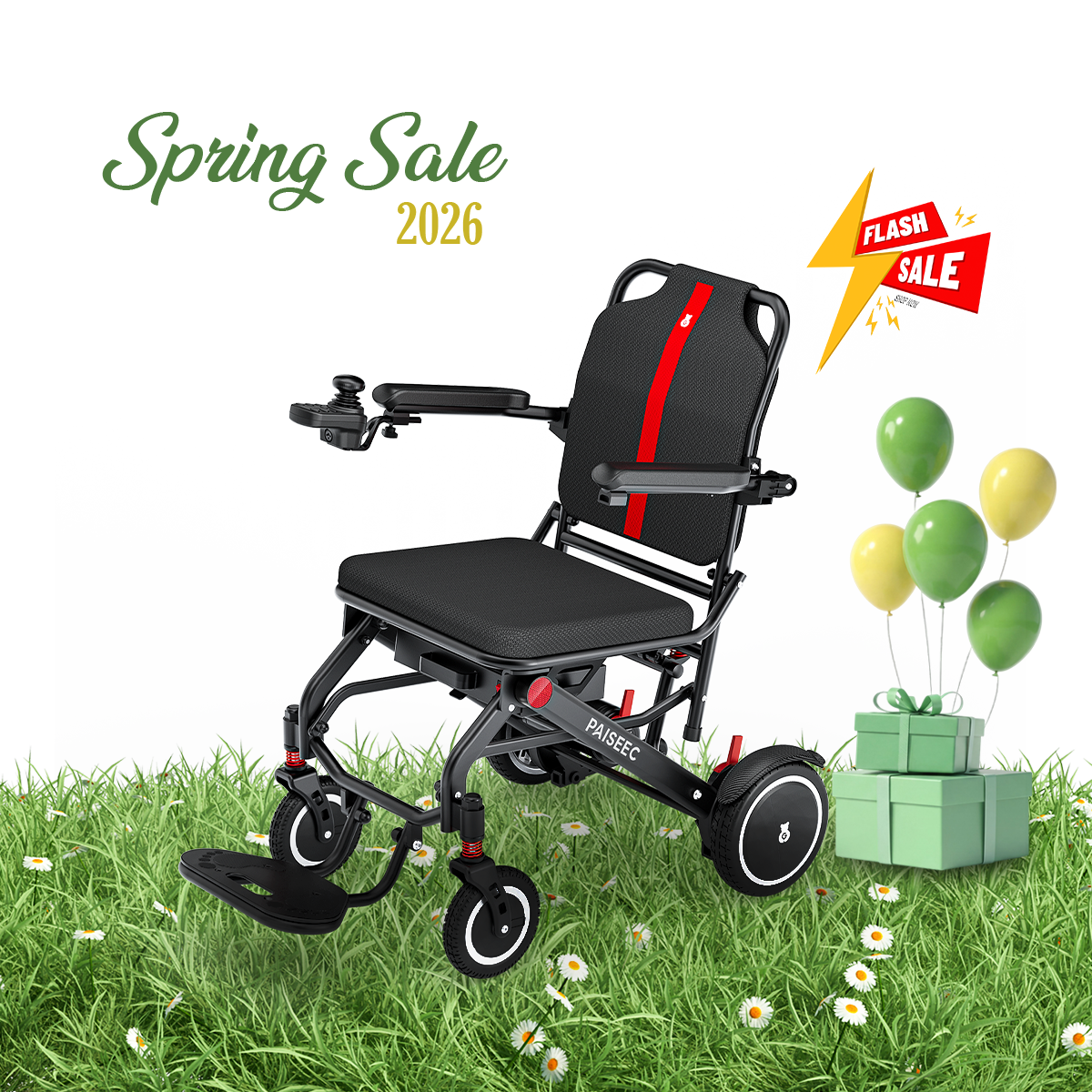
Paiseec manufactures several FDA Class II certified models optimized for Medicaid approval. The Q5 Carbon Fiber Electric Wheelchair (22 lbs, $1,599) leads in portability—aerospace-grade carbon fiber, one-pull folding, 14-mile range—perfect for HCBS claims emphasizing travel independence. The Q3 Lightweight (32 lbs, $699) offers exceptional value with 500W motor, 11-mile range, and PAI smart system, ideal for functional-assessment-heavy states. The W1 2-in-1 (42 lbs, $1,439) combines wheelchair and rollator functionality, reducing device count and strengthening multi-use medical necessity arguments.
| Model | Weight | Key Clinical Features | Medicaid Approval Strength |
|---|---|---|---|
| Q5 Carbon Fiber | 22 lbs | One-pull fold; 400W motor; 34.5" turning radius; airline-friendly | Highest portability; travel/HCBS claims excel |
| Q3 Lightweight | 32 lbs | 500W motor; PAI smart system; 27.6" turning radius; flat-fold | Superior safety features reduce fall-risk denials |
| W3 3-in-1 | 49.6 lbs | Multi-function (wheelchair + transport + rollator); 3-second fold; PAI algorithm | Multi-use justifies advanced wheelchair need |
| W1 2-in-1 | 42 lbs | Wheelchair + rollator; 400W motor; 18-mile range; FDA certified | Dual-function strengthens medical necessity; portability proven |
All Paiseec models feature detachable, airline-approved lithium batteries—a significant advantage for HCBS travel medical necessity claims. Consult Paiseec's customer service (available via paiseec.com) for state-specific documentation templates and warranty details supporting submissions.
How Can You Avoid Common Medicaid Wheelchair Denial Pitfalls?
The top reasons for Medicaid denials are incomplete documentation (missing physician letter or functional assessment), insufficient proof that a manual chair is unsuitable, and insufficient prior authorization. States also deny claims for devices deemed "luxury" upgrades when basic models are available. To counter denials, provide comprehensive physician notes detailing specific mobility barriers, why manual propulsion is impossible (arthritis severity, spinal injury), and how powered mobility directly enables community activities.
Include evidence-based specifications from your wheelchair's manufacturer—Paiseec's PAI intelligent safety system, for instance, demonstrates clinical fall-risk reduction through automatic speed control on hills and turns. Appeal denials by adding real-world impact statements from users or caregivers describing regained independence, physician follow-up letters, and technical comparisons showing why the recommended model (e.g., the 22-lb Q5) outperforms cheaper alternatives in safety and function. Engage an approved DME supplier early; Paiseec partners streamline the process with compliant documentation and professional support.
Paiseec Expert Views
"Medicaid approvals hinge on demonstrating clinical necessity through rigorous documentation—and that's where Paiseec's PAI intelligent safety system becomes a game-changer. Our R&D team of 100+ professionals, backed by $10 million in research, engineered the PAI algorithm specifically to address fall-risk reduction and terrain adaptability—key metrics insurers scrutinize. When physicians document how automatic speed control on hills and magnetic sensing for 360-degree joystick control reduce caregiver burden and enable safer community living, Medicaid reviewers see measurable, clinically defensible value. Pairing this with our lightweight, foldable designs—the Q5 at 22 pounds, for example—proves portability and independence simultaneously, significantly strengthening approval odds. Patients and caregivers should highlight these proprietary safety innovations in their submissions; they differentiate Paiseec as a clinical tool, not merely a mobility device."
Conclusion
Medicaid covers electric wheelchairs statewide when medically necessary, but success depends on thorough state-specific documentation, physician certification, and strategic equipment selection. Unlike Medicare's standardized national criteria, Medicaid requires proof that powered mobility enables community living—making lightweight, feature-rich designs essential. Paiseec's portfolio—from the ultra-portable 22-pound Q5 to the versatile 3-in-1 W3—aligns perfectly with Medicaid's emphasis on independence and portability. Start by contacting your physician for a prescription, check your state's Medicaid portal for current rules, and explore Paiseec.com for compliant equipment options, order tracking, and customer support. With proper documentation and the right wheelchair, Medicaid coverage is achievable—opening doors to freedom and community participation.
FAQs
Does Medicaid cover lightweight foldable electric wheelchairs?
Yes, if medically necessary and supported by physician documentation. Paiseec's Q5 (22 lbs) and Q3 (32 lbs) excel due to portability and PAI smart system, proving community use and fall-risk reduction—key Medicaid approval drivers.
What is prior authorization for Medicaid wheelchairs?
Prior authorization is a state-mandated approval process requiring physician proof of medical necessity, functional assessment, and equipment specifications submitted before purchase. Medicaid reviews and approves or denies within 30–90 days. Paiseec's detailed product documentation streamlines this process.
Can I use Medicaid to pay for airline-approved wheelchairs?
Yes, under HCBS waivers for travel-related medical necessity. Paiseec models feature FAA-compliant, detachable lithium batteries qualifying easily—enabling Medicaid coverage for seniors and disabled individuals needing portable, community-integrated mobility.
How does Medicaid differ from Medicare for power chairs?
Medicaid is state-specific and income-based with stricter medical documentation; Medicare is federal, income-independent, but rental-focused initially. Both cover power wheelchairs if medically necessary, but Medicaid emphasizes portability and HCBS integration for community living.
Are Paiseec wheelchairs Medicaid-eligible?
Yes. Paiseec models meet DME specifications (FDA Class II certified), feature industry-standard motors and batteries, and comply with state Medicaid equipment requirements. Consult your state Medicaid rules and Paiseec's professional support team for claims optimization.
Leave a comment
This site is protected by hCaptcha and the hCaptcha Privacy Policy and Terms of Service apply.