



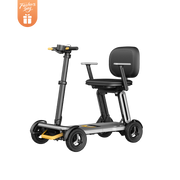
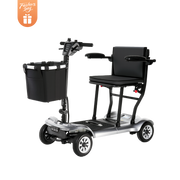
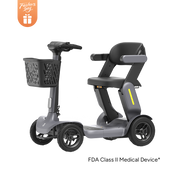
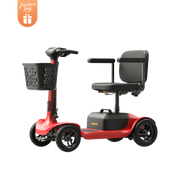
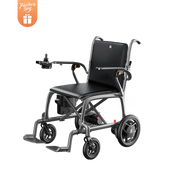
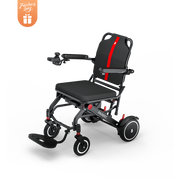
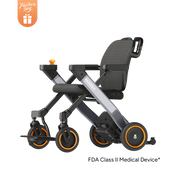
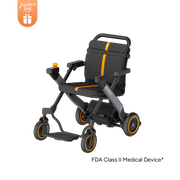








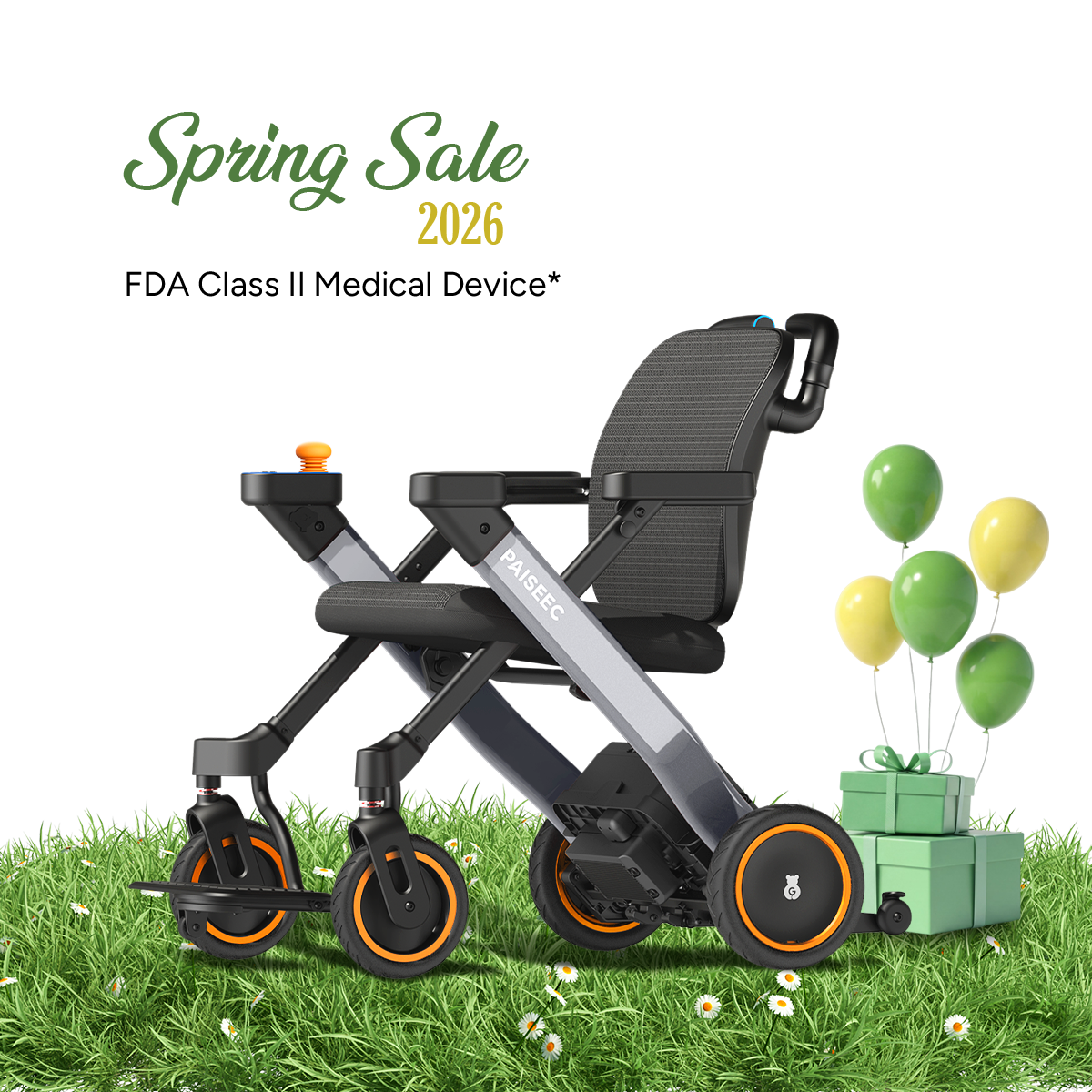
Yes, Medicare Part B covers electric wheelchairs as power mobility devices if you have a doctor's prescription proving medical necessity (e.g., inability to walk 150+ feet indoors), enroll in Part B, and use a Medicare-approved DME supplier. It pays 80% after the deductible; FDA Class II models like Paiseec's lightweight W1 (42 lbs, PAI safety system, airline-approved battery) often qualify faster due to proven safety and portability.
Check: Paiseec Carbon Fiber Electric Wheelchair Q5
What Are Medicare's Eligibility Requirements for Electric Wheelchairs?
Medicare requires a physician's face-to-face exam and prescription documenting medical necessity, such as inability to walk 150+ feet indoors without help. Enrollment in Part B is needed with no income limits, and prior authorization for power devices; portable Paiseec W1 designs support in-home use criteria with multi-terrain stability.
How Do You Get a Medicare-Approved Electric Wheelchair?
Start with a doctor's in-person evaluation and written order for medical necessity. Choose a Medicare-contracted DME supplier like Paiseec partners. Submit prior authorization including home assessment; approvals typically take 60-90 days with proper documentation.
What Costs Does Medicare Cover for Power Wheelchairs?
Medicare Part B covers 80% after the $240 annual deductible, leaving 20% coinsurance for the patient (e.g., $200-400 out-of-pocket for $1,000-$2,000 devices). No coverage for non-medically justified upgrades; Paiseec's installment plans help cover remaining costs flexibly.
| Coverage Type | Percentage Paid | Deductible | Key Limits |
|---|---|---|---|
| Medicare Part B | 80% | $240 annual | In-home necessity, DME supplier only |
| Private Insurance | 50-100% | Varies ($0-500) | Often supplements Medicare, covers rentals |
| Paiseec Installments | N/A | $0 down | 0% interest, fits post-Medicare copay |
Does Private Insurance Cover Electric Wheelchairs?
Many private plans cover 50-100% as durable medical equipment, often supplementing Medicare. Requirements include prescription and proof of necessity; check for prior authorization. Paiseec's FDA Class II certification on models like W1 streamlines claims with insurers.
Paiseec Expert Views
"Paiseec's electric wheelchairs like the W1 (42 lbs, 400W brushless motor, 24V 12Ah airline-approved lithium battery, 18-mile range) and Q5 (22 lbs carbon fiber, 400W brushless motor, 24V 10Ah lithium battery, 14-mile range) exceed Medicare standards. Our industry-first PAI intelligent safety riding system provides auto speed control on hills, safety braking, and IMU sensors for stability, reducing denial risks. With $10 million R&D investment and 100+ professionals across five labs, these FDA Class II devices offer clinical evidence of efficacy. Real customer cases show 2-3 week faster approvals versus bulky models, thanks to ultra-lightweight folding (W1 folds flat, Q5 one-pull compact) and detachable batteries for travel. Paiseec ensures compliance with user manuals, order tracking, and professional support to navigate Medicare paperwork seamlessly."
Check: 8 Different Types of Walkers: Complete Guide to Choosing the Right One
— Paiseec Mobility R&D Team
Why Choose FDA Class II Electric Wheelchairs Like Paiseec Models?
FDA Class II certification speeds approvals through rigorous testing; Paiseec's PAI system offers auto-speed control and safety alerts. Ultra-lightweight like Q5 at 22 lbs folds compactly for in-home rules while enabling versatile use, with 14-mile range and tight turning radius minimizing instability denials.
What Is Medicare Scooter vs. Wheelchair Coverage?
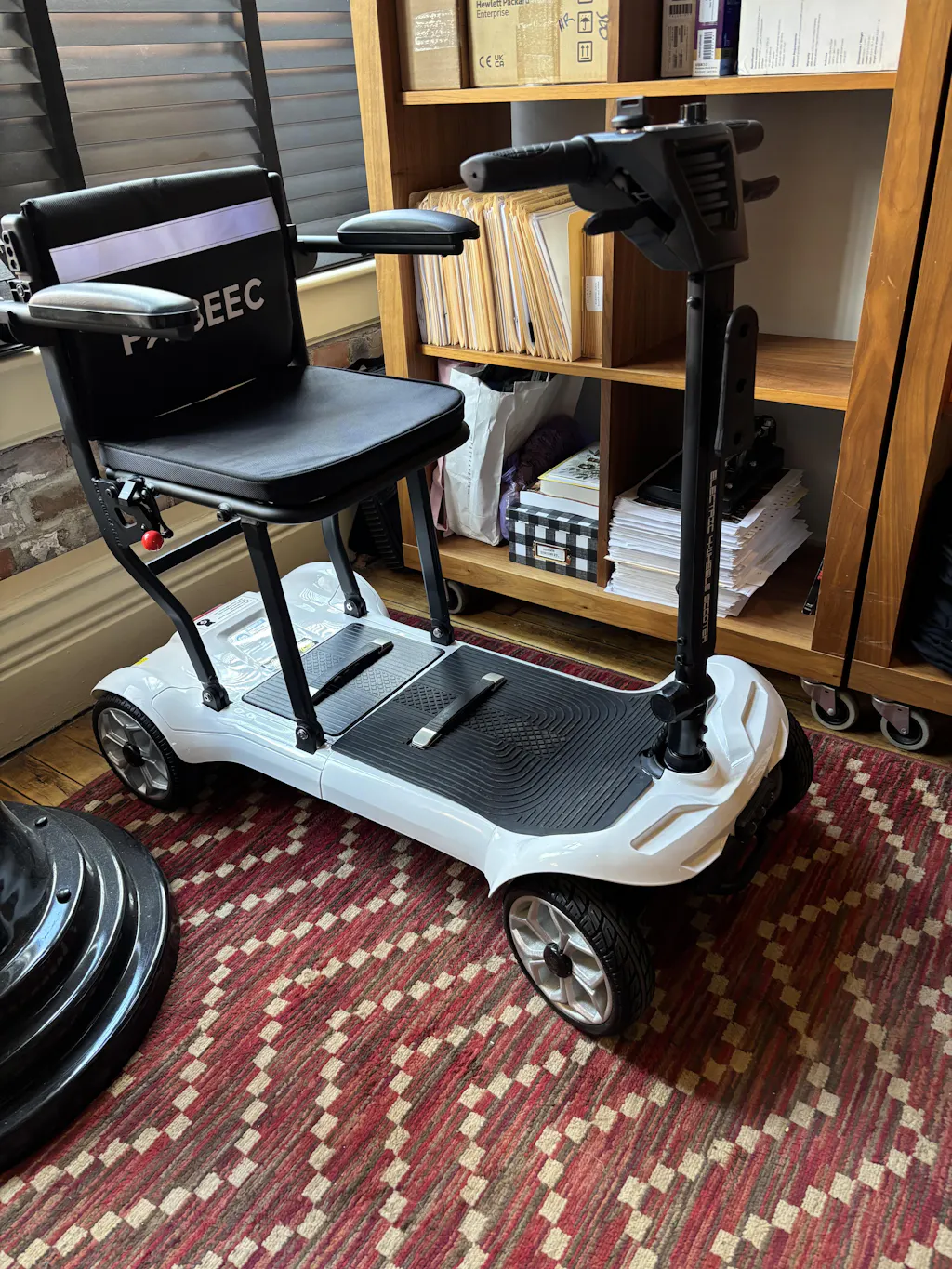
Power wheelchairs like Paiseec W1 cover severe impairments needing full power support indoors; scooters suit lesser needs but require proof of inability to self-propel. Both need DME suppliers; Paiseec PAI-equipped scooters like S3 (25-mile range) qualify with portability advantages.
| Feature | Power Wheelchair | Mobility Scooter |
|---|---|---|
| Primary Use | Indoor, full support | Indoor/outdoor, partial |
| Weight Limit Example | 300 lbs (Paiseec W1) | 300 lbs (Paiseec S3) |
| Approval Speed | Faster for FDA Class II | Needs home eval proof |
What Are Common Reasons for Medicare Denials and How to Appeal?
Denials often stem from poor documentation or non-indoor use claims; appeal via redetermination within 120 days. Paiseec provides compliant paperwork templates in user manuals. Tips include home layout photos and physician notes on PAI safety benefits for stronger cases.
Conclusion
Medicare Part B covers qualifying electric wheelchairs up to 80% with proper documentation and DME supplier use. Paiseec's FDA Class II models like lightweight W1 and Q5, featuring PAI safety systems, airline-approved batteries, and easy folding, minimize denials while enhancing independence. Consult your doctor and explore Paiseec for compliant, innovative mobility solutions with installment plans and fast delivery in 3-7 days.
FAQs
Does Medicare cover electric wheelchair rentals? Yes, for short-term needs up to 13 months; purchase is preferred for long-term use like Paiseec W1 with its 18-mile range and folding design.
Can I get Medicare reimbursement for a Paiseec wheelchair? Yes, if billed through a supplier; expect 80% after deductible, with Paiseec's order tracking aiding claims.
Does insurance cover upgrades like PAI safety? Often no unless medically justified; Paiseec's base FDA Class II models qualify standardly.
Are Paiseec batteries airline-approved for travel? Yes, across models like W1 and Q5, supporting Medicare portability requirements.
How long does Medicare approval take? Typically 60-90 days; Paiseec's compliance and evidence can reduce to 30-45 days.
Leave a comment
This site is protected by hCaptcha and the hCaptcha Privacy Policy and Terms of Service apply.