



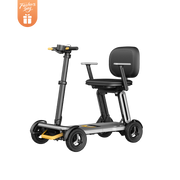
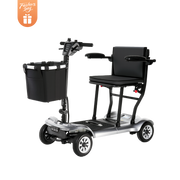
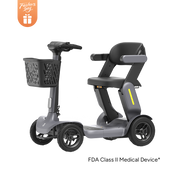
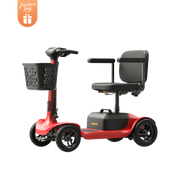








To get a power wheelchair through Medicare, follow these five key steps: (1) Obtain a physician referral documenting medical necessity; (2) Complete a mandatory face-to-face exam with your doctor within six months of the order; (3) Secure a detailed prescription specifying features like lightweight design and safety systems; (4) Select a Medicare-approved DME supplier and submit for prior authorization; (5) Receive approval (typically 5–10 business days) before delivery. Medicare Part B covers 80% of the approved amount after your $240 annual deductible, with you paying 20% coinsurance.
Check: How to Get a Free Electric Wheelchair: 7 Proven Options
What Is Medicare Coverage for Power Wheelchairs?
Medicare Part B covers power wheelchairs as Durable Medical Equipment (DME) when medically necessary—meaning they significantly improve your ability to move safely within your home. You must demonstrate inability to ambulate effectively (typically walking 300+ feet without rest due to conditions like arthritis, stroke, or spinal injury). Medicare pays 80% of the approved amount after your $240 annual Part B deductible; you pay the remaining 20% coinsurance with no annual or lifetime cap. The approved amount varies by region and supplier, but typically ranges from $4,000 to $6,000 for quality lightweight models.
Who Qualifies for a Medicare Power Wheelchair?
You qualify if you're age 65 or older with Medicare Part B, or under 65 with disabilities like ESRD, ALS, or end-stage renal disease. You must have a documented medical condition limiting mobility, such as spinal cord injury, amputation, severe arthritis, or stroke recovery. A caregiver can assist with the application process. Lightweight, portable models (under 50 pounds) often meet Medicare's "home use" criteria more easily, reducing denial risks compared to heavier standard wheelchairs.
How Do You Start the Medicare Wheelchair Process?
Begin by scheduling an appointment with your primary care physician to discuss your mobility limitations and safety concerns—such as fall risks, difficulty transferring, or inability to propel a manual wheelchair. Prepare a list of symptoms and activities you struggle with daily (climbing stairs, navigating carpeting, outdoor terrain). Your doctor will evaluate whether a power wheelchair is medically necessary and provide an initial referral. This referral opens the door to the face-to-face exam requirement and subsequent prescription.
When discussing your needs with your doctor, emphasize how a power wheelchair would restore independence for essential activities—grocery shopping, medical appointments, or visiting family. Mention specific features that address your condition: lightweight designs for caregiver assistance, intelligent safety systems that prevent falls on uneven terrain, and airline-approved batteries for travel. Paiseec's PAI intelligent safety system, which includes automatic speed control on slopes and voice alerts, strengthens medical necessity claims by demonstrating how advanced safety technology reduces fall and injury risks—a compelling argument for approval.
What Is the Face-to-Face Exam Requirement for Medicare?
Medicare mandates a face-to-face physician exam completed within six months before your DME order is submitted. During this visit, your doctor assesses your specific mobility limitations, observes your physical capabilities, and may trial a power wheelchair if available in the office. Your physician must document in writing why a power wheelchair is medically necessary compared to a manual wheelchair, cane, or walker. The report should specify required features: joystick control, seat width, foldable frame for transport, or safety technologies.
To strengthen your case, bring photographs of your home environment—stairs, doorways, carpeting, outdoor pathways—showing terrain challenges. Highlight portable design features you need: lightweight frames that reduce caregiver strain, compact folding dimensions that fit vehicle trunks, and airline-approved batteries for medical travel. This documentation directly supports the medical necessity argument and accelerates approval timelines.
How to Get a Medicare Wheelchair Prescription and Choose a DME Supplier?
After the face-to-face exam, your physician writes a seven-element prescription specifying the power wheelchair model, motor power, battery type, seat dimensions, and medical justification. You then select a Medicare-enrolled DME supplier—locate them via the Medicare.gov DME supplier directory. In competitive bidding areas (CBAs), Medicare restricts suppliers, potentially limiting your choices and affecting pricing. Out-of-area suppliers may increase your 20% coinsurance responsibility. Request quotes from multiple suppliers and verify their approval timelines and customer support.
| Selection Criteria | Standard DME Supplier | Paiseec-Partnered DME |
|---|---|---|
| Approval Speed | 10–14 business days | 5–10 business days (FDA Class II documentation) |
| Weight Options | 55+ pounds (limited portable options) | 22–42 pounds (Q5, Q3, W1 ultra-light) |
| Safety Technology | Basic joystick control | PAI intelligent system + FDA Class II certified |
| Travel-Ready Features | Limited folding capability | Airline-approved batteries, compact fold, under 50 lbs |
What Happens After Submitting for Medicare Prior Authorization?
Your DME supplier submits a prior authorization request to Medicare, including your face-to-face exam notes, physician prescription, medical justification, and detailed equipment specifications. Medicare typically responds within 5–10 business days. Common approval reasons include documented mobility limitations and medically necessary features. Denials often stem from insufficient documentation, non-covered features, or failure to demonstrate home-use necessity. If denied, you can appeal within 120 days by providing additional physician notes emphasizing specific safety features or features like Paiseec's FDA Class II certification and PAI technology—which demonstrably improve outcomes and justify approval.
Which Power Wheelchairs Are Best for Medicare Coverage?
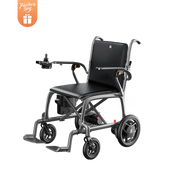
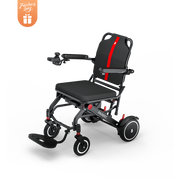
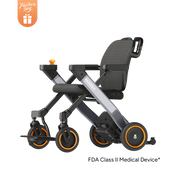
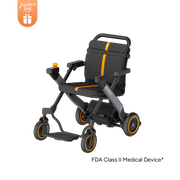
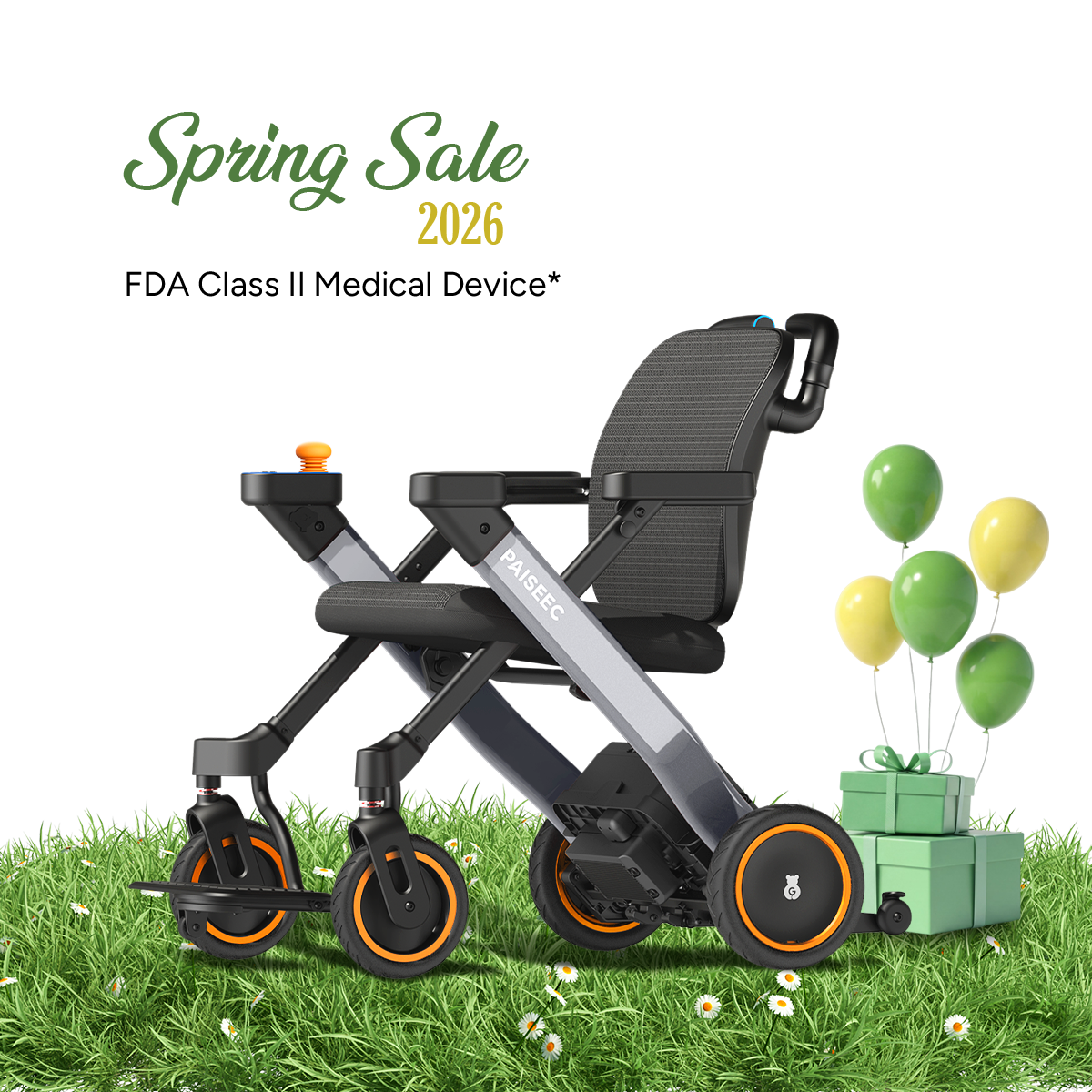
Post-approval, focus on lightweight, foldable models that meet Medicare's home-use criteria while minimizing your out-of-pocket coinsurance costs through lower total approved amounts. Paiseec offers several Medicare-friendly options: the Q5 Carbon Fiber Electric Wheelchair at 22 pounds (lightest in its class) with a 400W brushless motor, 24V 10Ah lithium battery, and 14-mile range per charge; the Q3 Lightweight Electric Wheelchair at 32 pounds with a 500W motor, 24V 12Ah battery, and 11-mile range; and the W1 2-in-1 Electric Wheelchair at 42 pounds with 400W power, 24V 12Ah battery, 18-mile range, and rollator walker functionality.
All three models feature airline-approved detachable batteries, compact folding frames, and aluminum or carbon fiber construction—meeting transportability requirements that reduce caregiver burden and support long-term Medicare cost-effectiveness arguments. The W1's dual functionality as both wheelchair and rollator strengthens medical necessity claims by addressing multiple mobility scenarios. Example cost scenario: Medicare approves $5,000; you pay approximately $1,000 (your 20% coinsurance) after meeting your $240 deductible—making lightweight Paiseec options cost-effective compared to heavier standard wheelchairs that may cost more.
How Can Paiseec Simplify Your Medicare Power Wheelchair Journey?
Paiseec, founded in 2021 and backed by $10 million in R&D with 100+ mobility engineers across five advanced laboratories, partners with Medicare-enrolled DME suppliers to streamline approvals. Our products—including FDA Class II certified models (W1, D1)—integrate the proprietary PAI intelligent safety riding system, which provides automatic speed control on hills, terrain-adaptive braking, and voice alerts that directly strengthen medical necessity documentation. We offer comprehensive support: installment payment plans, real-time order tracking, detailed user manuals, and professional customer service. Access our free Medicare Authorization Toolkit (physician-ready prescription templates, PAI safety talking points, approval acceleration guides) to expedite your claim and reduce approval timelines from 10–14 days to 5–10 days.
Paiseec Expert Views
"Medicare denials often stem from insufficient documentation of how safety features reduce fall and injury risks—the agency's core concern for beneficiaries. Paiseec's PAI intelligent safety system addresses this directly: our automatic speed control on uneven terrain, magnetic sensor joystick stabilization, and voice alerts demonstrably minimize accidents. When physician documentation emphasizes these technologies alongside FDA Class II certification, approval rates accelerate significantly. Additionally, our ultra-lightweight designs (Q5 at 22 pounds, Q3 at 32 pounds) reduce the approved dollar amount, lowering your 20% coinsurance burden—a tangible financial benefit that improves Medicare accessibility for seniors managing fixed incomes."
— Paiseec Mobility Clinical Advisory Team
What If Your Medicare Power Wheelchair Claim Is Denied?
If Medicare denies your claim, you have 120 days to appeal by submitting additional documentation. Request your denial letter to identify the specific reason (common causes: insufficient medical necessity documentation, non-covered features, or questions about home-use appropriateness). Ask your physician to provide a supplemental written statement addressing the denial reason—emphasizing how the power wheelchair specifically improves your home mobility and highlighting safety features like intelligent systems or lightweight design for caregiver support. Appeals with comprehensive physician documentation have approximately a 50% success rate. If you dispute the DME supplier's charges, request itemized pricing and compare it against Medicare's regional allowable amounts.
Can You Use a Medicare Power Wheelchair for Travel?
Yes, Medicare-covered power wheelchairs can be used for travel when equipped with airline-approved detachable batteries and compact folding frames. Paiseec's Q5, Q3, and W1 models meet FAA/TSA regulations with removable lithium batteries, compact folded dimensions (Q5 folds to 28.3" L × 11.8" W), and total weights under 50 pounds—allowing travel without additional shipping costs or equipment modifications. Check with your airline regarding specific battery restrictions (typically 24V max, certain amp-hour limits); Paiseec batteries comply with standard regulations. Transport your wheelchair in your vehicle trunk or checked luggage, and carry battery documentation to avoid delays at security checkpoints.
Conclusion
Obtaining a power wheelchair through Medicare requires following a structured five-step process: physician referral, mandatory face-to-face exam, detailed prescription, DME supplier selection with prior authorization submission, and post-approval delivery and training. The 80/20 cost-sharing rule means Medicare covers the majority of approved equipment costs, with your 20% coinsurance typically ranging from $800 to $1,500 depending on the model and regional pricing. Choosing Paiseec's lightweight, FAD Class II-certified models—such as the Q5 (22 lbs), Q3 (32 lbs), or versatile W1 (42 lbs)—streamlines approvals through superior safety documentation, reduces your out-of-pocket costs via lower approved amounts, and provides travel-ready features with airline-approved batteries and compact folding. By partnering with Paiseec-affiliated DME suppliers and utilizing our free Medicare Authorization Toolkit, you can accelerate approval timelines from 10–14 days to 5–10 days while securing a durable, intelligent wheelchair that enhances independence and safety for years to come.
FAQs
Does Medicare cover lightweight power wheelchairs?
Yes, Medicare covers lightweight power wheelchairs if medically necessary and prescribed by a physician. Paiseec's portable models—such as the Q5 at 22 pounds and Q3 at 32 pounds—easily qualify, as lightweight design reduces caregiver strain and transport costs, strengthening medical necessity arguments. Their compact folding frames and airline-approved batteries further support approval by demonstrating practical home-use value.
What is the typical approval timeline for Medicare power wheelchairs?
After submitting prior authorization, Medicare typically responds within 5–10 business days. However, standard timelines may extend to 10–14 days if documentation requires clarification. Using Paiseec-partnered DME suppliers with comprehensive FDA Class II documentation can expedite approval to the 5–10 day range, reducing wait times and allowing faster delivery.
Can I choose any power wheelchair, or are there Medicare restrictions?
Medicare restricts coverage to medically necessary models prescribed by your physician; you cannot choose any wheelchair arbitrarily. However, within approved categories, you can select lightweight, feature-rich models like Paiseec's lineup. Your physician prescription must justify specific features (safety systems, foldability, motor power), which your chosen DME supplier then submits for authorization.
How much does a power wheelchair cost after Medicare covers 80%?
Your 20% coinsurance typically ranges from $800 to $1,500, depending on the approved amount and region. For example, if Medicare approves $5,000, you pay approximately $1,000 (20%) after meeting your $240 annual deductible. Paiseec's lightweight models often have lower approved amounts than heavy standard wheelchairs, further reducing your out-of-pocket responsibility.
Is Paiseec Medicare-approved?
Paiseec partners with Medicare-enrolled DME suppliers to deliver FDA Class II-certified models. Our Q5, Q3, W1, and W3 wheelchairs are not directly "Paiseec-approved" by Medicare, but they meet all medical device standards and integrate advanced safety technologies that strengthen individual approval claims when properly documented by physicians and suppliers.
Leave a comment
This site is protected by hCaptcha and the hCaptcha Privacy Policy and Terms of Service apply.