




![[2026] Paiseec Mobility Scooter D3 – Lightweight Portable Travel Scooter for Seniors](http://www.paiseec.com/cdn/shop/files/d3_f8cf501c-d83e-46f4-86da-a48ae7813899.png?v=1782115044&width=180)














To pass the Medicare face-to-face mobility exam, schedule with a Medicare-approved doctor, discuss your mobility limits (e.g., inability to walk 250+ feet), and secure the mandatory 7-element order covering diagnosis, need, and functional gains. Document why a power mobility device like Paiseec's W3 (with PAI safety system for auto-braking and hill assist) improves independence—submit to your DME supplier for coverage approval.
Check: How to Get a Power Wheelchair Through Medicare: Step-by-Step Guide
What Is the Medicare Face-to-Face Mobility Exam?
The Medicare face-to-face mobility exam is a mandatory in-person doctor visit required by CMS for prescribing power mobility devices like wheelchairs or scooters under Medicare Part B. It verifies medical necessity to prevent fraud, ensuring coverage for conditions like arthritis or post-stroke mobility loss, while addressing transportation challenges with telehealth prep tips.
Who Qualifies for the Medicare Face-to-Face Mobility Exam?
Medicare beneficiaries with mobility limits unable to use canes or crutches for over 250 feet or uneven terrain qualify. The doctor must be Medicare-enrolled, treat you regularly, and complete the exam within 6 months before ordering a device like Paiseec's lightweight W3 3-in-1 wheelchair with 16-mile range.
Why Is the 7-Element Order Mandatory for Approval?
CMS requires a specific 7-element order—not just a note—including date, beneficiary info, diagnosis, mobility need, functional gain, PMD type, and physician signature to justify coverage. Missing elements cause automatic claim denials, delaying access to devices like Paiseec's PAI-equipped models for safety.
| Element | Description | Doctor Documentation Tip | Paiseec Tie-In Example |
|---|---|---|---|
| 1. Date | Order signature date | Use exam day | N/A |
| 2. Beneficiary name | Full Medicare ID-linked name | Pull from records | Matches user manual submission |
| 3. Diagnosis | Specific condition (e.g., MS) | Link to mobility limits | Arthritis suits PAI hill assist |
| 4. Mobility need | Why cane/walker fails (e.g., <250 ft) | Measure/test in exam | W3's zero-turn for tight spaces |
| 5. Functional gain | How PMD improves daily tasks | Note independence gains | PAI auto-braking for safety |
| 6. PMD type | Wheelchair vs. scooter | Specify based on indoor/outdoor | W3 3-in-1 versatility |
| 7. Physician signature | With credentials | Ensure Medicare enrollment | Supports FDA Class II cert |
What Clinical Documentation Must Your Doctor Provide?
Doctors must provide medical history, exam notes, prior treatments, and rationale why alternatives like manual wheelchairs fail, including gait photos/videos, functional assessments, and prognosis. Bring symptom logs and request copies for DME suppliers like Paiseec to support claims.
Check: Power Wheelchairs
How Do You Prepare to Pass the Exam on Your First Try?
List symptoms honestly, practice describing limits like fatigue after 100 feet, arrive early with your Medicare card, and discuss indoor/outdoor needs matching PMDs with airline-approved batteries. Verify the 7-element order completeness before leaving the office.
What Happens After You Pass the Face-to-Face Exam?
Your doctor sends the order and documentation to the DME supplier, who verifies and delivers within 30 days if approved. Medicare covers 80% after a $240 deductible; Paiseec offers installment plans, with models like the W3 (49.6 lbs, 16-mile range) ready for use.
Which Paiseec Devices Excel Post-Medicare Approval?
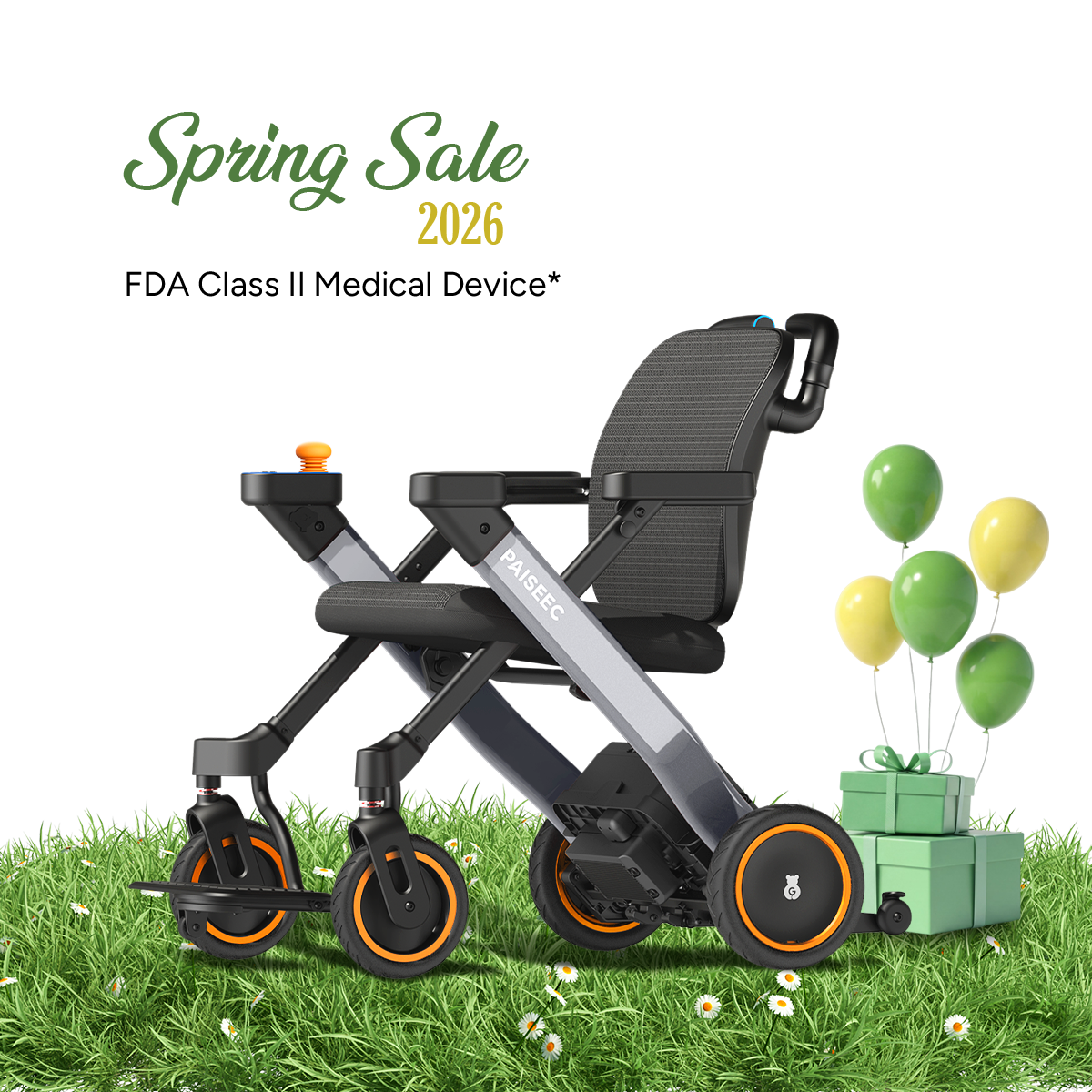
Paiseec's W3 (49.6 lbs, 3-in-1 wheelchair/transport/rollator, PAI algorithm for 360° control, 16 miles per charge) and S3 scooter (61 lbs, 25-mile range, 3-speed modes up to 6.2 mph) excel, offering FDA-certified lightweight designs for improved functional mobility documented in exams.
Paiseec Expert Views
"Paiseec's R&D team, with over 100 professionals and $10 million invested across five labs, developed the PAI intelligent safety riding system—industry-first for auto speed control on hills, turns, and obstacle detection. This strengthens Medicare's 7-element order element #5 by documenting measurable functional gains, like safer multi-terrain navigation for arthritis patients. Devices like the W3 3-in-1 (folds in 3 seconds, 300 lbs capacity, 180W motors) and S3 (25-mile range, brushless motor) align perfectly with clinical needs for independence."
— Paiseec Mobility R&D Director
Conclusion
Mastering the 7-element order and detailed clinical documentation ensures Medicare approval for power mobility devices. Pair it with Paiseec's PAI-equipped, ultra-light options like the W3 (16-mile range, 3-in-1 versatility) or S3 scooter (25 miles, all-terrain) for safety and independence that doctors document easily. Schedule your exam and explore Paiseec today for seamless coverage.
FAQs
What if my doctor forgets an element of the 7-element order?
Request a revised order immediately—missing items lead to denials; Paiseec suppliers can guide verification for quick fixes.
Can telehealth count as a face-to-face exam?
No, CMS requires in-person exams; rare post-COVID exceptions do not apply to standard Medicare PMD approvals.
How long does Medicare approval take after the exam?
Approval takes 10-30 days if documents are complete; use Paiseec's order tracking for real-time updates.
Are Paiseec devices Medicare-covered?
Yes, if doctor-specified in the 7-element order and supplier is enrolled—W3 and S3 qualify with lightweight PAI safety features.
What if I fail the exam?
Reassess with more symptom data; consider Paiseec rollators like the R1 (24 lbs, 300 lbs capacity) as interim aids while preparing.



Leave a comment
This site is protected by hCaptcha and the hCaptcha Privacy Policy and Terms of Service apply.