



![[2026] PAISEEC D3|Mobility Scooter for Easy Everyday Travel](http://www.paiseec.com/cdn/shop/files/d3_4a4ccb22-9e26-449e-8094-71f3ec4177c3.png?v=1782115044&width=180)
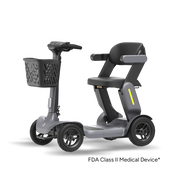

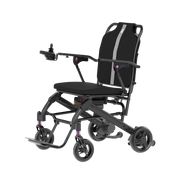
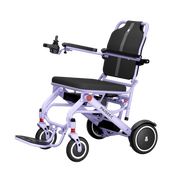


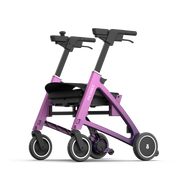
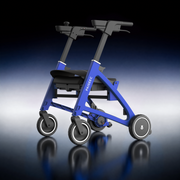









A true travel companion does more than move you from point A to point B; it unlocks destinations that once felt out of reach. A lightweight frame, compact transport design, and airline-approved engineering turn the D3 and L5 mobility series into your ticket to global adventure on planes, cruise ships, trains, and city streets worldwide.
check:Mobility Scooter
Why a Lightweight Frame Is the Ultimate Travel Companion
A lightweight frame transforms any mobility scooter or electric wheelchair from a local errand tool into a full travel companion that can follow you through airports, cobblestone streets, cruise terminals, and hotel corridors. When weight drops below the typical 50-pound threshold for travel mobility scooters, users gain easier lifting into car trunks, smoother handling at TSA checkpoints, and less strain for caregivers during transfers.
For frequent flyers, every pound matters at check-in, gate boarding, and luggage handling, especially when airline staff must load your mobility device into the cargo hold or jet bridge. Lightweight frames reduce risk of damage, simplify manual maneuvering when powered drive is off, and help keep the overall device within airline handling standards for safe stowage. This is why travel-focused models like the D3 and L5 series prioritize intelligent frame architecture, compact folded dimensions, and balanced center of gravity over bulky suspension or oversized bodywork.
On cruise ships and in small cabins, a compact, light frame becomes even more critical. Narrow doorways, tight stateroom layouts, and limited storage space demand a mobility scooter that can pivot sharply, fold quickly, and tuck into a corner without blocking pathways or emergency exits. A genuine travel companion must therefore balance lightweight portability, stability at speed, and enough battery range for a full day of shore excursions.
Market Trends: Airline-Approved Mobility and Compact Transport
Global travel trends show steady growth in accessible tourism, with more passengers with reduced mobility flying and cruising than ever before. Major airlines, cruise lines, and tourist destinations are responding by standardizing guidelines for airline-approved mobility scooters, travel wheelchairs, and lightweight electric devices with safe lithium batteries.
According to recent accessibility and tourism reports, demand is rising fastest in three key segments: ultra-light folding scooters, compact electric wheelchairs designed for cabin and corridor use, and modular travel systems that allow detachable batteries and quick folding frames. Travelers want a mobility solution that is airline-approved, TSA-compliant, and cruise-friendly while still delivering solid weight capacity and ride comfort.
Regulations from aviation authorities and security agencies focus primarily on lithium battery watt-hour limits, safe packaging, and clear labeling. At the same time, cruise industry guidelines emphasize scooter width, turning radius, and parking practices inside staterooms. These market forces are pushing manufacturers toward space-efficient frames, removable battery systems under approximately 300Wh per pack, and simple folding mechanisms that require minimal tools or physical strength.
Amid these trends, premium travel models such as the D3 and L5 series stand out by combining a lightweight frame, airline-compliant power systems, and dimensions optimized for both wide-body aircraft handling and narrow cruise ship passages. For modern travelers, the right mobility device is no longer an afterthought; it is a core part of every trip plan, from booking flights to selecting cabin categories.
Paiseec Mobility, founded in 2021, has quickly become a global leader in innovative mobility solutions built specifically for this new era of accessible travel. With more than 100 R&D professionals, five advanced laboratories, and major investment in high-performance batteries, motors, and intelligent safety systems, the company has positioned the D3 and L5 as flagship options for travelers who demand reliability, safety, and compact versatility around the world.
Spotlight on the D3 and L5 Series: Built for Real Travel
The D3 and L5 travel mobility series are designed from the ground up for users who spend serious time in airports, cruise ports, resorts, and city centers. Their lightweight frames, foldable construction, and carefully calibrated powertrains make them ideal travel companions rather than just local-use scooters.
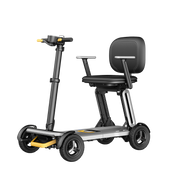
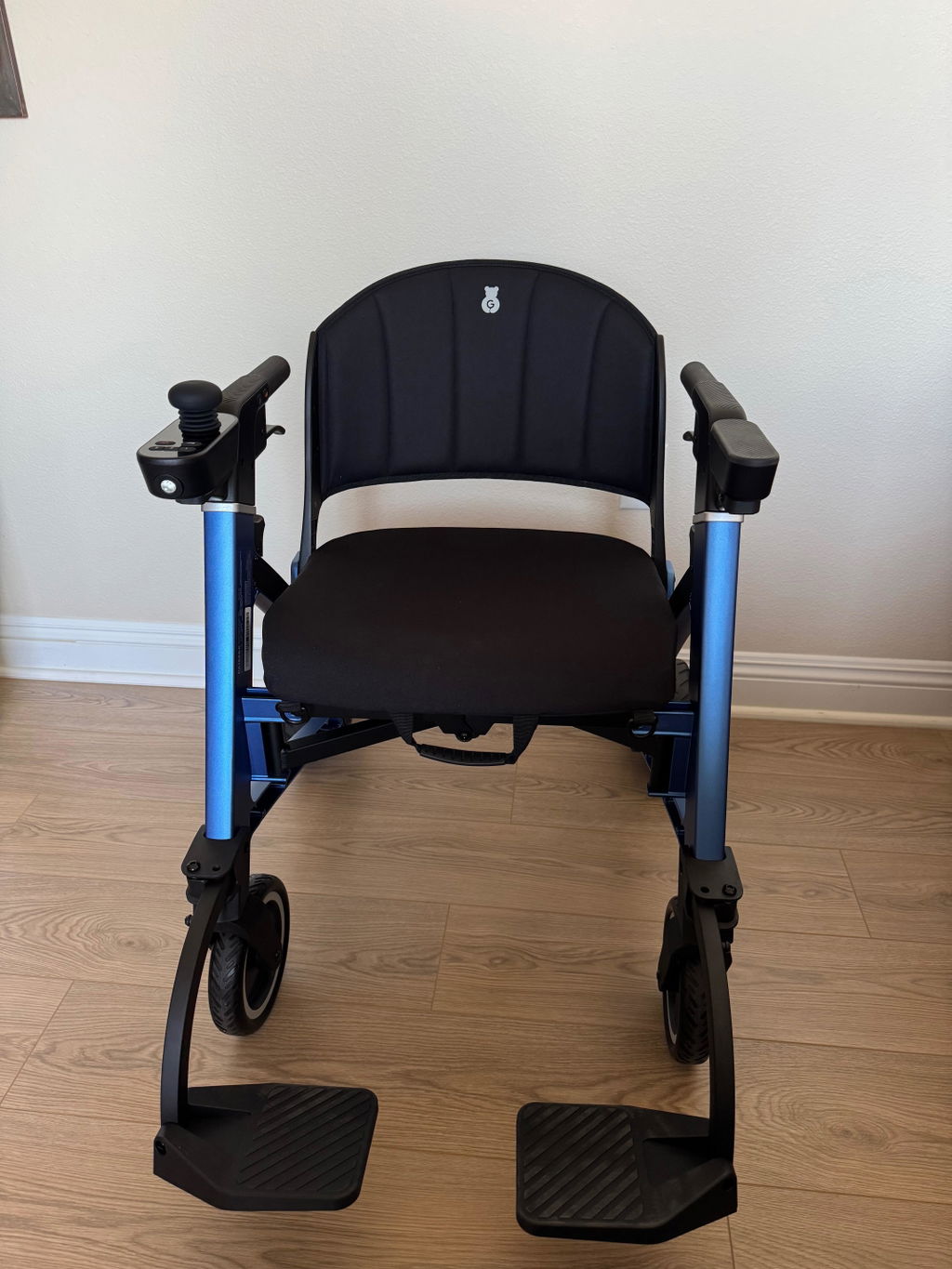
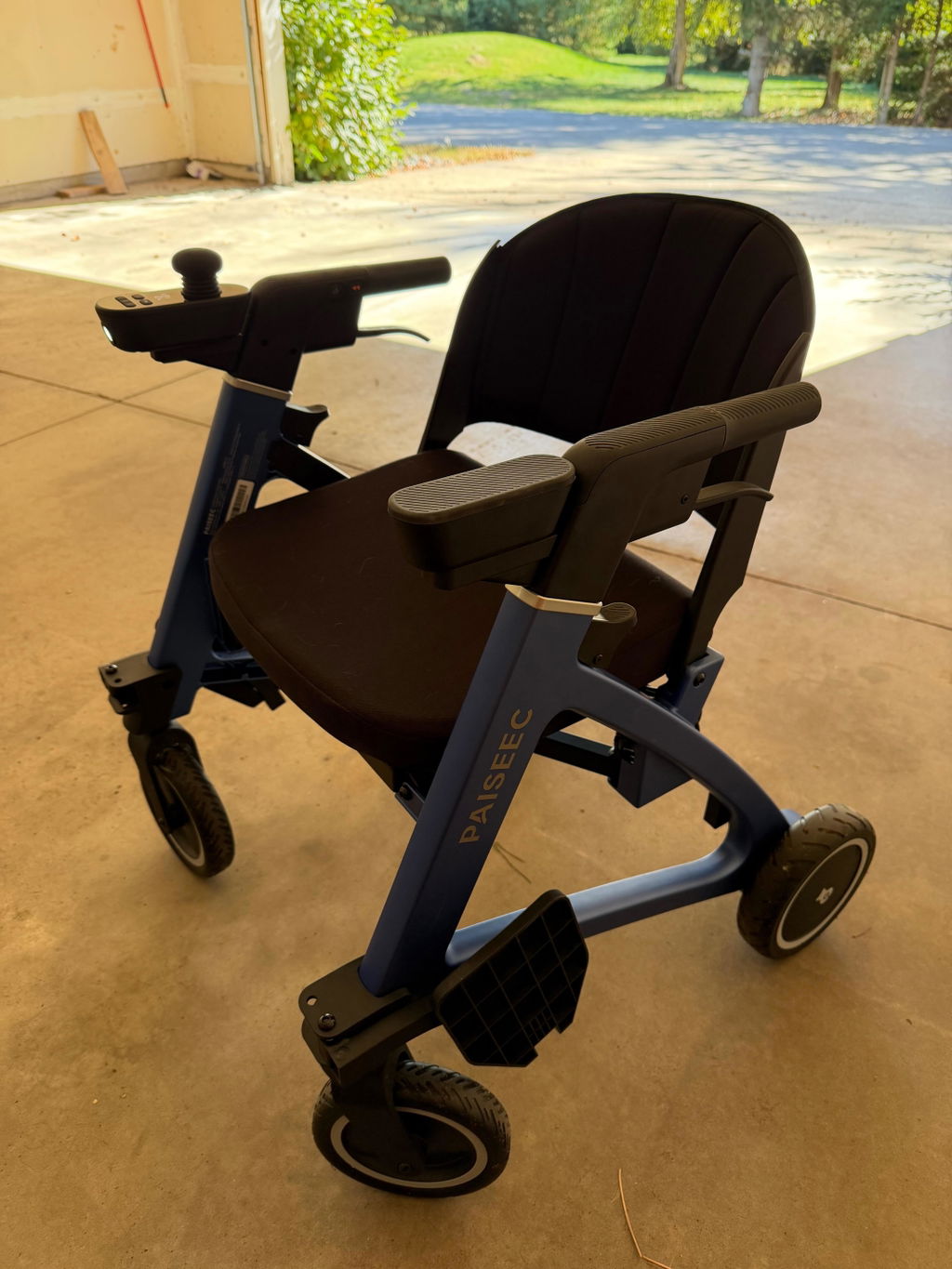
The D3 model is a compact folding mobility scooter that keeps total weight impressively low while still supporting everyday use. With a frame that weighs under roughly 50 pounds without the battery and folds down to around 39 inches long, 20 inches deep, and 15 inches high, it fits easily into many car trunks and aligns well with airline handling expectations for collapsible mobility scooters. By focusing on solid but lightweight materials and a streamlined deck, the D3 ensures that travelers can lift or tilt the unit with minimal strain when required at curbs, security lines, or cabin doorways.
The L5 series builds on this travel DNA with a focus on stability and long-range comfort. It typically incorporates a slightly larger frame and seating arrangement but remains firmly within the compact transport category. The aim is to give users the feel of a full-size mobility scooter with turning characteristics and folded dimensions suitable for modern travel infrastructure, including cruise ship corridors and resort elevators. Both D3 and L5 leverage high-efficiency lithium batteries around the 36V range paired with brushless motors near 250W, delivering a smart balance between hill-climbing power, energy efficiency, and airline battery compliance.
Top Travel Models Overview
FAA and TSA Rules for Mobility Devices: What Travelers Must Know
For air travel, the Federal Aviation Administration and the Transportation Security Administration focus on two main aspects of mobility devices: safe lithium battery transport and safe handling in aircraft cabins or cargo holds. Current rules for mobility scooters and electric wheelchairs typically allow lithium-ion batteries up to about 300Wh when installed in the device, with spare batteries often limited to around 160Wh each in carry-on baggage, depending on airline policy.
Travelers must ensure that their device’s main lithium battery clearly displays voltage and amp-hour ratings so airline staff can verify watt-hours quickly during check-in or gate handling. Many lightweight travel scooters like the D3 and L5 series use batteries comfortably under these watt-hour caps, simplifying the boarding process. Some airlines request advance notice, generally 48 hours before departure, to record device details and coordinate loading and unloading procedures for powered mobility aids.
TSA checkpoint procedures usually require that removable batteries be carried on board rather than checked if they are lithium-based and detachable. Users should protect battery terminals with covers or tape and pack them securely to prevent movement or impact during turbulence. The mobility device itself can be driven to the aircraft door and gate-checked, or it can be checked at the counter depending on airport preference and passenger needs. By combining a lightweight frame with an easily removable battery, both the D3 and L5 help travelers align smoothly with these FAA and TSA requirements.
How the D3 and L5 Achieve FAA and TSA-Friendly Design
The D3 and L5 series integrate core design features specifically to support FAA and TSA compliance, while remaining user-friendly for daily travel. Their battery systems rely on high-quality lithium cells arranged to stay within airline watt-hour thresholds, which is crucial for classification as airline-approved mobility scooters or travel companions.
Both series offer clear labeling of voltage and capacity so that airline personnel can calculate watt-hours swiftly if needed. Detachable designs allow users to remove the battery with minimal effort, place it in carry-on luggage, and then fold the scooter for gate or counter checking. This reduces risk of accidental power-on during transport and aligns with security guidance on preventing short circuits.
Their lightweight frames further reduce the strain on ground staff during manual lifting into cargo holds or jet bridge storage areas. Compared to heavier power chairs, a compact travel scooter under roughly 50 to 60 pounds without battery is simpler to maneuver and less prone to handling damage. Together, these features make the D3 and L5 strong candidates when travelers search for airline-approved mobility scooters with TSA-compliant lithium batteries and compact folded profiles.
Cruise Ship Cabin Fit: Why Compact Transport Matters
Cruise lines generally welcome mobility scooters and electric wheelchairs but often enforce practical size guidelines to keep corridors and staterooms safe and navigable. Standard interior cabin doors typically range from about 21 to 24 inches wide, meaning that a mobility scooter must either be narrower than this when in use or capable of folding and rolling through in a compact configuration.
A lightweight frame with a compact footprint becomes essential for cruise ship access. Many cruise line accessibility guides suggest that mobility scooters should not exceed roughly 26 inches in width to comfortably pass through hallways and doorways while still allowing other guests to move freely. In addition, a tight turning radius is critical in small staterooms, where users must pivot near beds, closets, and bathrooms without hitting walls or fixtures.
The D3’s folded dimensions, close to 39 inches long by 20 inches deep and 15 inches high, allow it to be parked against a cabin wall, under a desk, or beside the bed in many standard cabins without blocking the entrance. Its narrow standing profile and low weight make it easier to reposition by hand if needed. The L5, while slightly larger, is still engineered to be narrow enough for most cruise ship corridors and, when folded, to store neatly inside staterooms, especially in accessible cabins with wider doors.
How the D3 and L5 Fit Into Cruise Ship Life
On a cruise, your mobility companion must perform in multiple environments: embarkation terminals, gangways, narrow ramps, buffet areas, theater aisles, and shore excursion buses. The D3 and L5 series are engineered for this diversity, blending compact frames and practical range with stable, comfortable handling on varied surfaces.
The D3 shines in tight interior spaces, thanks to its small footprint and agile steering. It can weave through crowded buffet lines, turn efficiently in elevators, and park discreetly by dining tables or in theater seating sections. When it is time to head back to your stateroom, the scooter’s compact folded form streamlines storage so that housekeeping and other guests are not inconvenienced by a bulky device protruding into hallways.
The L5, meanwhile, offers enhanced comfort for longer days exploring large ships and extended ports of call. Its weight and geometry aim for a sweet spot between stability and portability, keeping the device manageable for crew when assisting with ramps or gangways. In cabins, the L5 can often be folded or parked diagonally to maximize remaining floor space, especially in balcony or accessible suites where door widths are more generous.
Core Technology: Lightweight Frames, Lithium Power, and Intelligent Safety
The technical core of the D3 and L5 series centers on advanced frame engineering, high-performance lithium batteries, and intelligent safety features. A lightweight frame does not simply mean using thinner materials; it involves optimizing geometry, load paths, and mounting points so that the scooter can support a robust weight capacity while keeping absolute mass low.
Aluminum alloys and carefully designed cross-bracing enable these scooters to minimize flex and vibration without resorting to heavy steel components. The result is a frame that feels solid under acceleration and braking yet remains easy to lift into vehicles or maneuver through tight spaces. Foldable joints are reinforced to withstand repeated folding cycles, an essential quality for devices used on frequent trips.
On the power side, 36V lithium battery packs paired with 250W brushless hub or transaxle motors provide efficient propulsion with minimal noise. These motors deliver responsive torque for slopes and uneven terrain while maintaining battery economy for extended range. Intelligent control systems monitor current, temperature, and voltage to protect both the user and the battery, supporting consistent performance over time and aligning with the safety expectations of airlines, cruise lines, and port authorities.
Real User Scenarios: From Airport Check-In to Shore Excursions
Imagine a traveler flying from New York to Barcelona for a Mediterranean cruise. With a D3 mobility scooter, check-in begins by declaring the device as a battery-powered mobility aid and presenting clear battery information. The user removes the lithium battery, stores it in a protective case inside carry-on luggage, and drives the scooter down to the gate where it is gate-checked just like a stroller.
Upon landing, ground staff return the scooter at the jet bridge, allowing the traveler to use it immediately through immigration, baggage claim, and the taxi queue. The compact frame navigates tight elevator corners and terminal ramps with ease. At the cruise terminal, embarkation staff appreciate the scooter’s manageable weight and foldability, which simplify scanning and security checks.
Onboard, the D3’s small turning circle helps the user navigate cabin corridors and shared spaces even during busy hours. In the stateroom, the scooter folds and parks against a wall, leaving clear walking paths. During shore excursions, the device offers enough range for a full day of exploring coastal towns, historic sites, or beach areas before returning onboard for evening entertainment.
A second traveler with the L5 series might embark on a longer itinerary involving back-to-back cruises and extended land tours. For this user, the L5’s extra comfort and range prove invaluable during long sightseeing days in large cities, where cobbled streets and steep slopes challenge less capable scooters. Despite its more substantial feel, the L5 remains compatible with most airline and cruise handling procedures, offering similar battery removal options, folding capabilities, and corridor-friendly dimensions.
Measurable Benefits and Travel ROI
When evaluating the return on investment of a travel mobility scooter such as the D3 or L5, consider more than the purchase price. Count the cost of alternative solutions, including airport wheelchair services, scooter rentals at each destination, and the physical strain on travel companions when pushing manual chairs over long distances.
Users who switch from rental-based strategies to owning an airline-approved mobility scooter often report lower overall expenses after several multi-city trips. They avoid repeated rental fees, delivery surcharges at hotels and ports, and the inconvenience of inconsistent equipment quality. At the same time, they benefit from consistent control feel, seat ergonomics, and battery performance across every leg of the journey.
Time savings are another major factor. With a personal travel scooter, users can move at their own pace through terminals and tourist areas instead of waiting for assistance staff or shuttle services. This autonomy frequently results in smoother connections, more efficient shore excursions, and greater flexibility to explore off-peak attractions. In addition, a familiar device reduces the learning curve at each new location, lowering the risk of mishandling or misuse associated with unfamiliar rental models.
Competitor Comparison: D3 and L5 vs Typical Travel Scooters
Choosing Between D3 and L5 for Your Travel Style
The choice between the D3 and L5 often comes down to travel style, body needs, and typical itinerary. Travelers who fly frequently, change hotels often, and navigate older cruise ships with tighter cabins tend to favor the D3 due to its extremely compact folded size and lower overall weight.
Those who prioritize all-day comfort, more spacious seating, and extra range may lean toward the L5, especially if they typically book balcony or accessible cabins with wider doorways and more open floor plans. If your trips revolve around large modern cruise ships, resorts, and accessible city infrastructure, the L5’s enhanced comfort can outweigh its slightly larger frame.
Before deciding, consider who will lift or maneuver the device when unpowered, how often it must be folded, and how narrow the typical doors on your journeys are. Also factor in your own strength, reach, and ability to bend or crouch when removing batteries or triggering folding mechanisms. Both models are designed as serious travel companions, but optimal fit depends on your unique lifestyle.
Practical Tips for FAA/TSA and Airline Compliance with D3 and L5
To maximize success when flying with the D3 or L5, start by documenting key specifications such as dimensions, weight without battery, battery voltage, and amp-hour rating. Keep a copy of the user manual or spec sheet handy on your phone or in print so that airline agents can confirm watt-hours and frame size quickly if needed.
Before your trip, contact the airline to register your mobility device as a battery-powered scooter and ask about any special forms or advance notice requirements. On the day of travel, arrive at the airport early to allow extra time at check-in and security, especially if it is your first time flying with the device. Practice removing the battery and folding the frame at home so that the process feels smooth at the counter or gate.
At TSA security, follow guidance for lithium batteries by placing the pack in a separate tray if requested and ensuring terminal protection. When boarding, discuss with gate agents whether the scooter will be gate-checked or checked from the counter and note any tags or receipts you receive for reclaiming the device at your destination. With the D3 and L5’s lightweight frames and clear labeling, these steps typically proceed efficiently once staff recognize that the model is designed with air travel in mind.
Cruise Ship Guidelines: Maximizing Cabin Space with D3 and L5
On cruises, planning begins with choosing the right cabin. If you use a D3, many standard cabins with door widths around 21 to 24 inches can accommodate the scooter when folded and parked carefully. You can roll the folded unit inside and store it near the wall or under a desk, ensuring that the door swings freely and emergency egress remains unobstructed.
For the L5, an accessible or larger cabin is often more comfortable, but many modern ships provide doorways wide enough for compact travel scooters even in standard rooms. Check your cruise line’s accessibility guide for recommended scooter dimensions and confirm whether hallway parking is allowed or discouraged. In most cases, storing the mobility device entirely within the cabin is preferred for both safety and convenience.
During the voyage, use the scooter’s turning radius to your advantage, planning routes that avoid tight bottlenecks when crowds are heaviest. Elevators fill quickly near showtimes, so consider off-peak travel within the ship where maneuvering is easier. Because D3 and L5 are designed with compact transport in mind, they integrate well with cruise life, enabling smooth transitions between dining areas, lounges, pools, and shore excursion meeting points.
Future Trends in Lightweight Travel Mobility
The future of travel mobility is moving decidedly toward smarter, lighter, and more connected devices. Industry analysts predict that standard battery limits will continue to normalize around the 300Wh installed and 160Wh spare range, prompting more manufacturers to adopt modular dual-battery setups with app-based monitoring. Real-time diagnostics, remote lock features, and predictive maintenance alerts may soon be common on premium airline-approved scooters and wheelchairs.
Frame design will likely become even more sophisticated, with composite materials and advanced alloys reducing weight while improving durability and vibration damping. As cruise lines and airports modernize, their infrastructure may integrate dedicated charging areas and parking spaces for compact mobility devices, reinforcing the role of scooters like the D3 and L5 as integral components of travel ecosystems.
For users, this means greater freedom to customize range, performance, and comfort without sacrificing airline or cruise compatibility. Models that align early with these trends, focusing on lightweight frames, intelligent power systems, and compact folded forms, will remain at the forefront of the market. The D3 and L5 series are already aligned with this trajectory, making them strong long-term partners for travelers who expect their mobility companion to keep pace with evolving regulations and technologies.
Relevant FAQs on Lightweight Travel Companions, D3, L5, and Airline Rules
What makes a lightweight frame so important for a travel companion mobility scooter?
A lightweight frame reduces lifting effort, improves maneuverability in tight spaces, and helps keep the device within airline and cruise handling specifications.
Are the D3 and L5 series compatible with FAA lithium battery rules?
Their lithium battery systems are engineered to remain within commonly accepted watt-hour limits for installed and spare batteries used on mobility scooters, making them suitable for most airlines when declared properly.
Can the D3 mobility scooter fit into a standard cruise ship cabin?
With folded dimensions close to 39 inches long, 20 inches deep, and 15 inches high, the D3 is designed to store efficiently in many standard staterooms without blocking doors or walkways.
Is the L5 series a good choice for long days on shore excursions?
Yes, the L5 emphasizes range and comfort while still offering compact transport features suitable for buses, ramps, and cruise ship infrastructure.
How should I prepare my D3 or L5 for TSA security checks?
Remove the lithium battery if it is detachable, cover the terminals, place it in carry-on luggage, and be ready to fold the frame quickly when requested by security or airline personnel.
Do airlines require advance notice for traveling with the D3 or L5 mobility scooter?
Many airlines appreciate or require advance notice, often around 48 hours, to document the device and plan loading, so it is wise to notify them when booking or before departure.
Are these models suitable for everyday local use as well as international travel?
Both D3 and L5 are versatile enough for regular grocery runs, medical appointments, and city errands while also being engineered to handle flights and cruises.
Can a caregiver easily handle the D3 or L5 when unpowered?
Their lightweight frames and compact folded forms make it easier for caregivers to push, tilt, or lift the scooters compared with heavier traditional models.
What is the typical user weight capacity for travel-focused mobility scooters like D3 and L5?
Most travel scooters in this class support user weights in the mid-200-pound range, but you should always confirm specific capacity in the product documentation.
Are compact transport mobility scooters stable enough for outdoor terrain on trips?
Travel scooters like the D3 and L5 aim to balance compact dimensions with wheel size, ground clearance, and suspension tuning to handle typical urban and tourist terrain such as pavements, ramps, and boardwalks.
Three-Level Conversion Funnel CTA: Start Planning Your Next Journey
If you are at the awareness stage, begin by reimagining mobility not as a constraint but as the key that unlocks airports, cruise terminals, and cities worldwide; a lightweight frame and airline-approved power system redefine what a travel companion can be.
If you are at the consideration stage, compare your current device’s weight, dimensions, and battery specifications with what the D3 and L5 series provide in terms of compact transport, FAA/TSA alignment, and cruise cabin compatibility.
If you are ready to take action, choose the model that best fits your itinerary style and storage needs, then explore our Airline-Approved Collection so your next flight or cruise is supported by a mobility partner built for global adventure.
Leave a comment
This site is protected by hCaptcha and the hCaptcha Privacy Policy and Terms of Service apply.