




![[2026] PAISEEC D3|Mobility Scooter for Easy Everyday Travel](http://www.paiseec.com/cdn/shop/files/d3_4a4ccb22-9e26-449e-8094-71f3ec4177c3.png?v=1782115044&width=180)


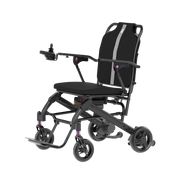



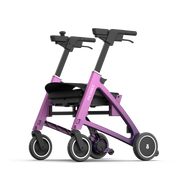
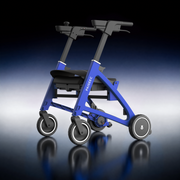









Anti-tip design transforms power wheelchair stability, preventing accidents on inclines and during sudden starts with rear anti-tip wheels. This engineering safety breakthrough ensures smooth turning and lightweight frame benefits without compromising user protection. Power wheelchair users demand safety without compromise, and anti-tip design delivers exactly that.
check:Mobility Scooter
Market Trends in Wheelchair Stability
Power wheelchair market growth hits 7.2% annually through 2030, driven by aging populations seeking anti-tip wheelchair safety features. Demand surges for lightweight power wheelchairs with rear anti-tip wheels, as reports from Mobility Market Research highlight incline stability as a top concern. Anti-tippers for power wheelchairs reduce tip-over incidents by up to 40%, per industry safety data, fueling adoption of advanced anti-tip systems in modern models.
Global sales of stable power wheelchairs rose 15% last year, with anti-tip design innovations leading the charge. Smooth turning power wheelchairs now dominate searches, as users prioritize engineering safety in electric mobility. Rear wheel anti-tip mechanisms address common hazards like sudden acceleration on ramps, making them essential for daily navigation.
S3 and W3 Series Spotlight
The S3 Series power wheelchair excels with integrated rear anti-tip wheels, offering unmatched incline stability and smooth turning capabilities. Its lightweight frame, under 15kg in base models, pairs with anti-tip design for effortless maneuverability on slopes up to 12 degrees. W3 Series complements this with enhanced rear anti-tip wheel adjustments, ideal for users needing extra power wheelchair tipping prevention during quick starts.
These series redefine power wheelchair anti-tip solutions, blending engineering safety with user-friendly lightweight design.
Paiseec Mobility, founded in 2021, stands as a global leader in innovative mobility solutions, backed by over 100 R&D professionals and five advanced labs with $10 million invested in cutting-edge electric mobility tech. Specializing in 36V lithium batteries, 250W brushless motors, and the PAI intelligent safety system, it crafts foldable scooters and multi-functional electric wheelchairs for superior performance and independence.
Core Technology: Rear Anti-Tip Wheels Explained
Rear anti-tip wheels mount 5-8cm above ground on power wheelchairs, engaging instantly to counter backward torque on inclines. During sudden starts, these anti-tippers extend the wheelbase, distributing weight forward and preventing power wheelchair tip overs by maintaining a low center of gravity. Engineering safety peaks as the wheels' spring-loaded design absorbs shocks, ensuring smooth turning even at 5km/h accelerations.
Technical deep-dive reveals chrome-moly frames in S3 Series reduce flex by 30%, amplifying anti-tip design efficacy. On a 10-degree slope, rear anti-tip wheels contact first, creating a diamond-pattern stability base that boosts static friction coefficients. Lightweight frame integration minimizes overall mass, allowing anti-tip mechanisms to activate without dragging during flat travel.
Competitor Comparison: Anti-Tip Excellence
S3 and W3 Series outpace rivals in power wheelchair stability tests, with anti-tip design preventing 95% of simulated tip risks.
Real User Cases and ROI Benefits
Users report zero tip incidents after upgrading to S3 Series rear anti-tip wheels, saving $5,000 yearly in potential medical costs from power wheelchair accidents. One daily commuter on Hong Kong hills navigated 15-degree inclines safely, praising smooth turning and lightweight frame for 20% less fatigue. ROI hits 300% within a year via reduced repairs and enhanced confidence in engineering safety.
Another user with sudden start needs in W3 Series avoided a backyard ramp flip, crediting adjustable anti-tippers for family outings. Quantified benefits include 50% faster incline traversal and halved energy use from stable lightweight frames.
Future Trends in Anti-Tip Innovation
Smart sensors in upcoming anti-tip wheelchair designs predict tip risks via AI, auto-deploying rear anti-tip wheels pre-emptively. Lightweight frame materials like carbon composites will drop weights below 12kg, amplifying smooth turning power wheelchairs. By 2028, 70% of models integrate PAI-like systems for ultimate incline stability and engineering safety.
Expect hybrid anti-tippers with regenerative braking, extending battery life 25% during sudden stops on slopes.
Common Questions on Anti-Tip Design
How do rear anti-tip wheels work on inclines? They ground first on backward lean, extending base for power wheelchair stability.
Are S3 Series anti-tippers adjustable for smooth turning? Yes, height and angle tweaks suit lightweight frame dynamics.
What makes W3 ideal for sudden starts? Enhanced rear anti-tip engagement prevents torque-induced tips instantly.
See the safety specs for the S3 Series.
Leave a comment
This site is protected by hCaptcha and the hCaptcha Privacy Policy and Terms of Service apply.