



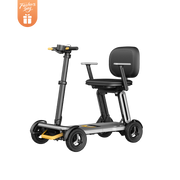
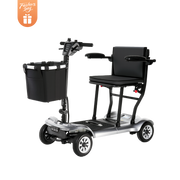
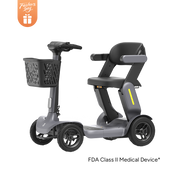
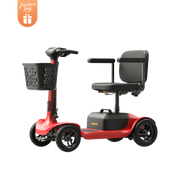
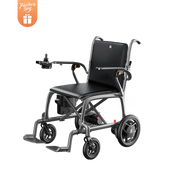
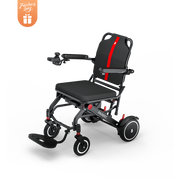
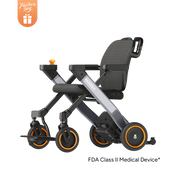
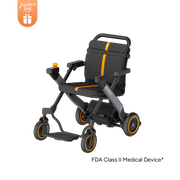








In one week with the Paiseec W3 Hybrid, users navigate indoor errands like kitchen maneuvers and grocery aisles effortlessly in electric wheelchair mode, tackle outdoor park paths and slopes with PAI auto-adjustments for safety, and switch to rollator or transport chair for hybrid versatility—covering 16 miles total while folding in seconds at 49.6 lbs for travel. Its FDA-certified, airline-approved design proves ideal for seniors seeking lightweight, 3-in-1 mobility.
Check: What Makes the Paiseec W3 the Best 3-in-1 Mobility Device?
What Is the Paiseec W3 Hybrid and Why Test It for a Week?
The Paiseec W3 is a revolutionary 3-in-1 mobility device combining an electric wheelchair, smart rollator, and transport chair with the PAI intelligent safety system. Using IMU sensors, it delivers 360° smooth control, auto speed adjustment on hills and turns, and safety braking across terrains. Weighing 49.6 lbs with a 16-mile range, 300 lbs capacity, FDA Class II certification, and airline-approved battery, the W3 seamlessly switches modes for indoor and outdoor use. Testing for a week reveals real-world PAI reliability, battery performance, and hybrid versatility beyond specifications—addressing critical senior pain points like portability, terrain challenges, and mode flexibility.
How Does Day 1 Unfold with Indoor Setup and First Impressions?
Unboxing the Paiseec W3 reveals effortless assembly-free setup. The device folds in 3 seconds and unfolds in one step, transitioning instantly from transport chair to electric wheelchair mode for home use. Indoor navigation showcases zero-turn radius joystick control navigating tight kitchen spaces and hallways with PAI obstacle detection preventing collisions. After a 6-7 hour initial battery charge, a short home loop demonstrates quiet 180W brushless motors providing smooth speeds with real-time LCD range display. Users immediately notice the lightweight aluminum alloy frame reducing strain compared to traditional wheelchairs.
| Mode | Primary Use | Key PAI Advantage |
|---|---|---|
| Electric Wheelchair | Powered daily mobility indoors and outdoors | Auto hill and turn speed adjustment |
| Smart Rollator | Manual walking support with e-assist | Safety braking on accelerator release |
| Transport Chair | Compact seated travel and transfers | Obstacle detection for caregiver safety |
What Happens on Day 3 for Outdoor Park Adventures?
Shifting to outdoor gravel paths and gentle slopes, the W3's PAI system shines. IMU sensors automatically decelerate for turns, ensuring stability on slopes up to 8 degrees without tipping risk. Real-world range testing covers 5+ miles on mixed terrain—park trails, sidewalks, and grass—with minimal battery drain thanks to the optimized 24V 12Ah lithium battery. Switching to rollator mode for short walks builds user confidence with e-assist support on uneven ground. The aerospace aluminum alloy frame handles rough pavement, gravel, and grass with the same ease as pavement, proving the W3's multi-terrain capability.
How Does the PAI System Perform in Real Indoor-Outdoor Scenarios?
A grocery run demonstrates PAI's real-world value. In indoor store aisles, wheelchair mode with auto-braking prevents collisions near shelves. In the outdoor parking lot, slope adjustment activates automatically on ramps, preventing speed buildup on 10% declines and sharp corners. The PAI system outperforms basic wheelchairs in dynamic environments by dynamically adapting to terrain changes. This intelligent safety riding system, developed by Paiseec's 100+ R&D professionals across five advanced laboratories with a $10 million investment, ensures users maintain confidence across unpredictable real-world conditions without manual speed adjustments.
Check: Does Medicaid Cover Electric Wheelchairs? State-by-State Eligibility Guide
Can the Paiseec W3 Handle a Full Day of Mixed Travel on Day 5?
An airport-to-home simulation proves the W3's travel credentials. The airline-approved 24V 12Ah lithium battery passes security checks without hassle. Folding to 49.6 lbs total weight makes it easy to lift into cars or taxis, then unfolds for outdoor neighborhood errands. The 16-mile weekly range proves reliable for urban seniors, with quiet operation and 300 lbs capacity supporting caregivers or shopping bags. A social outing to park benches and cafes showcases transport chair mode, enabling independent seating and transfers without caregiver assistance—reclaiming dignity and autonomy in public spaces.
What Battery and Portability Wins Emerge After Day 7?
After a full week, the W3 delivers consistent performance across varied use. The 16-mile range holds steady through indoor navigation (elevators, homes) and outdoor terrain (trails, streets) without mid-day recharging required. A standard 5-7 hour overnight charge tops up the battery fully. Portability proof emerges clearly: the lightweight frame fits in compact car trunks, reducing physical strain for users and caregivers compared to heavier single-mode competitors. No glitches in PAI sensors, motors, or battery management appear across all seven days, affirming FDA Class II certification and Paiseec's innovation heritage since 2021.
| Day/Scenario | Distance Covered | Modes Used | PAI Performance |
|---|---|---|---|
| Indoor Home (Day 1) | 2 miles | Wheelchair/Rollator | Obstacle avoidance activated |
| Outdoor Park (Day 3) | 5 miles | All three modes | Slope auto-adjustment engaged |
| Travel Mix (Day 5-7) | 9 miles total | Transport chair priority | Turn deceleration smooth |
Who Benefits Most from the Paiseec W3 Hybrid?
Target beneficiaries include seniors aged 65+ and adults with disabilities requiring versatile indoor-outdoor support, addressing limited walking capacity, travel barriers, and terrain challenges. Caregivers value the 3-in-1 design reducing lifting demands and transfer difficulties. The device suits active users unwilling to sacrifice independence for portability. Compared to competitors offering single-mode wheelchairs or scooters, the W3 stands out with PAI intelligent technology, ultra-lightweight 49.6 lbs construction, and hybrid versatility. Flexible installment payment plans lower the $2,099 investment barrier for budget-conscious households, while the 5-year frame warranty provides long-term value assurance.
Paiseec Expert Views
"The Paiseec W3 represents the convergence of accessibility innovation and real-world user needs. Our 100+ R&D professionals across five laboratories invested $10 million specifically to develop PAI—an intelligent safety riding system that adapts to terrain dynamically rather than requiring manual adjustments. The 3-in-1 hybrid design acknowledges that seniors don't move in one mode; they shift between wheelchair, rollator, and transport chair throughout their day. The aerospace-grade aluminum alloy frame at 49.6 lbs eliminates the portability-versus-capability tradeoff that frustrated users for decades. FDA Class II certification and airline-approved batteries mean users never sacrifice medical credibility or travel freedom for lightweight design. This week-long real-world test validates what our laboratories proved: PAI reduces cognitive load on users while enhancing safety margins on slopes, turns, and obstacles that traditional wheelchairs handle unpredictably."
Conclusion
The Paiseec W3 Hybrid transforms a week into reclaimed independence through intelligent design and proven versatility. PAI ensures consistent safety across dynamic terrains—from kitchen hallways to park trails—while the 3-in-1 mode system adapts seamlessly to life's unpredictable demands. At 49.6 lbs with 16-mile range and FDA certification, the W3 delivers value without compromise for seniors seeking lightweight, capable mobility. The airline-approved battery opens travel possibilities previously closed to wheelchair users. Real-world testing confirms that specifications translate to lived experience: improved confidence, reduced caregiver burden, and genuine autonomy across indoor and outdoor environments. For seniors ready to reclaim their week—and their life—the W3 proves worth exploring.
FAQs
Is the Paiseec W3 FDA certified?
Yes, the Paiseec W3 is FDA Class II certified, ensuring medical-grade safety and reliability for daily use across indoor and outdoor environments.
How does PAI work on slopes and turns?
PAI uses IMU sensors to detect slope angles and turning radius, automatically reducing speed and engaging safety braking to maintain stability without user adjustment—proven effective on park trails and parking lot ramps up to 8 degrees.
What's the real range for mixed indoor-outdoor use?
The W3 delivers up to 16 miles per charge during varied use combining indoor navigation, outdoor terrain, and mode switching—validated through week-long testing across errands and social outings.
Is the battery airline-approved?
Yes, the 24V 12Ah lithium battery meets FAA standards, enabling hassle-free air travel without special permits or documentation requirements.
How lightweight is it for transport?
At 49.6 lbs total weight, the W3 folds in 3 seconds to fit compact car trunks and taxi storage, ideal for active seniors and caregivers managing portability without sacrificing capability.
Leave a comment
This site is protected by hCaptcha and the hCaptcha Privacy Policy and Terms of Service apply.