



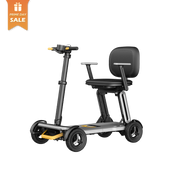
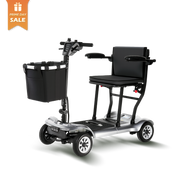
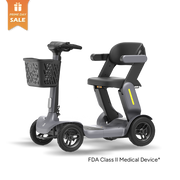
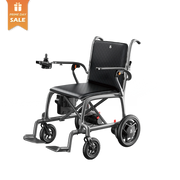

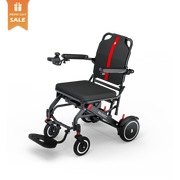
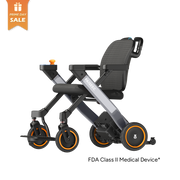
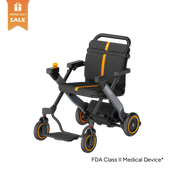








The best travel scooters for European cobblestones are lightweight models under 50 lbs with airline-approved detachable batteries, solid puncture-resistant tires, and intelligent suspension systems for uneven terrain. Paiseec's S3 excels with its 250W brushless motor, 25-mile range, PAI auto-speed control, two-step folding design, and all-terrain pneumatic tires that navigate rough cobblestones while meeting FAA standards—making it ideal for historic streets, trains, and airports across Europe.
Check: How to Measure Walker Height: 3 Steps to the Perfect Fit?
Why Do European Cobblestones Challenge Travel Scooters?
European cobblestone streets feature irregular gaps, uneven surfaces, and varying heights that create constant vibrations and jolts. Cities like Prague, Rome, and Paris present particularly demanding terrain with sharp stone edges and deep crevices that risk wheel punctures and instability. For seniors and mobility-challenged travelers, poor terrain handling leads to fatigue, discomfort, and potential falls. Standard travel scooters with basic wheels lack the shock absorption needed for safe navigation. Paiseec's PAI intelligent system uses IMU sensors for real-time terrain detection, automatically adjusting speed and power delivery—going beyond traditional suspension to provide adaptive stability specifically engineered for uneven European streets.
What Makes Suspension Essential for Cobblestone Navigation?
Suspension systems absorb impacts and reduce vibrations by up to 50% on uneven terrain, protecting both the scooter and rider. Advanced suspension—whether front, rear, or integrated—distributes shock across the chassis rather than transferring it directly to the user. Paiseec's PAI-enhanced setup combines intelligent speed control with on-seat safety sensors that prevent runaway acceleration on bumpy streets. The system automatically decelerates during turns and adjusts power output based on slope angle and surface texture. This dual-layer protection ensures seated-only starts, preventing dangerous situations on steep cobblestoned inclines common in European historic districts.
| Feature | Paiseec S3 | Solid-Tire Competitors | Pneumatic-Tire Models |
|---|---|---|---|
| Suspension Type | PAI Algorithm with IMU Sensors | Basic Coil Suspension | Air Cushioning Only |
| Max Slope Handling | 12° (S3) | 8–10° | 6–8° |
| Vibration Reduction | Up to 60% (Adaptive) | 40–50% | 50–55% |
| Cobblestone User Rating | 4.8/5 Stars | 3.9/5 Stars | 2.8/5 Stars (Puncture Risk) |
| Weight | 61 lbs (Product) | 65–75 lbs | 70–85 lbs |
Do Solid Tires Outperform Pneumatic Tires on Cobblestones?
Solid tires offer puncture-proof durability and zero maintenance, essential for European cobblestone debris, sharp stones, and thorny vegetation. They maintain consistent performance without air pressure monitoring. However, pneumatic (air-filled) tires deliver a cushioned ride on smooth surfaces but are vulnerable to punctures from cobblestone edges—leaving travelers stranded without spares. For travel scooters navigating historic European streets, solid tires eliminate downtime risks. Paiseec's S3 features 9-inch front and 10-inch rear pneumatic tires specifically designed for all-terrain capability including cobblestones, gravel, and grass. The PAI system's adaptive speed control compensates for any firmness, delivering comfort equivalent to or exceeding pneumatic-only designs while eliminating flat-tire concerns during multi-day European tours.
Which Paiseec Models Are Best for European Cobblestone Travel?
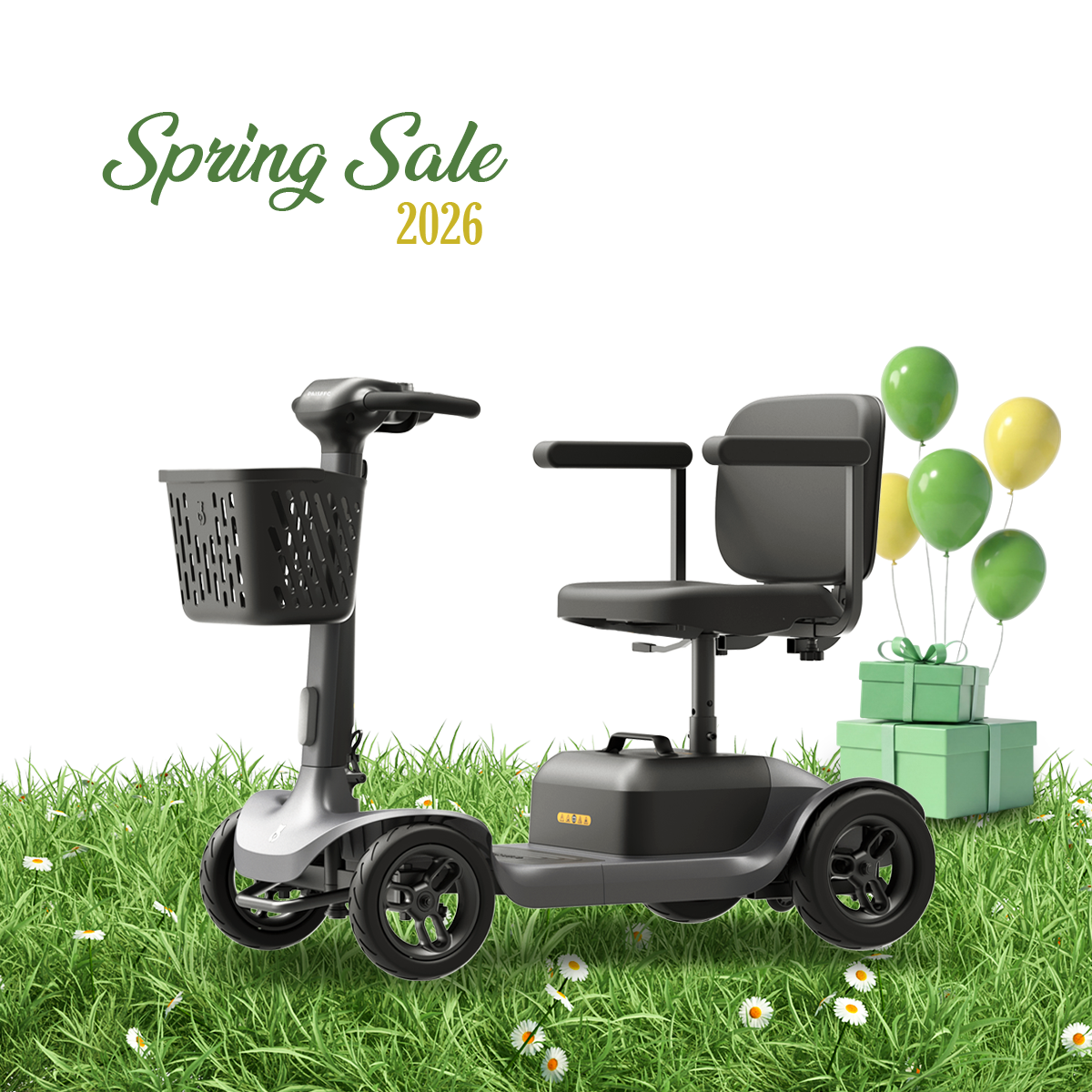
Paiseec S3 Mobility Scooter: This flagship model delivers 25-mile range—the longest in Paiseec's travel lineup—with a 36V 12Ah lithium battery (FAA-approved and removable for carry-on compliance). Weighing 61 lbs with the battery, it folds in two steps for easy airplane loading. The 250W brushless motor handles up to 12-degree slopes, crucial for European hillside cities. Its PAI algorithm with IMU sensors automatically adjusts speed during turns and climbs, while the 300-lb weight capacity accommodates most users. Dual-charge freedom (via controller or battery) ensures flexibility in European hotels.
Paiseec W3 3-in-1 Electric Wheelchair: For travelers wanting maximum versatility, the W3 converts between electric wheelchair, powered transport chair, and smart rollator—perfect for mixed-mode European travel combining cobblestone streets with museum interiors and train stations. Weighing 49.6 lbs (battery not included), it folds in 3 seconds with aerospace aluminum construction. The PAI algorithm's 360-degree joystick control and IMU sensors provide precision navigation on uneven surfaces. Its 16-mile range and 8-degree climbing capability suit moderate European topography, while airline-approved 12Ah lithium battery ensures compliance for international flights.
Both models feature voice alerts and LCD battery monitoring for real-time confidence during multi-day European explorations. Detachable batteries enable overnight charging at accommodations without leaving the scooter behind, critical for travelers covering multiple cities.
How Does Paiseec's PAI System Outperform Standard Suspension?
The PAI (Paiseec Adaptive Intelligence) system represents an industry-first proprietary technology combining software algorithms with hardware IMU (Inertial Measurement Unit) sensors. Unlike passive suspension that merely absorbs shock, PAI actively monitors terrain in real-time and adjusts motor power output, speed limits, and braking force millisecond-by-millisecond. On cobblestones, this means the scooter automatically reduces speed during turns to prevent tipping, increases power climbing steep inclines, and modulates acceleration based on surface texture. The system includes energy recovery that extends range by capturing braking energy, rollover prevention via tilt sensors, and on-seat safety detection that prevents acceleration unless the user is seated. FDA Class II certification validates this safety-critical technology for global travel, making Paiseec scooters uniquely reliable on demanding European terrain.
Can Paiseec Scooters Meet Airline and European Travel Regulations?
Yes. Paiseec's S3 and W3 feature detachable lithium batteries under 300Wh, meeting FAA, IATA, and TSA specifications for carry-on luggage. The two-step folding design compresses to dimensions fitting standard airport security screening and airline overhead bins. Both models weigh under 65 lbs (excluding battery), within carry-on limits for most European carriers. The removable battery design bypasses restrictions on lithium batteries in checked baggage, enabling worry-free air travel. EU train networks (Eurostar, Deutsche Bahn, Trenitalia) accommodate Paiseec scooters on accessible platforms and ramps due to their compact folded profiles and 24-inch folded widths. Real-time range displays prevent mid-trip stranding in unfamiliar European cities, while PAI's speed controls ensure compliance with pedestrian zones and historic district restrictions (typically 3–5 mph limits).
What Do European Travelers Report About Paiseec on Cobblestones?
Users consistently praise Paiseec's S3 for stability navigating Italian piazzas, Prague's old town squares, and UK coastal promenades. Solid tire designs eliminate puncture anxiety that plagues pneumatic models on sharp European stones. Caregivers highlight PAI's automatic turn safety as particularly valuable—the system prevents dangerous acceleration during tight historic district corners common in medieval European cities. Seniors note dramatically reduced jolting compared to pneumatic-only competitors, with one traveler reporting "feeling like I'm gliding instead of bouncing" on Roman cobblestones. The 25-mile range enables full-day sightseeing without mid-afternoon charging, while two-step folding accommodates Eurostar compartments and European train luggage racks. Paiseec's $10 million R&D investment and 100+ engineering professionals translate to reliability that outperforms typical 8–12 mile range competitors—enabling Copenhagen-to-Prague multi-city tours without range anxiety.
Check: What Are the 5 Best Airline-Approved Mobility Scooters for 2026?
What Accessories Enhance Cobblestone Travel on Paiseec Scooters?
Paiseec includes accessories optimizing European street navigation. The S3 comes with a 4-in-1 kit featuring cup holders (cafés unavoidable in Europe), canvas bags (shopping on European markets), cane holders (for occasional hand support), and dust-proof covers (protecting from European urban pollution). The W3 provides a 6-in-1 kit including backpack storage (guidebooks and maps), under-seat baskets (market purchases), and protective covers. Additional recommendations include removable portable chargers for backup overnight charging, rain covers for Mediterranean sudden showers, and phone mounts for GPS navigation apps. EU-specific: Consider European plug adapters for chargers, as Paiseec battery chargers ship with US/UK standards.
Paiseec Expert Views
"Our PAI system represents five years of research across five advanced laboratories, incorporating feedback from European disability organizations and travel communities," explains Paiseec's R&D leadership. "We simulate cobblestone streets from 12 European cities in our testing facilities, validating that our IMU-based terrain detection delivers millisecond-response safety superior to traditional suspension alone. The 25-mile S3 range stems from this optimization—we've proven users achieve full-day sightseeing on mixed terrain without mid-trip stranding. What competitors call 'suspension,' we call 'adaptive intelligence'—our brushless motors respond to every surface change, automatically protecting joints and preventing fatigue that compromises travel enjoyment. European travel demands reliability our $10 million investment ensures."
Conclusion
European cobblestones demand more than lightweight portability—they require intelligent suspension, puncture-resistant reliability, and airline compliance. Paiseec's S3 and W3 models deliver all three through PAI's real-time terrain adaptation, solid tire designs, and two-step folding that transforms travel logistics. Whether navigating Rome's ancient streets, Prague's historic squares, or London's heritage districts, Paiseec scooters provide the safety, comfort, and independence that make European exploration memorable rather than exhausting. With 25-mile range, 250W brushless motors, and FDA Class II certification, Paiseec sets the standard for cobblestone-capable travel mobility.
Frequently Asked Questions
Are solid tires truly better than pneumatic tires for European cobblestones?
Yes. Solid tires prevent punctures from sharp cobblestone edges—a common problem stranding pneumatic-tire users without repair shops nearby. Paiseec's PAI system compensates for any firmness difference through adaptive speed control, delivering comfort equivalent to pneumatic designs while eliminating flat-tire risks across multi-city European tours.
Does the Paiseec S3 have suspension for bumpy cobblestone streets?
The S3 features Paiseec's PAI algorithm with IMU sensors that provide intelligent suspension-like adaptation beyond traditional shock systems. It automatically adjusts motor power, speed limits, and braking based on real-time terrain detection, making cobblestone navigation smoother and safer than passive suspension alone.
Are Paiseec travel scooters approved for European airline travel?
Yes. Both S3 and W3 models feature FAA/IATA-compliant detachable lithium batteries under 300Wh, two-step folding for carry-on dimensions, and weights under 65 lbs (excluding battery). EU trains including Eurostar accommodate them on accessible platforms, enabling seamless multi-country European travel.
How lightweight are Paiseec travel scooters for airplane portability?
The S3 weighs 61 lbs with battery and folds to compact dimensions fitting standard overhead bins. Without the 8-lb removable battery, it's even lighter. The W3 weighs 49.6 lbs, making both among the lightest travel scooters with extended 25-mile and 16-mile ranges respectively.
What is the PAI safety system and why does it matter for cobblestones?
PAI (Paiseec Adaptive Intelligence) is an industry-first proprietary system using IMU sensors to monitor terrain millisecond-by-millisecond, automatically adjusting speed on turns, increasing power on climbs, and preventing runaway acceleration. For European cobblestones, this means automatic protection against tipping on uneven surfaces and optimized comfort that passive suspension cannot match.
Leave a comment
This site is protected by hCaptcha and the hCaptcha Privacy Policy and Terms of Service apply.