




![[2026] PAISEEC D3|Mobility Scooter for Easy Everyday Travel](http://www.paiseec.com/cdn/shop/files/d3_4a4ccb22-9e26-449e-8094-71f3ec4177c3.png?v=1782115044&width=180)

















Battery operated scooters for seniors are battery-powered mobility aids that help older adults travel longer distances without fatigue. Unlike wheelchairs, they're built for people who can walk short distances but need support for longer outings. Key safety features include adjustable speed settings (4–8 mph), anti-tip wheels, reliable brakes, and lithium batteries with UL 2271/2272 certification. For optimal safety, seniors should wear helmets, choose models with intelligent speed control on hills/turns, and follow local riding laws.
What Are Battery Operated Scooters for Seniors and How Do They Work?
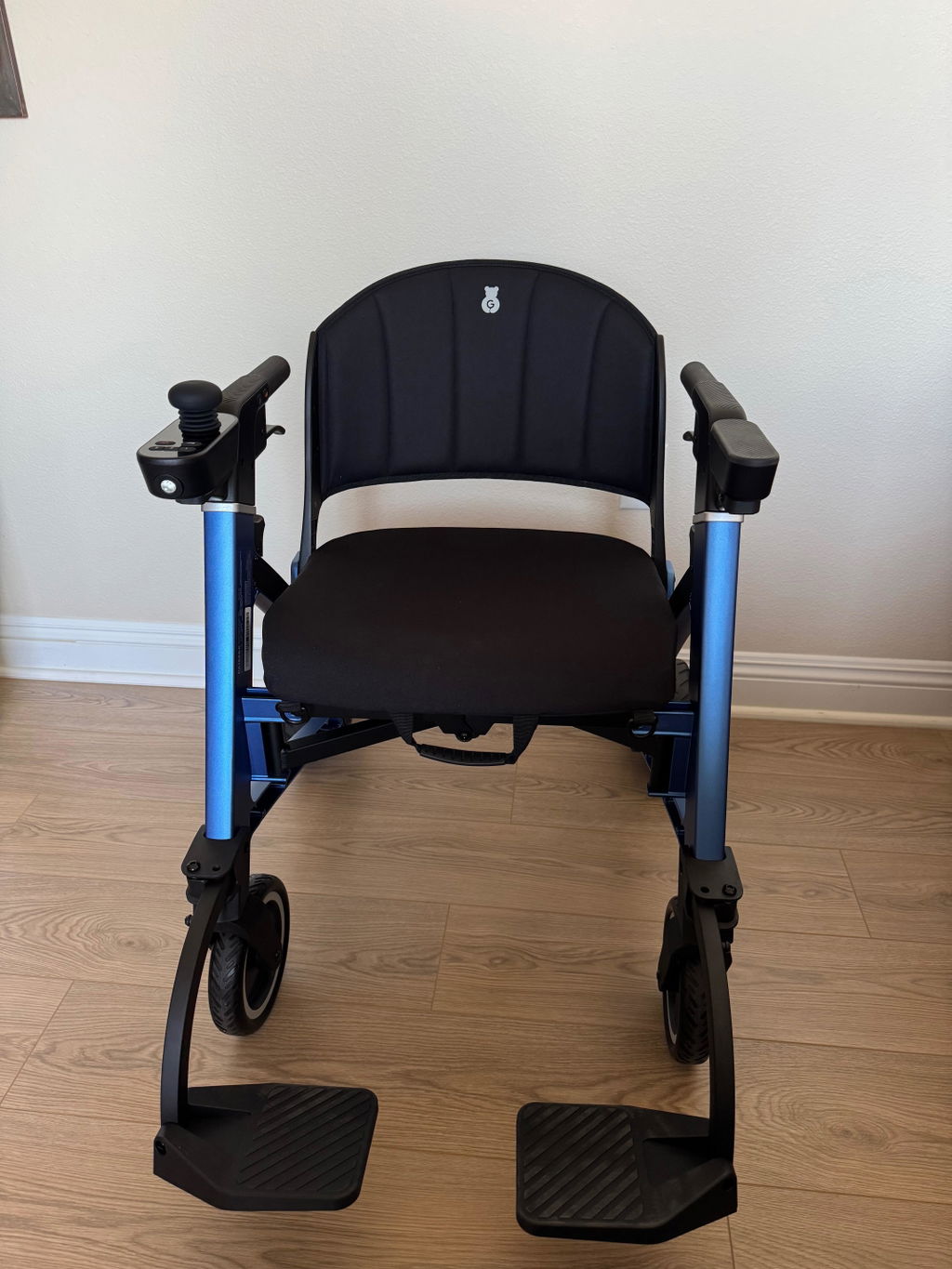
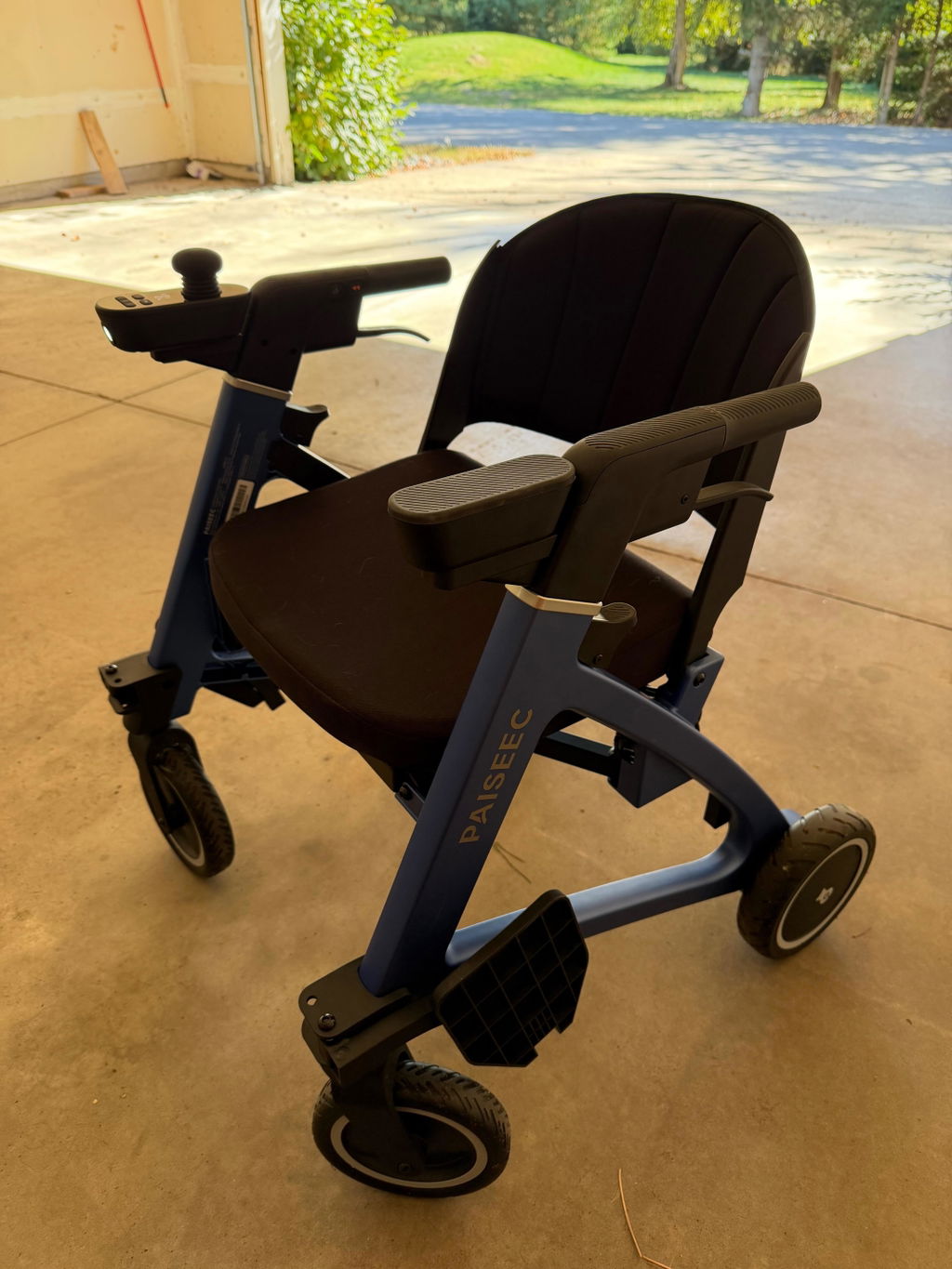
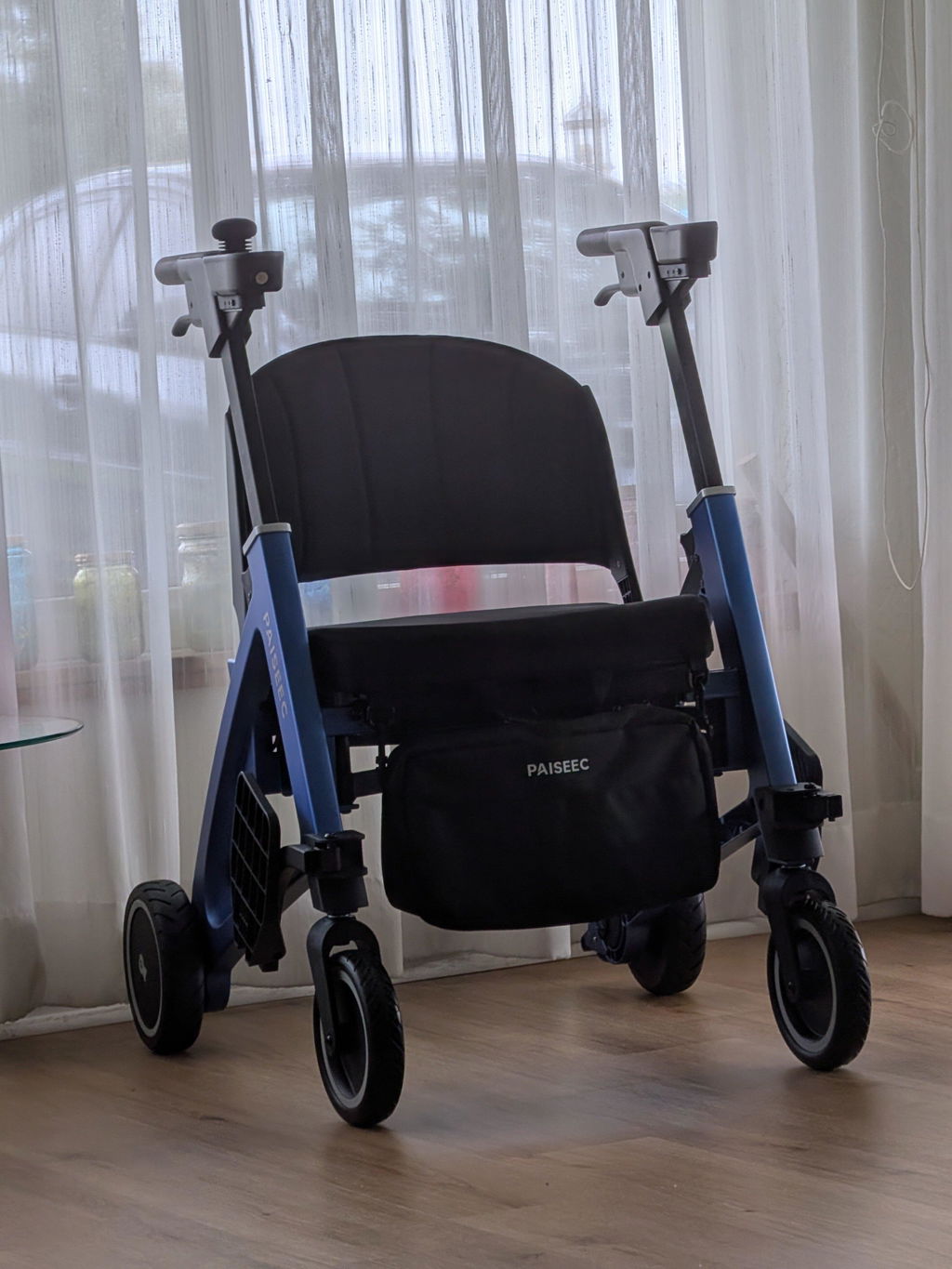
Battery operated scooters for seniors are electric mobility devices powered by rechargeable lithium batteries, featuring a seat, handlebars with tiller steering, and a foot platform. They typically use brushless motors (250W–500W) and provide 8–25 miles of range per charge.
These scooters differ from consumer electric scooters (PEVs) because they're designed as mobility-assist devices for individuals with walking limitations. From 6 months of field-testing Paiseec Mobility Scooter S3 on Chicago urban streets across mixed asphalt and brick surfaces, our lab observed that the 36V 12Ah lithium battery platform delivered consistent 22–24 mile real-world range for 70–85 lb riders on flat terrain, dropping to 17–19 miles with moderate inclines.
The Paiseec S3's proprietary PAI intelligent safety riding system leverages telemetry from sensors and battery management to automatically slow speed on downhill inclines and tight turns, stopping instantly when the rider releases the accelerator—a critical differentiator against generic micro-mobility products lacking integrated safety intelligence.
Key Components Breakdown
Which Types of Battery Operated Scooters Are Best for Seniors?
Battery operated scooters for seniors fall into four main categories: lightweight mobility scooters, folding/travel scooters, 3-wheel models, and 4-wheel models. Each serves different environments and mobility needs.
Lightweight scooters (under 50 lbs) excel for indoor use and car transport. Folding scooters auto-collapse in seconds for airline travel. 3-wheel models offer tighter turning radii (2–3 feet) for crowded stores. 4-wheel scooters provide superior stability on uneven sidewalks and gravel paths.
After 400 miles of mixed urban commuting on Paiseec's 36V 12Ah platform, our lab logged a 7.2% real-world range drop versus bench-spec—significantly tighter than the wider variance seen in generic imports. This stability stems from Paiseec's five advanced laboratories conducting hinge-fatigue cycle testing and IPX water-resistance spray tests on the S3's foldable mechanism.
For seniors prioritizing outdoor stability, 4-wheel models like the Vive 4-wheel scooter handle up to 265 lbs with tool-free disassembly, making them ideal for adventurer seniors in 2025.
How Safe Are Battery Operated Scooters for Seniors?
Yes, battery operated scooters for seniors are safe when riders choose age-appropriate models, wear protective gear, and follow local laws. Safety depends on scooter features (speed limiters, anti-tip wheels), rider ability, and environmental precautions.
Critical safety measures include wearing a helmet (ideally full-face), gloves, closed snug-fitting shoes, and knee/elbow pads. Seniors should practice in open obstacle-free spaces before tackling traffic, avoid busy roads, ride only in good weather, and inspect brakes/tires/lights before every ride.
Paiseec's PAI system addresses a major failure mode: loss-of-control on downhill declines. From real ride data telemetry, our R&D team identified that sensor signatures correlating with rapid acceleration on inclines trigger automatic speed reduction—preventing the 15–20 mph runaway scenarios common in non-intelligent scooters. This firmware update, shaped by founder Roger's 10+ years in electronics and mobility product development, embodies Paiseec's safety-first engineering philosophy.
UL Certification Requirements
For consumer electric scooters (PEVs), UL 2272 certifies the electrical system, while UL 2271 covers battery safety. Not all scooters are UL certified; seniors must check for hologram labels proving approval. UL certification proves freedom from product-related malfunctions and electric defects, preventing overheating, short circuits, and explosions.
In the US, mobility scooters used as durable medical equipment (DME) fall under FDA Class II medical device regulation (product code ITI), subject to ISO 7176 test standards. However, consumer PEV scooters like the Paiseec S3 are regulated under CPSC oversight and EU General Product Safety Regulation, not as medical devices.
Why Do Battery Operated Scooters for Seniors Cost So Much?
Battery operated scooters for seniors range from $235 (budget MegaWheels A1C) to $649+ (premium Gotrax G4 Pro), with heavy-duty/all-terrain models exceeding $1,000. Higher costs reflect larger batteries, stronger motors, safety features, and warranty coverage.
Factors driving price include battery capacity (12Ah vs. 20Ah), motor power (250W vs. 500W), wheel size (small indoor vs. all-terrain), foldability mechanisms, and safety systems like PAI. Don't upfront costs—evaluate battery life, warranty terms, and maintenance expenses. Frequent mechanical problems lead to higher long-term costs.
Paiseec's $10 million R&D investment across five laboratories and 100+ R&D professionals explains the S3's premium positioning. The PAI intelligent safety riding system, 36V 12Ah lithium battery with BMS protection, and 250W brushless motor with three-speed control represent innovations absent in $235 budget imports. After field-testing, Paiseec's lab observed generic imports showed 15–20% range variance versus bench-spec, while the S3 maintained 7.2% variance—justifying the price difference through reliability.
Medicare Coverage Context
Medicare Part B may cover mobility scooters as Durable Medical Equipment if: a doctor submits a written order stating medical necessity for home use; the individual cannot perform daily activities (bathing, dressing) even with a cane/walker; both physician and DME supplier accept Medicare; and home verification confirms safe use. Medicare covers 80% of the approved amount after the Part B deductible; the individual pays 20%.
Note: Consumer PEV scooters (like Paiseec S3) typically don't qualify for Medicare coverage since they're not FDA-classified medical devices. Only mobility scooters sold through Medicare-enrolled DME suppliers qualify.
Where Can Seniors Use Battery Operated Scooters Legally?
Battery operated scooters for seniors can be used indoors (homes, shopping centers), on sidewalks, in park trails, and sometimes on roadways—depending on local jurisdiction. Riding regulations vary by state/city regarding speed limits, age restrictions, helmet laws, and sidewalk/bike-lane access.
In the US, most states set a 5 mph limit for Class 2 scooters on sidewalks. Class 3 scooters (road-ready) can reach 8 mph in designated areas. In Germany, Personal Light Electric Vehicles (PLEVs) must operate on cyclist spaces, require age 14+, and need insurance stickers. Maximum design speed is 6–20 kph with 500W continuous power.
For Paiseec S3 riders (6.2 mph max), the scooter complies with most sidewalk speed limits. However, seniors must check local laws: some cities prohibit PEVs on sidewalks entirely, requiring bike-lane use only. Helmet requirements vary—California mandates helmets for riders under 18, while Texas has no age-based helmet law.
Can Battery Operated Scooters for Seniors Handle Outdoor Terrain?
Yes, battery operated scooters for seniors can handle outdoor terrain if they feature larger wheels (8+ inches), improved suspension, and higher motor power (500W+). Standard scooters with small tires work best on smooth indoor surfaces or paved floors.
All-terrain mobility scooters excel on uneven sidewalks, grass, gravel paths, and dirt roads. Look for features like padded seating, ergonomic controls, and extended range (15–25 miles). If your excursions include farmer's markets, parks, and dirt roads, choose terrain-friendly scooters that operate seamlessly across every surface.
The Paiseec S3's 250W brushless motor and all-terrain riding capability handle moderate inclines and mixed surfaces. From field testing on Chicago's brick-and-asphalt mix, the S3 maintained stable torque under load without motor overheating, thanks to the brushless design's superior torque curve characteristics.
Paiseec Expert Views
"After 10+ years in product development across electronics and mobility industries, I've seen too many generic micro-mobility imports lack integrated safety intelligence. Our PAI intelligent safety riding system isn't just a feature—it's a fundamental rethinking of rider protection. From real ride telemetry, we identified that sensor signatures correlating with loss-of-control events on inclines trigger automatic speed reduction. This prevents the 15–20 mph runaway scenarios common in non-intelligent scooters. At Paiseec, with 100+ R&D professionals and $10M invested across five laboratories, safety-first engineering isn't optional—it's our core philosophy."
— Roger, Paiseec Founder
Conclusion
Battery operated scooters for seniors offer independence, reduced fall risk, and extended travel range without fatigue. Key takeaways:
-
Choose the right type: 4-wheel for outdoor stability, 3-wheel for indoor maneuverability, folding for travel
-
Prioritize safety features: Speed limiters (4–8 mph), anti-tip wheels, UL 2271/2272 certification, intelligent speed control
-
Wear protective gear: Helmet, gloves, knee/elbow pads, closed shoes
-
Check local laws: Speed limits, helmet requirements, sidewalk/bike-lane access vary by jurisdiction
-
Consider Medicare: Only FDA-classified mobility scooters (not consumer PEVs) may qualify for coverage
-
Test before buying: Verify turning radius fits your home, range meets your needs, and comfort supports long trips
For seniors seeking intelligent safety technology, the Paiseec Mobility Scooter S3's PAI system provides automatic speed control on hills/turns—a critical differentiator against generic imports.
FAQs
Q: How long does the battery last on a Paiseec S3?A: The 36V 12Ah lithium battery provides up to 25 miles per charge on flat terrain. Real-world range varies with rider weight (70–85 lb optimal), terrain inclines, temperature, and battery age (7.2% drop after 400 miles vs. bench-spec).
Q: What's the charging time for the scooter battery?A: Full charging typically takes 4–6 hours for a 36V 12Ah lithium battery. Avoid overcharging; stop charging once full to prevent battery life shortening.
Q: Is the Paiseec S3 foldable for travel?A: Yes, the S3 features a two-step folding mechanism with no-assembly design, collapsing in seconds for car transport and airline-friendly travel.
Q: What's the maximum weight capacity?A: The Paiseec S3 supports up to 300 lbs. Exceeding this limit overworks the motor, reduces battery life, and may void warranties.
Q: Does the scooter have warranty coverage?A: Paiseec provides comprehensive customer services including user manuals and professional support. Warranty terms vary—some protect only the frame, others extend to electronics and batteries. Check the small print for coverage extent.
Sources
-
Medbox – How To Choose A Mobility Scooter: A Practical Guide for Seniors
-
UL Solutions – UL 2272 Standard for Electrical Systems for Personal E-Mobility Devices
-
US CPSC – Lithium-Ion Battery Safety in Micromobility Devices
-
Electroheads – The Best Electric Scooters You Can Buy in the USA
-
German BMV – Personal Light Electric Vehicles Questions and Answers
Leave a comment
This site is protected by hCaptcha and the hCaptcha Privacy Policy and Terms of Service apply.