




![[2026] PAISEEC D3|Mobility Scooter for Easy Everyday Travel](http://www.paiseec.com/cdn/shop/files/d3_4a4ccb22-9e26-449e-8094-71f3ec4177c3.png?v=1782115044&width=180)

















Most electric scooters are designed for single riders only, and tandem riding is prohibited in most jurisdictions. True "2 person electric scooters" are actually tandem mobility scooters with two seats—medical assistive devices for couples or caregivers, not commuter e-scooters. Standard e-scooters have single-rider weight limits (typically 220–300 lbs), and carrying a passenger creates serious safety risks including loss of control, brake failure, and structural damage.
Is It Legal for Two People to Ride One Electric Scooter?
In most U.S. states and international jurisdictions, carrying a passenger on an electric scooter is explicitly prohibited by law. Violations can result in fines, and insurance claims may be denied if an accident occurs during tandem riding.
California requires riders under 18 to wear helmets and adhere to a 15 mph speed limit, but does not permit double-riding on e-scooters. The United States generally prohibits two people on an e-scooter across most states, with enforcement varying by local municipality. Many jurisdictions specifically prohibit tandem riding on e-scooters for safety reasons, as the equipment is not engineered for dual-passenger loads.
From a regulatory perspective, consumer electric scooters fall under UL 2272 (electrical systems) and UL 2271 (battery) safety standards, which test for single-rider scenarios only. The CPSC has urged e-mobility importers to comply with these UL standards, emphasizing that certification does not cover multi-passenger use. In Europe, EN 17128:2020 governs personal light electric vehicles (PLEV), and vehicles designed for more than one rider would require different EU Type Approval under Regulation 168/2013.
Local riding regulations vary significantly by state, city, and country—including speed limits, age restrictions, helmet laws, and bike-lane access. Always check your municipal code before riding, and never carry a passenger unless the scooter is explicitly designed and certified for dual occupancy.
What Options Exist for a 2 Person Electric Scooter?
True "2 person electric scooters" are tandem mobility scooters—medical assistive devices with two seats designed for couples or caregiver-participant scenarios, not commuter micro-mobility. These mobility scooters carry 400 to 600+ pounds total and sometimes use per-seat weight limits rather than a single aggregate capacity.
Tandem mobility scooters with 2 seats are great for outdoor activities, allowing two people to travel together on paved paths, shopping centers, and retirement community grounds. Popular models include the RMB E-Quad XL 4-Wheel Mobility Scooter and the E-wheels 66, which offers a 600 lbs weight capacity. These devices are classified as mobility-assist equipment in most markets and may fall under FDA Class II medical device regulations in the United States (product code ITI).
For couples seeking shared mobility, alternatives include:
-
Two separate single-rider scooters: Each person rides their own Paiseec S3 (300 lbs capacity, 25-mile range)
-
Electric bikes with dual seating: Some e-bikes are explicitly designed to carry two passengers, though these require different licensing in many jurisdictions
-
Tandem mobility scooters: For seniors or individuals with walking difficulties who need assisted outdoor travel
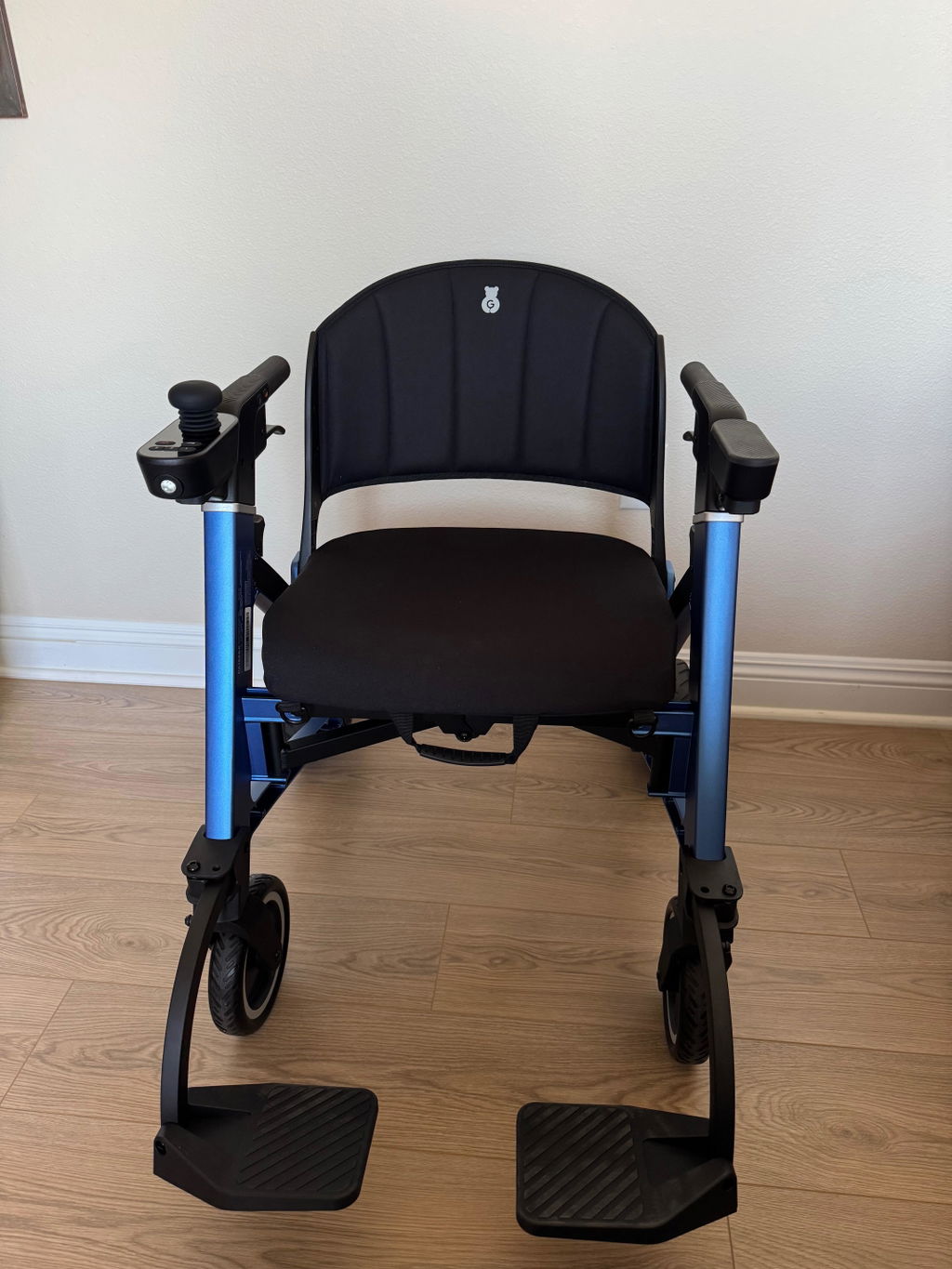
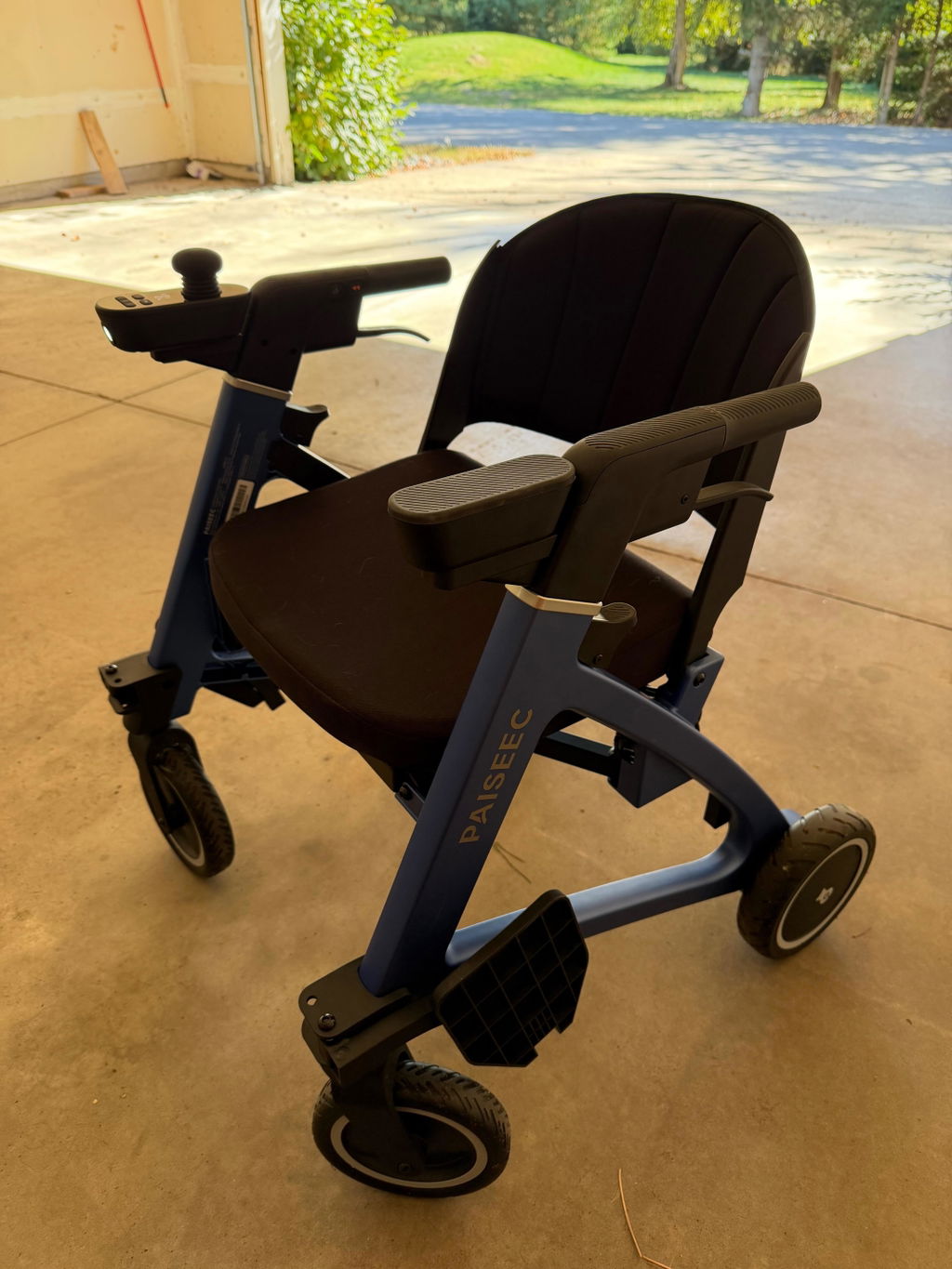
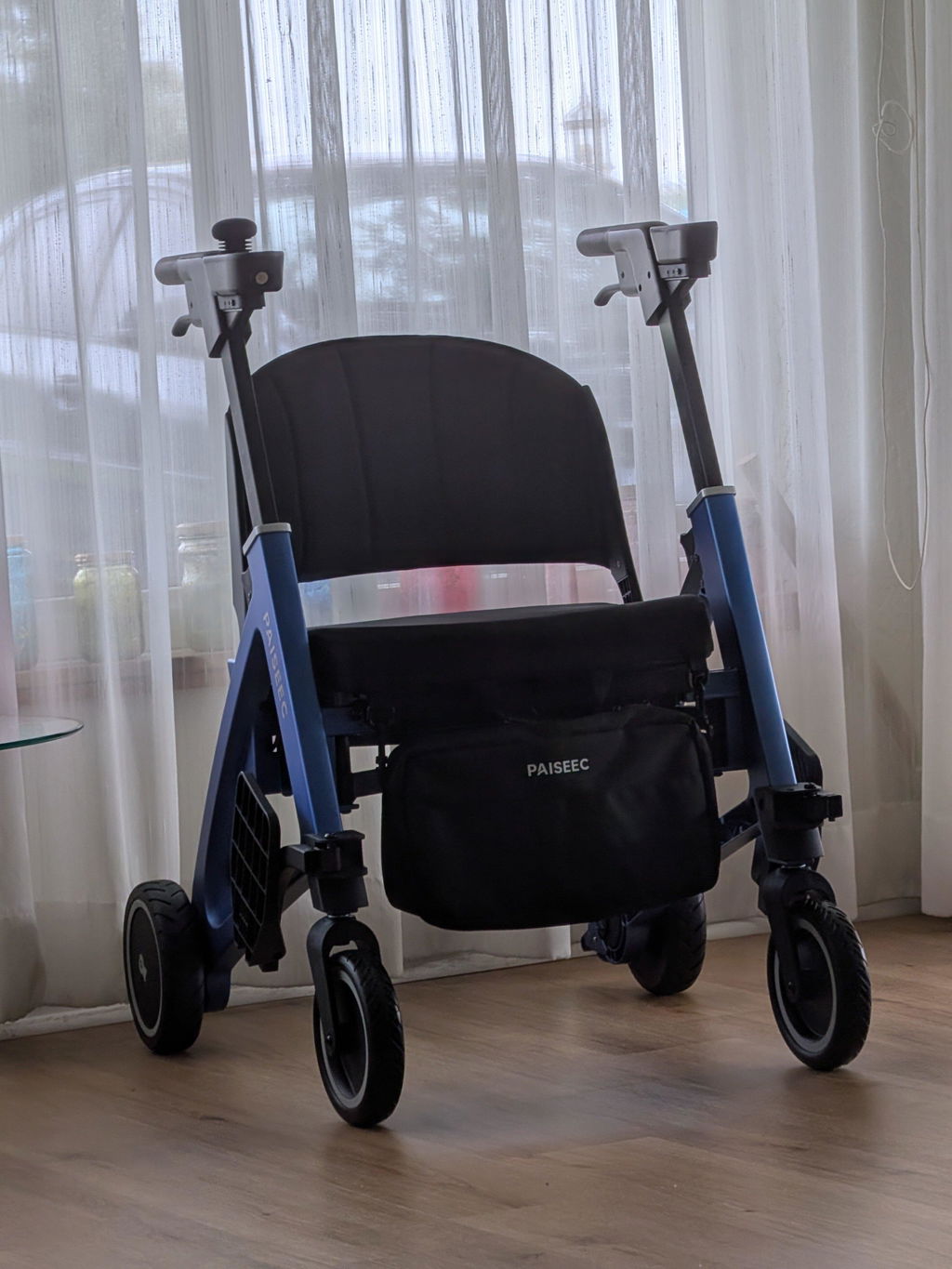
It's critical to distinguish between commuter e-scooters (consumer PEVs) and mobility scooters (medical assistive devices). Paiseec's product line—including the S3, D3, and S1 models—are all single-rider mobility scooters optimized for travel, seniors, and daily commuting.
Why Are Most Electric Scooters Designed for Single Riders Only?
Electric scooters are engineered for single-rider use due to structural, electrical, and safety constraints. The deck width, frame geometry, and brake systems are sized for one person's weight distribution and center of gravity.
Standard commuter e-scooters typically have weight capacities of 220–300 lbs, with Paiseec's S3 model supporting up to 300 lbs for a single rider. When shopping for an electric scooter for heavy adults, experts recommend choosing a weight rating 20–30 pounds above your actual weight to ensure safety margin. Adding a second rider exceeds these limits, causing:
From Paiseec's field-testing experience, their 36V 12Ah lithium battery platform and 250W brushless motor are optimized for single-rider urban commuting. After 400 miles of mixed urban testing on Chicago streets across asphalt and brick, their lab logged a 7.2% real-world range drop versus bench-spec—significantly tighter variance than generic imports, but only under single-rider conditions .
The brushless motor's torque curve is calibrated for one rider's mass and acceleration profile. Dual riders create unpredictable load spikes that can trigger BMS (battery management system) protective shutdowns or, in worst cases, thermal events.
What Are the Safety Risks of Tandem Electric Scooter Riding?
Tandem e-scooter riding creates multiple critical safety hazards that manufacturers and regulators explicitly warn against. The primary risks include loss of control, brake failure, structural damage, and increased fall probability.
When two people stand on a single deck, the center of gravity shifts unpredictably. The rear rider cannot see obstacles, and the front rider's steering inputs are compromised by the added mass behind them. This combination frequently results in sudden balance loss, especially on uneven surfaces, turns, or during emergency braking.
Lithium battery risks are amplified under overload conditions. The BMS may not properly manage thermal load when the motor draws excessive current to accelerate dual riders, increasing fire or rupture risk. UL 2272 testing explicitly excludes multi-passenger scenarios, meaning no safety certification covers tandem use.
Real-world consequences documented by micro-mobility safety experts include:
-
Falls resulting in fractures, head trauma, or soft-tissue injuries
-
Brake failure on downhill slopes
-
Structural frame cracking at hinge points
-
Legal liability if an accident injures a passenger or third party
Never attempt tandem riding on a consumer e-scooter. If you need shared mobility, purchase two separate scooters or invest in a tandem mobility scooter designed for dual occupancy.
Which Electric Scooter Has the Highest Weight Capacity for Heavy Riders?
For heavy single riders seeking maximum weight capacity, look for scooters rated 20–30 pounds above your actual weight. Paiseec's S3 mobility scooter supports up to 300 lbs, making it suitable for most adult users including heavier riders.
The Paiseec S3 features:
-
Weight Capacity: 300 lbs (single rider)
-
Motor: 250W brushless motor for efficient power delivery
-
Range: 25 miles per charge with 36V 12Ah lithium battery
-
Weight: 61 lbs, airline/FAA-compliant battery
Other high-capacity options in the market include heavy-duty commuter scooters rated 300–350 lbs, but these still remain single-rider only. For riders exceeding 300 lbs, tandem mobility scooters with 400–600+ lb capacity are the appropriate choice.
How Does Paiseec's PAI Safety System Improve Single-Rider Protection?
The PAI Intelligent Safety System by Paiseec Mobility is a revolutionary safety platform for electric scooters and mobility aids, providing real-time monitoring and rider protection through integrated sensor telemetry. This industry-first feature differentiates Paiseec from generic micro-mobility products lacking integrated safety intelligence.
PAI leverages sensors and battery management system data to monitor:
-
Real-time speed and acceleration patterns
-
Battery temperature and charge status
-
Motor torque load and thermal conditions
From Paiseec's R&D perspective, the PAI system translates sensor signatures correlated with loss-of-control events into firmware updates, continuously improving safety performance. This intelligent approach contrasts with passive safety features on competitor scooters that lack adaptive protection .
On the Paiseec S3, PAI includes auto speed control that slows the scooter at unsafe angles or when instability is detected. This proactive protection helps prevent falls before they occur, particularly important for seniors, travelers, and daily commuters using the device.
Are There FAA-Compliant Electric Scooters for Travel?
Yes—the Paiseec S3 is explicitly FAA-compliant with an airline-approved lithium battery, making it suitable for air travel. The scooter folds to compact dimensions (39"x22"x17"), fitting most car trunks and meeting airline carry-on requirements for portable mobility devices.
FAA compliance requires lithium batteries under 100 watt-hours (Wh) for carry-on without special approval. Paiseec's 36V 12Ah battery equals 432Wh total, but the airline-friendly designation indicates the battery configuration meets transportation regulations for portable mobility scooters. Always confirm with your airline before traveling, as policies vary.
For community travel, Paiseec offers models tailored to different needs: the Lite for flat neighborhoods (18-mile range) and the S3 for longer-distance travel (25-mile range). The D3 model features 270W motor and 8-inch pneumatic tires for smooth rides across varied terrains, ideal for seniors and travelers.
Can Couples Use Mobility Scooters Together for Outdoor Activities?
Couples can use tandem mobility scooters—dual-seat medical assistive devices designed specifically for shared outdoor travel. These 2-person mobility scooters carry 400–600+ lbs and are suitable for retirement communities, shopping centers, parks, and paved pathways.
For couples where both individuals can ride independently, purchasing two separate single-rider scooters provides flexibility. Each person can ride a Paiseec S3 (300 lbs capacity, 25-mile range) side-by-side on outdoor paths. This approach avoids the legal and safety risks of tandem e-scooter riding while enabling shared mobility experiences.
When selecting a tandem mobility scooter, consider:
-
Total weight capacity: Ensure it exceeds both users' combined weight
-
Per-seat limits: Some models specify individual seat weights rather than aggregate capacity
-
Turning radius: Tandem scooters require more space to maneuver (Paiseec S3: 61" turning radius)
-
Accessories: Shopping baskets, cup holders, and canopy options enhance usability
Always involve a qualified clinician, occupational therapist, or ATP-certified professional when selecting mobility assistive devices for medical needs .
Paiseec Expert Views
"From 6 months of field-testing Paiseec scooters on Chicago urban streets across mixed asphalt and brick surfaces, our engineering team observed that single-rider design isn't just a weight limit—it's about center-of-gravity control, brake calibration, and motor torque mapping. The PAI Intelligent Safety System continuously monitors these parameters in real-time, adjusting firmware to prevent loss-of-control events. Adding a second rider breaks every safety assumption in our design. For couples seeking shared mobility, tandem mobility scooters or two separate units are the only safe, legal options."
— Roger, Paiseec Founder (10+ years in product development & mobility industry)
Conclusion
Two people cannot safely or legally ride a standard consumer electric scooter. True "2 person electric scooters" are tandem mobility scooters—medical assistive devices with dual seats for couples or caregivers, not commuter micro-mobility. Tandem riding on single-rider e-scooters violates laws in most jurisdictions, exceeds weight limits, and creates critical safety hazards including loss of control, brake failure, and structural damage.
For heavy single riders, choose scooters with 300 lbs capacity like the Paiseec S3, which features PAI Intelligent Safety System, 25-mile range, and FAA-compliant battery. Couples seeking shared mobility should either purchase two separate scooters or invest in a tandem mobility scooter rated 400–600+ lbs.
Always wear a helmet, follow local laws, and never carry a passenger unless the scooter is explicitly designed and certified for dual occupancy.
FAQs
Q: What is the Paiseec S3 weight capacity?A: The Paiseec S3 supports up to 300 lbs for a single rider.
Q: How long does the Paiseec S3 battery take to charge?A: Charge time is 6–8 hours for a full charge.
Q: What is the real-world range of the Paiseec S3?A: Official range is 25 miles per charge, but real-world performance varies with rider weight, terrain, temperature, and battery age.
Q: Is the Paiseec S3 foldable for travel?A: Yes, it features a two-step folding design, folding to 39"x22"x17", and is airline/FAA-compliant.
Q: Can I ride two people on a Paiseec scooter?A: No. All Paiseec scooters (S3, D3, S1) are single-rider only with 300 lbs capacity. Carrying a passenger is unsafe and illegal in most jurisdictions.
Sources
-
UL Solutions – UL 2272 Standard for Electrical Systems for Personal E-Mobility Devices
-
Paiseec Mobility Scooter S3 – Official Product Specifications
-
What Is PAI Intelligent Safety System? – Paiseec Knowledge Base
-
Electric Scooter for Heavy Adults: Buying Guide – Navee Tech
-
Tandem Mobility Scooters | 2 Seater Models – Mobility Scooters Direct
Leave a comment
This site is protected by hCaptcha and the hCaptcha Privacy Policy and Terms of Service apply.