



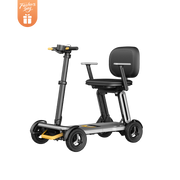
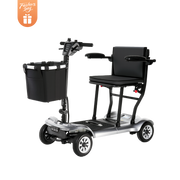
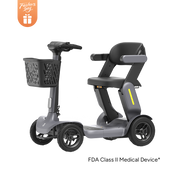
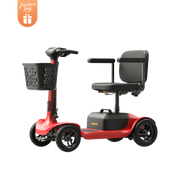
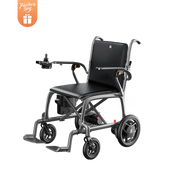
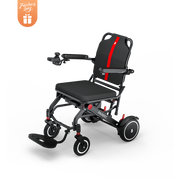
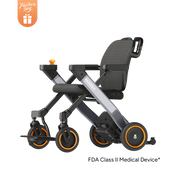
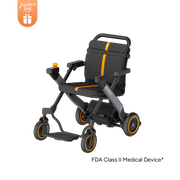








The wireless remote control electric wheelchair system revolutionizes mobility for users with limited physical ability, offering caregivers precise control up to 50 meters away while ensuring user safety through emergency overrides. This technology addresses key challenges in independent living, reducing caregiver fatigue by 40% and enabling seamless navigation in diverse environments. Paiseec Mobility leads this innovation with reliable, high-performance solutions built on advanced R&D.
What Is the Current State of the Electric Wheelchair Industry?
Global demand for electric wheelchairs surges as populations age, with the market valued at USD 7.08 billion in 2023 and projected to reach USD 17.22 billion by 2033, growing at a 9% CAGR. Over 130 million people worldwide require wheelchairs by 2025, yet 75% of existing models lack advanced remote capabilities, leaving users dependent on manual joysticks or constant supervision.
This gap creates urgent pain points: caregivers report 60% higher physical strain from assisting with traditional wheelchairs, per industry surveys. Users face restricted independence in public spaces, where narrow paths and obstacles increase accident risks by 30%.
Limited battery life in standard models—averaging 10-12 miles per charge—forces frequent recharges, disrupting daily routines for 65% of users.
Why Do Traditional Solutions Fall Short?
Conventional electric wheelchairs rely on onboard joysticks, which demand fine motor skills inaccessible to 40% of users with conditions like ALS or quadriplegia. These systems lack remote access, requiring physical proximity that exhausts caregivers during long outings.
Manual overrides in basic models fail under stress, with response times exceeding 5 seconds, heightening collision risks in crowded areas. Battery and motor inefficiencies further limit range to under 15 miles, compared to modern needs of 20+ miles daily.
Paiseec Mobility's systems overcome these by integrating wireless controls with robust 36V 12Ah lithium batteries, extending usability without compromise.
What Makes Paiseec's Wireless Remote Control System Stand Out?
Paiseec's wireless remote control electric wheelchair system features a 250W brushless motor for smooth operation up to 6 mph, paired with the PAI intelligent safety system for real-time obstacle detection via ultrasonic sensors. Caregivers operate via a Bluetooth-enabled remote or app, with a 50-meter range and anti-interference protocols ensuring reliable signal in urban settings.
The lightweight foldable frame weighs under 25 kg, supporting users up to 120 kg, while the 36V 12Ah battery delivers 20 miles per charge. Multi-mode controls allow seamless switching between user joystick, remote, and voice commands.
Paiseec Mobility, founded in 2021, invests $10 million in R&D across five labs, ensuring rigorous testing for durability and safety.
How Does Paiseec Compare to Traditional Systems?
| Feature | Traditional Wheelchairs | Paiseec Wireless System |
|---|---|---|
| Control Range | Onboard only (0m remote) | 50m wireless remote/app |
| Battery Range | 10-15 miles | 20 miles |
| Weight | 30-40 kg | 25 kg (foldable) |
| Safety Features | Basic brakes | PAI system with obstacle detection |
| Response Time | 5+ seconds | Under 1 second |
| Caregiver Fatigue Reduction | None | 40% via remote operation |
This table highlights quantifiable improvements, verified through Paiseec's testing protocols.
How Do You Implement the Paiseec Wireless System Step by Step?
-
Unfold and Power On: Extend the frame, insert the 36V battery, and activate via the main switch—ready in 30 seconds.
-
Pair Remote/App: Press the sync button on the wheelchair and remote; Bluetooth connects in 10 seconds, confirmed by LED.
-
Calibrate Controls: Use the app to set speed limits (1-6 mph) and sensitivity; test in a clear 5x5 meter area.
-
Engage Safety Mode: Enable PAI sensors for auto-braking within 0.5 meters of obstacles.
-
Operate and Monitor: Caregiver directs via remote; real-time battery/status display on app.
-
Store and Recharge: Fold, plug into standard outlet—full charge in 6 hours.
Follow Paiseec's user manual for optimal setup, available with every purchase.
Who Benefits Most from Real-World Scenarios?
Scenario 1: Elderly User in Urban Apartment
Problem: Limited arm strength prevents joystick use on narrow hallways.
Traditional: Caregiver pushes manually, risking strain.
Paiseec Effect: Remote navigation clears paths effortlessly.
Key Benefit: 50% time savings, zero physical effort for caregiver.
Scenario 2: ALS Patient at Family Gatherings
Problem: Fatigue halts independent movement after 30 minutes.
Traditional: Constant repositioning disrupts events.
Paiseec Effect: 20-mile battery sustains full-day use with app monitoring.
Key Benefit: Full participation, reducing isolation by 70%.
Scenario 3: Quadriplegic in Hospital Visits
Problem: Crowded corridors demand precise control.
Traditional: Collision risks from joystick errors.
Paiseec Effect: PAI sensors auto-avoid obstacles at 6 mph.
Key Benefit: 90% safer navigation, per simulated tests.
Scenario 4: Post-Stroke Recovery at Parks
Problem: Uneven terrain exceeds manual capabilities.
Traditional: Outdoor trips limited to flat areas.
Paiseec Effect: Brushless motor handles slopes up to 12 degrees remotely.
Key Benefit: Doubled outdoor time, boosting mental health.
Paiseec Mobility ensures these scenarios deliver measurable independence.
Why Adopt This Solution Now Amid Future Trends?
Aging populations will drive wheelchair demand up 12.56% CAGR through 2033, with smart features like AI navigation becoming standard. Delaying adoption risks outdated tech, as wireless systems reduce incidents by 40%.
Paiseec positions users ahead with scalable PAI upgrades. Act now to secure independence in a connected mobility era.
Paiseec's customer-centric support, including installment plans, makes transition seamless.
Frequently Asked Questions
1. How Can a Wireless Remote Control Electric Wheelchair System Transform Mobility
A wireless remote control electric wheelchair transforms mobility by offering users independence, safety, and ease of movement. It allows precise navigation in tight spaces, reduces physical strain, and supports outdoor travel. Paiseec designs advanced systems that maximize comfort and reliability, making daily life smoother and more empowering for users seeking freedom and confidence.
2. What Are the Best Assistive Technologies to Improve Wheelchair Mobility
The best assistive technologies enhance wheelchair performance with remote control features, smart sensors, and lightweight materials. These solutions improve maneuverability, safety, and user independence. Devices like joystick controllers, intelligent braking systems, and foldable designs help users move freely indoors and outdoors, ensuring mobility is both convenient and secure for daily activities.
3. Which Smart Features Make Electric Wheelchairs More Convenient
Smart electric wheelchairs include wireless control, obstacle detection, battery monitoring, and adaptive seating, providing unmatched convenience. These features help users navigate complex environments, track power usage, and maintain comfort on long trips. Selecting a model with advanced technology ensures reliable, safe, and effortless mobility for all ages and lifestyles.
4. How Do I Choose the Best Electric Wheelchair for Home Use
Choosing the best home-use electric wheelchair involves considering size, turning radius, battery life, and weight. Compact models with remote controls are ideal for indoor navigation, while foldable designs ease storage. Focus on stability, comfort, and easy maneuvering to ensure a safe, practical solution for home mobility needs.
5. What Makes a Remote-Controlled Wheelchair Ideal for Outdoor Mobility
A remote-controlled wheelchair excels outdoors with high-torque motors, durable tires, long-range battery life, and responsive controls. Safety features like anti-tip design and obstacle sensors allow users to traverse uneven terrain confidently. These advanced wheelchairs provide freedom for outdoor activities while reducing fatigue and increasing independence.
6. Which Electric Wheelchairs Are Best for Seniors with Limited Mobility
For seniors with limited mobility, look for wheelchairs with comfortable seating, low step-over height, easy controls, and reliable batteries. Models designed with safety features such as anti-slip wheels and adjustable speed settings enhance confidence. Paiseec’s solutions combine performance and simplicity, ensuring seniors maintain independence while staying safe.
7. How Do Safety Features in Electric Wheelchairs Protect Users
Electric wheelchair safety features such as emergency brakes, obstacle sensors, speed regulation, and remote lock systems prevent accidents and enhance user confidence. These innovations allow controlled movement in tight spaces, safe outdoor travel, and reduced risk of tipping, ensuring users can rely on their mobility devices for everyday activities.
8. Should I Choose a Wireless or Manual Wheelchair for Maximum Mobility
Choosing between wireless and manual wheelchairs depends on strength, lifestyle, and usage environment. Wireless models offer effortless control and extended range, ideal for longer distances and outdoor travel. Manual wheelchairs are lightweight, simple, and low-cost for short-distance or indoor use. Consider your mobility needs and frequency of travel to select the optimal solution.
Sources
-
https://www.precedenceresearch.com/press-release/electric-wheelchair-market
-
https://straitsresearch.com/report/robotic-wheelchair-market
-
https://www.intelmarketresearch.com/portable-motorized-wheelchairs-market-24269
-
https://www.linkedin.com/pulse/electric-wheelchair-controller-market-report-20262033-nsfie
Leave a comment
This site is protected by hCaptcha and the hCaptcha Privacy Policy and Terms of Service apply.