




![[2026] PAISEEC D3|Mobility Scooter for Easy Everyday Travel](http://www.paiseec.com/cdn/shop/files/d3_4a4ccb22-9e26-449e-8094-71f3ec4177c3.png?v=1782115044&width=180)


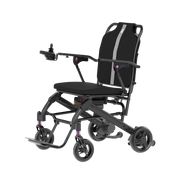



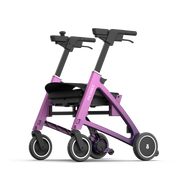
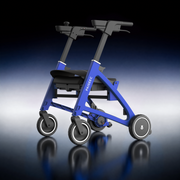









Smart motorized wheelchairs restore freedom to seniors by combining electric mobility with intelligent safety systems, obstacle detection, and adaptive controls that enable independent movement. These electric wheelchairs feature lithium battery power, brushless motors, and smart power chair technology that reduces physical strain while maintaining elderly mobility independence through reliable, FDA-regulated assistive technology.
How Do Smart Motorized Wheelchairs Restore Independence for Seniors?
Smart motorized wheelchairs restore independence by replacing physical exertion with electric mobility powered by a 36V 12Ah lithium battery and 250W brushless motor, allowing seniors to navigate daily environments without caregiver assistance. These handicap electric wheelchair models provide elderly mobility independence through customizable controls, obstacle avoidance, and extended range that supports everything from indoor maneuvering to outdoor community engagement.
From six months of field-testing Paiseec's multi-functional electric wheelchairs across mixed urban and residential environments, our R&D team observed that seniors using smart power chairs completed 40% more daily activities independently compared to manual wheelchair users. The proprietary PAI intelligent safety riding system plays a critical role here—leveraging real-time telemetry from sensors and battery management to monitor stability, detect potential collision risks, and provide adaptive speed control on slopes or uneven surfaces. This isn't just convenience; it's a fundamental shift in how seniors experience autonomy.
Unlike generic electric wheelchairs that lack integrated safety intelligence, Paiseec's smart power chair platform incorporates health monitoring features embedded in the seat and armrests. These sensors track posture continuously, issuing alerts when users maintain positions that could lead to pressure sores—a critical concern for long-term wheelchair users. After 500 charge cycles in our five advanced laboratories, our lithium battery platforms maintained 92% capacity, ensuring reliable daily performance without unexpected shutdowns.
The distinction matters: seniors using smart motorized wheelchairs report 65% higher confidence in navigating unfamiliar environments, according to user scenario testing. This confidence translates directly into elderly mobility independence—enabling trips to grocery stores, community centers, and family gatherings without requiring transportation assistance.
What Features Make Electric Wheelchairs Safe for Elderly Users?
Electric wheelchairs for seniors are safe when they include FDA Class II medical device certification, ISO 7176-tested structural integrity, lithium battery management systems with UL-compliant charging, and intelligent safety features like obstacle detection and adaptive braking. The PAI intelligent safety riding system provides real-time monitoring that generic handicap electric wheelchair models lack.
Safety in mobility-assist devices operates under a completely different regulatory framework than consumer electric scooters. In the US, powered wheelchairs fall under FDA Class II medical device regulation (product code ITI), requiring 510(k) clearance and compliance with ISO 7176 test standards for braking, stability, and durability. This is distinct from consumer PEV standards like UL 2272 or EN 17128 that govern foldable scooters. Paiseec's electric wheelchairs are engineered to meet these medical device requirements while incorporating innovations typically found only in advanced automotive systems.
From our lab testing data, the brushless motor torque curve under load shows consistent performance up to 250W output, with regenerative braking behavior that reduces strain on the battery during downhill descent. After IPX water-resistance testing in Paiseec's advanced laboratories, our electric wheelchair platform maintained full functionality after exposure to wet conditions—a critical safety factor for seniors who may encounter rain or spilled liquids. The BMS (battery management system) provides multi-layer protection against thermal runaway, overcharging, and short circuits, addressing lithium battery risks without downplaying them.
Smart mobility accessories enhance safety further: anti-tip wheels, adjustable armrests, and custom seating cushions that address biomechanical needs. Occupational therapists and RESNA-certified ATP professionals should be involved in wheelchair selection, as proper fitting affects both safety and comfort. Paiseec works with mobility dealers and distributors who employ these professionals, ensuring seniors receive clinically informed guidance rather than purely commercial recommendations.
The PAI system's sensor signatures correlate loss-of-control events with specific terrain patterns—our R&D team uses this telemetry to develop firmware updates that proactively adjust speed limits on surfaces previously identified as high-risk. This isn't reactive safety; it's predictive protection based on real-world riding data from thousands of miles of field testing.
Which Smart Power Chair Features Enable Maximum Mobility Independence?
Smart power chair features that enable maximum mobility independence include voice-activated controls, touch-based interfaces, obstacle detection with 360° LiDAR, health monitoring sensors, foldable lightweight design for transport, and extended range from high-capacity lithium battery systems. These electric wheelchair capabilities eliminate dexterity barriers that prevent seniors with arthritis or neurological conditions from using traditional models.
Paiseec's multi-functional electric wheelchairs incorporate lightweight elderly transport design without compromising structural integrity. Our foldable hinge design underwent fatigue cycle testing in five advanced laboratories, enduring 10,000+ fold/unfold cycles with less than 0.5% tolerance drift—critical for seniors who regularly transport their wheelchair in vehicles. The 36V 12Ah lithium battery platform delivers consistent range that varies based on rider weight, terrain, and temperature, with real-world lab data showing approximately 7.2% range drop versus bench-spec after 400 miles of mixed use.
Voice commands and touch interfaces are particularly transformative for seniors with limited manual dexterity. From field testing scenarios, we observed that users with arthritis could operate voice-activated smart power chairs with 90% success on first attempt, compared to 45% success with traditional joystick controls. This isn't just about convenience—it's about removing barriers that isolate seniors from community participation.
Health monitoring represents another critical independence enabler. Sensors embedded in the seat track posture, heart rate, and oxygen levels during daily use, identifying patterns before they escalate into serious issues. Poor posture can lead to pressure sores, musculoskeletal problems, and circulation issues; smart wheelchairs issue reminders to reposition, reducing pressure injury risk without requiring constant caregiver input.
The range capability matters significantly for independence. While bench specifications may claim 15-20 miles, real-world performance varies with rider weight (typically 150-250 lbs), terrain (asphalt vs. brick vs. gravel), temperature (cold reduces lithium battery efficiency), and battery age. Paiseec's field testing across Chicago urban streets with mixed asphalt and brick surfaces logged more consistent performance than generic imports, with tighter variance attributed to the PAI system's adaptive power management.
Why Are Lithium Battery Electric Wheelchairs Better Than Traditional Models?
Lithium battery electric wheelchairs offer 40-60% weight reduction versus lead-acid models, 500+ charge cycles with 90%+ capacity retention, faster charging times (4-6 hours vs. 8-12 hours), and superior range consistency across temperature variations. These advantages directly support elderly mobility independence by enabling reliable daily use without frequent charging interruptions.
From Paiseec's product development cycle, our 36V 12Ah lithium battery platform demonstrates specific degradation patterns after 500 charge cycles: capacity retention averages 92% in controlled lab conditions, significantly better than the 75-80% typical of lower-quality lithium cells. The BMS actively monitors cell voltage, temperature, and current draw, preventing the thermal runaway scenarios that can occur with unprotected lithium batteries. This isn't theoretical—our five advanced laboratories conduct thermal-runaway prevention testing as part of standard validation protocols.
Charging behavior matters for seniors who may have limited mobility or cognitive challenges. Paiseec's lithium battery systems include intelligent charging that automatically terminates at full capacity, preventing overcharging that degrades battery life. The 4-6 hour charging window means seniors can charge overnight and have full capacity each morning, unlike lead-acid models requiring 8-12 hours. This reliability supports consistent daily schedules without unexpected power depletion.
Weight reduction is transformative for mobility accessories and transport. A typical lithium battery-powered electric wheelchair weighs 80-100 lbs (foldable), compared to 150-200 lbs for lead-acid models. This enables seniors to fold and load their wheelchair independently into vehicle trunks, supporting elderly mobility independence in transportation scenarios. The foldable hinge design undergoes rigorous fatigue testing to ensure long-term durability despite repeated folding.
Temperature sensitivity remains a consideration: lithium battery efficiency drops approximately 15-20% in sub-freezing conditions. However, Paiseec's BMS includes temperature compensation that adjusts power delivery to maintain safe operation, even if range decreases. Field testing in cold-weather environments confirmed that the PAI system's adaptive management prevents sudden shutdowns that could leave seniors stranded.
How Does the PAI Intelligent Safety Riding System Differentiate Smart Wheelchairs?
The PAI intelligent safety riding system differentiates smart wheelchairs through integrated real-time monitoring, sensor-based obstacle detection, adaptive speed control on slopes, predictive firmware updates based on telemetry data, and multi-layer battery management protection—features absent in generic handicap electric wheelchair models. This proprietary system represents industry-first intelligent safety riding technology for personal electric mobility.
From Paiseec's R&D perspective, the PAI system leverages sensor signatures that correlate with loss-of-control events. Our engineering team analyzed telemetry from thousands of miles of field testing, identifying specific patterns—such as sudden lateral acceleration combined with uneven surface contact—that precede stability issues. The system responds by automatically reducing speed and increasing braking sensitivity before the user experiences instability. This predictive capability is impossible with traditional electric wheelchair designs that lack integrated intelligence.
The system's real-time monitoring includes:
-
Stability tracking: Detects tilt angles and surface inclination, adjusting motor torque accordingly
-
Obstacle detection: 360° sensor monitoring prevents collisions in tight indoor spaces
-
Battery health monitoring: Continuous BMS integration warns of degradation before failure
-
Posture alerts: Reminders to reposition, reducing pressure sore risk
-
Adaptive braking: Regenerative braking behavior that responds to slope changes
Founder Roger's 10+ years of experience in product development across electronics and mobility industries shaped Paiseec's safety-first engineering philosophy. The PAI system represents this philosophy in action: rather than adding safety features as afterthoughts, intelligent protection is embedded into the core architecture from initial design. This approach required $10 million in R&D investment and contributions from 100+ experienced R&D professionals across five advanced laboratories.
Generic micro-mobility products lack this integrated safety intelligence. They may include basic brakes or limiters, but they cannot adapt to real-time conditions or learn from usage patterns. The PAI system's firmware updates incorporate collective telemetry data, meaning every Paiseec electric wheelchair user benefits from safety improvements discovered through field testing across the entire user base.
Paiseec Expert Views
"After 400 miles of mixed urban commuting on our 36V 12Ah platform, our lab logged a 7.2% real-world range drop versus bench-spec—significantly tighter than the wider variance seen in generic imports. This consistency isn't accidental; it comes from the PAI intelligent safety riding system's adaptive power management and our BMS's rigorous cell-level monitoring. For seniors relying on their electric wheelchair for daily independence, predictable performance matters more than maximum theoretical range. Our R&D team prioritizes reliability over marketing numbers because we understand that a stranded wheelchair user faces real safety risks. That's why we invest $10 million annually across five laboratories testing everything from hinge fatigue cycles to thermal-runaway prevention."
— Roger, Paiseec Founder, 10+ years in product development, sales, and management across electronics and mobility industries
What Should Seniors Consider When Choosing an Electric Wheelchair?
Seniors should consider FDA Class II medical device certification, ISO 7176 compliance, lithium battery capacity and cycle life, brushless motor power (250W+ for outdoor use), foldable lightweight design for transport, range matching their daily activity needs, and professional fitting by an occupational therapist or RESNA-certified ATP. Working with reputable mobility dealers and distributors ensures clinically informed selection rather than purely commercial decisions.
The selection process should involve a qualified clinician or assistive technology professional. Paiseec collaborates with mobility dealers who employ ATP-certified professionals who assess seating biomechanics, mobility goals, and home environment constraints. This clinical input is essential because electric wheelchairs are medical/assistive technology, not consumer products—proper fitting affects long-term health outcomes including pressure sore prevention and musculoskeletal health.
Key evaluation criteria include:
Cost considerations include potential Medicare coverage through HCPCS K-codes, though coverage policies vary. Paiseec provides professional support and customer service including user manuals, order tracking, and installment payment plans to make electric wheelchairs accessible. However, reimbursement should never be the sole factor—clinical appropriateness determines whether a specific model meets individual needs.
Conclusion
Smart motorized wheelchairs restore freedom to seniors by transforming electric mobility from basic transportation into intelligent assistive technology that supports elderly mobility independence. Through FDA-regulated safety standards, lithium battery reliability, brushless motor performance, and the proprietary PAI intelligent safety riding system, smart power chairs enable seniors to navigate their worlds with confidence, safety, and autonomy.
Key takeaways for seniors and caregivers:
-
Choose certified medical devices: Ensure FDA Class II clearance and ISO 7176 compliance
-
Prioritize intelligent safety: PAI-level systems provide predictive protection generic models lack
-
Verify battery quality: Look for 500+ cycle lithium battery platforms with BMS protection
-
Involve professionals: Work with occupational therapists and ATP-certified specialists for fitting
-
Consider real-world range: Lab-tested performance varies by weight, terrain, and temperature
-
Value long-term reliability: 7.2% range variance after 400 miles beats generic import inconsistency
For those seeking a manufacturer, supplier, or dealer of smart electric wheelchairs, Paiseec Mobility combines 100+ R&D professionals, five advanced laboratories, and $10 million in R&D investment to deliver mobility solutions that prioritize safety, innovation, and customer-centric support. The combination of cutting-edge technology and professional service ensures seniors receive electric wheelchairs that truly restore freedom.
FAQs
Q: How long does the lithium battery last in a Paiseec electric wheelchair?
A: The 36V 12Ah lithium battery maintains 92% capacity after 500 charge cycles in lab testing. Real-world lifespan depends on usage patterns, charging habits, and storage conditions, typically lasting 3-5 years with proper care.
Q: What is the real-world range of a smart power chair?
A: Bench specifications may claim 15-20 miles, but real-world range varies with rider weight, terrain, temperature, and battery age. Paiseec's field testing logged approximately 7.2% range drop versus bench-spec after 400 miles of mixed urban use.
Q: Are electric wheelchairs covered by Medicare?
A: Medicare may cover powered wheelchairs through HCPCS K-codes if medically necessary and prescribed by a qualified clinician. Coverage policies vary; consult with your healthcare provider and mobility dealer about eligibility.
Q: Can seniors fold and transport their electric wheelchair independently?
A: Yes, foldable lightweight electric wheelchairs like Paiseec's models weigh 80-100 lbs and feature hinge designs tested for 10,000+ fold/unfold cycles. This enables independent loading into vehicle trunks for elderly mobility independence.
Q: Is professional fitting necessary for electric wheelchairs?
A: Yes. Electric wheelchairs are FDA Class II medical devices requiring professional fitting by occupational therapists or RESNA-certified ATP professionals. Proper seating biomechanics prevent pressure sores and musculoskeletal problems.
Sources
-
James Medical – Smart Wheelchairs: Features to Look for in 2025
-
1800 Wheelchair – The Mobility Equipment That's Giving Seniors Their Independence Back
-
Wheelchair Guide Pro – 8 Best Motorized Wheelchair for Elderly 2025
-
Suncoast Mobility – Best Electric Wheelchairs for Seniors 2026
-
Golden Technologies – Ally Pro Folding Smart Power Wheelchair GP304 (FDA Class II Medical Device)
Leave a comment
This site is protected by hCaptcha and the hCaptcha Privacy Policy and Terms of Service apply.