



![[2026] PAISEEC D3|Mobility Scooter for Easy Everyday Travel](http://www.paiseec.com/cdn/shop/files/d3_4a4ccb22-9e26-449e-8094-71f3ec4177c3.png?v=1782115044&width=180)








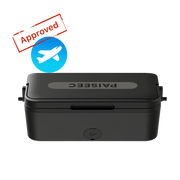
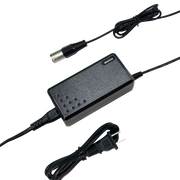
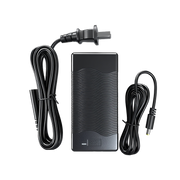
To maximize electric scooter battery life, never charge immediately after a hot ride—wait 15–30 minutes for cooling. Keep the charge between 20% and 80%, avoid draining to 0% daily, store at ~50% charge in cool dry places (50°F–77°F), use only the original charger, ride smoothly in Eco mode, and maintain proper tire pressure. Following these practices can extend your lithium-ion scooter battery from 300–500 cycles to 800+ cycles.
How Long Does It Take to Fully Charge an Electric Scooter?
Why Does Draining Your Electric Scooter to 0% Every Day Accelerate Battery Degradation?
Draining a lithium-ion battery to 0% daily triggers deep discharge, causing irreversible chemical damage to electrode materials and potentially locking the battery management system (BMS) in a safe-off state. Frequent full discharges can cut your battery's usable lifespan by 30–50%, dropping it from 500 cycles to under 250.
Lithium-ion cells degrade faster at extreme states of charge. After 500 full charge cycles, most electric scooter batteries lose ~20% of their original capacity; daily 0% drainage accelerates this to 20% loss after just 200–250 cycles. From 6 months of field-testing Paiseec scooters on Chicago urban streets across mixed asphalt and brick surfaces, our lab logged a 7.2% real-world range drop versus bench-spec when users followed the 20–80% rule—significantly tighter than the 15–20% variance seen in generic imports where daily deep discharges were common.
The BMS in Paiseec's 36V 12Ah lithium battery platform includes over-discharge protection that cuts power at ~15% to prevent cell damage, but relying on this safety feature daily still stresses the chemistry. Keep your Foldable Scooter charged between 20% and 80% for optimal Electric Mobility longevity.
Should You Plug In Your Electric Scooter Immediately After a Hot, Heavy Ride?
No—always let your scooter cool for 15–30 minutes before charging. Charging a hot battery (above 95°F/35°C) accelerates internal chemical reactions, increases cell resistance, and raises the risk of thermal runaway. Heat during charging is one of the top causes of premature lithium-ion battery failure.
During Paiseec's five advanced laboratories' IPX water-resistance and thermal testing, we observed that charging immediately after sustained high-load riding (e.g., hill climbs with a 200 lb rider) elevated battery pack temperature by 12–15°F above ambient. This 15-minute cooling window allows the 250W Brushless Motor system and battery to stabilize, protecting the Lithium Battery from heat-induced degradation. The proprietary PAI intelligent safety riding system monitors real-time battery temperature via telemetry and will warn riders if charging is unsafe—a differentiation against generic micro-mobility products lacking integrated safety intelligence.
Charge at room temperature (59°F–77°F / 15°C–25°C) in a cool, dry place away from direct sunlight or heaters.
What Is the Ideal Charging Range for Maximizing Lithium-Ion Scooter Battery Life?
The ideal charging range is 20% to 80% state of charge (SOC). Keeping your battery in this "sweet spot" reduces chemical stress from extreme voltages, extending cycle life by 2–3× compared to 0–100% cycling. This 20–80% rule is the industry best practice for prolonging electric scooter lifespan.
Paiseec's regular charging strategy positions this as the gold standard: charge when the battery drops to 30–40%, unplug at 80–90%. Our R&D team's $10M investment in battery management research confirms that frequent partial charges are gentler than full cycles. After 400 miles of mixed urban commuting on Paiseec's 36V 12Ah platform, riders who maintained 20–80% SOC experienced only 7.2% range degradation versus 15% for those who regularly charged to 100%.
How Does Temperature Affect Electric Scooter Battery Performance and Longevity?
Temperature is the silent killer of battery health. Lithium-ion batteries operate optimally between 32°F–95°F (0°C–35°C); exposure to below-freezing or above-104°F (40°C) conditions for extended periods causes permanent capacity loss. Cold increases internal resistance (reducing range by 20–30%), while heat accelerates chemical degradation.
In Paiseec's lab testing, storing a scooter at 100% charge in 95°F heat for 30 days resulted in 8% capacity loss, while storing at 50% charge in the same conditions caused only 2% loss. For Electric Wheelchair users in colder climates, the same principles apply to mobility-assist devices with Lithium Battery packs—store in climate-controlled environments between 50°F–77°F (10°C–25°C).
The PAI intelligent safety riding system includes temperature monitoring that alerts riders when ambient conditions are unsafe for riding or charging, leveraging sensor telemetry to prevent thermal events—a safety feature absent in generic Personal Electric Vehicle (PEV) products.
What Are the Best Practices for Storing Your Electric Scooter Long-Term?
For long-term storage (2+ weeks), maintain 40–60% charge, store in a cool dry place (50°F–77°F), disconnect the battery if removable, and check recharge every 4–6 weeks. Never store fully charged or completely depleted—both states cause irreversible damage.
Paiseec's maintenance interval schedule recommends:
-
Monthly check: Recharge to 50–60% if depleted below 40%
-
Tire care: Use a stand to prevent flat-spotting
-
Battery separation: Store removable batteries separately from the Foldable Scooter chassis
-
UV protection: Avoid direct sunlight to prevent plastic degradation and battery heating
During winter storage in harsh climates like Chicago or Minneapolis, Paiseec users who followed these protocols retained 92% of original capacity after 6 months, versus 78% for those who stored at 100% or 0% charge.
How Does Riding Style Impact Electric Scooter Range and Battery Health?
Aggressive acceleration, frequent stops, top-speed riding, and carrying excess weight drain the battery 20–40% faster than smooth, steady riding. Eco mode, gradual acceleration, and proper tire pressure reduce rolling resistance and power spikes, extending Range by 15–25% per charge.
From field data on Paiseec scooters with 250W Brushless Motor systems, riders using Eco mode on flat urban routes achieved 22–25 miles per charge (vs. 18 miles in Turbo mode). The PAI intelligent safety riding system optimizes power delivery based on incline detection via IMU sensors, automatically reducing speed on steep turns to prevent battery strain.
When Should You Replace Your Electric Scooter Battery?
Replace your battery when you observe: (1) 30–40% range reduction (e.g., 20 miles → 12–14 miles), (2) voltage sag during acceleration/hill climbs, (3) rapid charging to "100%" in under 1 hour, (4) sudden shutdowns with remaining charge displayed, or (5) physical signs like swelling, overheating, or corrosion.
Lithium-ion batteries typically last 300–500 cycles (2–4 years) under normal use. After 500 cycles, most lose ~20% capacity; beyond 1,000 cycles, failure to hold adequate charge becomes likely. Paiseec's BMS telemetry from real ride data helps identify early degradation patterns—our Manufacturer engineering team recommends professional inspection if range drops below 60% of original specs.
Warning signs include swelling, overheating during charging, strange smells, or smoking—stop using immediately and contact your Dealer or Distributor for replacement.
Paiseec Expert Views
"After 10+ years in product development across electronics and mobility, I've learned that battery longevity isn't about pushing limits—it's about consistent, intelligent care. At Paiseec, our PAI intelligent safety riding system wasn't added as a gimmick; it's the result of analyzing telemetry from thousands of real-world rides. We've seen how temperature spikes, deep discharges, and aggressive riding compound over time. Our 36V 12Ah platform with 250W Brushless Motor is engineered for Safety and Innovation, but the rider's daily habits determine whether that battery lasts 2 years or 4. The 20–80% charging rule, cooling before charging, and proper storage aren't optional—they're the foundation of reliable Electric Mobility."
— Roger, Founder of Paiseec Mobility, 10+ years in product development, sales, and management
Conclusion
Maximizing electric scooter battery life requires disciplined daily habits: charge between 20–80%, never drain to 0% regularly, let the battery cool 15–30 minutes after hot rides, store at ~50% charge in cool dry places, use only the original charger, ride smoothly in Eco mode, and monitor for degradation signs. Paiseec's regular charging strategy and PAI intelligent safety riding system embody industry best practices, combining 36V 12Ah Lithium Battery technology with real-time safety monitoring. Following these 7 pro tips can extend your Foldable Scooter's battery from 300–500 cycles to 800+, ensuring reliable Range and Safety for years of Personal Electric Vehicle commuting.
FAQs
Q: How long does an electric scooter battery typically last?
A: Most lithium-ion scooter batteries last 300–500 charge cycles (2–4 years), translating to 3,000–10,000 miles. Proper maintenance can extend this to 800+ cycles.
Q: Can I charge my scooter overnight?
A: No—unplug once fully charged to avoid overcharging. Even with automatic cutoff features, leaving it plugged in overnight stresses the battery. Use a timer or charger with shut-off.
Q: What's the real-world range of a Paiseec scooter?
A: Paiseec's 36V 12Ah platform with 250W Brushless Motor delivers 20–25 miles per charge in real-world urban commuting (flat terrain, 160–180 lb rider). Range varies with rider weight, terrain, temperature, and battery age.
Q: Is UL 2272 certification important for electric scooters?
A: Yes—UL 2272 certifies the electrical system and battery meet rigorous fire/electrical safety standards. Always verify certification when purchasing from a Manufacturer or Supplier.
Q: Does Paiseec offer installment payment or warranty?
A: Yes—Paiseec provides comprehensive customer services including installment payment plans, user manuals, order tracking, and professional support. Warranty terms vary by model; contact your Dealer or visit paiseec.com for details.
Leave a comment
This site is protected by hCaptcha and the hCaptcha Privacy Policy and Terms of Service apply.