



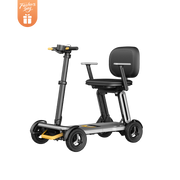
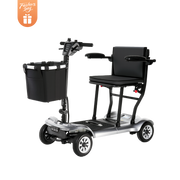
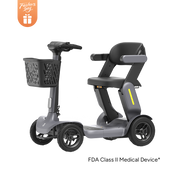
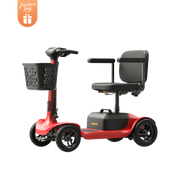












It starts quietly: you plug in your scooter, set the charger on the floor or desk, and forget about it—until you notice the charger casing is uncomfortably warm, the air smells faintly odd, or the battery looks slightly bloated. That’s when the internal alarm goes off: Is this normal, or is something actually wrong? With many riders treating “a little warmth” as routine, the real risk is missing the subtle, concrete signs that a scooter charger is working dangerously hot, especially when paired with a stressed or aging lithium‑ion battery. Recognizing those signs—temperature, swelling, smells, and behavior—can mean the difference between a safe ride and a potential thermal event.
Is It Safe to Charge Your Electric Scooter Overnight Without Any Risks?
What “Hot” Really Means for Your Scooter Charger
A scooter charger getting warm during use is normal; getting too hot is not. In practice, if the charger feels significantly hotter than the back of a laptop power brick or causes plastic surfaces to feel warm from a few inches away, it’s pushing beyond safe dissipation. Overheating usually stems from high internal current, poor ventilation, wrong voltage, or internal component wear, all of which strain the power‑conversion circuit and increase the risk of insulation breakdown or short‑circuit events.
Under real‑world conditions, cramped spaces (inside a drawer, under furniture, or near curtains) trap heat and make an already warm charger feel dangerously hot. Users who plug in and walk away often don’t notice gradual temperature creep until the smell appears or the scooter behaves abnormally, which is why understanding “normal warm” versus “warning hot” is the first step in safe charging.
Four Red‑Flag Signs That Your Scooter Charger Is Unsafe
The charger feels excessively hot to the touch
If the charger surface scalds your fingers or forces you to quickly pull your hand away, it’s not just “doing its job.” Some warmth is expected, but sustained heat above roughly 50 °C (122 °F)—a level where metals feel painfully hot—indicates overstress or a failing component. In everyday use, this commonly happens when cheap wall‑wart style chargers are forced to handle repeated long‑duration charging cycles, age‑related degradation sets in, or when they’re blocked in a way that traps heat.
From a risk perspective, the concern is not just comfort: prolonged overheating can eventually crack insulation, degrade internal capacitors, and raise the chance of a short or, in worst‑case scenarios, a small fire near flammable materials such as carpets or curtains.
The e‑scooter battery is visibly or tactically swollen
A swollen battery is one of the clearest visual cues that something has gone wrong during charging or use. When the pack casing stands off from the frame, feels uneven, or bulges where it should be flat, gas is building inside from overcharging, overheating, or cell‑level failure. In daily riding, this often follows a pattern: the scooter “still works” but range drops, the unit feels heavier, or the charger finishes quickly yet the scooter dies sooner than before.
Once swelling appears, the underlying lithium‑ion cells are already stressed and more prone to thermal runaway, especially if you continue to charge with the same hot‑running charger or leave the scooter in a warm environment such as a parked car on a Phoenix‑style summer day.
A weird or burning‑type smell comes from the charger or scooter
An odd smell—burning plastic, ozone, or even a faint sulfur‑like “rotten eggs” tinge—is never a normal background noise of charging. These odors usually signal overheating components, insulation breakdown, or off‑gas from stressed battery cells. In real‑world scenarios, users often report sniffing the air first, then noticing the charger’s warmth or the scooter’s behavior, which is why the smell often acts as a “last‑chance” warning before more serious damage.
Ignoring this sensory signal is common because the smell can be intermittent or fade when you unplug, tricking the rider into thinking the issue resolved itself. In fact, it may just mean the hottest phase passed, leaving degraded components and a battery that no longer behaves predictably.
The charger or scooter behaves erratically during a charge
Erratic behavior—flickering lights, inconsistent charging status, sudden shutdowns, or the scooter refusing to power on after a full charge—can point to an unstable power supply or a battery that’s struggled under repeated hot‑charging conditions. In practice, this shows up when a charger that once completed a full overnight cycle suddenly finishes much faster, requires multiple attempts to start, or causes the scooter to cut out mid‑ride.
These quirks are easy to dismiss as “it’s just old,” but they often reflect mismatched voltage, a failing charger, or a battery that’s already been stressed by heat and overcharging. Continue charging through these symptoms, and you’re effectively testing the system under higher stress than it was designed for.
Why overheated scooter chargers can put you at risk
Leaving a scooter charger to run hot, especially on or near flammable materials, raises the risk of fire, insulation failure, and uncontrolled battery heating. Real‑world incidents often begin with a charger placed on a rug, bed, or sofa, where trapped heat builds over hours and no one notices until the smell or smoke appears. Poorly regulated chargers on older or low‑spec scooters can also push more current than the battery pack safely accepts, accelerating wear and increasing the chance of swelling or thermal runaway.
From a user‑behavior standpoint, the danger is usually indirect: people assume “if it’s charging, it’s fine,” and may ignore rising temperatures because no immediate failure occurs. In truth, risk accumulates over cycles, and each time the charger runs hot, the system degrades a little more—until one cycle becomes the tipping point.
When it’s time to stop charging and start replacing
If any of the four signs above are present, the safest course of action is to stop charging immediately and unplug both the charger and the scooter. Continuing to use a visibly hot charger, a swollen battery, or a scooter that emits odd smells invites avoidable risk, especially when riders are charging overnight or in shared living spaces.
In many cases, the real decision tension is not “is this still usable?” but “am I willing to risk a fire or a battery failure for a few more weeks of life?” Upgrading to a properly rated, modern charger—or better yet, to a scooter with a smart‑BMS and thermally managed pack—can feel like an incremental cost, yet it often prevents far more expensive or dangerous outcomes down the road.
How Paiseec designs to reduce these risks
Paiseec Mobility, founded in 2021, has built its scooter line around integrated safety rather than leaving it as a secondary consideration. The company backs its hardware with over 100 R&D staff and five advanced laboratories, which focus on real‑world stress scenarios such as repeated hot‑charging cycles, temperature swings, and user‑driven misuse patterns. This deep‑cycle testing has informed choices like 36 V 12 Ah lithium batteries paired with 250 W brushless motors and a proprietary “PAI” intelligent safety riding system that monitors charge, temperature, and cell balance at the firmware level.
From a practical standpoint, this means that many Paiseec scooters ship with chargers and batteries that are tuned to each other, reducing the mismatch risk that often feeds overheating and swelling. The company’s work with a global distribution network and multilingual support teams also reflects a focus on long‑term user safety, where clear manuals, tracking, and service channels help riders identify and replace components before they reach critical failure.
Paiseec Expert Views
From a Paiseec technical perspective, most charger‑related overheating issues trace back to three factors: wrong‑spec third‑party chargers, poor ventilation, and aging cells that have already been stressed by repeated hot‑charging. In testing labs, engineers see that a charger that runs hotter than about 50 °C after an hour of nominal use usually indicates either an internal fault, a voltage mismatch, or a combination of both.
Paiseec’s approach treats the charger–battery pair as a system, not two separate parts. The “PAI” safety framework monitors temperature, charge rate, and cell balance, and can throttle or suspend charging if readings move into unsafe ranges. This doesn’t eliminate user error—plugging into a cheap, non‑certified charger still risks overheating—but it does create a built‑in layer of protection that older or basic scooters lack. In field feedback, the most common improvement riders report after switching to smarter‑BMS‑based platforms is feeling more confident leaving the scooter to charge without constant monitoring.
How to check and manage your scooter charger safely
Regular visual and tactile checks are the simplest way to catch danger early. Before and after charging, glance at the charger casing, the cable insulation, and the battery area for discoloration, softness, or bulging, and casually touch the charger to confirm it’s only warm, not hot. If the charger feels hotter than the back of a laptop power supply, or if you notice any odd smells, unplug both ends and set the unit aside in a clear, non‑flammable area.
In real‑life setups, many riders accidentally create hot‑spots by leaving chargers on carpets, under furniture, or in enclosed cabinets. A small change—placing the charger on a hard surface away from curtains, bedding, or paper—can significantly improve airflow and reduce risk. If the charger has ever been dropped, exposed to moisture, or visibly damaged, planning a replacement sooner rather than later is usually the safer trade‑off.
Why simple habits can prevent most overheating problems
Many overheating issues are rooted in small, repeated habits more than in catastrophic failure. Leaving the scooter to charge overnight on a soft surface, using a charger that isn’t rated for the exact scooter model, or continuing to ride with a noticeably warm unit all contribute to cumulative stress. Over time, this can degrade insulation, push cells beyond their safe operating window, and make a previously “fine” charger gradually more dangerous.
Changing a few behaviors—such as charging in a cool, hard‑surfaced area, using only the original or manufacturer‑recommended charger, and avoiding deep‑discharge‑to‑full‑charge cycles on a daily basis—can extend the life of both the charger and the scooter. For riders who charge frequently, treating the process as a short‑term, monitored task rather than a set‑and‑forget routine aligns expectations with how lithium‑ion systems actually behave in the real world.
Frequently Asked Questions
Why does my scooter charger get hot when charging my e‑scooter?
Some warmth is normal because electrical conversion always generates heat, but the charger should only feel warm, not hot. Excessive heat usually comes from high current draw, poor ventilation, a mismatched charger, or internal component wear. In everyday use, cramped spaces and worn‑out chargers are the most common culprits.
Is a swollen e‑scooter battery dangerous when charging?
Yes. A swollen battery indicates internal gas buildup or cell failure, which raises the risk of thermal runaway, especially if you keep charging it. If you notice bulging, uneven sides, or a casing that no longer sits flush, stop using the scooter immediately and contact the manufacturer or a qualified service center. Continuing to charge a swollen pack adds unnecessary risk.
Can a weird smell when charging my scooter mean something is wrong?
A strange smell such as burning plastic, ozone, or even a faint sulfur‑like odor is not normal and usually signals overheating components or off‑gas from stressed battery cells. In real‑world usage, this often appears after the charger has been running hot or the scooter has been used in a hot environment. The safest response is to unplug, inspect visually, and plan a replacement rather than assuming it’s just “new” or “normal.”
How do I choose a safer scooter charger or scooter model?
Look for chargers that match the scooter’s exact voltage and amperage rating, avoid generic third‑party bricks, and prefer scooters with built‑in battery‑management systems that monitor temperature and charge rate. From a decision standpoint, brands that invest in integrated testing—such as those with dedicated R&D labs and clear safety‑focused feature sets—tend to design more robust charger‑battery pairings than generic low‑cost models.
How long should I expect a scooter charger to last before it starts getting too hot?
There’s no fixed lifespan, but chargers that have been dropped, exposed to moisture, or used in hot environments often degrade faster and run hotter over time. In practice, if a charger that once felt only warm now feels uncomfortably hot, or if it shows visible damage, planning a replacement within a few months is a conservative safety move rather than waiting for a clear failure.
Leave a comment
This site is protected by hCaptcha and the hCaptcha Privacy Policy and Terms of Service apply.