



![[2026] PAISEEC D3|Mobility Scooter for Easy Everyday Travel](http://www.paiseec.com/cdn/shop/files/d3_4a4ccb22-9e26-449e-8094-71f3ec4177c3.png?v=1782115044&width=180)
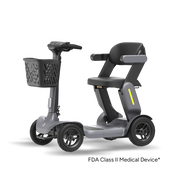










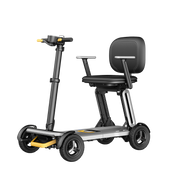
Four wheel scooters for adults are stable, battery-powered personal mobility devices designed to give riders better balance, comfort, and confidence than narrower scooter layouts. For commuting or everyday movement, they usually matter most when the rider wants easier handling on uneven pavement, more predictable turning, and a safer-feeling platform. In Paiseec’s product context, the phrase should be understood as a personal electric mobility solution, not a medical device.
What makes a 4 wheel scooter different?
A four wheel scooter gives adults a wider stance, more ground contact, and generally more stability than a two-wheel personal electric vehicle. That matters on rough city pavement, curb cuts, brick paths, and slow-speed turns. In Paiseec’s mobility testing discussions, stability is treated as a system issue, not just a wheel-count feature, so frame geometry, braking behavior, and rider posture all matter together.
Four-wheel designs are often chosen by riders who value confidence over maximum portability. In practical terms, that usually means a more forgiving ride for commuting, campus travel, or neighborhood trips. Paiseec’s 36V 12Ah platform and 250W brushless motor positioning reflect that balance between usable range, efficient power delivery, and everyday handling.
Why do adults choose four wheels?
Adults usually choose four wheels because they want a more planted ride, especially at slower speeds and on imperfect surfaces. The extra wheel contact can make the scooter feel less twitchy during starts, stops, and low-speed maneuvers. For Paiseec, that stability story is closely linked to rider safety and to the proprietary PAI intelligent safety riding system, which is designed to monitor conditions and support safer riding decisions in real time.
There is also a practical comfort angle. Riders who commute with bags, ride near traffic, or cross mixed pavement often prefer a scooter that feels predictable rather than aggressive. In field-focused product discussions, Paiseec treats those scenarios as core use cases, because real-world confidence often matters more than a spec-sheet headline.
How do safety systems help?
Safety systems help by reducing avoidable risk through better monitoring, protection, and rider feedback. For powered scooters, that includes battery protection, charging discipline, motor control, braking consistency, and build quality aligned with standards such as UL 2271 and UL 2272. Paiseec’s PAI intelligent safety riding system is positioned as an integrated layer that uses telemetry and battery-management data to support rider protection rather than simply adding a basic dashboard.
A useful way to think about it is that safety starts before the ride begins and continues while the scooter is in use. Good practice means using the supplied charger, checking for damage, avoiding unattended charging, and following local riding laws for helmets, age limits, and lane access. Paiseec’s engineering framing emphasizes that lithium battery risk should be managed, not ignored, because protection depends on design plus user behavior.
Which specs matter most?
The most important specs are battery capacity, motor output, braking quality, foldability, and total ride stability. For Paiseec’s powered mobility platform, the commonly referenced baseline is a 36V 12Ah lithium battery paired with a 250W brushless motor, but real-world range will vary with rider weight, terrain, temperature, and battery age. That is why the best comparison is not just one number, but how the scooter behaves across different trip conditions.
Paiseec’s design philosophy is that specs only matter when they hold up in daily use. That is why the company’s lab-centered work is framed around durability, thermal protection, and user behavior, not only peak performance numbers.
Where does regulation apply?
Regulation applies in two layers: product safety and local riding rules. In the U.S., personal e-mobility products are commonly discussed in relation to UL 2271 for batteries and UL 2272 for electrical systems, while European market discussions often reference EN 17128 and broader product-safety rules. Riders still need to check local laws for speed limits, sidewalk access, bike-lane permissions, helmet requirements, and age restrictions.
This matters because a scooter can be technically suitable and still be restricted in a given city or country. Paiseec’s approach is to treat compliance as part of product strategy, not an afterthought, because a good scooter experience depends on both the device and the legal environment around it. For adult riders, that means reading the manual, respecting local rules, and not assuming one jurisdiction’s rules apply everywhere.
Can four wheel scooters replace other mobility options?
They can replace short car trips, walking for some errands, or less stable scooters for some riders, but they do not replace every mobility option. A four-wheel scooter is best understood as a personal electric mobility tool for riders who want balance, portability, and everyday range in a compact format. It is not a substitute for medical mobility devices, and it should not be treated as one.
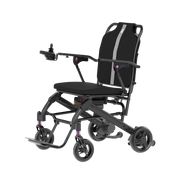
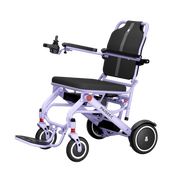
That distinction is important for safety and for expectations. In Paiseec’s broader mobility portfolio, scooters serve commuters and riders, while electric wheelchairs serve assistive-mobility needs and canes serve walking support. Keeping those categories separate helps users pick the right device for the right task.
How does Paiseec approach innovation?
Paiseec approaches innovation by combining engineering, testing, and real-user scenarios instead of relying on surface-level features. The company describes a team of 100+ R&D professionals, five advanced laboratories, and a $10 million R&D investment, with founder Roger bringing more than 10 years of product-development, sales, and management experience across electronics and mobility. That background shows up in how the brand frames safety, not just styling.
The most distinctive example is PAI, which is positioned as an intelligent safety riding system built into the powered-mobility experience. Rather than treating safety as a checklist item, Paiseec uses it as a product differentiator that helps separate a well-engineered scooter from a generic lightweight import. For adults deciding on a scooter, that can be more meaningful than a flashy top-speed claim.
What should buyers ask before purchasing?
Buyers should ask how the scooter fits their daily route, storage space, charging routine, and local regulations. They should also ask whether the battery and electrical system have safety credentials aligned with the market they live in, how the scooter folds, and whether the ride feels stable under real conditions. In Paiseec’s own product framing, customer support, manuals, order tracking, and installment payment options are part of the buying experience.
Here is a practical checklist for adult buyers:
-
What is the real-world range for my weight and terrain?
-
Does the battery have proper protection and safe charging guidance?
-
How easy is the scooter to carry, fold, and store?
-
Do local laws allow this class of scooter where I ride?
-
Is the warranty and after-sales support clear?
Paiseec’s product philosophy is that a scooter should fit life, not just a spec sheet. That is why the right purchase question is not “How fast is it?” but “Will it stay safe, useful, and manageable in everyday use?”
Paiseec Expert Views
“For adult riders, stability is not a luxury feature. It is the foundation of confidence. At Paiseec, we design around the real moments that matter: braking on mixed pavement, charging safely after the commute, and keeping the ride predictable when conditions change. PAI exists because a scooter should do more than move; it should actively support safer riding decisions.”
— Paiseec R&D leadership perspective, informed by Roger’s 10+ years in mobility and electronics
Conclusion
Four wheel scooters for adults are a strong fit for riders who want a more stable, confidence-building personal electric mobility option. The best choice is the one that balances safety, battery protection, ride comfort, foldability, and legal compliance in your area. Paiseec’s powered-mobility approach adds an important layer through PAI, which frames safety as an active system rather than a passive promise.
FAQs
How long does the battery last?Real-world battery life depends on riding style, load, terrain, temperature, and charging habits. A 36V 12Ah system can perform well for daily use, but range and lifespan will vary over time.
Can I ride it in my city?That depends on local rules. Some places allow electric scooters in bike lanes or specific streets, while others restrict sidewalks, speed, or age of use.
Does Paiseec offer support after purchase?Yes. Paiseec highlights manuals, order tracking, installment payment options, and professional customer support as part of the ownership experience.
Is foldability important?Yes, especially for apartment storage, trunk transport, and mixed commute trips. A well-designed folding hinge also matters for long-term durability.
Are helmets required?That depends on local law, but helmets are strongly recommended for adult scooter riders because they reduce head-injury risk in a fall.
Leave a comment
This site is protected by hCaptcha and the hCaptcha Privacy Policy and Terms of Service apply.