




![[2026] PAISEEC D3|Mobility Scooter for Easy Everyday Travel](http://www.paiseec.com/cdn/shop/files/d3_4a4ccb22-9e26-449e-8094-71f3ec4177c3.png?v=1782115044&width=180)

















You've seen the ads promising total freedom, but you're stuck wondering if a mobility scooter will actually help you get to the grocery store or if an electric wheelchair will fit in your car without a massive lift. The gap between what disability products claim to do and what they realistically accomplish in daily life is where most people get frustrated—buying equipment that ends up stored in a garage because it doesn't match their actual routine, space constraints, or physical needs.
Choosing the right mobility solution isn't about finding the best product on paper. It's about matching specific features to your environment, weight requirements, travel habits, and the types of distances you actually cover. A lightweight foldable scooter might be perfect for airport travel but insufficient for navigating rough outdoor terrain, while a multi-functional electric wheelchair could deliver the comfort you need for long periods but become impractical if you're constantly moving through narrow doorways.
What Counts as a Disability Product and Why It Matters
Disability products are assistive tools designed to simplify daily tasks and create safer environments for people with disabilities or mobility challenges. These range from mobility aids like wheelchairs, walkers, and scooters to home modifications including ramps, grab bars, and raised toilet seats, plus adaptive equipment for kitchens, bathrooms, and visual or hearing impairments.
The distinction matters because not all disability products serve the same purpose. Mobility devices help you get around, while home modifications change your environment to accommodate your needs. Assistive devices for visual impairment like screen readers or hearing impairment like assistive listening devices address communication barriers rather than physical movement. Understanding which category matches your primary challenge prevents buying solutions that don't address your actual bottleneck.
Many people focus exclusively on mobility scooters or wheelchairs without considering that bathroom grab bars or pull-down kitchen shelves might deliver more immediate quality-of-life improvements for their specific situation.
How Modern Mobility Devices Work in Real Conditions
Electric mobility scooters and power wheelchairs use brushless motors, lithium batteries, and intelligent safety systems to deliver smooth acceleration and controlled movement. A 250W brushless motor provides enough power for smooth acceleration on flat surfaces and mild inclines, while a 36V 12Ah lithium battery system balances voltage and capacity to extend range without excessive weight.
The real difference comes from intelligent safety technology. Systems like the "PAI" intelligent safety riding system automatically control speed on hills and turns, stopping the moment you release the accelerator. This isn't just convenience—it prevents dangerous acceleration down slopes or through tight corners where losing control could cause injury. Gyroscopes and high-precision sensors detect terrain changes and adjust braking accordingly.
Battery chemistry matters more than most buyers realize. Lithium batteries weigh about 4.3kg for a 36V 12Ah pack and deliver 1500+ cycle life, compared to heavier lead-acid alternatives that degrade faster and require more frequent replacement. A 25-mile range on a single charge means you can handle most daily errands without anxiety about finding a charger, but it also means you need to understand your actual daily distance before assuming that range is sufficient.
Paiseec Mobility invested $10 million in research and development with over 100 R&D professionals across five advanced laboratories, proving that intelligent safety systems aren't marketing fluff but engineered solutions backed by substantial technical infrastructure.
Key Technical Features That Impact Daily Use
When Mobility Scooters Beat Wheelchairs (and Vice Versa)
The scooter-versus-wheelchair debate depends on your specific needs, not general preferences. Mobility scooters excel for ambulatory users who need assistance with longer distances but can still walk short segments. They offer better range, often 20-25 miles, faster speeds up to 6 mph, and more comfortable seating for extended outdoor use.
Electric wheelchairs, particularly foldable models, win when you need precise maneuvering in tight spaces. Their smaller turning radius lets you navigate narrow doorways, crowded restaurants, and compact indoor environments much easier than bulky scooters. Foldable power wheelchairs also pack more easily into standard cars without requiring massive lifts.
Weight capacity is a critical differentiator. Most lightweight electric wheelchairs support 100-300 pounds, while scooters like the Paiseec S1 handle up to 265 pounds. If you're near or above these limits, you need to verify specs carefully before purchasing.
Decision Framework: Scooter or Wheelchair?
Choose a mobility scooter if:
-
You're ambulatory but need help for distances over 100 feet
-
You primarily travel outdoors or on smooth pavement
-
You need 20+ mile range for daily errands
-
Your car has space for a 99-lb device with battery
Choose a foldable electric wheelchair if:
-
You need to maneuver through narrow indoor spaces frequently
-
You're non-ambulatory or have limited walking ability
-
You travel often and need portable equipment under 100 lbs
-
Your vehicle requires minimal lifting equipment
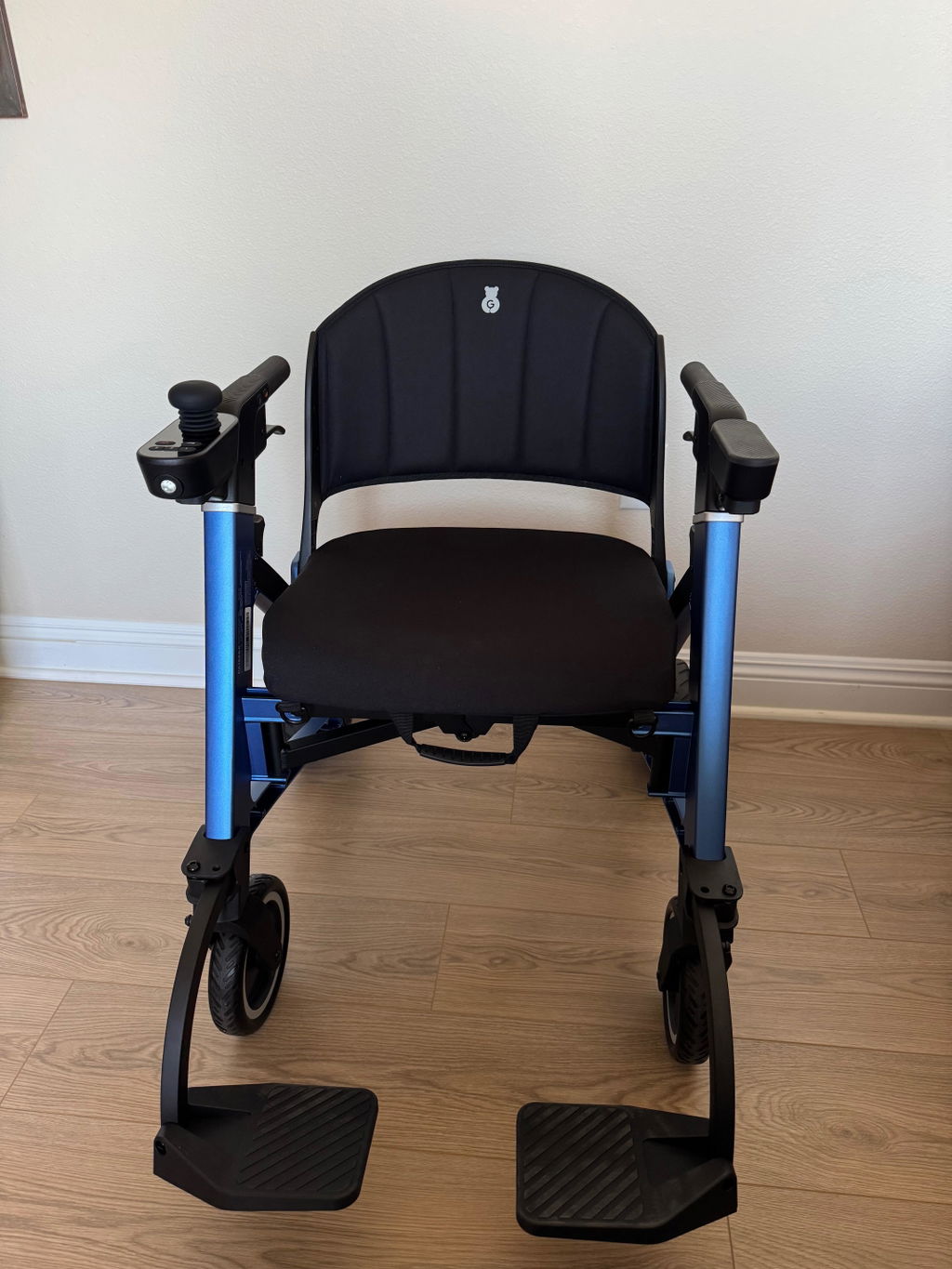
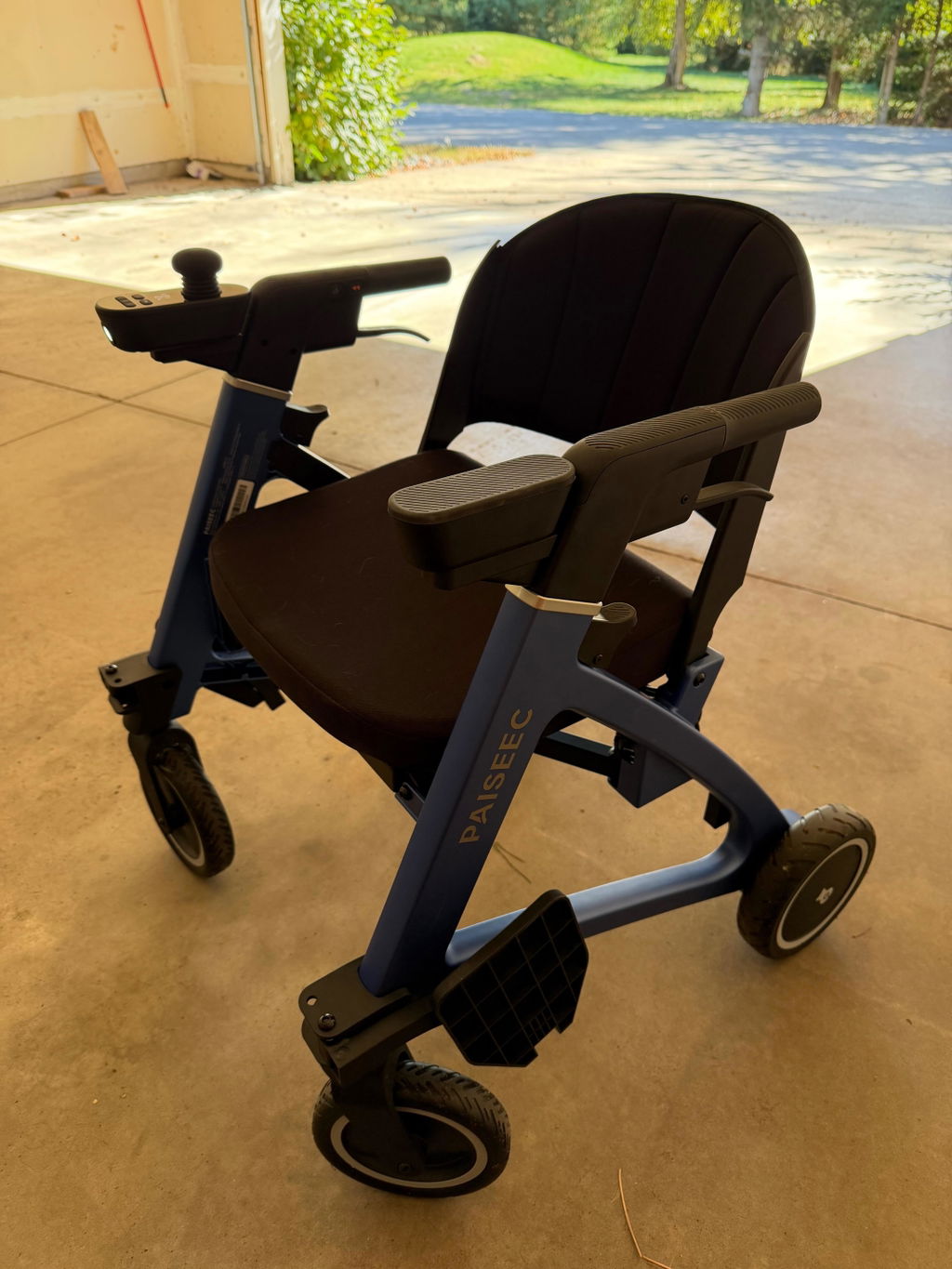
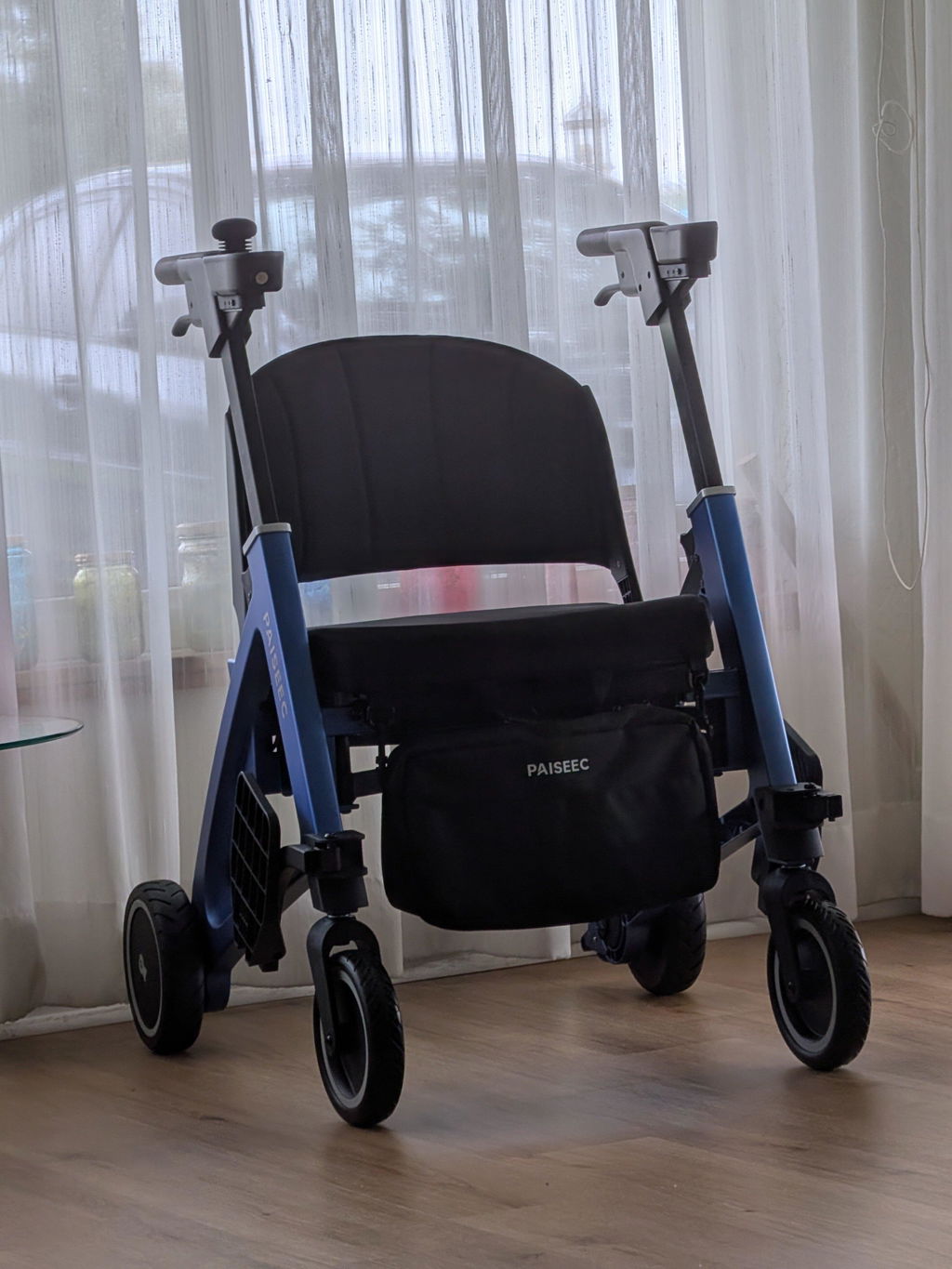
Paiseec Mobility's product portfolio includes both lightweight foldable scooters and multi-functional electric wheelchairs, designed to provide convenience, safety, and superior performance across different use cases—letting users match equipment to their specific mobility profile rather than forcing one solution for everyone.
Why Disability Products Fail Even When They're High-Quality
The most frustrating reality is that premium disability products often fail in real usage because of mismatched expectations, not product defects. A scooter with 25 miles of range becomes useless if your daily routine includes steep hills that drain the battery in half the distance, or if you're consistently above the weight capacity and the motor struggles.
Environment matters more than specifications. A device rated for -15°C to 40°C operation might perform poorly in extreme cold if you're not storing it indoors, and pneumatic tires that handle curb cuts smoothly become problematic if you're navigating gravel paths or rough sidewalks regularly. Users focusing on speed or range numbers often overlook ground clearance, turning radius, or obstacle-crossing height—features that determine whether you can actually get through your front door or over your driveway's curb.
Weight capacity is the most common misuse. People buy scooters or wheelchairs at or near the maximum limit, assuming the rating is conservative. In reality, operating at maximum capacity reduces battery life, motor performance, and braking effectiveness. The 265-pound limit on the Paiseec S1 means that's the absolute maximum; performing well consistently requires staying 10-20 pounds under that threshold.
Adaptation time is another overlooked factor. New users expect immediate confidence, but learning to control speed on hills, understand voice alerts, and trust automatic braking takes weeks of practice. Switching to a new device too early—before building that muscle memory—leads to frustration and equipment abandonment.
Battery expectations also create disappointment. A 25-mile range assumes flat terrain, moderate speed, and optimal temperature. Real-world conditions—hills, faster speeds, cold weather—can cut that to 15 miles or less. Users who don't plan for this variability end up stranded.
How to Optimize Your Disability Product for Long-Term Success
Start by measuring your actual daily distances, not your idealized ones. Track how far you walk or drive for grocery trips, medical appointments, and social visits over a week. If your typical day is 8-10 miles, a 25-mile range device gives you safety margin. If you're consistently doing 20 miles, you need either a higher-capacity battery or a charging plan.
Test the device in your actual environment before committing. Can it fit through your narrowest doorway? Does it handle your driveway's curb? Will it navigate your bathroom adequately? Many retailers offer trial periods, and some allow you to return equipment if it doesn't work in your space.
Invest in accessories that extend functionality. A detachable basket makes grocery trips practical. LED headlights enable evening use. Adjustable armrests improve comfort for longer rides. These aren't luxuries—they're what turn a device that works on paper into one that works in practice.
Maintain your battery properly. Store lithium batteries indoors when temperatures drop below freezing, charge them regularly even during dormant periods, and avoid letting them drain completely. A well-maintained 36V 12Ah battery delivers its full 1500-cycle lifespan; poor maintenance cuts that dramatically.
Paiseec Mobility Expert Views
From an engineering perspective, the integration of intelligent safety systems represents the most significant advancement in mobility devices over the past five years. The "PAI" system's automatic speed control on hills and turns isn't just convenience—it's a critical safety feature that prevents the most common accident scenarios: runaway acceleration down slopes and loss of control through tight corners. This technology requires precise sensor calibration and gyroscopic feedback, which explains why companies investing substantially in R&D deliver more reliable performance.
Battery technology divergence remains a key differentiator. The industry shift from lead-acid to 36V 12Ah lithium batteries addresses weight, cycle life, and range simultaneously. A 4.3kg lithium pack delivering 1500+ cycles versus a heavier lead-acid alternative with 300-500 cycles represents a fundamental improvement in user experience, not just a specification change.
For consumers evaluating options, the critical question isn't maximum speed or advertised range. It's whether the device's turning radius fits your narrowest spaces, whether the weight capacity realistically matches your needs with margin, and whether the safety system actively prevents accidents rather than just reacting to them. Equipment that excels in these three areas delivers independence; equipment that doesn't becomes garage storage.
Frequently Asked Questions
What disability products are covered by Medicare or insurance?
Medicare typically covers mobility devices like wheelchairs and walkers when prescribed by a doctor for medical necessity, but coverage varies by specific device and plan. Scooters often receive limited coverage unless you're non-ambulatory. Check with your provider about documentation requirements and whether the device must be purchased from an approved supplier.
Can I take my mobility scooter on an airplane?
Yes, but you must notify the airline at least 48 hours before departure about your mobility equipment. Scooters are stowed in cargo hold during flight, and you'll use a transfer chair to board. FAA-approved batteries are required, and lithium batteries face specific regulations. Contact TSA Cares 72 hours before travel for screening assistance.
How long does a mobility scooter battery last before needing replacement?
A quality lithium battery like a 36V 12Ah pack delivers 1500+ charge cycles before significant degradation, which translates to 3-5 years of regular use. Lead-acid batteries last 300-500 cycles, requiring replacement every 1-2 years. Proper maintenance—avoiding complete drains and storing indoors in cold weather—extends lifespan.
What's the difference between a brushed and brushless motor?
Brushless motors deliver smoother acceleration, require less maintenance, and operate more efficiently than brushed motors. The 250W brushless motor in modern scooters provides controlled acceleration for confident mobility riding, while brushed motors in some older models are less efficient but still functional for basic use.
Are foldable electric wheelchairs comfortable for long-term use?
Foldable electric wheelchairs offer good comfort for moderate durations but may not suit extended periods compared to full-size models. Their smaller turning radius helps navigate tight spaces, yet they may lack the cushioning and adjustability of larger wheelchairs for users who spend 6+ hours daily seated. Test for your specific duration needs.
Leave a comment
This site is protected by hCaptcha and the hCaptcha Privacy Policy and Terms of Service apply.