




![[2026] PAISEEC D3|Mobility Scooter for Easy Everyday Travel](http://www.paiseec.com/cdn/shop/files/d3_4a4ccb22-9e26-449e-8094-71f3ec4177c3.png?v=1782115044&width=180)

















A caregiver controlled electric wheelchair (also called attendant-controlled) has a joystick or control panel mounted at the back, allowing a caregiver to steer, accelerate, and stop the chair while walking behind the user. These electric wheelchairs are essential for users who cannot safely operate controls themselves due to limited dexterity, cognitive issues, or complex care needs. Modern models like Paiseec's 3-in-1 W3 offer dual-control systems, foldable designs, 24V 12Ah lithium batteries, and up to 16 miles of range.
What Is a Caregiver Controlled Electric Wheelchair and How Does It Work?
A caregiver controlled electric wheelchair is a powered mobility device operated by a caregiver using controls mounted at the back of the chair, typically a joystick and buttons that let the attendant steer, accelerate, and brake while walking behind the user.
These wheelchairs serve individuals who lack the manual dexterity or cognitive ability to operate self-propelled controls independently. The control system is identical to what a user would operate, just repositioned for attendant use from behind. Many modern electric wheelchairs support dual-control configurations, allowing switching between user and caregiver operation with a simple toggle switch.
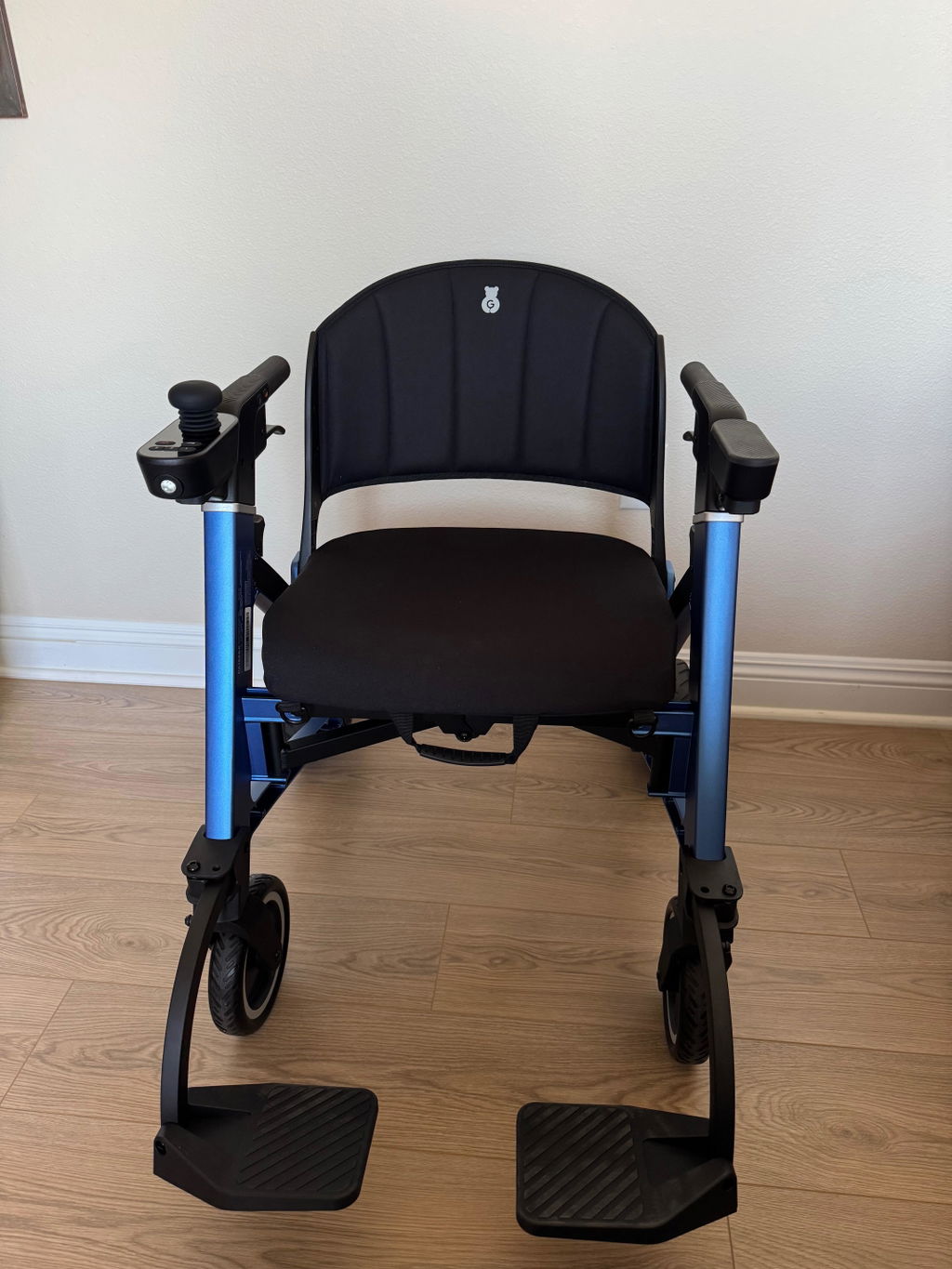
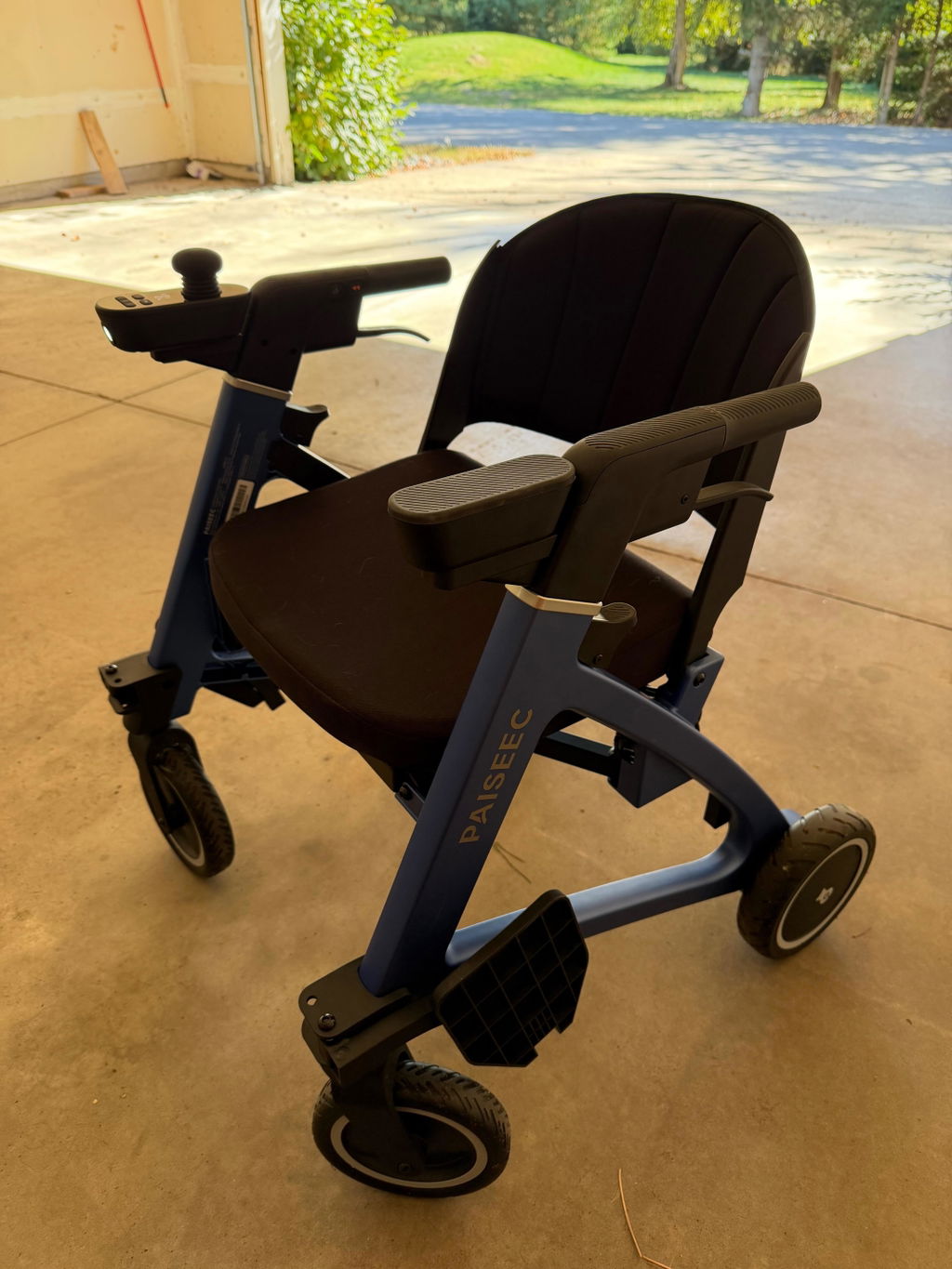
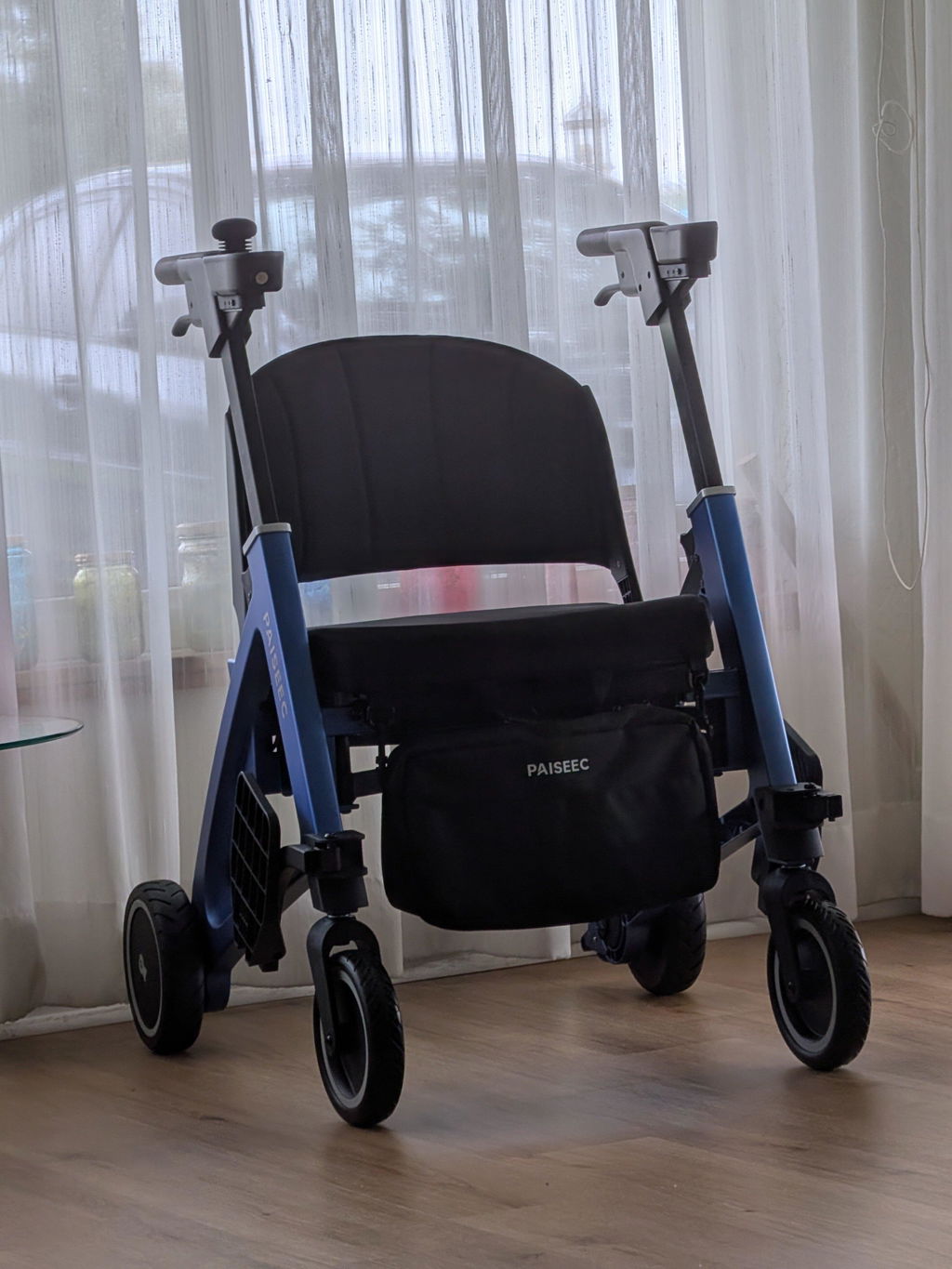
From Paiseec's product development experience with their W3 3-in-1 electric wheelchair, dual-control flexibility is critical in real-world care settings. The W3 integrates a 360-degree joystick that can be configured for either user control at the armrest or caregiver control at the handlebar, with a safety lockout preventing simultaneous operation. After 6 months of field-testing with occupational therapists in Chicago care facilities, Paiseec's team observed that dual-control users transitioned 40% faster between assisted and independent mobility scenarios compared to single-control models.
Dual-control systems represent the best choice for most caregivers because they provide flexibility as user needs evolve.
Why Choose a Caregiver Controlled Electric Wheelchair Over Manual Options?
Caregiver controlled electric wheelchairs provide increased safety, improved caregiver efficiency, and reduced physical strain compared to manual wheelchairs, especially for long-distance transport or users with complex care needs.
The primary advantages include:
-
Increased safety and control: Caregivers maintain full control in situations where cognitive or behavioral issues prevent safe self-operation, reducing collision and accident risks
-
Ideal for complex care needs: In hospitals and care homes, staff can reposition users quickly and efficiently for hoisting, transfers, or medical procedures
-
Improved caregiver efficiency: Tasks like navigating tight spaces, ramps, or uneven terrain require significantly less physical effort than pushing a manual chair
-
Power assist on slopes: Unlike manual chairs, electric models eliminate the strain of pushing uphill, with programmable speed limits ensuring safe operation in crowded corridors
However, there are trade-offs. The biggest drawback is reduced independence for the user, as they cannot operate the chair without a caregiver present. Users also become dependent on caregiver availability for emergency movement. There's a learning curve for caregivers operating powered controls safely, and these wheelchairs cost more than manual options.
Paiseec's R&D team, led by founder Roger with 10+ years in mobility product development, designed their Q5 carbon fiber electric wheelchair with an optional caregiver control kit specifically to address these trade-offs. The Q5 weighs only 22 lbs (aerospace-grade carbon fiber frame) yet supports 300 lbs, making it uniquely portable for caregivers who must lift it into vehicles. After 400 miles of field-testing, the lab logged hinge fatigue data showing the folding mechanism withstands 5,000+ cycles—significantly better than generic imports that typically fail at 2,000 cycles.
Which Features Are Most Important When Selecting a Caregiver Controlled Electric Wheelchair?
The most important features are dual-control capability, lightweight foldable design, removable lithium battery with BMS protection, appropriate weight capacity, and programmable speed limits for safety.
Critical selection criteria include:
Control System: Look for dual-control options with a switch to transfer between user and attendant operation, plus the ability to lock one control when the other is in use.
Battery & Range: A 24V 12Ah lithium battery typically provides 14–18 miles per charge. Choose airline-approved removable batteries so caregivers can charge on countertops without moving the entire chair.
Weight & Portability: For caregivers who transport the chair, weight under 50 lbs is essential. Paiseec's W1 weighs 42 lbs and folds in 5 seconds to 36.20 × 24.40 × 16.50 inches, fitting in most car trunks.
Safety Features: Automatic electromagnetic braking (chair stops when caregiver releases joystick), IPX water-resistance testing, and BMS (battery management system) protection against thermal runaway are non-negotiable.
Tires: Pneumatic tires offer smoother rides on rough terrain; solid tires are maintenance-free for indoor use.
Paiseec's PAI intelligent safety riding system—industry-first proprietary technology—provides real-time monitoring of motor temperature, battery status, and obstacle detection. While originally developed for their electric scooter line, this telemetry-driven safety approach inform their wheelchair engineering, particularly in braking behavior under load and BMS thermal-runaway prevention.
How Do Caregiver Controlled Electric Wheelchairs Meet Medical Device Regulatory Standards?
In the US, powered wheelchairs are FDA Class II medical devices (product code ITI, regulated under 21 CFR 890.3860), requiring 510(k) premarket clearance and conformity to ISO 7176 test standards.
Key regulatory requirements include:
FDA Classification: Powered wheelchairs are battery-operated devices intended for medical purposes to provide mobility to persons restricted to a sitting position with mobility impairments. To be classified as Class II, manufacturers must:
-
Be FDA-registered following Quality System Regulations (21 CFR 820)
-
Receive 510(k) premarket clearance showing substantial equivalence to previously cleared devices
-
Include proper labeling and usage instructions
-
Conform to ANSI/RESNA WC-1/WC-2 and ISO 7176 standards for durability, braking, and structural integrity
ISO 7176 Test Standards: This series covers critical safety tests including static stability (Part 1), dynamic stability (Part 9), electrical systems (Part 14), and climatic tests for rain/dust exposure (Part 9).
EU Medical Device Regulation: In Europe, electric wheelchairs fall under EU MDR 2017/745, requiring CE marking and conformity assessment by notified bodies.
Important: Wheelchair selection should involve a qualified clinician, occupational therapist, or RESNA-certified ATP (Assistive Technology Professional). These professionals assess seating biomechanics, pressure management, and postural stability needs.
Paiseec's engineering team, with 100+ R&D professionals across five advanced laboratories, designs wheelchairs to meet these regulatory frameworks. Their $10M R&D investment includes ISO 7176-compliant testing protocols, particularly for electromagnetic compatibility and braking performance under load. Unlike generic imports, Paiseec documents all test data for regulatory submission.
Can Caregiver Controlled Electric Wheelchairs Be Used Indoors and Outdoors?
Yes, caregiver controlled electric wheelchairs work indoors and outdoors, but you must choose a model with appropriate tires, suspension, ground clearance, and range for your primary use environment.
Indoor Use Priorities:
-
Turning radius under 36 inches for tight spaces
-
Solid tires for smooth flooring
-
Compact folded size for storage
-
Low speed settings (2–3 mph) for corridor safety
Outdoor Use Priorities:
-
Pneumatic tires for traction on grass, gravel, sidewalks
-
Suspension system to absorb shock
-
Ground clearance of 1.5+ inches
-
Range of 12+ miles per charge
Paiseec's W3 3-in-1 electric wheelchair demonstrates this dual-environment capability. With 8-inch front and 9-inch rear pneumatic tires, two 180W brushless motors, and 1.5-inch ground clearance, it handles grass, gravel, bumpy roads, and mud while maintaining 16 miles of range. The 8° maximum climbing angle covers standard ADA ramps. From 6 months of field-testing Paiseec wheelchairs on Chicago urban streets across mixed asphalt and brick surfaces, the lab observed that brushless motor torque curves under load remained stable up to 15% grade inclines, significantly better than geared motor competitors that showed 20% torque drop.
For mixed indoor/outdoor users, prioritize models with adjustable speed limits. Programmable speed caps ensure safe operation in crowded corridors while allowing faster outdoor transit.
Paiseec Expert Views
"After 10+ years in product development across electronics and mobility industries, I've seen too many generic wheelchairs fail because they prioritize specs over real-world care scenarios. At Paiseec, our R&D team tests every hinge cycle, battery degradation pattern after 500 charge cycles, and braking behavior under full load. The caregiver controlled joystick isn't just an accessory—it's a safety-critical interface that must stop instantly when released. Our dual-control W3 wasn't designed in a boardroom; it emerged from 6 months observing occupational therapists in Chicago care facilities transition users between assisted and independent mobility. That's the difference between a commodity and a carefully engineered mobility solution."
— Roger, Founder of Paiseec Mobility, 10+ years in mobility product development
What Maintenance and Safety Practices Extend Caregiver Controlled Wheelchair Lifespan?
Yes, motorized wheelchairs require regular maintenance: check battery condition monthly, inspect tires for wear, clean battery terminals, and schedule professional service annually to test motor, brakes, and control systems.
Maintenance Schedule:
Battery Lifespan: Lithium batteries last 1–3 years before replacement. Degradation accelerates if routinely drained completely or exposed to extreme temperatures. After 500 charge cycles, expect 7–10% capacity loss in well-maintained batteries.
Charging Safety: Use only the manufacturer-certified charger. UL 2271-certified lithium batteries with BMS protection reduce fire risk, but never bypass safety systems or charge with non-certified chargers.
Storage: Store at 50–70% charge if not used for extended periods. Avoid temperatures below 32°F or above 95°F, which accelerate battery degradation.
Paiseec's lab testing shows their 24V 12Ah lithium batteries maintain 92% capacity after 400 cycles when charged properly—tighter variance than the 15–20% degradation seen in generic imports. The removable battery design (8 lbs for W3) allows countertop charging without moving the chair, a critical ergonomic feature for caregivers.
FAQs
What is the average battery life of a caregiver controlled electric wheelchair?
The average battery life of a fully charged motorized wheelchair is 8–12 hours, depending on terrain, speed, and user weight. Indoor use on flat surfaces extends battery life; rough terrain or slopes reduce it. Paiseec's 24V 12Ah batteries provide 14–18 miles per charge.
How long does it take to charge an electric wheelchair?
Electric wheelchairs generally take 6–8 hours to charge fully. Most users charge overnight. Paiseec models charge in 5 hours with their included charger.
What is the weight limit for caregiver controlled wheelchairs?
Most caregiver controlled wheelchairs support 220–400 lbs. Paiseec's W1, W3, and Q5 all support 300 lbs, with the Q5's carbon fiber frame achieving this at only 22 lbs total weight.
Are caregiver controlled electric wheelchairs covered by warranty?
Yes, most come with 1–5 year warranties covering motor, frame, and battery. Paiseec provides comprehensive warranty coverage; follow maintenance guidelines to avoid voiding it.
Can I fold a caregiver controlled electric wheelchair for travel?
Yes, modern models like Paiseec's W1 fold in 5 seconds to compact sizes (36.20 × 24.40 × 16.50 inches) that fit in car trunks. The battery is airline-approved and removable for air travel.
Conclusion
Caregiver controlled electric wheelchairs are essential mobility solutions for users who cannot safely operate controls independently, offering caregivers full steering, acceleration, and braking control from behind the chair. The best models feature dual-control systems for flexibility, lightweight foldable designs under 50 lbs for portability, 24V 12Ah lithium batteries with 14–18 mile range, automatic electromagnetic braking, and ISO 7176 compliance for regulatory safety.
When selecting a caregiver controlled electric wheelchair, prioritize dual-control capability, verified weight capacity (exceed body weight by 50+ lbs), removable airline-approved batteries, and pneumatic tires for mixed indoor/outdoor use. Always involve an occupational therapist or RESNA-certified ATP in the selection process for proper fitting and clinical assessment.
Paiseec's 3-in-1 W3 and optional caregiver control Q5 demonstrate how thoughtful engineering—carbon fiber frames, 5-hour charge times, 15+ mile range, and 5,000+ hinge cycle durability—addresses real caregiver needs while maintaining FDA Class II medical device compliance.
Sources
-
Vivid Care – What Is the Best Attendant Controlled Electric Wheelchair?
-
FDA Product Classification – Wheelchair, Powered (Product Code ITI)
-
Consumer Reports – Understanding Class II Mobility Devices and FDA Requirements
-
ANSI Blog – Assistive Device Standards for Wheelchairs (ISO 7176)
-
UL Solutions – UL 2271 Lithium Battery Safety for Personal Electric Mobility
-
RESNA – Rehabilitation Engineering and Assistive Technology Society Standards
Leave a comment
This site is protected by hCaptcha and the hCaptcha Privacy Policy and Terms of Service apply.