




![[2026] PAISEEC D3|Mobility Scooter for Easy Everyday Travel](http://www.paiseec.com/cdn/shop/files/d3_4a4ccb22-9e26-449e-8094-71f3ec4177c3.png?v=1782115044&width=180)

















A mobility scooter is a battery-powered, single-seat vehicle designed to help people with limited mobility travel short to medium distances independently. It features handlebars (tiller) for steering, a seat, footrest, brakes, and a rechargeable battery—typically with three or four wheels. Unlike electric wheelchairs, mobility scooters are primarily used for outdoor and community mobility, while many models offer folding or lightweight designs for travel and portability.
What Exactly Is a Mobility Scooter and Who Uses It?
A mobility scooter is a personal electric mobility device for individuals who can walk short distances but struggle with longer walks, standing for extended periods, or navigating community environments. It's commonly used by older adults, people recovering from injury, those with chronic conditions affecting walking strength, and caregivers seeking independence for their loved ones.
Unlike commuter electric scooters or standing e-scooters, mobility scooters are designed for seated mobility support. Users sit on a cushioned seat, steer via handlebars, and control speed with a thumb lever or twist grip. Most models travel 3–10 mph and offer ranges from 5–45 miles per charge, depending on battery capacity, user weight, terrain, and speed.
Primary User Groups
Mobility scooters are not medical devices requiring prescription in most cases, though Medicare may cover "medical mobility scooters" if prescribed and used primarily at home.
How Does a Mobility Scooter Differ from an Electric Wheelchair?
This is one of the most common questions for buyers. While both are battery-powered seated mobility devices, they serve different needs:
Electric wheelchairs excel in indoor maneuverability and are designed for individuals needing all-day mobility support, often with clinical fitting for seating, posture, and pressure management. Mobility scooters are better suited for outdoor use and offer more affordable, portable options for users who still walk short distances.
At Paiseec, we separate these categories carefully because they have different users, safety considerations, and regulatory contexts. Choosing between them depends on your physical abilities, intended environment, transport needs, and budget.
What Types of Mobility Scooters Are Available?
There are three main types of mobility scooters, each designed for different use cases:
1. Travel / Portable Mobility Scooters
-
Lightweight (often 39–80 lbs)
-
Folding or disassemblable for car trunk or airplane transport
-
Compact design for tight spaces
-
Ideal for vacations, shopping, and short community trips
2. Three-Wheel Scooters
-
Better turning radius than four-wheel models
-
Suitable for indoor and moderate outdoor use
-
Slightly less stable on rough terrain than four-wheel options
3. Four-Wheel Scooters
-
Maximum stability for outdoor use
-
Better for rougher terrain, slopes, and uneven paths
-
Often higher weight capacity (up to 350–500 lbs for bariatric models)
Some models are bariatric, supporting up to 350–500 lbs, while standard scooters typically support up to 250 lbs. Range varies significantly: 5–45 miles per charge depending on battery type (often lithium), capacity, user weight, terrain, temperature, and speed.
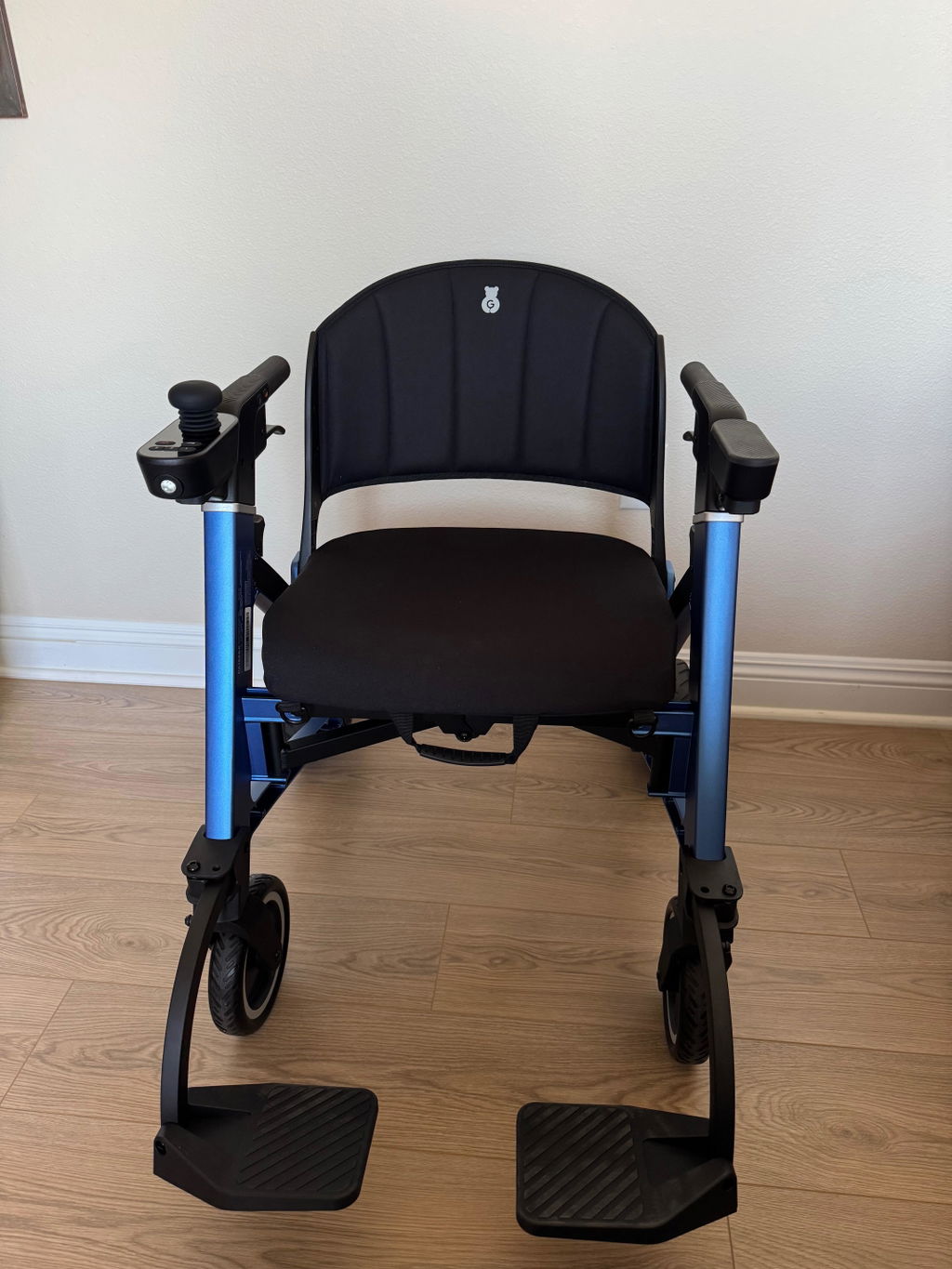
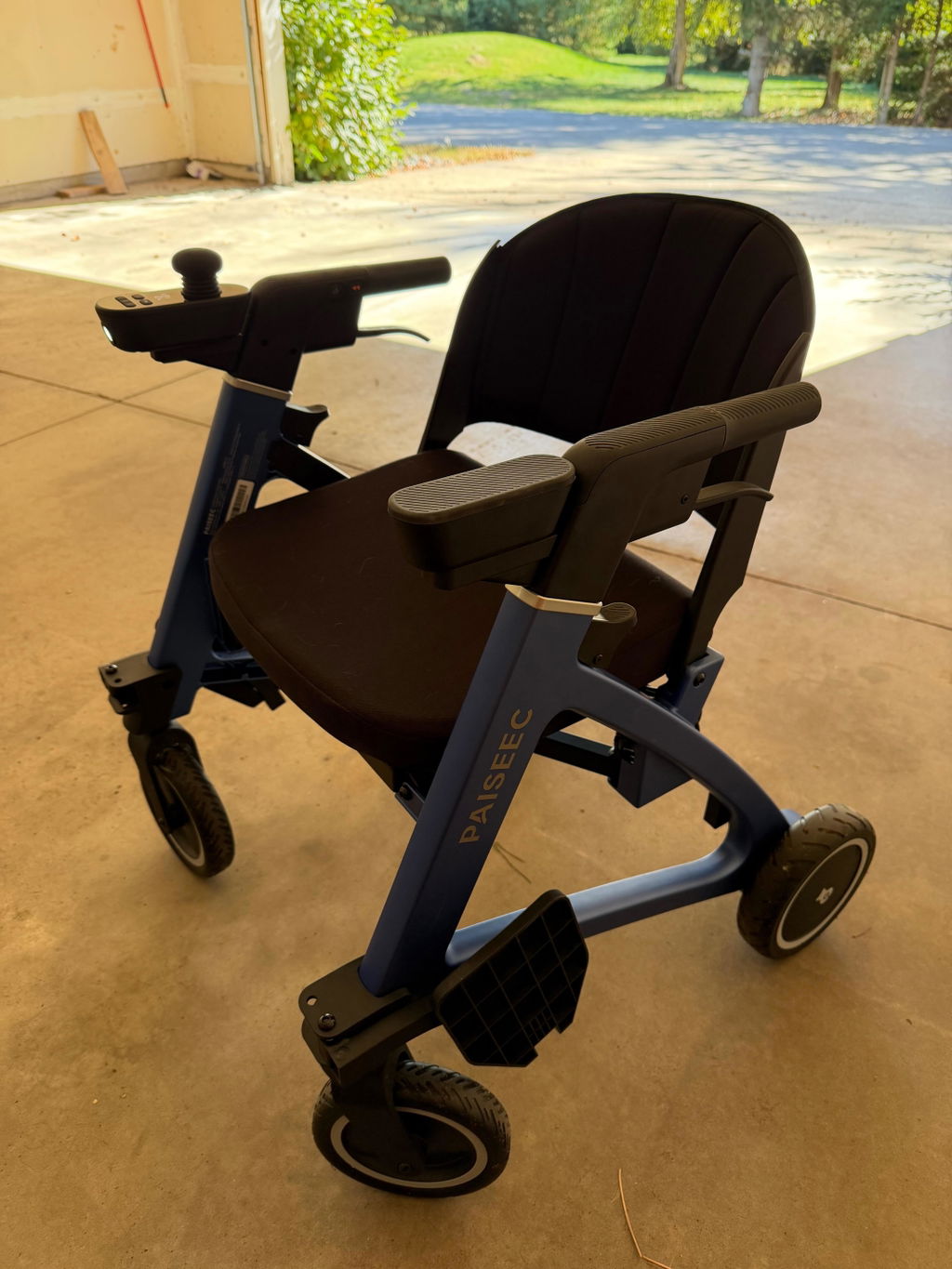
Paiseec offers mobility scooters including travel, folding, and lightweight options focused on portability, seat comfort, and safety-aware powered mobility design.
How Do You Operate and Control a Mobility Scooter?
Mobility scooters are designed for easy operation with minimal physical effort. Here's the typical control setup:
-
Turning On: Press the power button on the tiller
-
Steering: Rotate handlebars left/right (like a bike)
-
Speed Control: Thumb lever or twist grip on the right handlebar
-
Braking: Automatic when you release speed control; some have manual brake levers
-
Dashboard: Shows battery level, speed, and sometimes error codes
Most scooters are plug-and-play: turn on, relax, and ride. Controls are within reach, requiring minimal movement—ideal for users with limited mobility.
Safety Operation Tips
-
Read the manufacturer's operation guidelines
-
Ride responsibly at appropriate speeds for your environment
-
Avoid overloading beyond weight capacity
-
Do not attempt unsafe slopes or wet-condition misuse
-
Never modify battery packs or bypass the battery management system (BMS)
What Safety Considerations and Battery Rules Apply to Mobility Scooters?
General Safety Rules
No mobility product is "100% safe" or "fall-proof." Mobility scooters can help support independence when properly selected for the user's condition and environment. Always:
-
Operate within local rules for powered mobility devices
-
Use safety equipment as required (e.g., headlights, reflectors)
-
Train users on proper operation
Lithium Battery Safety
Most modern mobility scooters use lithium-ion batteries with a battery management system (BMS). Critical safety practices:
Never bypass the BMS, use uncertified chargers, or mix battery packs. Store batteries indoors, away from flammable materials, and never dispose of them in household trash.
Range varies by user weight, terrain, temperature, tire condition, battery age, and speed—don't assume a fixed number without verifying for your specific model.
When Should You Choose a Mobility Scooter Over Other Mobility Products?
Choosing the right mobility product depends on several factors. Here's a decision framework:
Mobility Product Selection Checklist
Choose a mobility scooter if:
-
You can walk short distances but need help with longer walks
-
You primarily need outdoor/community mobility
-
Portability and travel are important
Choose an electric wheelchair if:
-
You need all-day mobility support
-
Indoor maneuverability is critical
-
You have seating, posture, or pressure concerns requiring clinical fitting
Choose a walking cane if:
-
You only need minor balance or strength support
-
You're recovering from temporary injury
-
You want maximum portability with minimal cost
For balance problems, pain, weakness, fall risk, injury recovery, or neurological conditions, involve a physical therapist (PT), occupational therapist (OT), or clinician before selecting a cane or powered mobility device.
What Do Paiseec Experts Recommend?
"In Paiseec's typical mobility-scooter selection workflow, buyers first confirm their primary use environment (indoor vs. outdoor), transport needs (folding vs. standard), and weight capacity requirements. For powered mobility, battery charging safety matters: always use the OEM charger, charge in a temperature-controlled area, and inspect cables regularly. If you have seating, posture, balance, or fall-risk concerns, involve a qualified PT, OT, or mobility dealer before purchase. We design our scooters with user-centered mobility principles—prioritizing seat comfort, portability, and safety-aware powered mobility for seniors, caregivers, and travel users."
— Paiseec Mobility Product Team
Conclusion
A mobility scooter is a practical, battery-powered seated vehicle that helps people with limited mobility travel independently for short to medium distances. Key takeaways:
-
Choose the right category: Mobility scooters for outdoor/community use; electric wheelchairs for all-day indoor+outdoor support; canes for minor walking aid
-
Verify specifications by model: Range, weight capacity, and portability vary significantly
-
Prioritize battery safety: Use OEM chargers, charge in safe conditions, inspect cables, never modify batteries
-
Involve professionals when needed: PT/OT/clinician/ATP guidance is recommended for seating, posture, balance, or fall-risk concerns
-
Consider portability and terrain: Folding/lightweight models for travel; four-wheel for rough outdoor terrain
For product details, support, dealer inquiries, or mobility-product selection help, contact Paiseec to verify current specifications, warranty terms, and availability for mobility scooters, electric wheelchairs, walking canes, and accessories.
FAQs
Is a mobility scooter the same as an electric wheelchair?
No. Mobility scooters use handlebars for steering and are primarily for outdoor/community use. Electric wheelchairs use joystick control, have tighter turning radii, and are designed for all-day indoor and outdoor support. Wheelchair selection often requires clinical input for seating and posture.
Can Medicare cover a mobility scooter?
Medicare Part B may cover a "medical mobility scooter" if prescribed by a doctor and used primarily in the home. The patient must qualify through a doctor's evaluation, and a DME provider must evaluate home maneuverability.
How far can a mobility scooter travel on one charge?
Range varies from 5–45 miles per charge, depending on battery capacity, user weight, terrain, temperature, tire condition, battery age, and speed. Always verify range for your specific model rather than assuming a fixed number.
Are mobility scooters safe for seniors?
Mobility scooters can be safe when users read operation guidelines, ride responsibly, and select models appropriate for their ability and environment. No product is 100% safe. For balance problems, fall risk, or medical conditions, involve a PT/OT before purchase.
Do Paiseec mobility scooters fold for travel?
Paiseec offers travel and folding mobility scooter options focused on portability. Verify specific folding dimensions, weight, and transport requirements from current official product pages before purchase, as specifications vary by model.
Leave a comment
This site is protected by hCaptcha and the hCaptcha Privacy Policy and Terms of Service apply.