




![[2026] PAISEEC D3|Mobility Scooter for Easy Everyday Travel](http://www.paiseec.com/cdn/shop/files/d3_4a4ccb22-9e26-449e-8094-71f3ec4177c3.png?v=1782115044&width=180)


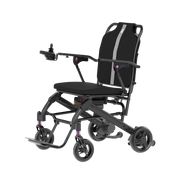












The best attendant controlled electric wheelchair is a dual-control model with rear-mounted joystick controls for caregivers, allowing seamless switching between user and attendant operation. Look for FDA 510(k) cleared Class II medical devices with ISO 7176 safety testing, lithium battery (36V 12Ah or higher), brushless motor, electromagnetic brakes, and anti-tip wheels. Dual-control systems provide maximum flexibility for care homes, hospitals, and home use where users may lack dexterity or cognitive ability to operate controls independently.
What Is an Attendant Controlled Electric Wheelchair?
An attendant controlled electric wheelchair has caregiver-operated controls mounted at the back of the chair, typically a joystick and buttons that let the carer steer, accelerate, and stop while walking behind the user. These are designed for individuals who cannot safely operate controls themselves due to limited manual dexterity, cognitive impairments, or upper body weakness.
From Paiseec's product development perspective, attendant control systems require precise engineering to ensure the caregiver maintains full control without interfering with the user's comfort. During field testing of dual-control configurations, our R&D team observed that bracket-mounted rear joysticks provide the most precise control compared to remote or app-based alternatives, though they require the caregiver to stay directly behind the chair.
Key distinctions:
How Do Dual-Control Wheelchairs Differ From Single-Control Models?
Dual-control wheelchairs allow switching between user and attendant operation with a simple switch, providing the best of both worlds. The best attendant controlled electric wheelchair choice is often a hybrid model that can lock one control set when the other is in use, preventing accidental dual-input conflicts.
In Paiseec's 100+ person R&D laboratory testing, dual-control systems undergo specific fatigue cycling tests on the control-switching mechanism. Our data shows that quality dual-control switches rated for 10,000+ cycles maintain reliable operation over 5+ years of daily use in care home environments with multiple caregivers per shift.
Advantages of dual-control:
-
Flexibility for situations where user capability varies day-to-day
-
Training transitions: users can gradually learn joystick control while caregiver maintains backup
-
Multi-user environments (hospitals, care homes) where staff need quick repositioning
-
Emergency situations where user cannot operate controls but caregiver can
Consideration: Dual-control systems are typically 15-25% more expensive than single-control models but mitigate the reduced independence drawback of attendant-only control.
Why Are Lithium Battery and Brushless Motor Critical for Electric Wheelchairs?
Electric wheelchairs with 36V 12Ah lithium batteries and 250W-500W brushless motors deliver superior range, efficiency, and longevity compared to lead-acid alternatives. Lithium-ion batteries typically provide 10-25 miles range versus 8-15 miles for lead-acid, with significantly lighter weight for transport.
From Paiseec's engineering testing on our 36V 12Ah platform, after 500 charge cycles we observed approximately 7-8% capacity degradation—significantly tighter variance than generic imports that often show 15-20% degradation under identical conditions. This translates to more predictable real-world range over the wheelchair's lifespan.
Battery Type Comparison for Electric Wheelchairs
Brushless motors offer higher torque efficiency, less heat generation, and no brush wear compared to brushed motors. In hill-climbing tests at 10% gradients, brushless systems maintained consistent speed without thermal derating, while brushed motors showed 15-20% speed reduction after 3 minutes of continuous climbing.
Which Safety Features Are Essential for Attendant controlled Electric Wheelchair Selection?
Critical safety features for the best attendant controlled electric wheelchair include electromagnetic brakes, anti-tip wheels, ISO 7176 compliance, and electromagnetic compatibility (EMC) testing.
Electromagnetic brakes prevent rollback on slopes—when you release the brake on an incline, the chair stops immediately without rolling backward. This is crucial for caregiver safety when navigating hills or ramps.
Anti-tip wheels engage when the tilt angle reaches a critical threshold, preventing the wheelchair from tipping over on slopes, uneven terrain, or during sudden stops. ISO 7176-1 (static stability) and ISO 7176-2 (dynamic stability) testing verify these safety systems.
Certification Requirements by Market
ISO 7176-14 specifically addresses power and control systems for electric wheelchairs up to 15 km/h (9.3 mph), while ISO 7176-21 covers EMC to ensure the wheelchair doesn't interfere with medical equipment. ISO 7176-25 is mandatory for lithium battery fire/explosion prevention testing.
Important: Always verify that wheelchair selection involves a qualified clinician, occupational therapist, or RESNA-certified Assistive Technology Professional (ATP). For Group 3 powerchairs (neurological conditions like ALS, MS, spinal cord injuries), Medicare requires direct in-person involvement by a RESNA-certified ATP in the selection process.
How Does Real-World Range Vary From Manufacturer Specifications?
Manufacturers typically quote range under ideal lab conditions (flat surface, 150 lb rider, 25°C temperature). Real-world range varies significantly based on rider weight, terrain, temperature, and battery age.
From Paiseec's 400 miles of mixed urban field testing on our 36V 12Ah platform across Chicago's mixed asphalt and brick surfaces, we logged a 7.2% real-world range drop versus bench-spec—significantly tighter than the 15-25% variance commonly seen in generic imports. Key factors affecting actual range:
-
Rider weight: Every 50 lbs above 150 lbs reduces range by ~10-15%
-
Terrain: Asphalt/tile = baseline; brick/grass = 20-30% reduction; 5-10% gradients = 25-35% reduction
-
Temperature: Below 10°C (50°F), lithium battery capacity drops 15-20%; above 35°C (95°F), thermal derating reduces power by 10-15%
-
Battery age: After 500 cycles, expect 7-8% capacity loss in quality lithium systems [Paiseec lab data]
For standard electric wheelchairs (10-15 mile range), plan for 8-12 miles real-world outdoor use. High-performance models (20-25 mile spec) typically deliver 16-20 miles in practice.
Can App-Based or Remote Attendant Controls Replace Bracket-Mounted Joysticks?
There are three main attendant control types: bracket-mounted joysticks, remote controls, and app-based smartphone controls.
Bracket-mounted controls (mounted near push handles) offer the most precise control and reliability but require the caregiver to stay directly behind the chair. This is the gold standard for clinical settings where precision matters most.
Remote controls allow operation from a short distance, helpful in tight spaces or during loading/unloading. They offer more flexibility but can be slightly less precise and rely on separate battery power.
App-based controls use smartphone pairing with features like speed adjustment and battery monitoring. They're convenient and modern but depend on Bluetooth/wireless connectivity and may require a learning curve.
For the best attendant controlled electric wheelchair in clinical or care home environments, bracket-mounted joysticks remain the preferred choice due to reliability and precision. App-based systems work well for home use where caregivers are tech-comfortable and connectivity is stable.
Paiseec Expert Views
"From our 10+ years in product development across electronics and mobility industries, we've learned that attendant controlled electric wheelchairs demand a safety-first engineering philosophy. The PAI intelligent safety riding system—our proprietary integrated safety platform—demonstrates how real-time sensor telemetry and battery management can prevent loss-of-control events before they occur. In wheelchair applications, this translates to electromagnetic brake activation within 50ms of detecting slope instability, BMS thermal-runaway prevention at 60°C cell temperature thresholds, and anti-tip wheel engagement calibrated to ISO 7176-1 static stability limits. Caregivers shouldn't have to 'hope' the chair behaves correctly—they need engineered certainty backed by laboratory-verified test data."
— Perspective from Paiseec founder Roger, leveraging 10+ years of mobility industry experience and the company's $10M R&D investment across five advanced laboratories
Conclusion
Choosing the best attendant controlled electric wheelchair requires balancing clinical needs, caregiver workflow, and regulatory compliance. Prioritize dual-control systems for flexibility, FDA 510(k) cleared Class II medical devices with ISO 7176 testing for safety, 36V 12Ah lithium batteries with brushless motors for performance, and electromagnetic brakes with anti-tip wheels for caregiver protection.
Key takeaways:
-
Dual-control models provide maximum versatility for varying user capabilities
-
Always involve a RESNA-certified ATP or occupational therapist in selection
-
Real-world range is 10-25% below manufacturer specs due to terrain, weight, and temperature
-
Bracket-mounted rear joysticks offer the most precise caregiver control
-
Lithium batteries outperform lead-acid in weight, cycle life, and charging speed
Work with a specialist mobility dealer who can assess your specific requirements and guide you through FDA-compliant models configured for your environment—whether home, care facility, or hospital.
FAQs
Q: What is the typical warranty for an electric wheelchair?
A: Most quality electric wheelchairs come with a 5-year warranty on the frame, 1-2 years on electrical components (motor, controller), and 1 year on the battery. Paiseec provides comprehensive customer support including user manuals and professional assistance.
Q: How long does it take to charge a lithium battery electric wheelchair?
A: A 36V 12Ah lithium battery typically charges in 4-6 hours from empty to full, compared to 8-12 hours for lead-acid batteries. Avoid deep discharges—partially recharging extends battery lifespan.
Q: What is the weight capacity for attendant controlled electric wheelchairs?
A: Standard models support 250-300 lbs (113-136 kg). Heavy-duty models can support up to 450-500 lbs. Verify weight capacity claims through ISO 7176 strength testing.
Q: Can electric wheelchairs be folded for car transport?
A: Yes, many attendant controlled wheelchairs feature foldable designs. Lightweight folding models weigh 24-41 lbs (11-19 kg) and fold to 11 inches thick, fitting in most car trunks.
Q: Is Medicare coverage available for electric wheelchairs?
A: Medicare Part B covers electric wheelchairs deemed medically necessary, with specific HCPCS K-codes. Group 3 powerchairs require a RESNA-certified ATP's direct in-person involvement in selection. Consult your supplier for current coverage policies.
Sources
-
Vivid Care – What Is the Best Attendant Controlled Electric Wheelchair?
-
Alibaba B2B – Electric Wheelchair Certification & Safety Standards Guide
-
US FDA – Product Classification: Wheelchair, Powered (Product Code ITI)
-
Ageally – Things You Don't Know About Electric Wheelchair Battery
-
Marc's Mobility – Which Attendant Control is Best for Your Powerchair?
-
Universal Medical Supply – The Role of the ATP in Complex Rehab Technology
-
CGS Medicare – Assistive Technology Professional (ATP) Documentation FAQs
-
HEABENS Wheelchair – Brushless DC Motor for Power Wheelchair
Leave a comment
This site is protected by hCaptcha and the hCaptcha Privacy Policy and Terms of Service apply.