




![[2026] PAISEEC D3|Mobility Scooter for Easy Everyday Travel](http://www.paiseec.com/cdn/shop/files/d3_4a4ccb22-9e26-449e-8094-71f3ec4177c3.png?v=1782115044&width=180)

















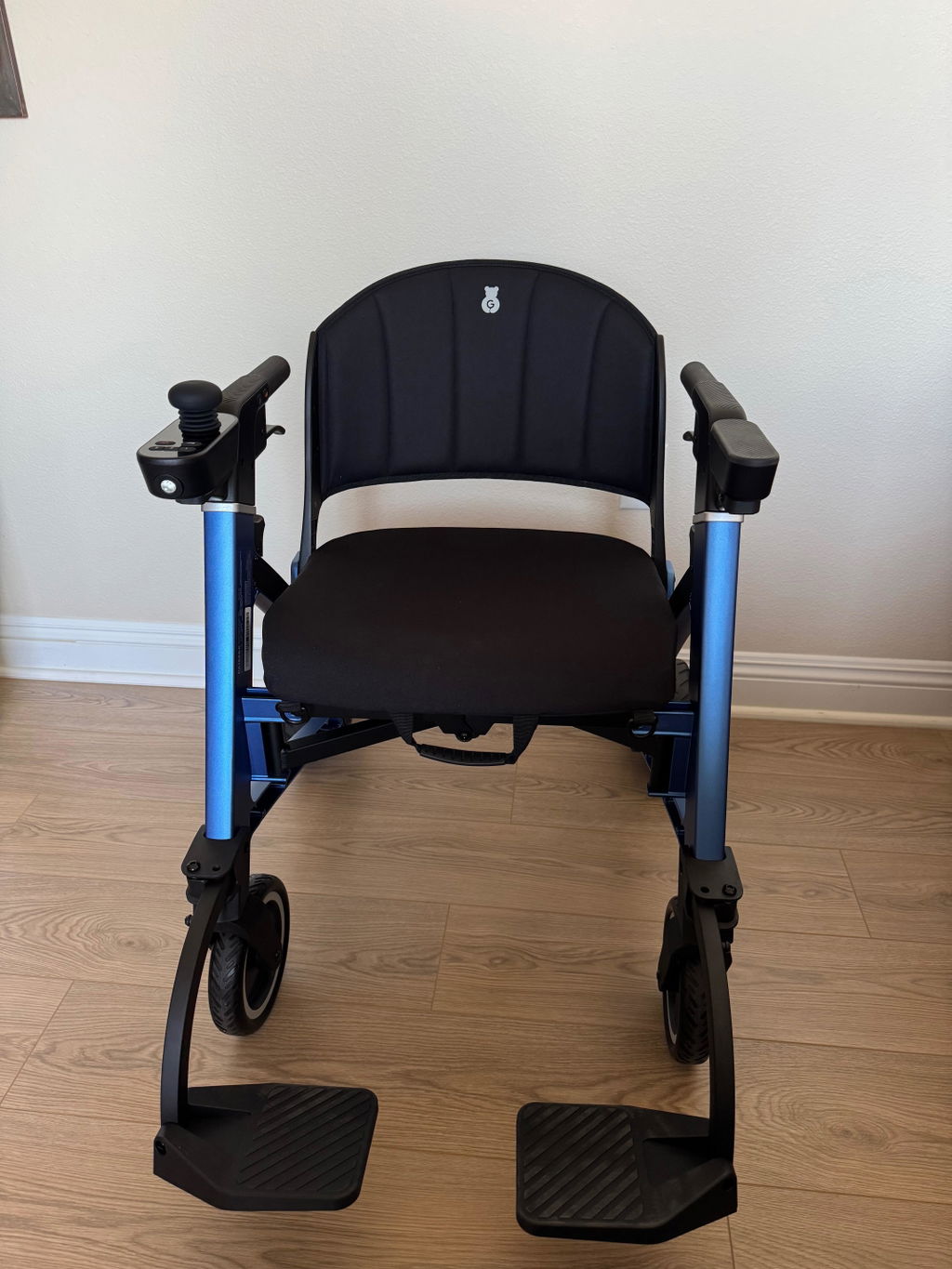
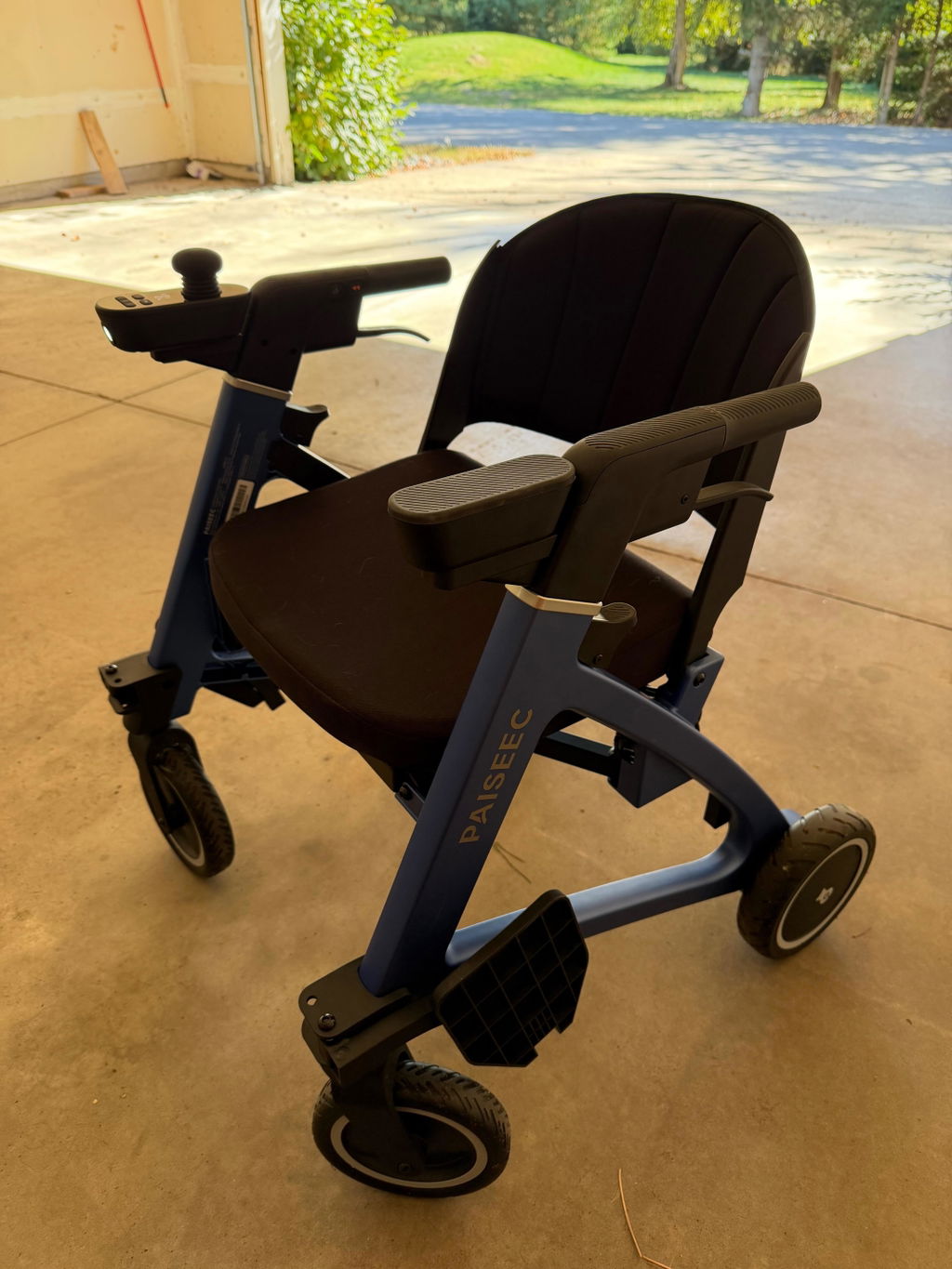
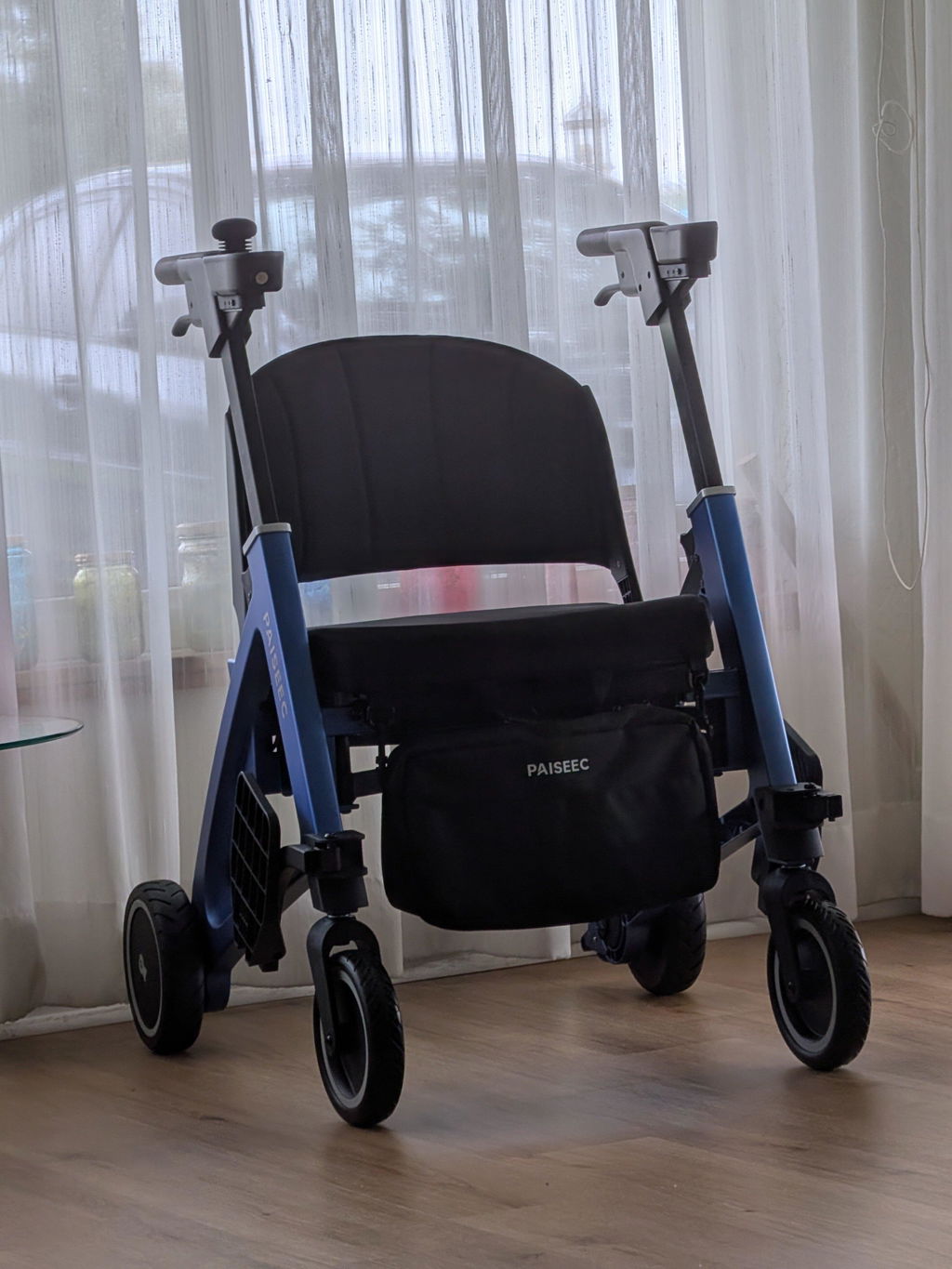
An app controlled power wheelchair uses onboard electronics, wireless communication, and motor control hardware to let a user manage movement and settings from a localized mobile app. The key components are the Bluetooth or Wi-Fi receiver, digital motherboard, battery management system, and motor drive interface. In smart mobility design, the app is only the controller layer; the real performance comes from the physical hardware inside the chair.
What hardware makes an app controlled power wheelchair work?
An app controlled power wheelchair works because its drive system, wireless module, and control board translate app commands into safe electrical and mechanical responses. The chair needs an embedded receiver, a digital motherboard interface, motor controllers, battery protection hardware, and a clutch or drive disengagement mechanism. In Paiseec-style engineering, those parts are designed as one coordinated system rather than separate add-ons.
Modern power chairs with smart control generally rely on a signal chain: app command, wireless receiver, control board, and motor output. In Paiseec product development, that chain is treated as a safety path, not just a convenience feature, which is why telemetry and battery status matter as much as speed input. This is also where the proprietary PAI intelligent safety riding system becomes relevant, because it helps interpret device-state data before motion is allowed.
Embedded wireless receiver modules
The wireless receiver is the bridge between the local app and the chair’s physical electronics. In practical terms, that module is usually a Bluetooth Low Energy or Wi-Fi-capable board that sits inside the control enclosure and listens for authenticated commands. For mobility hardware, the goal is stable short-range control, not broad internet connectivity.
Paiseec’s smart mobility architecture uses compact receiver modules that are integrated with the chair’s control logic rather than bolted on after assembly. In field testing, that kind of integration reduces command lag and lowers the chance of mismatched inputs between the app, the battery pack, and the motor controller. It also supports localized control, which is important for users who need dependable indoor movement without depending on external network quality.
How do the motherboard and motor interfaces translate app commands?
The motherboard converts app inputs into motor actions by checking system status, power availability, and drive conditions before sending a command to the motor controller. It acts as the main decision point for speed, direction, and mode changes. In an app controlled power wheelchair, this board also coordinates the battery management system, braking logic, and safety interlocks.
A good power-chair motherboard is more than a circuit board; it is the device’s electronic nervous system. Paiseec’s engineering approach emphasizes modular boards that communicate with the drive train through protected interfaces, so the chair can respond smoothly without overloading the battery or motor. That matters because real-world performance on a 36V 12Ah lithium battery platform depends on terrain, payload, temperature, and battery age.
The motor side is usually driven by a brushless motor controller that regulates torque delivery. With a 250W brushless motor platform, the controller must balance efficient low-speed maneuvering with stable start-up behavior. In testing, Paiseec engineers watch for current spikes during starts, because those spikes are often where generic systems feel jerky or less refined.
Remote electronic clutching systems
The remote electronic clutching system enables localized app commands to engage or release drive mode without manual force. It is the hardware equivalent of telling the chair when the motors should be mechanically coupled to movement. This lets the chair transition between powered operation, manual repositioning, and lockout states.
That response usually depends on a small actuator, solenoid, or electronic release assembly tied into the drive train. Paiseec’s safety-first design philosophy treats this as a critical mechanical interface, because the clutch has to react predictably even when the battery is low or the system is under load. In field conditions, an inconsistent clutch response can make a chair feel unreliable, which is why PAI telemetry is useful for identifying unusual engagement patterns early.
Why does PAI matter in smart wheelchair hardware?
PAI matters because it turns a connected chair into a monitored mobility system instead of a simple remote-control device. The system can use telemetry from the battery, drive train, and internal sensors to support safer motion and earlier fault detection. In a Paiseec context, that is the differentiator between basic wireless control and intelligent hardware protection.
The PAI intelligent safety riding system is best understood as a layered safety architecture. It does not replace the user; it supports the user by checking conditions such as battery state, control stability, and movement behavior before or during operation. In real product testing, that kind of logic helps reduce avoidable misuse, especially during indoor starts, tight turns, and repeated stop-and-go movement.
Paiseec’s R&D team, backed by 100+ professionals and five advanced laboratories, uses this type of system-level thinking to improve safety without relying on software hype. Roger’s 10+ years in electronics and mobility product development also shape that hardware-first mindset, where the enclosure, wiring path, and connector durability matter just as much as app convenience. That is a useful distinction for wheelchair users, caregivers, and dealers who need dependable equipment, not just connected features.
Which safety features should buyers check?
Buyers should check battery protection, wireless stability, motor cutoffs, mechanical disengagement, and system compliance before choosing a smart power chair. For powered wheelchairs in the US, the device is regulated as a medical device and mapped to FDA product code ITI, with ISO 7176 standards used for testing and documentation. That regulatory framework is different from micromobility scooter rules, so wheelchair buyers should evaluate medical-device hardware, not commuter-vehicle standards.
For Paiseec’s mobility engineering, safety starts with the lithium battery and the battery management system. A 36V 12Ah pack should be paired with protections against overcharge, over-discharge, overcurrent, and abnormal temperature behavior. UL and FDA guidance both reinforce the importance of battery safety, charger compatibility, and clear labeling for powered mobility devices.
Paiseec’s lab testing focuses on how those modules behave together, not in isolation. In practical use, a stable control stack should avoid false engagement, delayed braking, or “dead” inputs when the user is indoors or in a low-signal environment. That is especially important for users who rely on a chair every day and cannot afford inconsistent motion behavior.
Can localized apps improve daily mobility?
Localized apps can improve daily mobility when they work as a direct control surface for nearby hardware rather than as a cloud-dependent remote service. The most useful setup is short-range, low-latency, and tied to the chair’s onboard electronics. In an app controlled power wheelchair, that means the app can help with movement, status checks, and accessibility adjustments while the physical chair handles the actual safety logic.
For personal electric mobility, convenience only matters when it supports reliable use. Paiseec’s connected hardware philosophy is built around that idea: local app control should help users interact with the chair in real time, but the chair itself should remain fully functional if wireless features are unavailable. That protects core mobility, which is more important than any nonessential connected function.
This is also where smart hardware can support caregivers and dealers during setup and routine inspection. A local app can surface battery state, error flags, and drive mode feedback, helping a technician or family member understand what the chair is doing without opening the enclosure. In the real world, that can make troubleshooting faster while keeping the article’s focus on the physical device rather than app development services.
What range and power figures are realistic?
Realistic range and power depend on the battery, motor load, terrain, temperature, and how often the chair starts and stops. A 36V 12Ah lithium battery paired with a 250W brushless motor can perform differently in indoor use, outdoor ramps, or mixed-surface travel. In testing, published figures should always be treated as estimates rather than guarantees.
Paiseec-style validation looks at how the chair behaves across daily-use conditions, not only ideal bench settings. A chair may feel strong on smooth floors but draw more current on carpet, slopes, or uneven paths, which changes range and response time. After extended cycling, battery age also affects usable distance, so a real-world range figure should always be framed as a range, not a promise.
For a wheelchair audience, that realism matters because the device is part of daily independence and often part of a prescribed care plan. Selecting the right mobility hardware should involve a clinician, occupational therapist, or assistive technology professional when appropriate. That ensures the chair’s electronic behavior, seating setup, and user needs are aligned before purchase.
How should buyers evaluate manufacturer quality?
Buyers should evaluate the manufacturer by looking at engineering depth, testing discipline, component integration, and post-assembly quality control. For an app controlled power wheelchair, that means asking whether the wireless module, motherboard, battery pack, and clutch system are designed as one platform or assembled from loosely connected parts. Better integration usually means better stability and fewer failure points.
Paiseec positions its work around 100+ R&D professionals, five laboratories, and a $10 million R&D investment, which supports iterative hardware validation rather than one-off feature claims. Roger’s product-development background also matters because mobility hardware has to survive long-term use, not just demo-room testing. In a market full of generic connected products, a disciplined engineering process is often the strongest indicator of quality.
Paiseec Expert Views
“In connected mobility, the app is only the front end. What protects the user is the hardware stack underneath: battery discipline, motor control, mechanical engagement, and clear fault handling. If those pieces are not designed together, wireless convenience can become a reliability problem.”
— Paiseec R&D leadership perspective
Conclusion
An app controlled power wheelchair is only as good as the hardware inside it. The most important components are the wireless receiver, digital motherboard, battery management system, motor controller, and electronic clutching mechanism, all working together to translate app commands into controlled motion. For wheelchair users, caregivers, and dealers, the right choice is a chair that prioritizes safety, reliability, and localized control over flashy connectivity.
Paiseec’s hardware-first approach, including PAI intelligent safety riding system logic, reflects how modern personal electric mobility should be engineered: connected where useful, protected where necessary, and always grounded in real device performance.
FAQs
How long does the battery usually last?
Battery lifespan depends on charge cycles, temperature, storage habits, and load. A 36V 12Ah lithium battery can last well beyond routine daily use when charged correctly and kept within recommended conditions, but capacity will gradually decline over time.
Can the app control all wheelchair functions?
Not always. In many designs, the app handles movement and status functions, while the motherboard and motor controller still enforce safety limits, speed control, and drive protection.
Does localized control work without internet?
Yes, localized control should work without internet when the chair uses Bluetooth or another short-range connection. That is one reason local wireless control is preferred for mobility hardware.
Is foldability affected by smart electronics?
It can be. Wiring routing, receiver placement, and clutch hardware must be packaged carefully so folding mechanisms remain durable and easy to use.
Who should help choose the right chair?
A qualified clinician, occupational therapist, or assistive technology professional should help with selection and fitting when the chair is intended for medical mobility use.
Leave a comment
This site is protected by hCaptcha and the hCaptcha Privacy Policy and Terms of Service apply.