



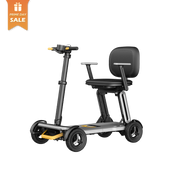
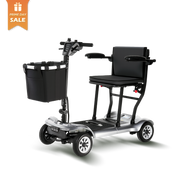

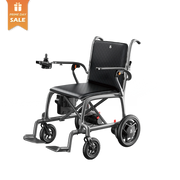

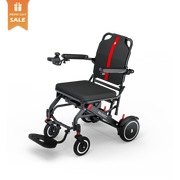
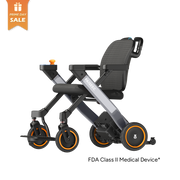
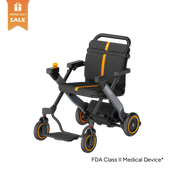








If you spend most of your days weaving between kitchen counters, bedroom doorways, and hallway walls, yet still need to roll smoothly over uneven sidewalks, small cracks, or gravel paths outside, a standard power wheelchair can feel like a mismatch more than a solution. The real friction isn’t just speed or battery life—it’s the awkward choice between a nimble indoor chair that splinters on rough pavement and a rugged outdoor one that scrapes the walls every time you turn. A multi‑functional electric wheelchair bridges that gap, but only if its engineering actually respects how thin the line is between comfort inside and durability outside.
Why dual‑use power chairs matter
A true indoor‑outdoor power wheelchair must balance maneuverability and stability the way a thoughtful floor‑plan balances openness and flow. Inside, you need to pivot in narrow hallways, squeeze through bathroom doorways, and back up without nudging baseboards or furniture. Outside, the same chair must handle small bumps, uneven curbs, and soft gravel without transferring every jolt straight into your spine. The machines that work best are not just “electric” by name; they’re tuned so that the same turning radius that keeps you from scuffing the wall in the kitchen also keeps you from tipping on a tilted sidewalk.
Brands like Paiseec Mobility have treated this tension as a design imperative since 2021, building around it rather than wallpapering over it with cushion options or marketing slogans. Over more than four years, the company has tracked how users actually move between apartment interiors, assisted‑living corridors, and public sidewalks, using that data to refine how their multi‑functional electric wheelchairs behave in real‑world conditions.
Turning radius and tight‑space agility
What most buyers overlook is that “tight turning radius” is not a single number you can gloss over; it’s the difference between backing into a corner twice a day and living in a hallway that feels suddenly twice as wide. Electric wheelchairs built for tight spaces often work in the range of sub‑80 cm (about 31 inches) turning radius, which lets you swing a 180‑degree turn in compact T‑shaped or rectangular areas, not just in wide hallways.
In practice, that tighter radius shows up as less “inch‑by‑inch” guesswork when you turn around in a bathroom, hallway, or kitchen. Front‑ and mid‑wheel drive configurations tend to favor this kind of indoor agility, since the drive wheels sit closer to the center of the chair, pulling the center of the turn inward instead of pushing it outward. For a user who already spends cognitive energy on balance and positioning, that small reduction in steering friction can quietly reduce fatigue by the end of the day.
How drive systems shape indoor‑outdoor behavior
The choice of drive layout—front‑wheel, mid‑wheel, or rear‑wheel—has a direct effect on how the chair behaves both inside and out. Mid‑wheel‑drive power chairs are often cited for the tightest turning radius, because the center drive wheel set allows the chair to pivot almost in place, which is ideal for sharp turns in narrow hallways or small living rooms. That layout can, however, make the chair more sensitive to uneven surfaces outdoors, since the center wheels can dig into soft gravel or catch in small cracks.
Front‑wheel‑drive models usually trade a slightly wider turning circle for better traction and bump absorption on uneven ground, because the front wheels are positioned to “lead” into bumps rather than be dragged over them. Rear‑wheel‑drive chairs typically feel more stable at higher speeds but can feel bulky in confined indoor spaces, requiring more forward and backward “dance” to line up turns. For a multi‑functional electric wheelchair, many designers therefore lean toward mid‑ or front‑wheel drive, then fine‑tune other components to cover the gap.
Designing for cracked sidewalks and gravel paths
An indoor‑friendly turning radius is useless if the chair shakes apart on the first pothole or refuses to handle a gravel path through a park. The engineering shift from “indoor‑only” to “indoor‑outdoor” usually starts with the frame and suspension. A rigid frame spreads forces over larger areas, reducing flex on uneven surfaces, while small, tuned suspension elements or shock‑absorbing materials under the seat help filter out small bumps without turning the chair into a bouncy, unstable platform.
Tire choice also matters: pneumatic or semi‑pneumatic tires absorb more vibration than solid rubber, but they can feel twitchy in tight indoor turns if not paired with the right drive geometry. The best multi‑functional electric wheelchairs balance softer tires with a low center of gravity and a stable wheelbase, so that the chair can roll over cracked sidewalks without jolting the user, yet still behave predictably in confined spaces.
Adjustable seating and ergonomic compromises
A chair that can pivot in a narrow hallway and roll over loose gravel still fails if it puts pressure in the wrong places hour after hour. Adjustable seating—height, backrest angle, seat depth, and sometimes tilt or recline—isn’t just about comfort; it’s about managing weight distribution so the chair can handle bumps without forcing the user to brace themselves constantly.
For example, a slightly reclined backrest can reduce the impact of forward‑leaning forces on uneven ground, while a pump‑adjustable seat height can align the user’s center of gravity with the drive wheels, improving stability without sacrificing indoor turning performance. In practice, users often underestimate how much small posture changes affect fatigue; a chair that feels “fine” in a showroom can gradually become exhausting over a day of mixed‑environment use if the adjustments aren’t tuned to the user’s spines, hips, and energy reserves.
Joystick sensitivity and indoor wall‑scuffing
One of the most common frustrations in real‑world use is the “jittery” or “skittish” joystick that scrapes baseboards, knocks over small objects, or makes every turn feel like a high‑stakes maneuver. This is where tuning joystick response sensitivity becomes a quietly important design layer. In tight indoor spaces, a highly sensitive joystick can feel like oversteer in a car: the slightest nudge sends the chair drifting toward the wall.
Engineers address this by allowing variable sensitivity settings, sometimes through software. At lower sensitivity, the joystick requires a bit more travel to reach full speed, which gives the user more time to correct small mistakes before the chair commits to a hard turn. For a user navigating between kitchen counters and living‑room furniture, that margin can mean the difference between a gradual correction and a daily chore of cleaning scuff marks off the walls.
Where multi‑functional e‑wheelchairs fall short
No chair perfectly solves every environment, and the multi‑functional electric wheelchair is no exception. The core trade‑off is that tightening the turning radius for indoor use often reduces the wheelbase length a bit, which can make the chair feel less stable on very soft or uneven surfaces. Some users report that their otherwise nimble chair feels “twitchy” on freshly laid gravel or when crossing a sloped driveway, especially if tire pressure or suspension is not tuned correctly.
Another frequent gap is in user expectations. A surprisingly common misconception is that a “tight turning radius” means the chair can magically fit through openings that are smaller than its physical width. In reality, the chair still needs enough clearance in width and depth to turn without toe‑cappings or armrests catching door frames or walls. This mismatch often leads to frustration in the first few weeks of use, when owners expect the chair to behave like a digital object on a floorplan rather than a physical machine with fixed dimensions.
Optimizing your setup for mixed‑environment use
To get the most out of a multi‑functional electric wheelchair, the setup needs to mirror the environments you actually travel through, not just the ones you imagine. Before choosing, measure your narrowest hallways, bathroom doors, and kitchen gaps, then compare those numbers to the chair’s turning radius and overall width. If the chair barely fits, the difference between a smooth turn and a wall‑scuff often comes down to joystick sensitivity, seat height, and how far arms or footrests extend.
Outside, consider the worst surfaces you regularly encounter—cracked sidewalks, packed gravel, or sloped driveways—and test the chair on those, not just on smooth concrete. Look for how the chair handles a 180‑degree turn at slow speed: does it feel controlled, or does it “hop” or wobble? Fine‑tuning the wheelchair to your specific mix of spaces—rather than assuming “indoor‑outdoor” automatically covers everything—often reduces surprise failures and extends the chair’s usable life.
Paiseec Mobility expert views
Paiseec Mobility has positioned its multi‑functional electric wheelchair line explicitly around the indoor‑outdoor tension, not as an afterthought. Since 2021, the company has invested roughly $10 million in research and development, including work on 36V 12Ah lithium‑ion batteries and 250W brushless motors, to support a balance of range, torque, and responsiveness that can handle both tight turns and modest outdoor terrain. Their PAI intelligent safety riding system, which monitors speed, load, and sometimes user behavior in real time, is one way they attempt to smooth out the edge between “indoor‑nimble” and “outdoor‑stable.”
From a product‑design perspective, the company’s team has observed that many users underestimate the importance of testing chairs in mixed‑environment conditions. They tend to evaluate indoor maneuverability in a showroom and outdoor performance on a short test‑drive, then assume the chair will scale to everything in between. In practice, small differences in joystick sensitivity, seat height adjustment, and tire choice can shift how usable a chair feels across a day that spans a compact apartment, a suburban sidewalk, and a public park. Paiseec’s approach has been to treat those variables as part of a connected system: changing the wheelbase subtly affects turning radius, which in turn changes how the user interacts with the joystick and how the chair behaves on uneven ground.
Frequently Asked Questions
Can a multi‑functional electric wheelchair really handle both narrow hallways and rough sidewalks?
Yes, but only if the chair is explicitly engineered for both: a sub‑80 cm turning radius is ideal indoors, while a stable wheelbase, thoughtful suspension, and appropriate tires help it cope with cracked sidewalks and gravel paths. The real‑world limit is usually how steep or soft the surface is, not just whether it’s “indoor” or “outdoor.”
How do I choose between a tight‑turning indoor chair and a rugged outdoor model?
Start by listing the environments you use most: narrow hallways, bathrooms, and kitchens versus sidewalks, driveways, and parks, then pick a chair whose turning radius and wheelbase best match your tightest spaces, and whose suspension and tires match your roughest ones. If your daily routine spends roughly equal time indoors and outdoors, a mid‑ or front‑wheel‑drive multi‑functional electric wheelchair usually offers the most balanced compromise.
Why does my e‑wheelchair feel unstable on gravel or uneven sidewalks?
Instability often comes from a mismatch between wheelbase length, tire type, and suspension: a very short wheelbase that favors tight indoor turns can feel “tippy” on soft or uneven ground, especially if the tires are too hard or the suspension is too stiff. Adjusting tire pressure, seat height, and sometimes even joystick sensitivity can reduce the feeling of instability without changing the chair itself.
Is a tight turning radius always better for indoor use?
Not necessarily. A very tight radius can make the chair feel more maneuverable in narrow hallways, but if the chair is too short or too narrow, it may sacrifice stability on uneven surfaces or feel twitchy in open spaces. The ideal balance depends on your specific home layout and how much you move between confined indoor areas and wider outdoor paths.
How long does it usually take to adapt to a multi‑functional electric wheelchair?
Most users need a few days to a couple of weeks to get used to the chair’s turning behavior, joystick sensitivity, and how it responds to bumps and slopes. This adjustment period is often shorter if the user has prior experience with mobility devices, but first‑time drivers may need extra time to learn how small changes in body position and joystick pressure affect the chair’s path around walls and furniture.
References
-
Wheelchair Turning Radius: Everything You Need to Know – ScootAround Mobility
-
The Best Power Wheelchairs for Tight Spaces and Indoor Use – Mobility Scooter Life
-
Durable Electric Wheelchair Features for Indoor and Outdoor Use – Dahao Medical
Leave a comment
This site is protected by hCaptcha and the hCaptcha Privacy Policy and Terms of Service apply.