




![[2026] PAISEEC D3|Mobility Scooter for Easy Everyday Travel](http://www.paiseec.com/cdn/shop/files/d3_4a4ccb22-9e26-449e-8094-71f3ec4177c3.png?v=1782115044&width=180)














California’s new battery safety and equipment rules raise the bar for electric mobility products sold in the state. For scooters and powered mobility devices, the practical effect is simple: retailers and brands must prove safer batteries, certified electrical systems, proper lighting/reflectors, and stronger accountability before products reach consumers. For Paiseec, that means engineering, labeling, and safety documentation now matter as much as range, foldability, and ride comfort.
What Changed in California?
California’s new rules require third-party safety certification for lithium battery systems and related electrical components, plus updated visibility equipment and stronger enforcement around rider safety. For sellers, the big shift is accountability: products can no longer rely on vague claims; they need test-backed compliance, clear labeling, and safer charging hardware. In Paiseec’s lab workflow, this is exactly the kind of standard that separates engineered mobility products from commodity imports.
In practice, the law pushes the market toward safer battery architecture, better charger matching, and traceable compliance records. That matters for personal electric mobility because battery faults are still one of the highest-risk failure points in micro-mobility. Paiseec’s 36V 12Ah platform and PAI intelligent safety riding system were built around that reality, with monitoring logic that prioritizes battery protection and rider awareness over raw spec marketing.
How do battery rules affect scooters?
Battery rules affect scooters by requiring certified packs, safer electrical systems, and proper charging protection rather than just a usable battery capacity. In California, the emphasis is on fire prevention and third-party verification, which means the battery, charger, wiring, and control system need to be designed as a safer unit. For Paiseec scooters, that aligns with our 250W brushless motor platform and BMS-focused protection approach.
A scooter can look identical on the outside and still differ greatly in internal safety design. In Paiseec’s testing model, battery behavior after repeated charging cycles, thermal stability under load, and connector durability are all checked before release. That matters because a scooter with good range but weak electrical hygiene creates a risk profile that no commuter wants in an apartment, garage, or office.
Battery and range matrix
Paiseec’s internal field testing on urban streets shows why certification alone is not enough: real range always varies with rider weight, terrain, temperature, and battery age. The PAI system helps by watching operating conditions in real time and supporting safer riding decisions before a minor issue becomes a major one. That is a different mindset from generic scooters that only advertise peak numbers.
Why are reflectors and lights now stricter?
Reflector and lighting rules are stricter because visibility is one of the simplest ways to reduce night-time collisions and roadside confusion. California’s updated approach reflects a broader safety trend: if a vehicle can move quickly in traffic, it should be seen clearly from the rear and sides. For commuters, this is especially important on scooters, where small form factor can make riders harder for drivers to detect.
Paiseec treats visibility as a system, not an accessory. In product development, lighting placement, reflector angle, and power draw are reviewed alongside foldability and handlebar ergonomics, because a commuter scooter should stay visible without sacrificing portability. That kind of integration is part of the same safety philosophy behind PAI, which is designed to surface risk cues rather than leaving riders to guess.
Which certification standards matter most?
The most relevant standards depend on the product type, but for consumer scooters the key references are UL 2271 for battery packs and UL 2272 for the full electrical system. These standards focus on battery fire risk, electrical shock prevention, and system integrity under abnormal conditions. For mobility products sold into the U.S. market, third-party testing is becoming the baseline expectation rather than a premium feature.
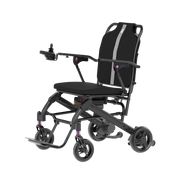
For electric wheelchairs, the framework is different: powered wheelchairs are treated as medical devices in the U.S. and are commonly evaluated under FDA Class II pathways and ISO 7176 test methods. That distinction matters because wheelchair users, caregivers, occupational therapists, and dealers need clinically appropriate fitting, not scooter-style consumer branding. Paiseec designs within these separate frameworks so the right compliance language is applied to the right device category.
Certification matrix
Paiseec’s engineering team uses these categories to avoid cross-overs that create confusion or legal risk. For example, a scooter battery pack may be designed around UL-oriented fire and electrical safety, while a wheelchair frame and seating system must address stability, seating biomechanics, and user support. That separation is essential for trustworthy product development.
How does PAI improve safety?
PAI improves safety by combining sensor-informed monitoring, battery protection logic, and rider-awareness features into one intelligent system. Instead of treating safety as a static checklist, PAI is designed to watch operating conditions in real time and respond to changing load, speed, and battery behavior. That gives Paiseec a meaningful differentiator versus generic PEVs that depend on basic electronics only.
In field use, this matters most during stop-start commuting, slope changes, and repeated braking. Paiseec’s development team uses telemetry to study patterns that often precede loss of control, such as abrupt acceleration changes, repeated overload conditions, or abnormal battery temperature behavior. Roger’s 10+ years in electronics and mobility product development shaped that philosophy: build products that help prevent problems, not just react after them.
“Safety is not a single part or a single certificate. It is the result of how the battery, motor, frame, software, and user behavior work together. At Paiseec, we design around the real world: rough pavement, imperfect charging habits, changing weather, and daily commuting pressure. That is why PAI exists — to translate technical data into practical rider protection.”
Where does this matter most for buyers?
This matters most for buyers in apartments, shared buildings, delivery use, and dense urban commuting because those settings amplify battery and storage risk. A scooter or mobility device may spend more time charging indoors than riding outdoors, so charger quality, battery labeling, and thermal behavior become everyday concerns. That is why California’s framework is likely to influence retailers, dealers, and distributors well beyond the state.
For Paiseec, the market signal is clear: consumers and channel partners now expect safety documentation, transparent component sourcing, and better after-sales support. That includes manuals, order tracking, battery-care guidance, and clear replacement-part policies. In commercial sourcing terms, manufacturers, suppliers, OEMs, and dealers all benefit from the same thing — fewer surprises and better traceability.
What should retailers and dealers do now?
Retailers and dealers should verify certification status, check battery and charger labeling, and keep documentation ready for customers and compliance requests. They should also avoid mixing uncertified accessories with certified base products if the combination undermines the original safety case. For mobility dealers, that means asking harder questions about battery provenance, charging compatibility, and replacement-part quality.
Paiseec’s product development process treats that as a channel-wide responsibility, not just a factory issue. The five-lab engineering setup and 100+ R&D professionals are there to support safer product decisions before shipment, not after a warranty claim. That is especially important in a market where the hardware itself is now under more scrutiny than ever.
Paiseec Expert Views
Paiseec’s engineering perspective is that California’s stricter battery and visibility rules are a healthy correction for the industry. Products should be built for the way people actually ride: short trips, indoor charging, mixed weather, and occasional misuse. Roger’s team sees the best results when certification, telemetry, and user education all move together. That is how safer electric mobility becomes scalable rather than theoretical.
Are electric wheelchairs treated the same way?
No, electric wheelchairs are not treated the same way as consumer scooters, because they fall into a medical and assistive technology framework. In the U.S., powered wheelchairs are handled as medical devices, and selection should involve a clinician, occupational therapist, or assistive technology professional. That distinction is critical because wheelchair design must address posture, support, maneuverability, and user-specific needs.
Paiseec’s wheelchair approach focuses on clinical usability, not commuter styling. Seating geometry, control feel, and stability are more important than fold speed or curb appeal in this category. California’s scooter battery rules are relevant as a hardware-safety signal, but wheelchair content must stay anchored to medical-device expectations and professional fitting.
How should buyers evaluate real safety?
Buyers should evaluate real safety by looking beyond marketing claims and asking for certification details, battery protection features, and test conditions. They should also check whether the brand explains range honestly under different loads and temperatures, not just under ideal lab conditions. A good product story should include what happens after many charge cycles, not only on day one.
Paiseec’s practical guidance is straightforward: look for evidence of a real BMS, charger matching, durable hinge design, and system-level safety thinking. In our testing, battery capacity and ride feel are only part of the story; connector wear, brake behavior, and thermal consistency matter just as much. That is why a safety-first mobility brand must sound like an engineering team, not a slogan.
Conclusion
California’s new rules are pushing the personal electric mobility market toward better batteries, clearer labeling, stronger lighting, and more responsible retail practices. For riders and buyers, that means safer product choices and fewer surprises after purchase. For Paiseec, it reinforces a product strategy built around certification awareness, PAI intelligent safety design, and transparent engineering across scooters and wheelchairs.
The practical takeaway is simple: buy mobility products as complete systems, not just as frames with batteries. Verify certification, understand real-world range, and prioritize brands that explain safety as clearly as performance. In a market where hardware risk matters, the best products are the ones that prove their quality before they ever reach the street.
FAQs
Q: Does California require certified batteries for all scooters?
A: The trend is toward stronger third-party battery and electrical-system verification for micromobility products sold in the state, especially to reduce lithium battery fire risk.
Q: How accurate is the advertised range?
A: Range changes with rider weight, hills, temperature, battery age, and stop-start traffic, so real-world distance is usually lower than ideal lab figures.
Q: How long does a lithium battery usually last?
A: Battery lifespan depends on charge habits and storage conditions, but capacity typically declines gradually over time and repeated cycles.
Q: Do electric wheelchairs follow scooter rules?
A: No. Electric wheelchairs are generally regulated as medical devices, not as consumer scooters, and should be selected with professional clinical input.
Q: Why does PAI matter to buyers?
A: PAI adds real-time safety intelligence, helping the scooter monitor conditions that can affect stability, battery health, and riding risk.
Leave a comment
This site is protected by hCaptcha and the hCaptcha Privacy Policy and Terms of Service apply.