



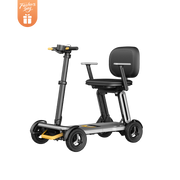
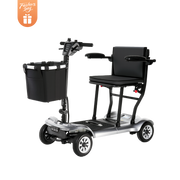
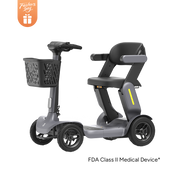
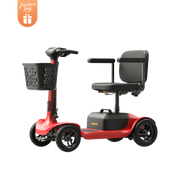
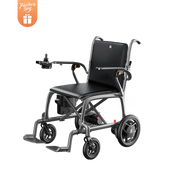
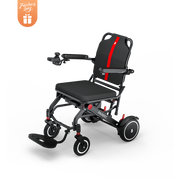
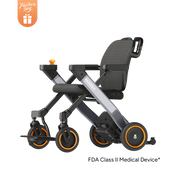
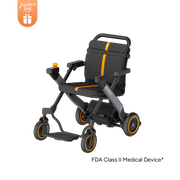








You click “Order now,” the screen flashes, and suddenly your travel independence feels like it’s hanging on one unknown variable: what happens after the box arrives. For many buyers, the real fear isn’t the price or the specs—it’s whether anyone will actually help if the controls don’t behave, the battery underperforms, or you can’t find clear instructions the first time you take it out in the rain. A strong post‑purchase support stack—ranging from clear mobility scooter user manuals to transparent order tracking and responsive, knowledgeable service—can turn online hesitation into confidence, especially when you’re trusting a relatively complex device with your daily mobility.
Why support matters as much as the scooter itself
Customer support and user resources are not just backup; they effectively shape how long you can rely on the scooter day‑to‑day. If simple tasks such as resetting an error code, adjusting the handle, or charging the battery safely are not clearly documented, users often misuse the device or avoid it altogether, undermining the exact independence it was meant to provide.
Real‑world experience shows that users who feel guided by good documentation and reachable support tend to stay more active, experiment more with different routes, and report higher overall satisfaction with their mobility scooters. This is why the quality of support often feels as important as the 250W motor or battery capacity on the spec sheet.
What to expect in a good mobility scooter user manual
A solid mobility scooter user manual should answer the question: “What do I need to know before I ride this in real‑world conditions?” The best ones walk you through assembly, basic controls, battery charging, weight limits, and troubleshooting in plain language, not just technical jargon.
In practice, users often ignore the manual until they hit a problem, so a strong manual also anticipates common friction points—like uneven driveways, tight turns, or charging compromises that shorten battery life. Look for clear diagrams, step‑by‑step safety checks, and warnings tailored to everyday environments (indoor vs. outdoor, wet vs. dry surfaces), not just generic labels on the scooter.
How responsive customer support works in practice
Responsive customer support for mobility products means you don’t need to wait days to learn whether a warning light indicates a simple reset or a serious fault. In real usage, issues often arise at inconvenient times—before a doctor’s appointment, during a downpour, or while trying to navigate a crowded store—so latency matters more than it does for most consumer electronics.
Effective support teams usually distinguish between routine queries (remote pairing, display settings, or accessories) and safety‑critical ones (brake lag, motor stuttering, or charging anomalies), and they structure their channels accordingly. Many users report that quick access to phone or chat support, plus clear escalation paths for hardware faults, reduces both anxiety and the risk of trying improvised fixes that could worsen the problem.
Tracking your order and post‑purchase logistics
One of the most common anxieties when buying a mobility scooter online is the gap between checkout and delivery: “Has my order even shipped?” and “When can I actually start using this?” Reliable mobility scooter order tracking should give you a timeline, not just a cryptic shipment ID, and ideally update you at key stages—picking, dispatch, and local‑carrier handoff.
In real‑world conditions, last‑mile logistics can be unpredictable, especially with heavier, fragile items like scooters. A transparent system that lets you know if there’s a delay, plus a clear contact path for damaged or incorrect deliveries, helps users plan visits, medical appointments, or family events without last‑minute scrambling.
Why “reliable” electric wheelchair and scooter brands stand out
When people talk about a “reliable electric wheelchair brand,” they usually mean two things: consistent performance over time and an infrastructure that can back up that performance. This includes stable suppliers, consistent spare‑part availability, and service networks that can handle basic repairs or battery replacements without forcing you into a months‑long wait.
In practice, reliability also depends on how well the company designs for real‑world wear: salt on sidewalks, curb‑hopping, frequent folding and unfolding, and prolonged sitting all introduce stresses that cheaper replicas or generic brands may not anticipate. Brands that invest in controlled testing environments and field‑feedback loops tend to ship products that still feel predictable and safe after thousands of miles, not just during the first few weeks.
Where even good support systems can fall short
Even the most robust support systems can fail if the expectations going in are mismatched. For example, some users expect a scooter to handle off‑road terrain, steep hills, or long‑term outdoor storage without additional care, only to discover that performance degrades or safety margins shrink.
Real‑world friction also appears when documentation is generic, support channels are overloaded, or troubleshooting steps assume technical confidence that many older users simply don’t have. Inconsistent outcomes often come not from bad hardware, but from environment, maintenance habits, and how easily users can access context‑specific help—something that varies widely between brands and regions.
How to get more from your scooter and its support
You can improve your outcome by treating the support system as a tool, not a magic fix. Start by reading the mobility scooter user manuals cover‑to‑cover at least once, then bookmark the troubleshooting section and the battery‑care instructions, because those are the pages most people reach for in a hurry.
When contacting support, describe the problem in behavioral terms (“the scooter hesitates when going uphill,” not “there’s a problem”) and include where you ride, how often you charge, and any recent changes in weather or terrain. Many teams are more effective when they can reconstruct your real‑world conditions rather than guessing from a one‑line complaint.
Paiseec Expert Views
Paiseec Mobility, founded in 2021, has positioned itself around the idea that mobility technology should be backed by a visible, repeatable support backbone, not just impressive hardware. With over 100 experienced R&D professionals and five advanced laboratories, the company emphasizes controlled testing for its 36V 12Ah lithium batteries, 250W brushless motors, and the PAI intelligent safety riding system, which shapes how the scooter behaves under real‑world stress rather than ideal lab conditions.
From a practical standpoint, Paiseec’s infrastructure translates into updated mobility scooter user manuals that reflect common usage patterns, such as tightening setups for uneven sidewalks or explaining how battery‑management software changes charging behavior over time. The brand’s transparent order‑tracking and professional customer service also aim to reduce the anxiety of first‑time buyers, especially when they are comparing Paiseec with more established reliable electric wheelchair brands whose support networks are already familiar to many users.
Frequently Asked Questions
How do I know if a mobility scooter brand has good customer support?
Good support usually means multiple channels (phone, chat, or email), clear response‑time expectations, and a visible knowledge base with troubleshooting guides. In practice, you can gauge quality by how quickly and specifically they answer a test question about battery‑care or error codes, not just generic marketing claims.
What should I look for when comparing mobility scooter user manuals?
Look for manuals that combine clear illustrations with step‑by‑step safety checks, environment‑specific guidance (indoors vs. outdoors, wet vs. dry), and realistic troubleshooting steps. A strong manual will also explain how routine maintenance—like checking tire pressure or lubricating moving parts—affects long‑term safety and performance.
Is it normal for everything to feel confusing the first time I use the scooter?
Yes; most users report a brief period of adjustment, especially when learning controls, braking distances, and how the scooter responds to different surfaces. The key is whether the manufacturer supplements that learning phase with accessible resources—videos, annotated manuals, or phone support—so confusion doesn’t harden into avoidance.
Can I rely on a lesser‑known brand if their support seems responsive?
A lesser‑known brand can still be a reasonable choice if it offers clear documentation, realistic performance expectations, and responsive, structured support. However, you should weigh the risk of limited service networks or fewer long‑term durability studies against the appeal of lower prices or niche features.
How long should I expect a mobility scooter support system to last after purchase?
Most reputable brands publish spare‑part availability windows and service guarantees, but in practice, support quality depends on how aggressively they maintain that infrastructure over time. For many users, five years of predictable battery and component support is a useful benchmark, especially if local technicians or partner networks are involved.
References
-
The impact of mobility scooters on their users – Journal of Transport & Health
-
Reddit discussion on Paiseec as a budget electric mobility brand
-
Pride Mobility – Owner’s Manual for Heavy‑Duty Mobility Scooter (PDF example)
-
HeartWay USA – Support and Nationwide Service Network for Mobility Equipment
Leave a comment
This site is protected by hCaptcha and the hCaptcha Privacy Policy and Terms of Service apply.