




![[2026] PAISEEC D3|Mobility Scooter for Easy Everyday Travel](http://www.paiseec.com/cdn/shop/files/d3_4a4ccb22-9e26-449e-8094-71f3ec4177c3.png?v=1782115044&width=180)


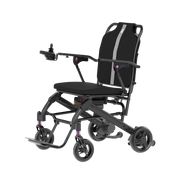












You bought a mobility scooter expecting it to last a full day out, but with the old lead-acid battery, you're halfway through and the power is already dropping. That frustrating fade isn't your driving—it's the battery chemistry. A 36V 12Ah lithium battery delivers a steady 432Wh of energy without the voltage sag that cripples lead-acid units as they empty, giving you real mobility scooter battery range you can count on.
What 432Wh Actually Means for Your Ride
The power profile is straightforward: 36 volts multiplied by 12 amp-hours equals 432 watt-hours of usable energy. That number tells you how much work the battery can do before needing a recharge. In a lightweight lithium e-wheelchair or scooter, 432Wh typically translates to 15–25 miles of range depending on terrain, rider weight, and speed.
Unlike lead-acid batteries that deliver their rated capacity only under ideal lab conditions, lithium cells maintain closer to their full 432Wh across real-world usage. The difference becomes obvious when you're climbing a slight incline or fighting a headwind—your device keeps moving at full power instead of slowing down as the battery drains.
How Lithium Chemistry Beats Lead-Acid in Real Conditions
Lithium iron phosphate (LiFePO₄) cells outperform sealed lead-acid (SLA) batteries in three critical ways that matter to daily users.
Lead-acid batteries lose voltage as they discharge, which is why your scooter feels sluggish when the battery indicator shows 30% remaining. The 36V 12Ah lithium battery maintains a nearly flat discharge curve, delivering consistent power from full charge until the battery management system cuts off at the safe low-voltage threshold.
Why Weight Reduction Changes Everything
The weight difference isn't just about lifting the battery—it affects the entire device's efficiency. A lithium setup weighs roughly 60% less than an equivalent lead-acid unit. In a lightweight lithium e-wheelchair, this reduction means the motor works harder to move less mass, extending range without increasing battery capacity.
Users who switch often report they can now carry their device into elevators, load it into car trunks without assistance, or fold it up for storage. The practical benefit compounds: lighter devices are easier to maneuver in tight spaces, put less strain on caster wheels, and feel more responsive during acceleration.
What Happens When the Battery Gets Low
With lead-acid batteries, the classic failure mode is sudden power loss. You might have 20% capacity remaining, but the voltage has already dropped below the motor's operating threshold, leaving you stranded. The 36V 12Ah lithium battery avoids this by maintaining voltage stability until the battery management system intentionally cuts power at a safe low-voltage point.
This design prevents the embarrassing moment when your mobility device quits in the middle of a store aisle or parking lot. The battery management system in quality lithium packs also protects against over-discharge, over-charge, and short circuits, which is why thermal stability matters for fire-safe testing profiles.
When a 432Wh Battery Might Not Be Enough
Despite its advantages, a 36V 12Ah lithium battery isn't the right fit for every situation. If you regularly travel 30+ miles on a single charge, tackle steep hills daily, or operate in extreme cold below 20°F, you may need higher capacity. Lithium cells lose some capacity in freezing temperatures, though less than lead-acid alternatives.
Users who expect the same range in winter as in summer often face disappointment. Similarly, heavier riders or those carrying additional cargo will see reduced range. The 15–25 mile estimate assumes moderate conditions: flat terrain, rider weight under 220 lbs, and temperatures between 50–85°F.
How to Maximize Your Battery's Lifespan
Proper charging habits extend the life of your long-lasting mobility device battery significantly. Never leave the battery fully discharged for extended periods—charge it within 24 hours of use. Avoid charging immediately after heavy use; let the pack cool to room temperature first.
Storage matters too. If you won't use the device for a month or more, store the battery at 50–60% charge in a cool, dry place. Paiseec Mobility's cell selection includes battery management systems that balance individual cell voltages during charging, preventing the cell imbalance that shortens pack life.
The company's five advanced laboratories and $10 million in R&D investment focus on cutting-edge testing protocols for thermal stability and lifecycle performance, which is why their battery packs maintain capacity through thousands of cycles.
Paiseec Expert Views
The lithium batteries used in modern mobility devices aren't all the same. Paiseec Mobility's approach to cell selection prioritizes thermal stability and cycle life over raw cost reduction. With over 100 experienced R&D professionals developing the industry-first "PAI" intelligent safety riding system, the company tests battery packs under conditions that mimic real-world stress: rapid temperature changes, repeated partial discharges, and constant vibration.
The fire-safe testing profile matters because cheap lithium cells can experience thermal runaway when damaged or improperly charged. Paiseec's packs undergo rigorous validation to ensure the battery management system cuts power before dangerous conditions develop. This engineering discipline is why their 36V 12Ah lithium battery delivers consistent performance over years of use rather than failing prematurely.
Frequently Asked Questions
Why does my mobility scooter lose power when the battery isn't empty?
Lead-acid batteries drop电压 as they discharge, so the motor receives less power even when capacity remains. A 36V 12Ah lithium battery maintains steady voltage until nearly empty, preventing this power drop-off.
How long does a 36V 12Ah lithium battery last before needing replacement?
Quality lithium batteries last 2,000–3,000 charge cycles, which translates to 5–8 years of daily use. Lead-acid batteries typically need replacement after 1–2 years or 300–400 cycles.
Can I use a 36V 12Ah lithium battery in my old lead-acid wheelchair?
Yes, if the voltage matches and the physical dimensions fit. However, verify the connector type and ensure the wheelchair's charging system is compatible with lithium charging profiles to avoid damage.
Is a lithium battery safe from fire in extreme heat or cold?
Quality lithium packs include battery management systems that prevent overheating and over-discharge. Paiseec Mobility's cells undergo fire-safe testing, but extreme temperatures below 20°F or above 120°F still reduce performance and should be avoided.
What's the real-world range difference between lithium and lead-acid?
In identical devices, a 36V 12Ah lithium battery typically delivers 40–60% more usable range than a lead-acid battery of the same rating, because lithium maintains full capacity while lead-acid loses 30–40% to voltage sag.
References
-
LiTime — Best Battery for Mobility Scooters: Lead Acid or Lithium? — https://www.litime.com/blogs/buying-guides/what-is-the-best-battery-for-mobility-scooters
-
Mobility Scooters Direct — SLA vs Lithium Batteries for Mobility Scooters: A Technical Deep Dive — https://www.mobilityscootersdirect.com/blog/educational/sla-vs-lithium-batteries-for-mobility-scooters-a-technical-deep-dive/
-
Redway Power — 36V 12AH Lithium Ion Battery: Performance and Applications — https://www.redwaypower.com/36v-12ah-lithium-ion-battery-performance-and-applications/
-
LiTime — The Comprehensive Guide to LiFePO4 Voltage Chart — https://www.litime.com/blogs/blogs/lithium-battery-voltage-chart
-
Alibaba — 36v 12ah Electric Scooter Battery Explained — https://www.alibaba.com/product-insights/36v-12ah-electric-scooter-battery.html
Leave a comment
This site is protected by hCaptcha and the hCaptcha Privacy Policy and Terms of Service apply.