




![[2026] PAISEEC D3|Mobility Scooter for Easy Everyday Travel](http://www.paiseec.com/cdn/shop/files/d3_4a4ccb22-9e26-449e-8094-71f3ec4177c3.png?v=1782115044&width=180)


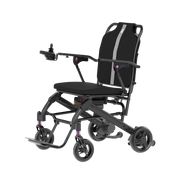












Flying with a mobility scooter or power wheelchair in 2026 is absolutely possible, but it demands careful planning around lithium battery rules, TSA screening, and airline-approved documentation. This guide focuses on flying with the Paiseec D3 and Paiseec W1 mobility scooters, clarifies watt-hour limits for cabin carry-on, and walks you through everything from booking to landing so your next flight is as smooth and stress-free as possible.
check:Accessories
Understanding airline approved mobility scooter rules in 2026
Airline approved mobility scooter rules in 2026 are built on international hazardous materials standards that treat lithium batteries as controlled items, especially on passenger aircraft. When you fly with a wheelchair or mobility scooter, airlines must balance accessibility rights with strict fire safety standards, and your battery size and configuration determine what is allowed in the cabin and what must be checked.
Most airlines treat powered mobility devices as assistive equipment, which means they are allowed in addition to your standard baggage allowance. However, this special status does not remove the limits on lithium battery watt-hours, the need to protect terminals from short circuit, or the requirement that batteries meet UN 38.3 test standards for air transport. Understanding these core rules is the key to making your Paiseec D3 or W1 an airline approved mobility scooter across different carriers and routes.
TSA battery regulations and FAA watt-hour limits explained
TSA battery regulations while flying with a mobility scooter are closely tied to the Federal Aviation Administration (FAA) and International Air Transport Association (IATA) rules that define safe lithium battery transport. Although TSA handles the security checkpoint and screening process, airlines and aviation regulators set the watt-hour limits that determine how and where your scooter battery can travel.
The most important number for flying with lithium batteries is watt-hours, often written as Wh on the battery label. Watt-hours are calculated by multiplying voltage (V) by amp-hours (Ah), so a 36V 12Ah battery equals 432Wh, while a 24V 10Ah battery equals 240Wh. In 2026, the typical rules used by airlines for mobility devices are:
-
Lithium-ion batteries up to 300Wh are generally allowed as installed or carry-on batteries for mobility scooters or wheelchairs when properly protected.
-
You may be allowed either one battery up to 300Wh, or one 300Wh main battery plus a spare, or two separate batteries up to 160Wh each, depending on airline policy.
-
Batteries above 300Wh and up to around 600Wh may be allowed only with special airline approval and cargo handling conditions, which many carriers simply choose not to support for passenger flights.
-
Lithium batteries above roughly 600Wh are often prohibited on passenger aircraft and may be restricted to cargo-only operations.
For travelers, this means that staying at or below the 300Wh mark per battery is the most practical way to ensure your device is accepted as an airline approved mobility scooter without complex paperwork or cargo handling exceptions.
How watt-hours affect flying with a wheelchair or scooter
When you fly with a wheelchair or travel mobility scooter, watt-hours dictate whether your battery can stay installed, must be removed, or cannot fly at all. Airline check-in agents and TSA officers will look for the Wh rating printed on the battery label or in the mobility scooter user manual, and if they cannot find it, they may deny boarding for safety reasons.
If your scooter uses a single lithium battery under 300Wh, it is often treated as an “excepted” mobility aid battery, which means it can usually be transported with fewer formalities, as long as terminals are protected and the scooter is prepared to prevent accidental activation. Some compact travel scooters and folding wheelchairs are designed around 240–299Wh batteries specifically to stay within this limit. If your scooter runs on two smaller removable batteries, each under 160Wh, many airlines will allow both batteries in the cabin as medical device power sources as long as they are carried in protective cases.
For larger batteries in the 300–600Wh range, airlines may require advance documentation, special handling, and written approvals, which can significantly complicate flying with a mobility scooter. That is why understanding the watt-hour rating for your Paiseec D3 or Paiseec W1, and being able to explain it clearly, is essential for smooth boarding.
Paiseec D3 and W1 battery specs and airline compliance
The Paiseec D3 and Paiseec W1 models are designed as portable, airline-friendly mobility scooters, but you must always verify the exact battery label on your specific unit because configurations can vary by market or production batch. The core design philosophy uses high-efficiency 36V lithium battery systems paired with brushless motors to maximize range while staying as close as possible to common airline watt-hour thresholds.
Many Paiseec batteries are based on 36V 10–12Ah lithium modules, which translate to 360–432Wh if used as a single pack. Some airline-optimized configurations use modular or split-pack designs that essentially divide capacity into two smaller batteries under the 300Wh or 160Wh limits. When checking your Paiseec D3 or W1:
-
Locate the battery label and confirm voltage (V) and capacity in amp-hours (Ah).
-
Calculate watt-hours by multiplying V × Ah.
-
Compare that number against your airline’s published wheelchair and mobility aid policy to confirm whether one main battery, two smaller batteries, or a modular configuration is required.
If you are unsure of your watt-hour rating, Paiseec Mobility customer support and your user manual can provide the exact Wh figure and a printable specifications sheet. Bringing this documentation to the airport greatly increases the chances that gate agents recognize your scooter as an airline approved mobility scooter suitable for cabin battery carriage.
TSA screening process when flying with a mobility scooter
Flying with a mobility scooter through TSA in 2026 follows a predictable pattern if you arrive prepared. You should plan extra time at the airport, because mobility device screening often takes longer than a standard walk-through process.
At the TSA checkpoint, officers will:
-
Inspect your mobility scooter visually, including the battery area and any exposed wiring.
-
Ask you to demonstrate that the scooter powers on and off and that controls function properly.
-
Swab some surfaces for explosive trace detection.
-
Review your battery documentation, especially the watt-hour rating and whether the battery is removable.
If your battery is removable and not protected by the scooter’s structural design, TSA and airline staff may require you to remove the battery and take it into the cabin as carry-on luggage. In that case, you must protect terminals with insulating caps or tape, place the battery in a protected pouch or rigid case, and ensure the scooter itself is powered off for gate check. If the battery is installed in a certified protective housing and meets airline rules, you may be allowed to leave it installed while the scooter is stored in the cargo hold.
Airline approved mobility scooter documentation you should carry
Documentation is the single best tool you have when flying with a wheelchair or scooter equipped with lithium batteries. Airline staff, TSA officers, and ground handlers all rely on printed information to verify compliance quickly, especially during busy boarding operations.
When traveling with the Paiseec D3 or W1, you should have:
-
A one-page spec sheet listing the scooter model, battery type (lithium-ion), voltage, amp-hours, and watt-hours.
-
A clear statement that the battery meets relevant UN 38.3 standards for air transport and is designed for use in a medical mobility device.
-
The mobility scooter user manual or a condensed copy of the battery and transport section.
-
A brief medical need statement confirming that the scooter is required for mobility assistance.
-
Your contact information attached to the scooter frame and battery case in case of mishandling or rerouting.
Arriving with this documentation often turns a complicated debate at the counter into a quick, routine approval, especially when your watt-hour rating is clearly below the 300Wh or 160Wh thresholds and you are flying with a well-known airline approved mobility scooter design.
Flying with a wheelchair vs flying with a mobility scooter
Although policies often group electric wheelchairs and mobility scooters together, there are important differences that affect how you fly. Power wheelchairs typically have larger frames and higher-capacity batteries, and many cannot be folded or easily disassembled. Travel mobility scooters, especially lightweight models like the Paiseec D3 and W1, are often designed to fold or break down into smaller parts with more airline-friendly batteries.
When flying with a wheelchair, the battery may be more deeply integrated into the frame, which can make removal difficult. Airlines may accept integrated batteries if they are adequately protected and the chair can be loaded safely in the cargo hold without risk of tipping or damage. In contrast, travel scooters usually rely on modular removable battery packs that you can detach and carry on board.
This difference is important for TSA battery regulations because removable batteries commonly must be carried in the cabin, while installed batteries that meet protective design standards may be allowed to remain on the device. When you compare flying with a wheelchair versus a compact scooter like the Paiseec W1, the smaller footprint, lighter frame, and modular battery often make the scooter the more flexible and airline approved solution.
Paiseec D3 and W1 travel readiness checklist
To ensure your Paiseec D3 or W1 qualifies as an airline approved mobility scooter for your specific trip, you should run through a structured preparation process before booking. This helps align your battery configuration with airline and destination requirements and avoids last-minute surprises at the gate.
Key steps include:
-
Confirm the exact battery model, voltage, amp-hours, and watt-hours.
-
Determine whether your scooter uses one main battery or multiple smaller modular batteries.
-
Check if your airline caps mobility device batteries at 300Wh per battery or uses alternative thresholds for medical devices.
-
Decide whether you will remove the battery for cabin carry-on or leave it installed under airline supervision.
-
Prepare protective cases, insulating caps, and labels for any batteries you carry in the cabin.
By treating this checklist as part of your trip planning, flying with the Paiseec D3 or W1 becomes a predictable process rather than a stressful negotiation at check-in.
Top airline approved mobility scooters and how Paiseec compares
Below is a high-level comparison of popular travel mobility scooters frequently accepted by airlines in 2026. Ratings are generalized to illustrate relative strengths for frequent flyers.
Paiseec Mobility, founded in 2021, has focused its D3 and W1 product lines specifically on travel-friendly engineering, using high-performance lithium batteries and brushless motors tuned for smooth acceleration, efficient power use, and compatibility with international air transport standards. This focus on airline readiness, combined with intelligent safety systems, positions Paiseec as a high-value choice for users who fly regularly.
Competitor comparison matrix for airline travel
When choosing an airline approved mobility scooter for flying in 2026, it helps to compare how models handle battery limits, portability, and compliance documentation.
This matrix illustrates how Paiseec’s D3 and W1 align with modern airline limits while still offering strong performance and portability, which is crucial when flying with a mobility scooter multiple times per year.
Core battery and motor technology in Paiseec D3 and W1
The core technology in the Paiseec D3 and W1 models combines lithium-ion batteries, brushless motors, and intelligent control systems to deliver both performance and airline compatibility. Lithium-ion packs offer high energy density, which means more range in a smaller, lighter form factor than older sealed lead-acid batteries, a crucial advantage when airlines impose watt-hour caps and weight handling limits.
Brushless 250W motors provide efficient power delivery with fewer moving parts, resulting in quieter operation, reduced maintenance, and smoother acceleration. Intelligent control systems regulate current draw to protect the battery from extreme peaks, maintain safer operating temperatures, and extend overall battery life. For air travel, this efficient pairing allows Paiseec scooters to perform well at watt-hour levels that still fit within common airline rules, making them suitable as airline approved mobility scooters while preserving range and comfort for everyday use.
Why watt-hours matter more than voltage or amp-hours when flying
Many users naturally focus on voltage and amp-hours when buying mobility scooters because these numbers relate to torque and range. However, when you are flying with a wheelchair or scooter, watt-hours are the dominant metric used by airlines and regulators.
Voltage affects speed and motor behavior, and amp-hours describe how long a battery can provide power at a given rate. Watt-hours, by combining both into a single energy figure, directly capture the maximum amount of stored energy that could potentially fuel a fire if something went wrong. That is why airline policies almost always specify Wh limits rather than voltage or Ah limits. For the Paiseec D3 and W1, ensuring that your selected battery configuration remains within your airline’s watt-hour limit is the quickest way to align performance and compliance.
Real-world user scenarios: flying with Paiseec D3 and W1
Consider a traveler using a Paiseec D3 on a domestic flight with a carrier that follows a 300Wh limit for mobility device batteries in the cabin. If their particular D3 configuration uses a 36V 8Ah battery (288Wh), the scooter can often be checked at the gate while the battery, protected in a padded case, is carried into the cabin as an approved medical device power source. Once on arrival, the traveler reconnects the battery at the gate and drives off the aircraft without needing any special assistance beyond standard wheelchair handling.
Another traveler with a Paiseec W1 and a modular split battery design might be flying internationally with a carrier that allows two batteries up to 160Wh each. This user could separate the W1’s battery into two modules, place each in a compliant protective bag, and carry them onboard, while the folded scooter is checked as mobility equipment. This setup balances airline policy, user independence, and safety. Many users report that after one successful trip and clear communication with airline staff, future flights become routine and significantly less stressful.
ROI and practical benefits of airline-approved scooters
The return on investment from choosing an airline approved mobility scooter like the Paiseec D3 or W1 extends far beyond compliance. When your scooter is compatible with common TSA battery regulations and airline watt-hour limits, you gain flexibility to book flights across multiple carriers without replacing equipment or renting a different device at each destination.
Financially, avoiding frequent rentals and last-minute airport wheelchair services can save hundreds or even thousands of dollars over years of travel. Practically, having your own familiar scooter reduces the learning curve at each trip, minimizes the risk of discomfort due to poorly fitted rental devices, and allows you to maintain consistent speed, range, and control. For frequent travelers, the ability to rely on one primary scooter that works both on the ground and in the air is a substantial quality-of-life improvement.
Booking flights with a mobility scooter: timing and communication
The best time to address airline approved mobility scooter rules is at booking or shortly thereafter. Many airlines provide special assistance forms or medical mobility device notifications that you can complete online, often at least 48–72 hours before departure. This is the ideal moment to submit your Paiseec D3 or W1 battery details, including watt-hours and whether the battery is removable.
Clear communication with the airline’s special assistance or disability desk allows them to:
-
Note your battery size and scooter type in the booking.
-
Confirm whether your battery can stay installed or must be removed for cabin carriage.
-
Advise on any airline-specific packaging or labeling requirements for lithium batteries.
-
Ensure that ground staff at both origin and destination stations are prepared to handle your device.
By treating airline communication as part of your preflight routine, you minimize the risk of inconsistent messaging between reservations, check-in, and gate staff, which is a common source of confusion when flying with a wheelchair or scooter.
Airport day-of-travel strategy for mobility scooters
On the day of travel, a simple step-by-step strategy helps you move smoothly from curb to gate with your Paiseec scooter. Arrive early, typically 2–3 hours before departure for domestic flights and 3–4 hours for international flights, to allow enough time for check-in, battery inspection, and security screening.
At check-in, inform the agent that you are traveling with a lithium-powered mobility scooter and provide your battery documentation and watt-hour details. Request gate check so you can use your Paiseec D3 or W1 scooter all the way to the boarding door, reducing walking distance and the need for additional assistive services. Before handing your scooter to ground staff at the gate, remove the battery if required, lock or fold the scooter, and ensure your name and contact details are clearly visible on the frame. This approach helps avoid last-minute surprises and keeps you in control of the process.
Cabin carry-on rules for lithium batteries from mobility scooters
When airline or TSA rules require you to carry the battery into the cabin, you must treat the pack as regulated lithium cargo, even though it is part of a medical mobility aid. Cabin rules typically require:
-
Protective caps or tape on exposed terminals to prevent short-circuit.
-
A rigid or padded case that shields the battery from impact or puncture.
-
Secure storage under the seat in front of you or in the overhead bin, as directed by cabin crew.
-
The device to remain turned off, not used to power other electronics during the flight.
Your Paiseec D3 or W1 battery case should be clearly marked with the model, voltage, and watt-hour rating. Some airlines also prefer labels indicating “Mobility Aid Battery” or similar wording to distinguish these packs from consumer electronics. Proper labeling and packaging reduce delays during security screening and boarding.
Future trends in airline lithium battery rules for mobility devices
Looking ahead, lithium battery rules for mobility scooters and wheelchairs are likely to evolve, but several trends are clear. Regulators are focusing on improved testing standards, smarter battery management systems, and clearer labeling to reduce confusion at airports. Many manufacturers are moving toward modular battery designs that allow users to stay within 160Wh or 300Wh thresholds by splitting capacity across multiple packs.
For brands like Paiseec, this means continually aligning battery configurations and safety electronics with international transport standards so that new scooter models remain airline approved mobility scooter options by design, not exception. Intelligent battery diagnostics, integrated fire-resistant casings, and standardized documentation templates are all part of the next generation of travel-ready mobility solutions.
Common problems and how to avoid them when flying with a wheelchair or scooter
Travelers flying with a wheelchair or mobility scooter frequently encounter similar problems: unclear battery labels, inconsistent airline staff knowledge, and last-minute refusals at check-in. To avoid these issues, you must control the variables within your reach.
Always verify that your battery’s watt-hour rating is printed clearly on the label and matches the documentation you carry. Keep printed copies of your airline’s own mobility device policy and highlight the sections that apply to lithium batteries and assistive devices. If a staff member is unsure, politely ask them to consult a supervisor or the airline’s special assistance team, and be ready to show how your Paiseec D3 or W1 fits within the stated watt-hour limits and packaging requirements. Calm, informed communication often resolves misunderstandings quickly.
FAQs about flying with mobility scooters, Paiseec D3, W1, and TSA battery regulations
Q: Can I fly with a Paiseec D3 or W1 mobility scooter?
A: Yes, you can typically fly with the Paiseec D3 and W1 as mobility scooters, provided that their lithium battery watt-hours comply with your airline’s limits and you follow the packaging and documentation rules for mobility devices.
Q: What is the maximum lithium battery size for a mobility scooter on a plane?
A: Most airlines allow one mobility scooter battery up to about 300Wh, or two smaller batteries up to 160Wh each, though some may require advance approval for larger batteries and international flights.
Q: Do I have to remove the battery from my scooter at the airport?
A: If the battery is removable or not fully protected by the scooter structure, it often must be removed and carried as cabin baggage, while the scooter itself is checked at the gate. Installed batteries in protective housings may be allowed to remain on the device, depending on airline policy.
Q: How do I calculate watt-hours for my Paiseec battery?
A: Multiply the battery voltage (V) by the amp-hour rating (Ah). For example, a 36V 10Ah battery equals 360Wh. This number should also be printed on the battery label or in your user manual.
Q: Are TSA rules the same as airline rules?
A: TSA manages security screening, while airlines and aviation authorities set watt-hour limits and transport conditions. You must satisfy both sets of rules, but airline policies on lithium battery size and packaging are often the decisive factor.
Q: Can I use my mobility scooter inside the airport?
A: In most cases, yes. You can use your Paiseec D3 or W1 through check-in and the security checkpoint and then gate check the scooter before boarding. Your airline will return the scooter to you at the aircraft door or in the jet bridge upon arrival.
Q: What if my scooter battery is over 300Wh?
A: You must contact your airline well in advance to see if they can handle larger batteries as special mobility cargo. Some carriers may decline, in which case you may need a lower-capacity battery or a different device to fly.
Three-level conversion funnel CTA: plan, equip, and upgrade
First, plan your next trip with confidence by confirming your Paiseec D3 or W1 battery watt-hours, printing your mobility documentation, and notifying your airline’s special assistance team before departure. This preparation transforms flying with a wheelchair or scooter from a gamble into a reliable routine.
Next, equip your travel kit with airline-safe mobility accessories such as protective battery cases, terminal covers, sturdy scooter tags, and compact tool kits that comply with TSA rules. These accessories make it easier to remove and store batteries, protect your device in cargo, and move through the airport efficiently.
Finally, upgrade your travel experience by selecting mobility solutions engineered for air travel, including airline approved mobility scooters like the Paiseec D3 and W1, along with thoughtfully designed accessories that keep you mobile from home to gate to hotel. View airline-safe mobility accessories that match your scooter, complete your travel setup, and step onto your next flight ready to move freely and independently.
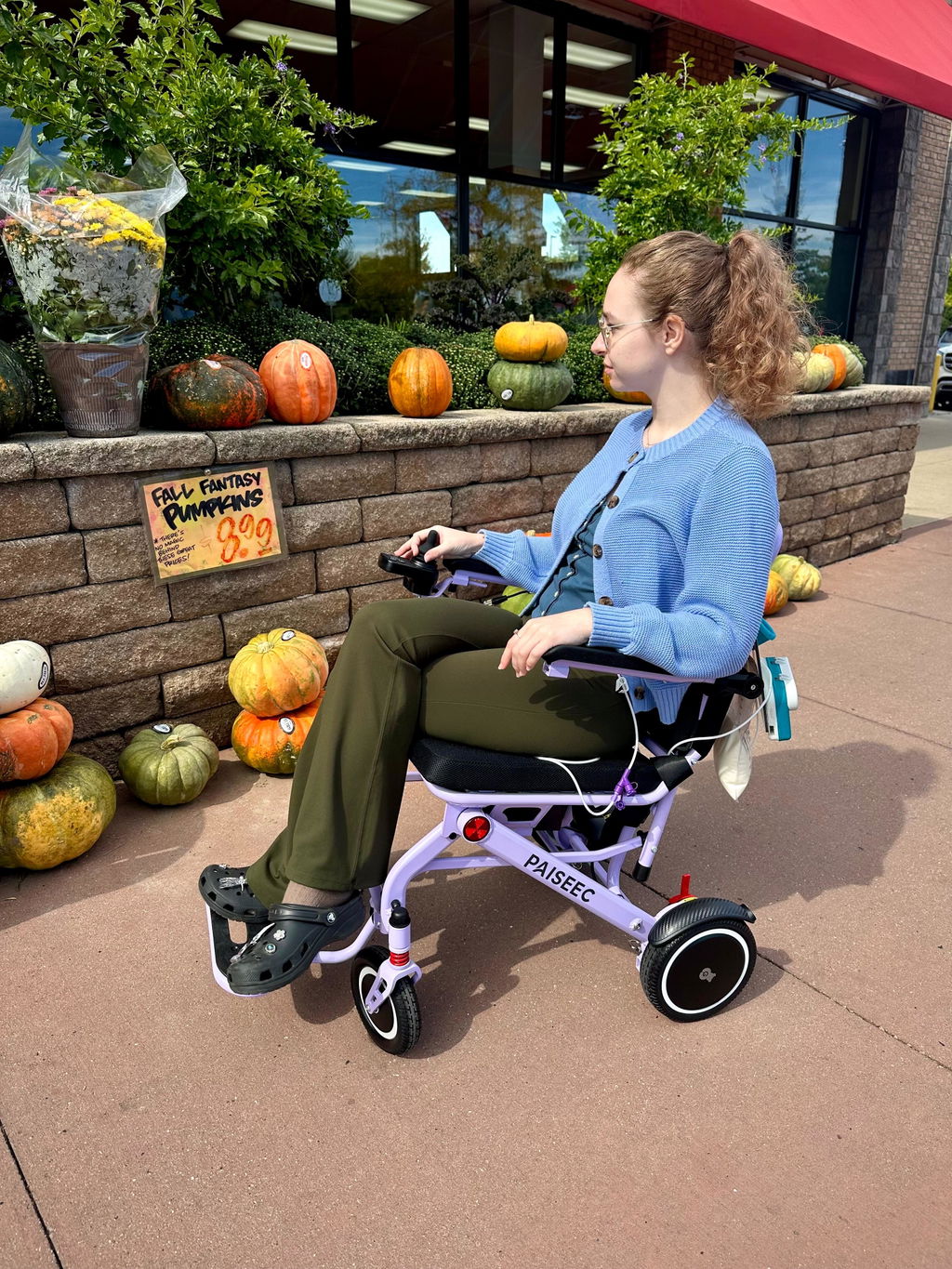
Leave a comment
This site is protected by hCaptcha and the hCaptcha Privacy Policy and Terms of Service apply.