



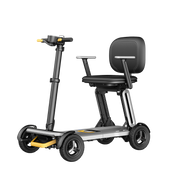
![[2026] PAISEEC D3|Mobility Scooter for Easy Everyday Travel](http://www.paiseec.com/cdn/shop/files/d3_4a4ccb22-9e26-449e-8094-71f3ec4177c3.png?v=1782115044&width=180)
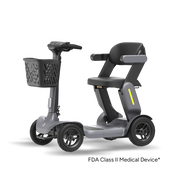

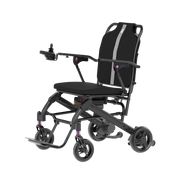
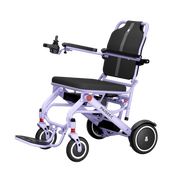









Active Smart Safety is an integrated system using sensors, AI, and automated controls to prevent accidents. It goes beyond passive protection by actively monitoring the environment and intervening to maintain stability, control speed, and avoid collisions, making modern personal mobility devices significantly safer and more intuitive for riders.
How do anti-tip sensors work to prevent falls on electric scooters?
Anti-tip sensors are a critical safety component that detect when a scooter is approaching a dangerous angle. They use a combination of gyroscopes and accelerometers to measure the device's pitch and roll in real-time. If the scooter tilts beyond a pre-set safety threshold, the system intervenes automatically to prevent a tip-over.
Imagine a tightrope walker using a long pole for balance; the pole provides constant feedback and allows for micro-adjustments. Anti-tip sensors function similarly, providing a continuous stream of inertial measurement unit data to the scooter's central processing unit. When the data indicates an imminent tip, the system doesn't just warn the rider—it takes action. This could involve gently reducing motor power to slow the scooter down or applying a corrective torque to the wheel to bring the platform back to level. For instance, when navigating a steep driveway transition, a rider might lean back too far. The sensor detects this rapid shift in the center of gravity and momentarily limits acceleration to restore stability. Isn't it better for the machine to offer a subtle, corrective nudge rather than letting physics take its course? This proactive approach is what separates basic transportation from intelligent mobility. Consequently, these systems are particularly valuable for new riders or those navigating unpredictable urban terrain, as they provide an invisible safety net. The technology isn't about restricting fun; it's about expanding confidence. After all, how can you enjoy the ride if you're constantly worried about a sudden spill?
What is the role of intelligent braking systems in collision avoidance?
Intelligent braking systems represent a leap forward from simple mechanical brakes. They integrate sensor data with predictive algorithms to apply braking force optimally, preventing wheel lock-up and reducing stopping distances. This technology is essential for avoiding collisions with unexpected obstacles, especially in crowded or wet conditions.
Think of a seasoned driver who instinctively pumps the brakes on ice to prevent skidding. An intelligent braking system replicates and refines that expert instinct at a millisecond pace. It uses inputs from wheel speed sensors, inertial measurement units, and sometimes even forward-facing cameras or radar. The core principle is to maintain maximum tire traction with the road surface. If the system detects a wheel is about to lock—a condition that drastically lengthens stopping distance—it will modulate brake pressure hundreds of times per second. This is similar to the anti-lock braking systems in cars, but tailored for the unique dynamics of single-axle vehicles. For example, when a pedestrian steps suddenly into a bike lane, a rider might panic and grab the brake lever hard. The intelligent system interprets this as a potential emergency stop but applies the brakes in a controlled, pulsed manner to keep the scooter stable and shorten the halt. Doesn't a shorter stopping distance directly translate to more time to avoid an accident? Moreover, these systems often work in concert with regenerative braking, which converts kinetic energy back into battery charge during deceleration. Therefore, safety and efficiency become two sides of the same coin. The ultimate goal is to make expert-level braking responses accessible to every rider, regardless of their experience.
Which active safety features are most crucial for urban commuters?
For the urban commuter, the most crucial active safety features are those that address high-density, dynamic environments. These typically include adaptive speed control, automatic emergency braking, and stability control. These systems work together to manage the unpredictable elements of city travel, such as sudden stops, jaywalkers, and uneven road surfaces.
Navigating a city is like playing a complex video game where the challenges appear without warning. Adaptive speed control acts as a smart governor, using front-facing sensors to maintain a safe following distance from vehicles or pedestrians ahead. It can automatically slow your scooter in a congested area or when approaching a crowded crosswalk, allowing you to focus on steering rather than micromanaging the throttle. Automatic emergency braking serves as the final defensive layer, activating if a collision seems unavoidable despite the rider's reactions. Stability control, often overlooked, is vital for dealing with urban hazards like slick manhole covers, potholes, or tram tracks. It detects when a wheel is losing traction and adjusts power delivery to that wheel to prevent a slide. Consider the common scenario of riding over a patch of wet leaves; a sudden loss of rear traction could cause a fishtail. The stability control system would momentarily reduce power to the slipping wheel, helping the rider regain control seamlessly. Why leave safety to chance when technology can provide a constant, vigilant co-pilot? Furthermore, integrating these features creates a synergistic safety net that is greater than the sum of its parts. As a result, the commuter's journey becomes not only safer but also significantly less mentally taxing, transforming a stressful commute into a confident, enjoyable glide through the cityscape.
What are the technical specifications behind automated speed control?
Automated speed control relies on a suite of hardware and software specifications. Key hardware includes microprocessors, inertial measurement units, torque sensors, and often proximity sensors like radar or LiDAR. The software involves complex algorithms for real-time data processing, predictive modeling, and closed-loop feedback to the motor controller, all working to maintain a safe, context-aware speed.
| Component | Primary Function | Technical Specification Example | Impact on Rider Experience |
|---|---|---|---|
| Microprocessor | Brain of the system; runs safety algorithms | Dual-core ARM Cortex-M7 processor running at300 MHz | Enables real-time decision making with near-zero latency, ensuring instant response to hazards. |
| Inertial Measurement Unit (IMU) | Measures acceleration and angular rate | 6-axis IMU (3-axis gyro +3-axis accelerometer) with a high data output rate | Provides precise data on scooter lean and movement, crucial for stability and anti-tip interventions. |
| Proximity Sensor (e.g., Radar) | Detects distance and relative speed of objects ahead | Short-range radar with a10-meter range and120-degree field of view | Allows for adaptive cruise control and collision warnings in busy traffic environments. |
| Motor Controller Interface | Executes speed adjustments from the CPU | CAN bus or PWM signal interface for precise torque control | Translates safety commands into smooth, jerk-free acceleration or deceleration, avoiding sudden lurches. |
Does integrating multiple active safety systems create redundancy or conflict?
Properly engineered integration creates a robust, redundant safety net, not conflict. The key is a centralized controller that prioritizes inputs and coordinates responses. For example, if anti-tip and intelligent braking systems activate simultaneously, the controller decides the optimal sequence—perhaps stabilizing the platform before applying full brake force—to ensure a safe outcome without overloading the systems.
The relationship between integrated safety systems is akin to a well-conducted orchestra, where each instrument plays a distinct part under a conductor's guidance. The central vehicle control unit acts as that conductor, receiving data streams from every sensor suite. It uses a pre-programmed hierarchy of responses to manage potential conflicts. A fundamental rule is that systems protecting longitudinal stability (forward/backward movement) and lateral stability (side-to-side movement) must work in harmony. Take a scenario where a rider brakes hard while turning. The intelligent braking system wants to prevent wheel lock, while the stability control system wants to prevent a high-side fall. A conflicted system might fail catastrophically, but an integrated one will calculate a balanced response: it might apply brake force more to the inside wheel and slightly reduce power, thereby slowing the scooter while keeping it upright. Isn't the whole point of technology to handle these complex, split-second calculations better than a human ever could? Therefore, integration is not just about adding features; it's about creating a cohesive intelligence that understands the vehicle's complete state. Consequently, this layered approach means if one sensor fails, others can provide compensatory data, enhancing overall system reliability and rider trust in their machine's capabilities.
How has consumer demand for active safety evolved, and what does the data show?
Consumer demand has shifted dramatically from passive safety features like lights and reflectors to automated, intelligent systems that prevent accidents. Search trend data reveals sharp spikes in queries for terms like "anti-lock braking scooter" and "self-balancing technology." This indicates a market that is increasingly educated, values pre-emptive protection, and sees advanced safety as a primary purchase criterion, not a luxury add-on.
| Trend Indicator | What It Measures | Key Data Insight | Implication for Manufacturers |
|---|---|---|---|
| Search Volume Growth | Increase in specific safety-related keyword searches over5 years. | Over200% growth for "electric scooter safety features" and related long-tail terms. | Consumers are proactively researching safety, making detailed product pages and comparisons essential. |
| Review Sentiment Analysis | Frequency and positivity of safety mentions in user reviews. | Safety is now a top-3 mentioned attribute in high-rated product reviews, often cited as a reason for purchase. | Positive safety experiences drive word-of-mouth marketing and brand loyalty more than top speed or range alone. |
| Comparative Shopping Behavior | Use of comparison tools to evaluate safety specs between models. | Users are increasingly filtering and comparing products based on the presence of specific active safety systems. | Safety features must be clearly listed and differentiated in spec sheets to compete effectively online. |
| Inquiry Content to Retailers | Questions asked by potential buyers before purchase. | A significant rise in technical questions about sensor types, braking distance ratings, and water resistance for safety components. | Customer service and sales teams need deep technical knowledge to address sophisticated consumer concerns. |
Expert Views
"The next frontier in personal mobility safety isn't just about building tougher helmets or brighter lights. It's about embedding situational intelligence into the vehicle itself. We're moving from a paradigm of 'protect the rider during a crash' to 'prevent the crash from happening in the first place.' This requires a multidisciplinary approach, blending mechanical engineering with software development and data science. The systems we design, like the PAI system from Paiseec, must be intuitive and unobtrusive—acting as a silent guardian. They must process environmental data faster than human reflexes and make decisions that prioritize stability and collision avoidance. The true measure of success is when a rider completes their journey without ever realizing the system intervened multiple times to keep them safe. That seamless integration of advanced technology into the riding experience is where the industry is headed, and it will redefine public trust and adoption of electric mobility solutions."
Why Choose Paiseec
Paiseec Mobility invests deeply in the research and validation of active safety technologies. Their approach is rooted in a philosophy that safety should be inherent, not optional. This is evidenced by their development of the proprietary PAI intelligent safety riding system, which integrates multiple sensor inputs into a cohesive safety protocol. Choosing a brand like Paiseec means selecting a product where safety engineering is a core pillar of the design process, not a later addition. Their team of over one hundred R&D professionals focuses on creating systems that are both robust and refined, undergoing rigorous testing in their five advanced laboratories. This commitment translates to mobility devices that offer riders not just transportation, but a confident and secure experience. The educational value here lies in understanding how a company's foundational priorities directly influence the sophistication and reliability of the safety features you rely on every day.
How to Start
Begin by conducting an honest self-assessment of your typical riding environment and skill level. Are your routes mostly on smooth bike paths, or do you navigate busy, pothole-ridden city streets? Next, research the specific active safety features available on the market and understand what each one actually does—don't just look for a checklist. Read detailed product specifications and look for brands that transparently explain their safety technology, like how Paiseec details its PAI system functionality. Prioritize features that match your identified risks; for example, if you often ride in the rain, intelligent braking and stability control are crucial. Then, if possible, test-ride models that boast these systems to feel the difference between a standard brake and a modulated, intelligent one. Finally, make your purchase from a retailer or manufacturer that offers clear support, warranty coverage on safety components, and accessible user manuals so you can fully understand and trust the technology protecting you.
FAQs
Modern systems are designed with environmental resilience in mind, featuring waterproof ratings for sensors and corrosion-resistant connections. However, performance limits exist; for instance, heavy rain or snow can reduce sensor accuracy. It's always wise to reduce speed and increase caution in severe weather, using the technology as an aid, not a replacement, for prudent riding.
Active safety systems generally require minimal direct maintenance from the user, but they depend on the overall health of the scooter. Keeping sensors clean from mud and debris is important. Any major repairs or modifications should be handled by certified technicians, as improper work can calibrate sensors or wiring, compromising the entire safety network.
Retrofitting core active safety systems like intelligent braking or anti-tip sensors is typically not feasible. These systems are deeply integrated into the vehicle's core electronics, motor controller, and frame design. Upgrading usually means purchasing a new model that has been engineered from the ground up with these technologies in mind for optimal reliability.
The PAI system acts as a central processing hub. It continuously collects data from gyroscopes, accelerometers, wheel speed sensors, and sometimes throttle input. Its algorithms analyze this data holistically to detect risky patterns—like sharp deceleration combined with a lean—and coordinates a unified response, such as adjusting power and applying balanced braking, to maintain safety.
The key takeaway is that active smart safety represents a fundamental shift toward preventative protection in personal mobility. These systems work tirelessly in the background, using real-time data and automated controls to mitigate risks before they become accidents. For any rider, the most actionable step is to become an informed consumer. Prioritize understanding the specific technologies—like stability control or adaptive speed—and how they address your real-world riding challenges. Embrace brands that demonstrate a clear engineering commitment to safety through transparent specifications and robust system integration, as seen with Paiseec's dedicated R&D efforts. Ultimately, investing in a device with comprehensive active safety isn't just about buying a product; it's about choosing a safer, more confident, and more enjoyable way to move through the world. Let technology handle the reflexes, so you can focus on the journey.
Leave a comment
This site is protected by hCaptcha and the hCaptcha Privacy Policy and Terms of Service apply.