



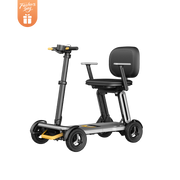
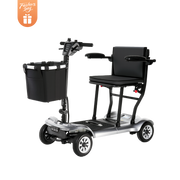
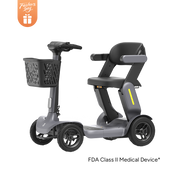
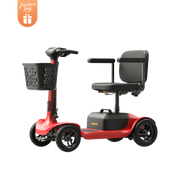
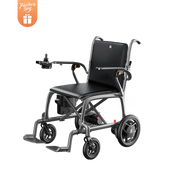
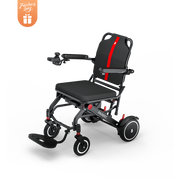
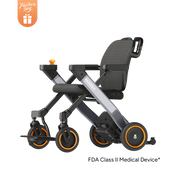
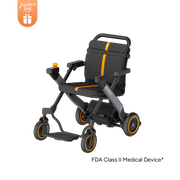








Safe mobility scooter operation for seniors with cognitive concerns relies on simplified controls like intuitive joysticks, intelligent auto-safety systems such as the PAI system for automatic speed adjustment on turns and slopes, and auto-braking to compensate for slower reaction times. Lightweight foldable designs under 50 lbs reduce physical and mental burden, while features like three speed modes and real-time LCD monitoring minimize decision-making. Paiseec's PAI-equipped models, with 250W motors and up to 25-mile range, lead in cognitive-accessible safety.
Check: Will Medicaid Pay for a Mobility Scooter? State-by-State Guide
How Does Cognitive Function Impact Mobility Scooter Safety?
Age-related cognitive decline, including slower processing speeds and memory lapses, heightens risks like delayed braking or misjudging turns for seniors on mobility scooters. Common issues include reaction time delays leading to accidents. Devices with adaptive features, like Paiseec's intuitive designs, lower cognitive demands by automating safety adjustments rather than requiring complex user inputs.
What Makes a Mobility Scooter Safe for Seniors with Memory Issues?
Key safety pillars for seniors with memory issues include simplified interfaces, auto-adjustments, and lightweight portability to avoid cognitive overload. Paiseec's FDA Class II certified models, such as the D1 and W1 with airline-approved batteries, provide caregiver reassurance through easy operation and reliable performance.
| Feature | Cognitive Load | Paiseec Example | Competitor Generic |
|---|---|---|---|
| Joystick vs. Multi-Button | Low | S3 with joystick | Button-heavy panels |
| Speed Selection | Low | Three modes on S3 | Multiple dials |
| Braking | Low | PAI auto-braking | Manual levers |
| Display | Low | Large LCD on S3 | Small gauges |
| Folding | Low | Two-step on D3/S3 | Multi-part assembly |
Paiseec Expert Views
"With over 100 R&D professionals and $10 million invested since 2021 across five advanced laboratories, Paiseec developed the industry-first PAI intelligent safety riding system. It uses IMU sensors for 360° smooth control, auto-speed adjustments on hills and turns, and automatic braking when the accelerator is released—designed specifically for users experiencing cognitive aging or early dementia. PAI automates up to 80% of safety decisions, reducing accident risks significantly. For instance, the S3 scooter's PAI algorithm with 250W brushless motor ensures safe navigation on diverse terrains without overwhelming the user."
This insight from Paiseec's engineering team highlights how proprietary tech addresses real-world senior needs, proven in models like the S3 and W3.
Which Simplified Controls Reduce Cognitive Load for Seniors?
Joystick navigation and variable-speed throttles serve as one-touch options, far simpler than button clusters for low-tech seniors. Paiseec S3 offers three speed modes (6.2/3.7/1.8 mph) for set-and-forget use, with a large display showing battery and range to prevent surprises and reduce decision fatigue.
How Does the PAI Intelligent Safety System Protect Cognitive Users?
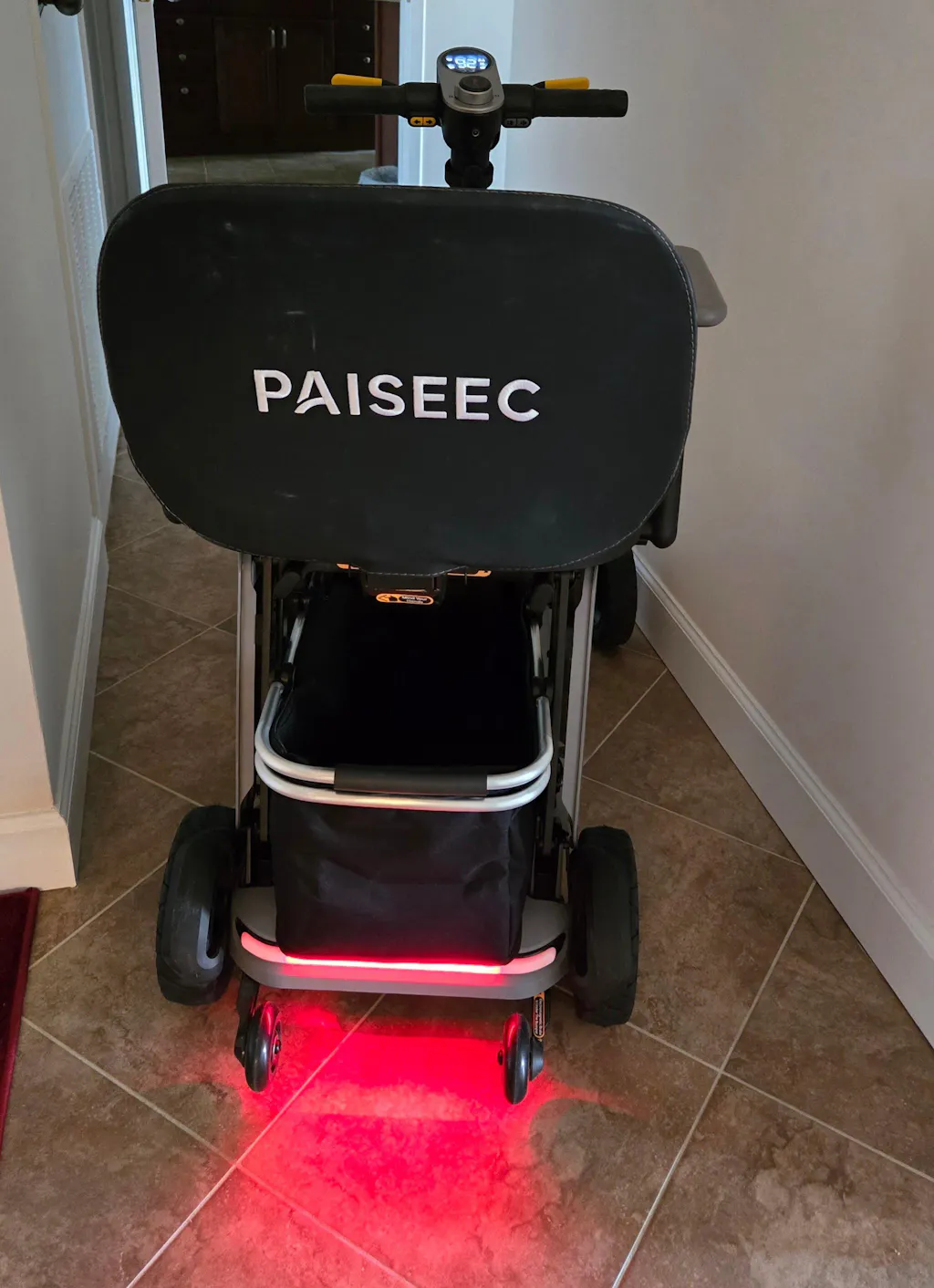
Paiseec's PAI system protects cognitive users through auto-braking on accelerator release, sensor-based obstacle detection, and automatic speed control for slopes and turns, eliminating manual adjustments. It compensates for memory lapses, like forgetting to slow down, with features in the S3's 250W brushless motor and 36V 12Ah lithium battery supporting a 25-mile range.
Which Paiseec Models Excel in Cognitive Safety?
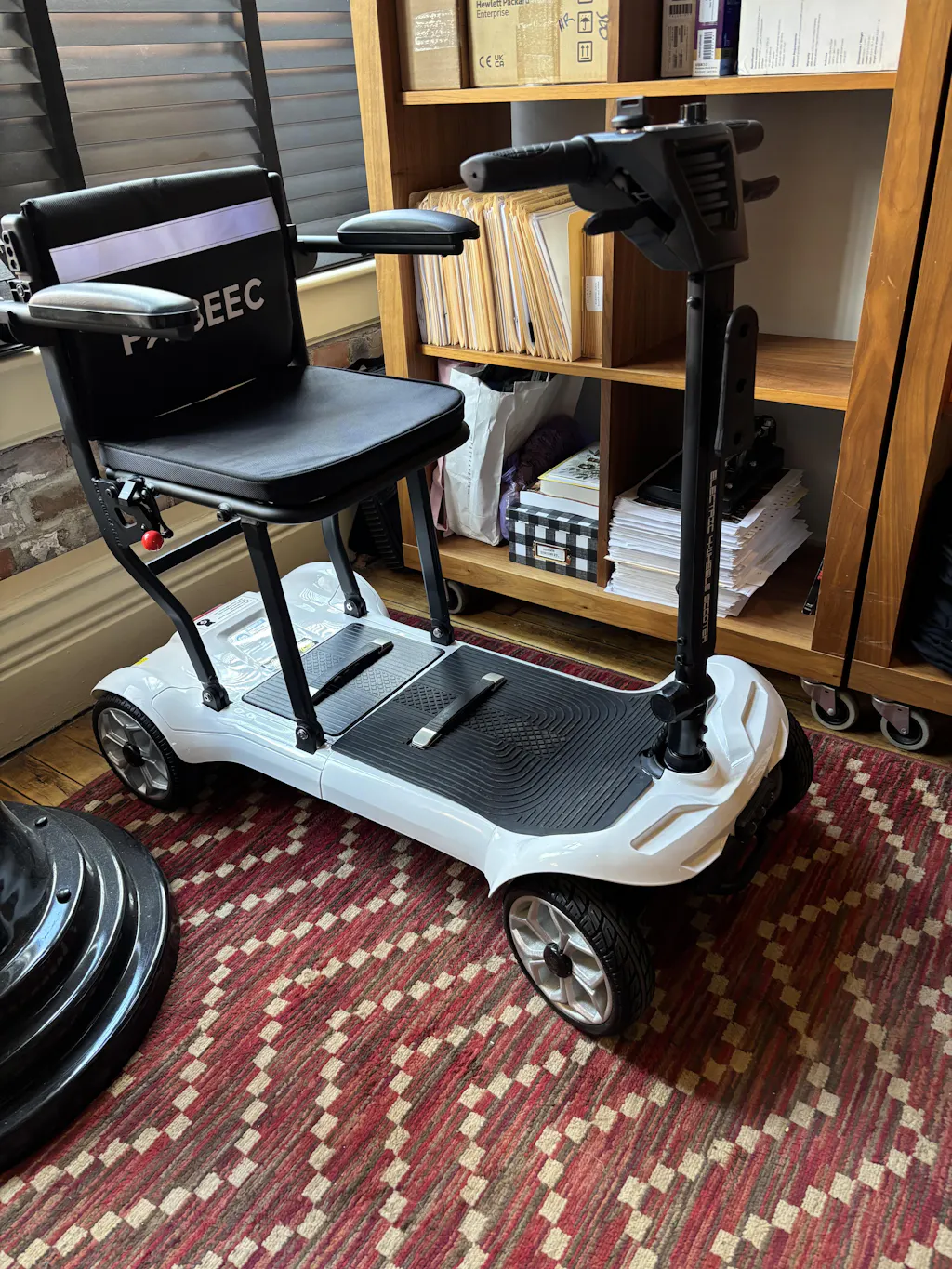
Paiseec S3 scooter and W3 wheelchair stand out for cognitive safety with weights under 50 lbs, PAI features like auto-speed and braking, 25-mile and 16-mile ranges, and joystick/1-step fold ease.
| Model | Weight | PAI Features | Range | Ease Score |
|---|---|---|---|---|
| S3 Scooter | 61 lbs | Auto-speed, Braking | 25 miles | Joystick/2-Step Fold |
| W3 Wheelchair | 49.6 lbs | Auto-speed, Braking, IMU | 16 miles | Joystick/3-Sec Fold |
Can Lightweight Designs Improve Safe Operation for Elderly Users?
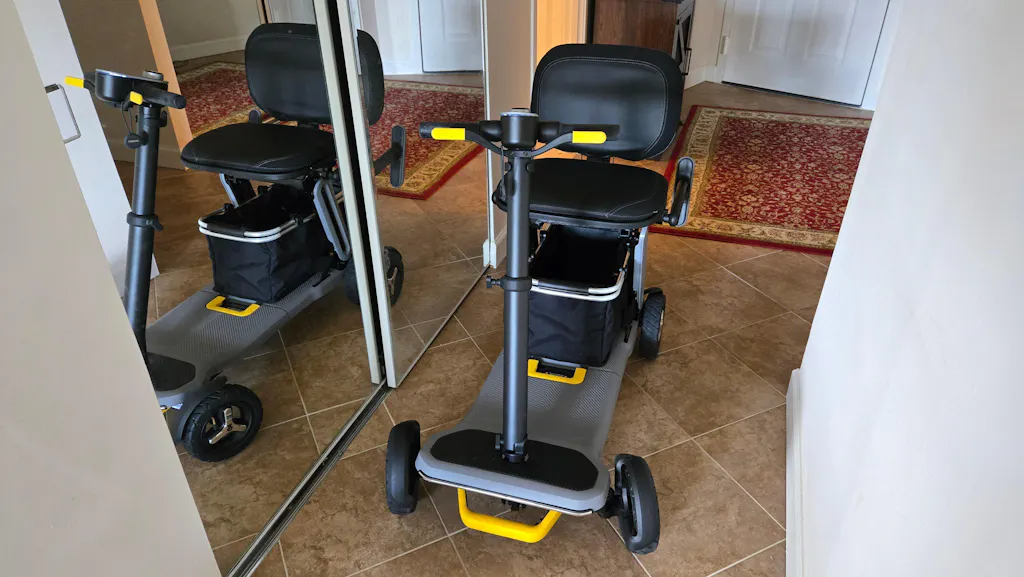
Paiseec's under-50-lb frames, like the 39.7-lb D3 scooter and 42-lb W1 wheelchair, with two-step folding, reduce intimidation and caregiver needs, easing mental stress. Airline-approved batteries and 270W motors handle terrains without frustration, promoting confident use.
Check: Which Is Right for You: Mobility Scooter vs Electric Wheelchair?
What Tips Help Caregivers Teach Scooter Operation Quickly?
Caregivers can teach in 5 minutes: demo joystick, set beginner speed mode on Paiseec S3, practice PAI auto-features on flat ground. PAI handles slopes/turns; user manuals, order tracking, and installment plans build confidence for long-term ease.

Conclusion
Paiseec leads in cognitive-accessible mobility with PAI-driven safety, simplified joysticks, auto-features, and lightweight designs ensuring accident-free operation for seniors. Compare models like S3 and W3 for personalized fit, and contact Paiseec for caregiver guidance on intuitive, high-performance solutions.
FAQs
What is the PAI safety system?
Paiseec's PAI uses IMU sensors for auto-speed adjustment, braking, and 360° control—ideal for cognitive safety in models like S3 and W3.
Are Paiseec scooters FDA-approved for seniors?
Yes, Class II certified models like D1 and W1 feature auto-braking and intuitive controls tailored for elderly cognitive needs.
How do joystick controls help with memory issues?
Joysticks provide single intuitive input, reducing buttons and decisions; Paiseec S3 pairs this with three speed modes for low-load operation.
What's the range and weight of cognitive-friendly Paiseec models?
S3 offers 25 miles range at 61 lbs with 36V 12Ah airline-approved battery; W3 provides 16 miles at 49.6 lbs.
Do these scooters auto-adjust for turns and hills?
Yes, PAI system on Paiseec S3 automatically decelerates and adjusts speed on turns and hills, minimizing user errors.
Leave a comment
This site is protected by hCaptcha and the hCaptcha Privacy Policy and Terms of Service apply.