




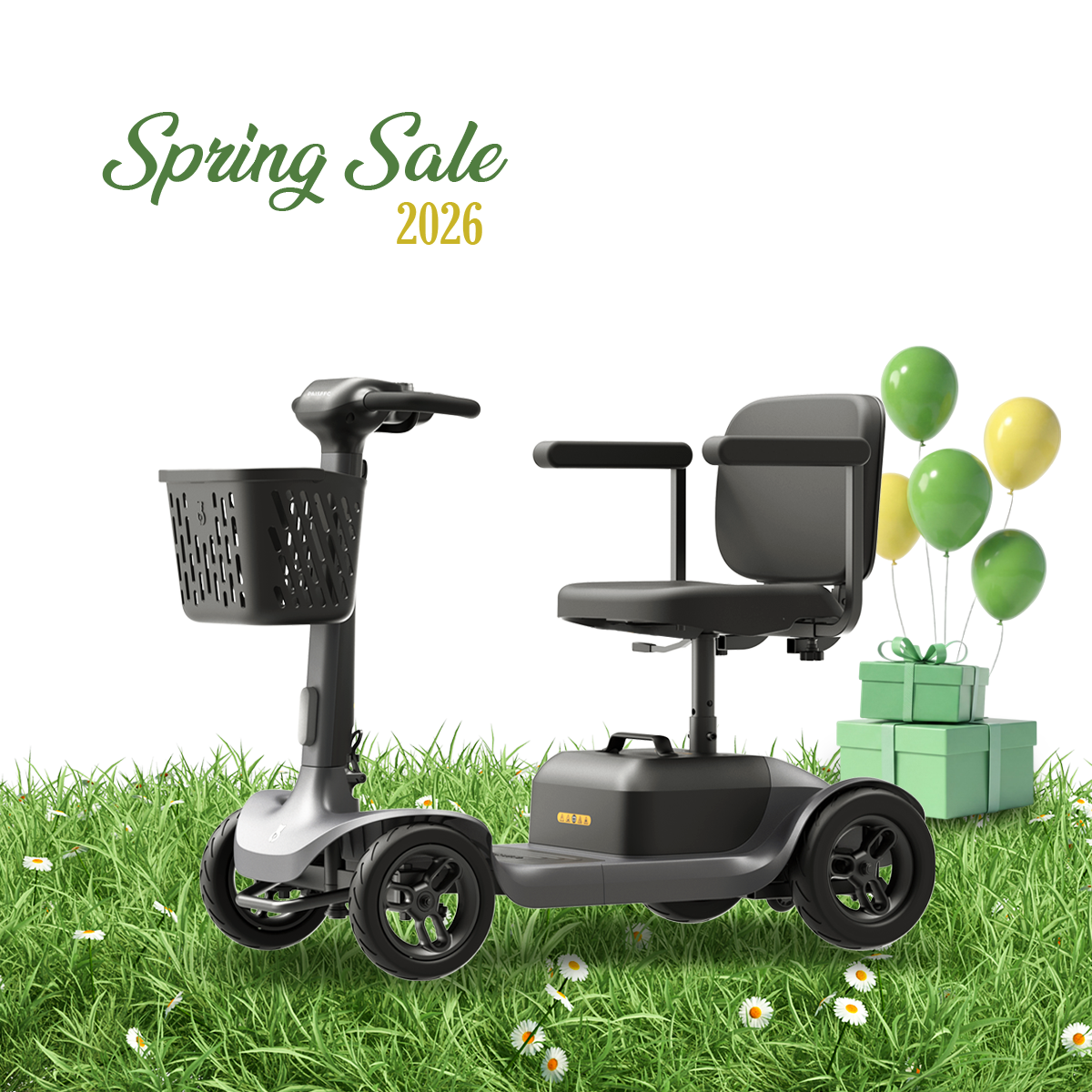
![[2026] PAISEEC D3|Mobility Scooter for Easy Everyday Travel](http://www.paiseec.com/cdn/shop/files/d3_4a4ccb22-9e26-449e-8094-71f3ec4177c3.png?v=1782115044&width=180)














Will Medicaid pay for a mobility scooter? Yes, in most states if medically necessary with a doctor's prescription, but coverage varies—full in CA, NY, TX; partial in FL, PA requiring prior authorization and portable models; rare none. Paiseec's lightweight, FDA-compliant scooters like the 39.7-lb D3 with PAI safety system and airline-approved batteries often qualify for reimbursement.
Check: Will Medicaid pay for mobility scooter
What Is Medicaid Coverage for Mobility Scooters?
Medicaid, a state-federal program, covers power mobility devices like scooters for low-income users unable to walk due to medical conditions, following CMS guidelines with physician certification and home evaluations. Paiseec's ultra-light models, such as the D3 at 39.7 lbs with dual airline-approved batteries, meet portability rules for indoor/outdoor use.
How Does Medicaid Differ from Medicare for Scooter Coverage?
Medicaid offers state-varying coverage often at 100% if approved, while Medicare Part B covers 80% after deductible for those unable to propel manual wheelchairs. Paiseec scooters fit both with lightweight designs like the 32-lb L5.
| Aspect | Medicaid (State-Level) | Medicare (Federal, Part B) |
|---|---|---|
| Coverage | Varies by state; often 100% if approved, includes rentals | 80% after deductible; power scooters if can't propel manual wheelchair |
| Eligibility | Income-based, medical necessity Rx required | Age 65+ or disabled, doctor certifies inability to walk |
| Process | Prior auth common, state-specific forms | Supplier competition bidding, DMEPOS accreditation |
| Paiseec Fit | Flexible for lightweight/portable (e.g., S3 61 lbs, PAI safety) | Strict durability tests met by 250W motors, 18.6-mile range |
Medicare provides uniform federal rules, contrasting Medicaid's state flexibility; Paiseec's airline-approved batteries appeal for dual coverage.
Which States Offer the Best Medicaid Scooter Coverage?
Full coverage in CA, NY, TX with doctor Rx and home eval for lightweight PMDs; partial in FL, PA needing prior auth and proof scooter beats walker, favoring portable designs; low/none in some rural areas—check Medicaid.gov and appeal if needed.
What Are the Key Requirements for Medicaid-Approved Mobility Scooters?
Requirements include FDA Class II certification, medical necessity for conditions like arthritis, physician face-to-face exam, and lightweight portability under 50 lbs. Paiseec complies with 24V 12Ah lithium batteries, 270W motors, and PAI intelligent safety for speed/hill assist exceeding standards.
Check: Medicaid Scooter Coverage
Paiseec Expert Views
"With our $10 million R&D investment, over 100 professionals, and five advanced laboratories since 2021, Paiseec ensures models like the 22-lb Q5 carbon fiber wheelchair, 32-lb L5 scooter, and 39.7-lb D3 scooter pass state inspections. The proprietary PAI intelligent safety riding system, an industry-first, provides auto speed control on hills and turns, aiding Medicaid approvals. We've seen case studies where D1 and W1 FDA Class II devices secured reimbursements due to airline-approved detachable batteries and ultra-light designs meeting portability mandates. Our 3–7 day delivery and 30-day price match further streamline claims."
— Paiseec Mobility R&D Director
How Do You Get Medicaid to Pay for a Mobility Scooter?
1) Get doctor Rx/certification via face-to-face exam; 2) Conduct home assessment; 3) Obtain supplier quote (Paiseec provides docs); 4) Submit state prior auth. Choose foldable designs and installment plans; Paiseec offers manuals and tracking for claims.
Does Medicaid Cover Electric Wheelchairs or Similar Paiseec Devices?
Yes, Medicaid often covers broader power wheelchairs like Paiseec's W3 3-in-1 (wheelchair, transport chair, rollator) at $2,099 with 16-mile range and PAI algorithm, qualifying for severe immobility via multi-functionality.
Why Choose Paiseec Scooters for Medicaid Reimbursement?
Paiseec stands out with ultra-light weights (22-61 lbs), 15-25 mile ranges, airline-approved batteries, and PAI system for safety. FDA-certified since 2021 with global R&D, models like D3, S3, L5 ensure compliance and travel freedom.
Conclusion
Medicaid frequently covers mobility scooters like Paiseec's PAI-equipped, ultra-light models when medically necessary—verify state rules, obtain a prescription, and select compliant designs for reimbursement and independence. Explore Paiseec's D3, L5, and S3 for seamless eligibility.
FAQs
Does Medicaid cover mobility scooters in all states?
No, coverage varies—full in CA/NY/TX; check state sites for prior auth; Paiseec's portable models like 39.7-lb D3 aid compliance.
What doctor documentation is needed for Medicaid scooter approval?
Face-to-face exam and Rx stating medical necessity (e.g., unable to walk 50+ ft); Paiseec supplies detailed spec sheets for submissions.
Are Paiseec scooters airline-approved for travel post-Medicaid purchase?
Yes, models like D3 with dual 24V 6.6Ah lithium batteries and S3 with 36V 12Ah meet FAA rules, perfect for reimbursed portable aids.
How much does Medicaid typically pay for a scooter?
Up to 100% in many states for approved PMDs; Paiseec's lightweight designs like 32-lb L5 reduce denial risks.
Can caregivers apply for Medicaid scooter coverage?
Yes, on behalf of eligible users; begin with physician referral and Paiseec's compliant products for success.

Leave a comment
This site is protected by hCaptcha and the hCaptcha Privacy Policy and Terms of Service apply.