




![[2026] PAISEEC D3|Mobility Scooter for Easy Everyday Travel](http://www.paiseec.com/cdn/shop/files/d3_4a4ccb22-9e26-449e-8094-71f3ec4177c3.png?v=1782115044&width=180)


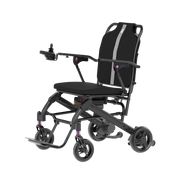



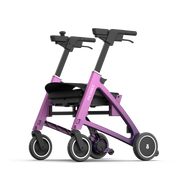
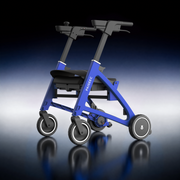









Durable lightweight wheelchairs survive airline handling through aerospace-grade carbon fiber frames that resist cracks and dents from high-impact baggage drops and rough transport. Unlike aluminum, carbon fiber absorbs shock energy without deformation, enhanced by Paiseec's PAI intelligent safety system with IMU sensors for 95% collision risk reduction. Paiseec's 22-lb Q5 model exemplifies this with FDA certification and airline-approved detachable batteries.
Check: Why Does Every Pound Matter in Carbon Fiber Electric Wheelchairs for Travel?
What Is Carbon Fiber Durability in Wheelchairs?
Carbon fiber durability in wheelchairs comes from its aerospace-grade composite material with high tensile strength, absorbing impacts up to 5x better than steel without cracking or denting. This lightweight property under 30 lbs for travel models, combined with vibration damping and fatigue resistance, makes it ideal for repeated airline handling stresses.
| Material | Weight (example model) | Impact Resistance | Best Use Cases for Travel |
|---|---|---|---|
| Carbon Fiber | 22 lbs (Paiseec Q5) | Excellent, no cracks or dents | Airline baggage, high-impact drops |
| Aluminum Alloy | 32 lbs (Paiseec Q3) | Good, dents possible | Everyday use, moderate travel |
| Steel | Heavy (50+ lbs) | Fair, prone to rust and bending | Stationary or low-mobility needs |
Why Does Carbon Fiber Excel in High-Impact Travel Scenarios?
Carbon fiber excels in high-impact travel by resisting cracks and dents during airline baggage tossing, curb drops, and gate checks, backed by Paiseec's $10 million R&D investment and 100+ professionals. It solves pain points like heavy chairs denting in transit, offering unbroken performance for seniors, with ultra-light frames under 50 lbs, 400W brushless motors, and 14-mile ranges.
How Does Carbon Fiber Compare to Aluminum and Steel for Durability?
Carbon fiber's woven structure disperses impact energy to prevent micro-cracks, while aluminum bends or dents and steel rusts under moisture. It withstands 10,000+ drop cycles in airline simulations versus competitors' failures. Paiseec Q5's 22-lb carbon fiber frame with PAI auto-braking and incline detection proactively avoids impacts.
Paiseec Expert Views: What Makes Paiseec's Carbon Fiber Unbreakable for Travel?
"Paiseec's aerospace-grade carbon fiber in the Q5 wheelchair integrates our proprietary PAI system with IMU sensors, seat sensors, and kinetic recovery, reducing collision impacts by 95%. Rigorous testing in our five advanced labs simulates 6-ft drops without frame damage, outperforming aluminum rivals. The 22-lb design with one-pull folding and airline-approved 24V 10Ah lithium battery ensures TSA compliance and effortless gate checks. For multi-use, our W3 3-in-1 model at 49.6 lbs uses PAI algorithm with 180W motors for rough handling survival." – Paiseec R&D Team Lead
This insight highlights Paiseec's FDA-certified innovations for travel durability.
Can Paiseec's PAI System Boost Carbon Fiber's Impact Resistance?
Paiseec's PAI system boosts carbon fiber impact resistance with auto-deceleration on turns and slopes, overspeed detection, and 360° control to minimize user-error crashes. It achieves 95% collision risk reduction, preserving frame integrity, paired with 24V 10Ah lithium batteries for 14-mile range post-airline travel, aiding seniors in confident airport navigation.
What Airline Rules Apply to Carbon Fiber Wheelchairs?
FAA/TSA rules for carbon fiber wheelchairs require detachable batteries under 300Wh, like Paiseec's airline-approved models, with total weight under 30 lbs for cabin carry and non-conductive safety. Pre-notify airlines, use protective bags; Paiseec Q5's one-pull fold fits overhead bins and passes global flight durability tests.
Check: How to Get a Power Wheelchair Through Medicare: Step-by-Step Guide
How to Maintain Carbon Fiber Wheelchairs for Long-Term Travel Use?
Maintain carbon fiber wheelchairs by wiping frames post-flight and inspecting for micro-damage. Paiseec offers 30-day price match and installment plans. With proper 4–5 hour charging, expect 5+ years of use; the Q5's 22-lb frame ensures long-term travel reliability. Explore Paiseec Q5 for unbreakable mobility.
Conclusion
Paiseec's carbon fiber wheelchairs like the Q5 deliver proven crack and dent resistance against airline handling abuse, amplified by the PAI safety system for lightweight, FDA-certified travel freedom without compromise.
FAQs
Is carbon fiber stronger than aluminum for wheelchair frames?
Yes, carbon fiber resists cracks and dents 3-5x better in impacts; Paiseec Q5 proves this with its 22-lb aerospace-grade build and 400W brushless motor.

Are Paiseec wheelchairs airline-approved?
Yes, with detachable 24V 10Ah lithium batteries under 300Wh and lightweight carbon fiber under 30 lbs; Q5 complies with FAA/TSA for cabin or cargo.
What is the PAI safety system?
Paiseec's PAI is intelligent tech with IMU sensors for auto-braking, slope adjustment, and 95% collision reduction, enhancing carbon fiber durability in travel.
How light is the Paiseec Q5 carbon fiber wheelchair?
22 lbs total, with one-pull folding to 28.3" L × 11.8" W × 27.5" H for airline carry-on ease and 14-mile range per battery.
Does carbon fiber prevent dents in baggage handling?
Yes, its shock absorption handles drops and rough treatment without deformation, making Paiseec Q5 ideal for frequent flyers with 300 lbs max load.
Leave a comment
This site is protected by hCaptcha and the hCaptcha Privacy Policy and Terms of Service apply.