




![[2026] PAISEEC D3|Mobility Scooter for Easy Everyday Travel](http://www.paiseec.com/cdn/shop/files/d3_4a4ccb22-9e26-449e-8094-71f3ec4177c3.png?v=1782115044&width=180)
















Avoid electric scooter tickets by following these 7 steps: 1) Know local speed limits and e-scooter road rules. 2) Always use electric scooter hand signals for turns and stops. 3) Obey traffic lights and ride in permitted zones. 4) Wear helmets and safety gear. 5) Use lights at night. 6) Perform pre-ride checks. 7) Choose PAI-equipped scooters for auto speed control to prevent common e-scooter violations like speeding.
Check: Are E-Scooters Allowed on the Road? USA Laws & PAI Safety Guide
What Are the Most Common Reasons for Electric Scooter Police Stops?
Common reasons for electric scooter police stops include speeding over local limits like 15-20 mph, ignoring traffic signals, riding on unauthorized roads or sidewalks, and failing to use signals or lights. Fines range from $50-$500, with points on licenses and impound risks; seniors face higher visibility issues. State variations exist, such as stricter rules in California versus Florida.
| Common Violation | Example States | Fine Range | Prevention Tip |
|---|---|---|---|
| Speeding (>15 mph) | CA, NY, FL | $100-$300 | Use PAI auto-adjust on hills/turns |
| No Hand Signals | TX, IL | $50-$200 | Practice standard arm signals daily |
| Traffic Light Ignore | All | $150-$500 | Stop fully like vehicles |
| Night No Lights | Urban areas | $75-$250 | Equip LED lights/reflectors |
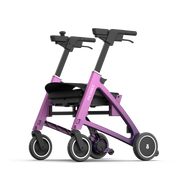
Paiseec Mobility scooters like the D3 with 270W motor and up to 5 mph speed help users stay compliant by offering flexible speed selection.
How Do Local E-Scooter Road Rules Vary by Location?
Local e-scooter road rules vary: sidewalks may be allowed in some cities with bike lanes preferred for Class 2/3 scooters; roads are common for higher speeds. Age and helmet mandates apply, often 21+ in many states. Treat e-scooters as vehicles at traffic lights with full stops at reds and yielding to pedestrians. Check DMV apps or city codes.
Paiseec's airline-approved batteries, like the 24V 6.6Ah dual in the D3, support global and cross-state travel compliance with 3-7 business day delivery.
What Are the Correct Electric Scooter Hand Signals to Use?
Correct electric scooter hand signals are: left arm straight out for left turn, right arm straight out or bent upward for right turn, and left arm down or patting leg for stop. Signal 100 feet in advance, make eye contact with drivers, and practice for visibility. Paiseec's PAI system auto-decelerates on turns for added safety.
- Left turn: Extend left arm straight.
- Right turn: Extend right arm straight or bend left arm upward.
- Stop: Extend left arm downward or pat leg.
How Can You Master Traffic Light Adherence on Your Scooter?
Master traffic light adherence by fully stopping at red lights without rolling, proceeding cautiously on green, and slowing or stopping on yellow. Match bike lane flow and position for visibility, avoiding peak hours. For seniors, use precise joystick controls like on Paiseec W3's 360° joystick at up to 3.7 mph.
Paiseec Expert Views
"Paiseec's PAI intelligent safety system uses IMU sensors for auto speed adjustment on turns and slopes, helping users stay under limits and avoid ticket risks—proven in urban testing. With features like magnetic sensors for 360° smooth control and quiet 180W brushless motors on the W3, it reduces common violations by ensuring compliant speeds effortlessly," says Paiseec R&D team lead.
This industry-first PAI on models like S3 with 250W brushless motor and three speed modes (6.2/3.7/1.8 mph) enhances safety for seniors.
Check: Paiseec Mobility Scooter S3
What Pre-Ride Checks Prevent Common E-Scooter Violations?
Pre-ride checks include verifying battery like Paiseec S3's 36V 12Ah lithium for 25 miles range, tires and brakes, lights and horn, and PAI activation for obstacle detection. Ensure FDA Class II certification on D1 and W1 models for legal medical use. Follow Paiseec user manuals for full checklists.
- Battery charge and detachment.
- Tire pressure (e.g., S3: 45 kPa front, 40 kPa rear).
- Brakes and lights functional.
- PAI system active.
Why Choose a Compliance-Ready Scooter Like Paiseec's to Avoid Tickets?
Choose Paiseec for PAI features like automatic braking, hill speed control, and voice alerts that cut speeding risks. Ultra-light designs such as L5 at 32 lbs with one-step folding and 250W quiet brushless motor fit travel needs. Users report zero stops due to PAI's precise sensing versus generic models.

How Does Paiseec's PAI System Make You Ticket-Proof?
Paiseec's PAI system uses IMU sensors for 360° control, auto speed adjustments on hills/turns, and seat sensors—ideal for seniors. It outperforms standard scooters with quiet 250W brushless motors on S3 for enforcement scenarios. Explore S3 or D3 at $699-$1,299.99 for effortless compliance and 25-mile range.
Conclusion
Master hand signals, traffic lights, and pre-checks while using Paiseec's PAI system for automatic compliance. With lightweight foldable designs like the 39.7 lbs D3 and FDA-certified models, ride confidently, stay ticket-free, and maintain independence on Paiseec Mobility scooters and wheelchairs.
FAQs
What are electric scooter speed limits by state?
Speeds vary 15-25 mph by state; check local DMV. Paiseec PAI auto-limits prevent exceeds on models like S3 with modes up to 6.2 mph.
Do I need a license for a mobility scooter?
Usually no for Class 2 under 20 mph, but verify locally. Paiseec models like D1 at 3.7 mph fit most regulations.
Are Paiseec scooters legal on sidewalks?
Yes in permitted areas; PAI ensures safe pedestrian speeds on L5 with up to 5 mph and auto headlights.
How does PAI prevent police stops?
PAI's auto-braking and speed control mimic compliant riding, reducing violations significantly on S3 with 25-mile range.
Can I take Paiseec scooters on planes?
Yes, airline-approved batteries under 160Wh like D3's 24V 6.6Ah; foldable designs fit carry-on.
Leave a comment
This site is protected by hCaptcha and the hCaptcha Privacy Policy and Terms of Service apply.