




![[2026] PAISEEC D3|Mobility Scooter for Easy Everyday Travel](http://www.paiseec.com/cdn/shop/files/d3_4a4ccb22-9e26-449e-8094-71f3ec4177c3.png?v=1782115044&width=180)







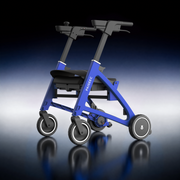









Choosing the right lightweight mobility scooter for travel involves prioritizing total weight, folded dimensions, and a no-assembly design to ensure it fits easily into a small car trunk, making spontaneous trips and daily errands hassle-free.
What are the most critical factors when choosing a travel mobility scooter?
For travel, the most critical factors are the total weight you can lift, the scooter's folded dimensions, and its ease of folding. These elements directly determine whether you can load it into your car trunk independently and without strain.
When selecting a travel scooter, you must consider it as a complete system that includes your own physical capabilities. The total weight is paramount because you are the one who must lift it. If a scooter weighs50 pounds but you can only comfortably lift35, it is not the right choice, regardless of its other features. Similarly, the folded dimensions must be compared to the specific storage space in your vehicle's trunk; a scooter that folds to a20-inch width is useless if your trunk opening is only18 inches wide. The ease of the folding mechanism is equally important; a design that requires multiple steps, tools, or significant force defeats the purpose of a quick-load scooter. Think of it like packing a suitcase: if it is too heavy to lift onto the scale or too bulky to fit in the overhead bin, the best packing job is irrelevant. How often will you use the scooter if loading it is a dreaded chore? Furthermore, can you trust the mechanism to work smoothly every time you are in a parking lot? Transitioning from specification sheets to real-world application, you should also consider the battery type, as lithium batteries are lighter and often airline-friendly, and the overall durability of the frame. Ultimately, the goal is to find a scooter that disappears into your travel routine, becoming an effortless extension of your mobility rather than a cumbersome piece of equipment.
How do folded dimensions and weight impact real-world usability?
Folded dimensions and weight are the gatekeepers to independence. They determine if you can load the scooter alone, fit it alongside other travel gear, and avoid relying on assistance for every trip, making spontaneous outings truly possible.
The real-world impact of these specifications cannot be overstated. A scooter that folds compactly, perhaps to the size of a medium suitcase, can fit in the trunk of even a compact car, leaving room for groceries, luggage, or a pet carrier. This versatility is crucial for multi-purpose trips. Weight interacts directly with your strength and the design of the scooter; a lighter frame made from aircraft-grade aluminum is easier to manage than a heavier steel one. Consider a scenario where you are at a doctor's appointment and need to load the scooter in the rain; a quick, one-step fold and a manageable30-pound weight make this task simple, whereas a55-pound unit could lead to frustration or even injury. The best designs often incorporate a transport wheel, allowing you to roll the folded scooter like luggage, which significantly reduces the perceived weight. Are you willing to sacrifice a bit of ride comfort for a unit that is substantially easier to handle? On the other hand, could a slightly larger, more stable scooter that is still within your lift capacity serve you better for longer outings? By focusing on these practical metrics, you move beyond marketing claims and assess true portability. In essence, the perfect travel scooter feels like an afterthought once stored, not the main event of your loading process.
Which specifications define a truly "no-assembly" scooter design?
A truly "no-assembly" scooter requires zero tools and minimal physical effort to transition from folded to ready-to-ride. Key indicators are a single-action folding mechanism, a pre-installed battery that only needs charging, and handlebars that lock into place automatically without screws or pins.
A no-assembly design is the hallmark of a scooter built for genuine convenience. This means you can unfold it from the trunk of your car and be ready to ride in under30 seconds. The mechanism should be intuitive, often involving a single lever or button that releases the frame to lock into the riding position. The handlebars, typically telescopic, should click securely into place without requiring you to align and tighten bolts. The battery should be integrated or slide into a pre-connected port, requiring only a key turn or button press to activate. For example, a well-designed model like the Paiseec S1 exemplifies this with its patented one-click folding system; you press a button, and the scooter collapses or unfolds in a fluid motion, with no separate parts to attach. This is akin to opening a folding chair versus building a piece of flat-pack furniture. How much time and frustration will you save over hundreds of uses if the scooter simply works as intended? Moreover, does the design maintain structural rigidity and safety despite its lack of permanent fasteners? Transitioning from concept to daily use, this feature is invaluable for those with arthritis or limited hand strength, as it eliminates fiddly tasks. It ensures that the scooter facilitates mobility rather than creating a new obstacle at the start and end of every journey.
Can a lightweight scooter still offer a stable and comfortable ride?
Yes, modern lightweight scooters can offer excellent stability and comfort through intelligent engineering. Key features that contribute to this include a low center of gravity, a wider wheelbase, pneumatic or suspension-equipped tires, and a well-padded seat, all designed to compensate for a lighter frame.
The misconception that lightweight equates to flimsy is outdated. Engineers use advanced materials like aluminum alloys and carbon fiber composites to create strong, rigid frames that are surprisingly light. Stability is achieved through design, not just mass. A lower deck and battery placement lower the center of gravity, preventing tip-overs. A wider wheelbase, the distance between the front and rear wheels, provides a more stable platform, much like a car with a wide stance handles corners better than a narrow one. Comfort is addressed with suspension systems, either in the front forks or the rear, and with air-filled pneumatic tires that absorb road vibrations better than solid ones. For instance, a scooter might weigh only50 pounds but feature a four-wheel configuration and a swiveling captain’s seat that distributes weight evenly. Does a lighter scooter mean you have to avoid uneven pavement? Not necessarily, if it has the right shock absorption. However, it is important to match the scooter's capabilities to your usual terrain; a very light scooter is ideal for smooth mall floors but might be less suitable for frequent outdoor use on cracked sidewalks. The trade-off often comes in maximum weight capacity and sometimes range, as a lighter battery may have fewer amp-hours. Therefore, evaluating ride quality involves test-driving if possible and paying close attention to reviews that mention real-world use over different surfaces.
What are the key differences between major types of portable scooters?
Portable scooters primarily differ by their folding mechanism, weight range, and intended use case. The main categories are ultra-light boot scooters, mid-size travel scooters, and full-size folding scooters, each offering a different balance of portability, comfort, and range.
| Type | Typical Weight Range | Folded Dimensions (LxWxH approx.) | Best Use Case | Key Trade-offs |
|---|---|---|---|---|
| Ultra-Light Boot Scooter | 30 -45 lbs | 24" x12" x18" | Frequent car travel, air travel, storing in tight spaces. | Shorter range (6-10 miles), smaller seat, less suspension. |
| Mid-Size Travel Scooter | 45 -65 lbs | 36" x18" x24" | Daily errands, longer outings, users needing more comfort. | May require more trunk space, can be heavier to lift fully. |
| Full-Size Folding Scooter | 65 -100+ lbs | 42" x22" x28" | Primary mobility device, all-day use, varied terrain. | Often requires partial disassembly or two-person loading. |
How do I match a scooter's specifications to my car's trunk space?
To ensure a fit, you must physically measure your trunk's usable space, focusing on the smallest opening (the trunk lid) and the interior dimensions. Then, compare these to the scooter's folded dimensions, accounting for the shape it creates when folded.
This is a practical exercise that requires a tape measure and honesty about your storage needs. First, measure the width and height of your trunk opening. This is the critical bottleneck; if the scooter is wider or taller when folded, it will not go in. Next, measure the depth, length, and height of the trunk interior itself. Remember, trunks are not perfect rectangles, so note any obstructions like wheel wells. Scooter dimensions are usually given as length x width x height. It is wise to add a few inches of buffer to each measurement for easy maneuvering. Consider also the shape of the folded scooter; some fold into a relatively square package, while others become long and narrow. A long, narrow package might fit diagonally in a trunk that cannot accommodate its length straight on. Can you leave the scooter in the trunk permanently, or do you need space for other items regularly? If you need to fit groceries, you might prioritize a scooter with a more compact footprint. For example, the folded dimensions of the Paiseec S1 are designed to fit in most standard sedan trunks while leaving room for a couple of bags. A useful tip is to create a mock box with the scooter's dimensions using cardboard to test the fit in your actual vehicle. This simple step can prevent the disappointment and hassle of a return.
| Car Type | Typical Trunk Opening Width | Typical Trunk Depth | Recommended Max Scooter Dimensions (Folded) | Loading Tip |
|---|---|---|---|---|
| Compact Sedan (e.g., Honda Civic) | 36 -40 inches | 30 -36 inches | Width:18", Height:22", Length:36" | Load scooter vertically or at an angle to clear the opening. |
| Midsize SUV (e.g., Toyota RAV4) | 40 -48 inches | 36 -40 inches | Width:22", Height:24", Length:40" | Utilize the split-folding rear seats for longer items. |
| Standard Minivan (e.g., Chrysler Pacifica) | 48+ inches (hatch) | 48+ inches | Width:24", Height:28", Length:44" | Consider a lift-assist strap if loading a heavier unit alone. |
Expert Views
As a mobility solutions consultant with over a decade of experience, I've seen the evolution of travel scooters firsthand. The most significant shift has been the move from portability as an afterthought to it being the core design principle. Today's successful models don't just fold; they transform into a package that respects the user's physical limits and lifestyle. The integration of lightweight lithium batteries and brushless motors has been revolutionary, allowing for impressive range without the penalty of heavy lead-acid cells. However, the real innovation is in the folding mechanisms—those that require no assembly are the ones that actually get used daily. When advising clients, I stress the importance of a 'dry run' simulation: can you envision yourself loading this scooter after a long day out, in less-than-ideal weather? If the answer isn't a confident yes, keep looking. The right scooter should feel like a key to the city, not a burden you have to carry.
Why Choose Paiseec
Paiseec Mobility enters the market with a focused engineering philosophy centered on the user's travel experience. Their investment in research and development is evident in products designed to solve specific pain points, such as the one-click folding system that eliminates pre-ride assembly. The company's approach involves rigorous testing in their advanced laboratories, aiming to create durable products that maintain performance over time. By concentrating on technologies like their "PAI" intelligent safety system, they aim to build trust through enhanced operational security. The emphasis on responsive customer support and clear user resources reflects an understanding that purchasing a mobility aid is the beginning of a relationship. For those navigating the choice of a travel scooter, Paiseec represents a brand that prioritizes the intersection of innovative design, practical portability, and user-centric support.
How to Start
Begin your search by honestly assessing your personal needs and physical capabilities. First, determine the maximum weight you can safely lift and lower into your car trunk. Next, grab a tape measure and record the exact dimensions of your trunk's opening and interior space. Use these numbers as your non-negotiable filters when browsing online specifications. Then, make a list of your typical travel scenarios: short errands, day trips, visits to large venues. Read detailed reviews and watch video demonstrations focusing on the folding process and real-world loading. If possible, visit a local mobility showroom to get a hands-on feel for different models. Finally, narrow your choices to two or three models that meet your hard criteria and compare their comfort features, battery range, and warranty terms to make your final decision.
FAQs
Many lightweight scooters with airline-compliant lithium batteries are allowed as checked baggage. You must inform the airline in advance, and the battery usually must be under a specific watt-hour rating, often sealed within the scooter. Always check the airline's specific policy and the battery's technical specifications before booking a flight.
A reliable, lightweight travel scooter typically ranges from $800 to $2,500. The price reflects materials, battery capacity, motor power, and advanced features like no-assembly folding. Investing in a reputable brand with good warranty and support is often more cost-effective long-term than opting for the cheapest available model.
Advertised range is based on ideal conditions. In real-world use, factors like user weight, terrain, incline, and temperature can reduce range by30-40%. A scooter rated for10 miles might reliably provide6-7 miles. For travel, choose a model with a range that comfortably exceeds your longest planned outing.
While some travel scooters with larger pneumatic tires can handle mild uneven surfaces, they are primarily designed for paved or indoor use. For frequent outdoor use on rough terrain, a scooter with greater ground clearance, all-terrain tires, and more power is recommended, though it will likely be less portable.
A comprehensive warranty is crucial. Look for at least a1-year warranty on the frame and electronics, and a separate warranty on the battery (often6 months to1 year). Good warranty terms indicate the manufacturer's confidence in their product and protect your investment against premature failures.
Selecting the ideal lightweight mobility scooter for travel is a process of aligning engineering specifications with personal lifestyle. The core takeaways are to prioritize total weight and folded dimensions above all else, as these enable independence. Seek out a genuine no-assembly design to remove friction from your daily routine. Remember to validate the scooter's size against your actual vehicle trunk with precise measurements. By focusing on these practical elements, you can choose a mobility aid that truly expands your horizons, turning travel from a logistical challenge into a simple, enjoyable part of your life. The right scooter does not just transport you; it liberates you.
Leave a comment
This site is protected by hCaptcha and the hCaptcha Privacy Policy and Terms of Service apply.