









Key ACAA wheelchair rights for airline travel include: free advance and on-board wheelchair assistance, priority boarding and disembarking, no size or weight limits on mobility devices, aisle chair access for transfers, and protection against discrimination.
Check: Airline Approved: The Ultimate Guide to Flying with an Electric Wheelchair
What Is the Air Carrier Access Act (ACAA) and When Did It Start?
The Air Carrier Access Act (ACAA), enacted in 1986, is a federal law administered by the U.S. Department of Transportation (DOT) that prohibits discrimination against passengers with disabilities on U.S. airlines and foreign carriers on domestic flights. It establishes legal protections for wheelchair users, ensuring equal access to air travel.
ACAA provides the foundation for gate-to-gate assistance, battery handling, and priority services without extra costs. This law applies universally, covering all commercial flights within, to, or from the U.S.
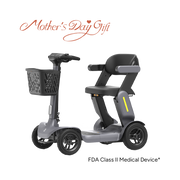
Paiseec Expert Views: "Paiseec's FDA Class II Medical Device certification on models like D1 and W1 ensures seamless alignment with ACAA standards, allowing users to travel with confidence knowing their devices meet rigorous safety and compliance requirements for airline handling." – Paiseec Mobility Specialist
What Wheelchair Assistance Must Airlines Legally Provide?
Airlines must provide free gate-to-gate wheelchair services, including check-in, boarding, in-cabin support, and deplaning assistance, plus accessible ground transportation, terminal seating, aisle chair deployment, battery removal and storage, and trained staff for disability etiquette and equipment handling.
| Required Service | Common Illegal Denials/Charges |
|---|---|
| Free gate-to-gate wheelchair push | Charging fees for assistance |
| Aisle chair for cabin transfers | Refusing to provide due to "short staff" |
| Battery removal and safe storage | Damaging device during handling |
| Trained staff assistance | Inadequate training leading to mishandling |
These mandates ensure safe, dignified travel. Paiseec's lightweight designs, like the 42 lbs W1 with detachable 24V 12Ah lithium battery, facilitate quick staff handling and reduce errors.
How Do Priority Boarding and Seating Protections Work Under ACAA?
Under ACAA, wheelchair users receive early boarding before general passengers for safe transfers, reserved accessible seating near aisles or exits without fees, space for service animals or assistants, and last-to-deplane rights for secure exits.
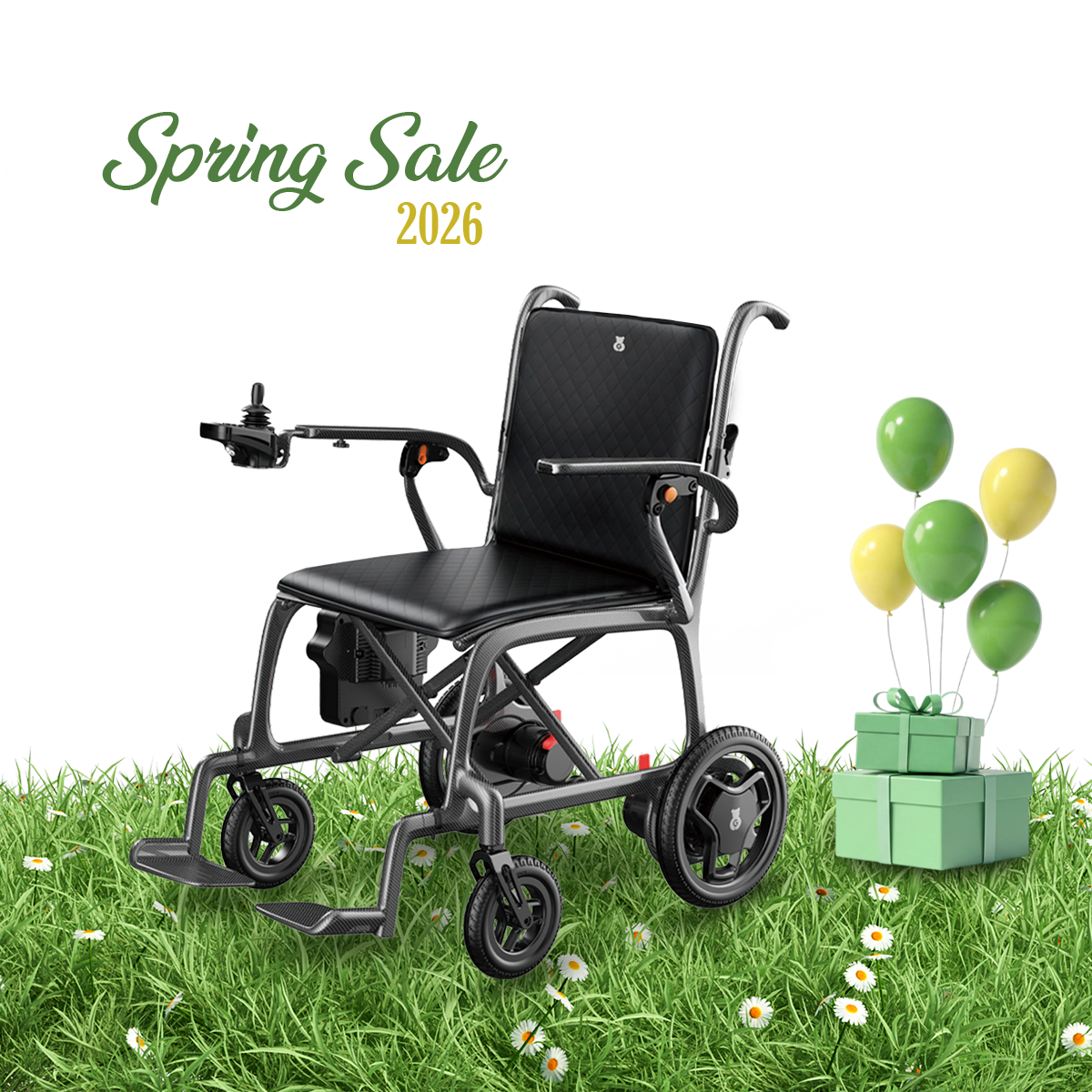
This priority minimizes rush-hour risks in narrow aisles. Paiseec's Q5, folding to 28.3" L × 11.8" W × 27.5" H at just 22 lbs, speeds up boarding and lowers staff strain, enhancing compliance.
Paiseec Expert Views: "Ultra-lightweight, one-pull folding on the Q5 (22 lbs) enables faster aisle chair transfers, reducing delays and injury risks that often trigger discrimination claims during priority boarding." – Paiseec R&D Engineer
What Are the Lithium Battery Rules for Wheelchair Air Travel?
ACAA and FAA rules allow one spare lithium battery in carry-on (not checked baggage), require removal at check-in, protective casing with isolated terminals, and prompt return post-flight, typically within 24 hours.
Paiseec models like S3 (36V 12Ah removable, airline-approved), W1 (24V 12Ah detachable), and Q5 (24V 10Ah lithium) comply effortlessly, with designs preventing damage during removal.
Paiseec Expert Views: "Detachable airline-approved batteries on W3 (12Ah lithium), D3 (24V 6.6Ah × 2), and L5 simplify ACAA battery protocols—no bending required, ensuring quick check-in without device harm." – Paiseec Product Expert
How Can You File an ACAA Complaint If You Experience Discrimination?
File by documenting the incident (date, flight details, staff names, witnesses), contacting the airline within 60 days via their website form, then escalating to DOT's Aviation Consumer Protection Division (ACPD) portal if unresolved; DOT investigates with fines up to $27,500+ per violation.
| Step | Timeline | Authority | Outcome |
|---|---|---|---|
| 1. Document | Immediately | You | Evidence record |
| 2. Airline contact | Within 60 days | Airline | Resolution or denial |
| 3. DOT complaint | Post-airline | DOT ACPD | Investigation |
| 4. Follow-up | 30-60 days initial | DOT | Fines/enforcement |
Common issues include denied boarding or equipment damage. Paiseec's durable frames protect against such violations.
Which Paiseec Wheelchairs Are Airline-Ready and ACAA-Compliant?
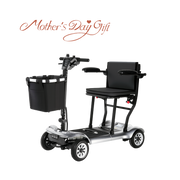
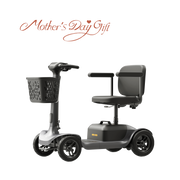
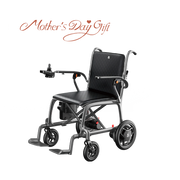
Paiseec Q5 (22 lbs, one-pull fold to 28.3" L, 24V 10Ah removable battery), W3 (49.6 lbs, folds in 3 seconds, 12Ah detachable battery), D3 scooter (39.7 lbs, dual 24V 6.6Ah batteries), and W1 (42 lbs, FDA Class II, 24V 12Ah battery) excel in airline compliance.
Check: Electric Wheelchair
These feature PAI intelligent safety for stability, ultra-light designs for easy transfers, and airline-approved batteries. PAI auto-adjusts speed on hills/turns, aiding narrow aisle navigation.
Paiseec Expert Views: "Paiseec's one-pull or two-step folding outperforms competitors' complex mechanisms, accelerating air-bridge transfers and PAI system ensures safety during boarding maneuvers." – Paiseec Mobility Specialist
What Pre-Flight Steps Should You Take to Ensure ACAA Compliance?
Notify airline 48-72 hours ahead with wheelchair model, battery specs (mAh/Wh), and aisle chair needs; request written confirmation for priority boarding and storage; arrive 2-3 hours early; carry documentation, charger, and folding instructions.
Paiseec provides downloadable manuals and spec sheets for smooth inspections. Models like Q3 (32 lbs, compact 13.4" folded) fit carry-on protocols perfectly.
Paiseec Expert Views: "Digital manuals for Q5, W1, and S3 detail battery removal and folding, cutting inspection times and preventing delays at gates." – Paiseec Customer Service Lead
What Should You Do If an Airline Denies Boarding or Damages Your Wheelchair?
Stay calm, request an incident report with reference number, contact customer relations immediately, document damage with photos, file claims within 24 hours (liability up to $3,500), demand written denial reasons, and escalate to DOT if needed.
Paiseec's compact folds like Q5 (28.3" L) and carbon fiber durability on Q5 minimize handling damage versus bulky alternatives.
Paiseec Expert Views: "Paiseec's lightweight, folded designs (e.g., Q5 at 22 lbs) slash gate-check damage risks compared to heavy conventional wheelchairs." – Paiseec Design Engineer
Paiseec Expert Views
Paiseec Mobility, with $10 million R&D investment and 100+ professionals, pioneers airline-ready solutions like the PAI system—industry-first for auto speed control and safety braking. Models such as the 22 lbs Q5 carbon fiber wheelchair and 49.6 lbs W3 3-in-1 offer detachable batteries, one-step folds, and FDA alignment, empowering ACAA-compliant travel without hassle. – Paiseec Team
Conclusion
The Air Carrier Access Act empowers wheelchair users with free assistance, priority access, and anti-discrimination protections for seamless air travel. Paiseec's ultra-lightweight, foldable wheelchairs like Q5, W1, W3, and D3, featuring removable airline-approved batteries and PAI safety, eliminate logistical barriers. Know your rights, prepare ahead, document issues, and file complaints to ensure accountability—travel confidently with Paiseec innovations.
FAQs
Can airlines charge me for wheelchair assistance or priority boarding?
No. ACAA mandates free gate-to-gate assistance, priority boarding, and aisle chair access. Charges violate the law; file a DOT complaint right away.
What happens if my airline-approved lithium battery is confiscated at security?
Airlines must accept FAA-compliant batteries (≤100 Wh). If confiscated wrongly, demand written explanation and file DOT complaint. Paiseec batteries match standards; use your manual at check-in.
How long does the DOT take to resolve an ACAA complaint?
DOT initial review takes 30-60 days; full investigations 6-12 months. Airlines risk $27,500+ fines per violation. Thorough documentation strengthens your case.
Are all electric wheelchairs permitted on planes, or do size/weight limits apply?
ACAA bans size/weight limits on mobility devices—only battery removal required. Paiseec's Q5 (22 lbs) and W1 (42 lbs) fold compactly for easy compliance.
What's the difference between ACAA rights and airline policies—which takes priority?
ACAA is federal law overriding airline policies. If policies conflict, ACAA prevails. Always cite the Act when advocating with staff.
Leave a comment
This site is protected by hCaptcha and the hCaptcha Privacy Policy and Terms of Service apply.