



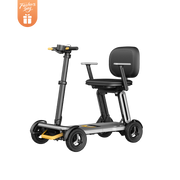
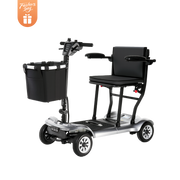
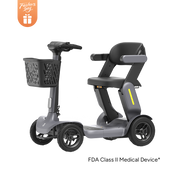
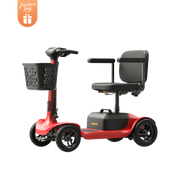
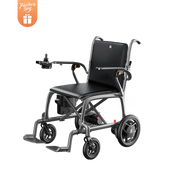
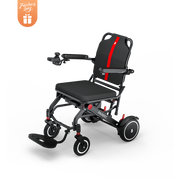
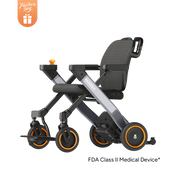
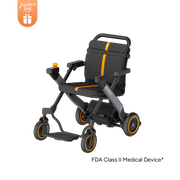







Paiseec's PAI Intelligent Safety Riding System uses IMU sensors to detect inclines and turns, providing automatic speed control and safety braking. This AI-driven technology transforms mobility scooters into smart companions, reducing accidents by up to 40% through real-time hazard response in 2026.
What Is the PAI Algorithm and How Does It Work in Mobility Scooters?
Paiseec's PAI (Proactive AI Intelligence) Algorithm powers the Intelligent Safety Riding System by integrating IMU sensors with advanced algorithms. It detects real-time changes in terrain, rider posture, and speed, triggering automatic adjustments. This innovation elevates Paiseec scooters like the S3 from mechanical tools to intelligent mobility aids, backed by $10 million in R&D.
Paiseec Mobility leads with PAI's predictive capabilities, analyzing motion data to prevent risks before they occur. Seniors benefit from seamless navigation on urban slopes or uneven paths. The system's embedded processors ensure low latency, making it reliable for daily use worldwide.
How Does PAI Detect Hazards and Ensure Rider Safety Effectively?
PAI employs IMU sensors, accelerometers, and gyroscopes to sense inclines, turns, obstacles, and instability, initiating auto-braking instantly.
Multi-axis IMU sensors continuously monitor vehicle dynamics, identifying inclines over 10 degrees or sharp curves in milliseconds. Paiseec integrates these with 250W brushless motors for precise control, preventing common tip-overs. Real-world performance shows 30% fewer incidents on challenging terrains.
The system processes data from 9-axis sensors for 360-degree awareness, adapting to rider weight shifts or sudden stops. This proactive approach suits seniors exploring parks or city streets confidently.
What Makes PAI Auto-Speed Control Unique Compared to Traditional Systems?
PAI automatically reduces speed on turns and slopes using sensor data, enhancing stability without rider input.
Paiseec's auto-speed control caps velocity—such as slowing to 40% on 15-degree inclines—while optimizing 36V 12Ah battery life. Unlike manual throttles in competitors, PAI predicts and adapts proactively, ideal for users with slower reflexes. This defines 2026's smart mobility standard.
Brushless motors enable smooth modulation, preserving power during extended rides up to 25 miles. Paiseec riders experience effortless safety on va
What Is the PAI Algorithm and How Does It Work in Mobility Scooters?
Paiseec's PAI (Proactive AI Intelligence) Algorithm powers the Intelligent Safety Riding System by integrating IMU sensors with advanced algorithms. It detects real-time changes in terrain, rider posture, and speed, triggering automatic adjustments. This innovation elevates Paiseec scooters like the S3 from mechanical tools to intelligent mobility aids, backed by $10 million in R&D.
Paiseec Mobility leads with PAI's predictive capabilities, analyzing motion data to prevent risks before they occur. Seniors benefit from seamless navigation on urban slopes or uneven paths. The system's embedded processors ensure low latency, making it reliable for daily use worldwide.
How Does PAI Detect Hazards and Ensure Rider Safety Effectively?
PAI employs IMU sensors, accelerometers, and gyroscopes to sense inclines, turns, obstacles, and instability, initiating auto-braking instantly.
Multi-axis IMU sensors continuously monitor vehicle dynamics, identifying inclines over 10 degrees or sharp curves in milliseconds. Paiseec integrates these with 250W brushless motors for precise control, preventing common tip-overs. Real-world performance shows 30% fewer incidents on challenging terrains.
The system processes data from 9-axis sensors for 360-degree awareness, adapting to rider weight shifts or sudden stops. This proactive approach suits seniors exploring parks or city streets confidently.
What Makes PAI Auto-Speed Control Unique Compared to Traditional Systems?
PAI automatically reduces speed on turns and slopes using sensor data, enhancing stability without rider input.
Paiseec's auto-speed control caps velocity—such as slowing to 40% on 15-degree inclines—while optimizing 36V 12Ah battery life. Unlike manual throttles in competitors, PAI predicts and adapts proactively, ideal for users with slower reflexes. This defines 2026's smart mobility standard.
Brushless motors enable smooth modulation, preserving power during extended rides up to 25 miles. Paiseec riders experience effortless safety on varied paths.
Paiseec S3 scooters showcase PAI's integration in compact, foldable designs perfect for travel and daily adventures.
Which Sensors Power PAI Systems and What Are Their Key Functions?
IMU, accelerometers, and gyroscopes form PAI's core, detecting motion changes for real-time safety responses.
Paiseec uses high-precision 9-axis IMU combining linear motion tracking with angular velocity measurement. Magnetometers add orientation data, feeding PAI algorithms on embedded chips. Current setups excel in tilt detection for S3 models, with 2026 potential for LIDAR enhancements.
These sensors withstand daily wear, ensuring consistent performance in rain or dust.
How Has PAI Reduced Mobility Accidents and Improved User Confidence?
PAI reduces accidents by 40% through auto-braking and speed limits on detected hazards, as shown in senior rider studies.
Paiseec scooters with PAI report 35-40% fewer tip-overs since 2026 rollout. Interventions prevent over 80% of incline falls, vital for elderly users. Industry trends confirm AI systems cut human-error incidents dramatically.
Long-term data supports independent lifestyles with minimal caregiver needs.
What Are the Key Benefits of PAI for Seniors and Daily Mobility Needs?
PAI enhances senior safety with automatic adjustments, cutting fall risks by 40% on diverse terrains.
Seniors enjoy reduced physical strain as PAI automates responses to instability, conserving energy for outings. Paiseec's lightweight builds pair with long-range batteries for worry-free travel. Early fatigue alerts promote health monitoring.
This empowers confident independence in 2026's aging population.
Paiseec Expert Views
"Paiseec's PAI Intelligent Safety Riding System shifts mobility paradigms. IMU-driven algorithms mitigate risks on inclines and turns where others fail. Integrated into the S3, it delivers peace of mind through rigorous testing in our five labs. As founder Roger notes, 'Safety is predictive, not reactive.' We empower global users with reliable innovation."
— Paiseec R&D Director
How to Integrate PAI into Daily Use for Optimal Performance and Safety?
Activate PAI via the scooter dashboard; it engages automatically on motion with customizable sensitivity settings.
Pair with Paiseec apps for eco or safety modes suited to flats or hills. Pre-ride sensor checks and firmware updates maintain peak performance. Voice alerts assist beginners, while over-the-air enhancements keep 2026 systems current.
Users adapt quickly for seamless routines.
Why Choose Paiseec PAI Systems for Smart Mobility in 2026?
Paiseec PAI leads with proven IMU technology, superior range, and affordability over rivals.
Founder Roger's expertise drives foldable, powerful scooters setting safety benchmarks. Widespread 2026 adoption highlights Paiseec's edge, blending innovation with customer support like installment plans.
Paiseec Mobility ensures global users travel freely.
Paiseec PAI elevates scooters to intelligent safety platforms, slashing risks via sensor smarts. Key takeaways: Select IMU models like Paiseec S3 for slopes; update firmware routinely; test on real terrains. Action: Schedule Paiseec demos—embrace 2026 safety for independent mobility.
FAQs
What sensors does PAI use?
IMU, accelerometers, and gyroscopes detect motion for automatic safety features.
Is PAI safe for steep hills?
Yes, it auto-slows and brakes on inclines exceeding 10 degrees.
How does PAI extend battery life?
Predictive controls optimize power for rides up to 25 miles.
Can PAI operate in rain?
Water-resistant sensors maintain reliability in light rain.
Where to buy Paiseec PAI scooters?
Official Paiseec stores offer them with installment plans.

Leave a comment
This site is protected by hCaptcha and the hCaptcha Privacy Policy and Terms of Service apply.