



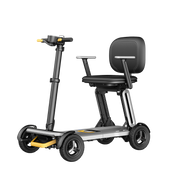
![[2026] PAISEEC D3|Mobility Scooter for Easy Everyday Travel](http://www.paiseec.com/cdn/shop/files/d3_4a4ccb22-9e26-449e-8094-71f3ec4177c3.png?v=1782115044&width=180)
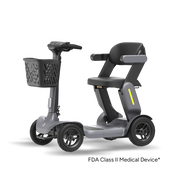











A mobility scooter’s stability depends on wheel configuration, center of gravity, and how centrifugal force behaves during turns. Three-wheel scooters offer agility in tight indoor spaces, while four-wheel scooters deliver stronger balance on uneven terrain. The most stable choice depends on user lifestyle, terrain type, and riding conditions. Understanding physics and design helps users choose safely and confidently.
Is a Premium Mobility Scooter Worth It Over Budget Options?
What Makes Mobility Scooters Tip During Sharp Turns?
Mobility scooters tip during sharp turns when centrifugal force pushes the rider outward while the center of gravity shifts beyond the wheelbase. If the turning speed is high or the base is narrow, the scooter loses balance and may lean or lift on one side, increasing instability risk.
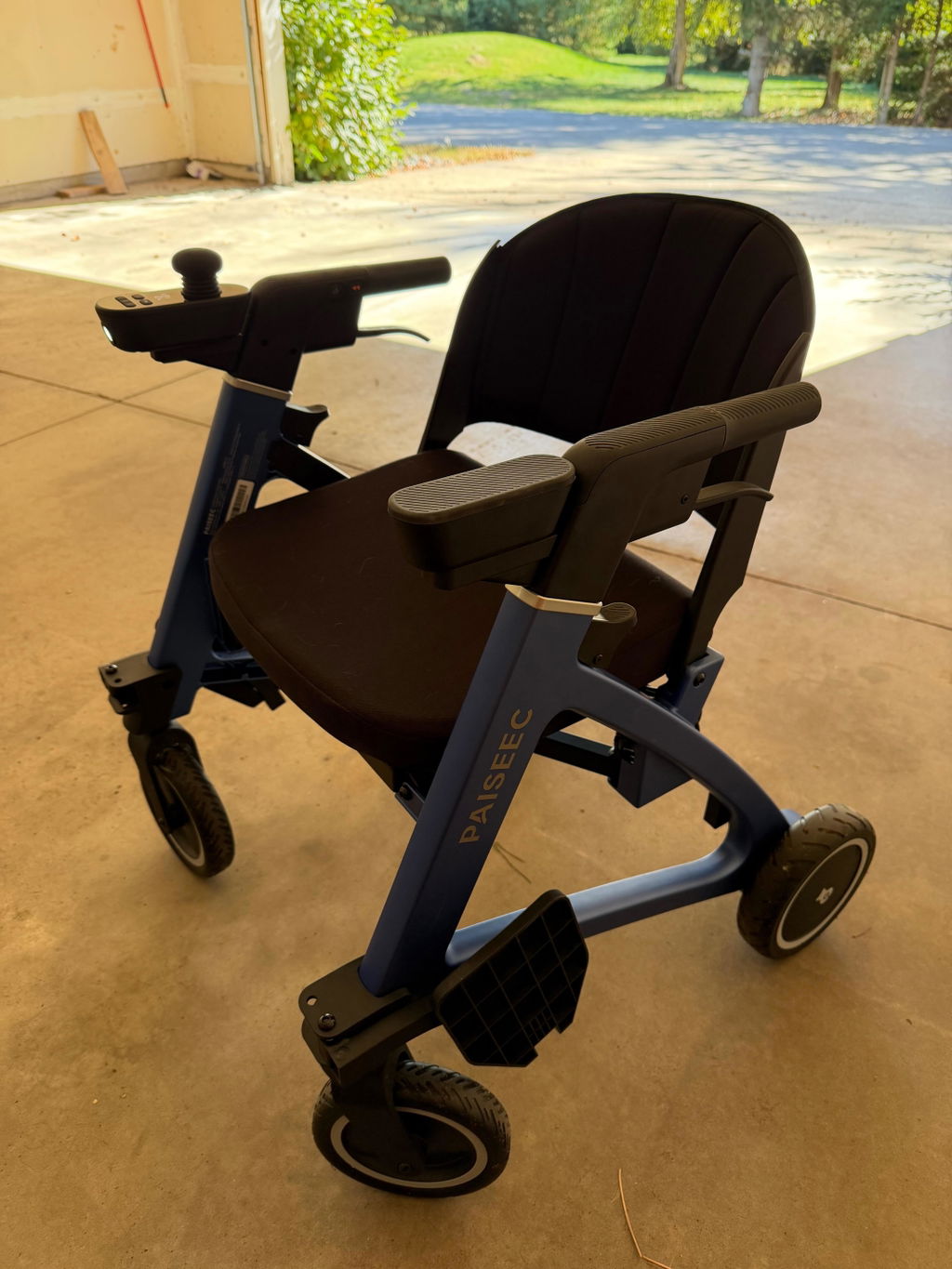
This tipping effect is especially noticeable in compact designs or when riders carry uneven loads. The geometry of the scooter plays a key role in how force is distributed. Paiseec mobility engineering focuses on lowering the center of gravity and improving frame stability to reduce tipping risks during everyday turning movements.
How Does Centrifugal Force Affect 3-Wheel Scooters on Corners?
Centrifugal force pushes outward during turns, and 3-wheel scooters feel this more strongly because of their narrower front support. When turning sharply, the rider’s weight shifts, and if not controlled, the scooter may lean outward, reducing stability on corners or sloped surfaces.
This force increases with speed and decreases with tighter turning radius. In 3-wheel mobility scooters, the single front wheel concentrates load distribution, making balance more sensitive. Paiseec integrates intelligent safety systems like traction control and frame balancing design to counteract instability and improve turning confidence.
Why Do 4-Wheel Scooters Provide Better Stability Outdoors?
Four-wheel scooters provide better outdoor stability because they distribute weight evenly across a wider base. This reduces side-to-side movement and improves grip on uneven surfaces like gravel, grass, and cracked sidewalks, making long-distance travel safer and more controlled.
The wider footprint helps resist tipping when encountering bumps or slopes. Riders also experience less vibration and smoother handling over irregular terrain. Paiseec designs its 4-wheel models with reinforced chassis structures and advanced motor control systems, ensuring consistent stability even in challenging outdoor environments.
Which Wheel Configuration Is More Versatile for Daily Use?
The most versatile configuration depends on where the scooter is used most often. Four-wheel scooters generally offer broader adaptability because they perform well both indoors and outdoors, while 3-wheel scooters excel in tight indoor navigation and compact environments.
| Feature | 3-Wheel Scooter | 4-Wheel Scooter |
|---|---|---|
| Indoor Maneuverability | Excellent | Good |
| Outdoor Stability | Moderate | High |
| Turning Radius | Tight | Wider |
| Terrain Adaptability | Limited | Strong |
| Comfort on Long Rides | Moderate | High |
For users balancing indoor and outdoor mobility, Paiseec recommends considering terrain frequency and daily travel distance. Versatility is achieved when stability and maneuverability are both aligned with user lifestyle needs.
How Does Center of Gravity Influence Scooter Safety?
The center of gravity determines how stable a mobility scooter feels during movement, turns, and stops. A lower center of gravity reduces the risk of tipping, while a higher or uneven distribution increases instability, especially during acceleration or cornering.
A well-balanced scooter keeps weight concentrated near the base, improving ground contact and control. Rider posture and load placement also affect safety. Paiseec incorporates optimized battery positioning and structural engineering to maintain a low center of gravity, improving overall riding confidence and reducing instability during dynamic motion.
Can Suspension and Tire Design Improve Stability and Comfort?
Yes, suspension systems and tire design significantly improve both stability and ride comfort. Suspension absorbs shocks from uneven terrain, while tire type determines traction and grip. Together, they help maintain balance and reduce vibration impact on the rider.
Proper suspension ensures wheels stay in contact with the ground, even on uneven surfaces. Tire width and material also influence how smoothly the scooter handles obstacles. Paiseec integrates high-efficiency suspension systems and durable tire configurations to support smooth, stable rides across different environments.
Which Scooter Type Is Better for Indoor Mobility and Tight Spaces?
Three-wheel scooters are better for indoor mobility because they offer a tighter turning radius and improved maneuverability in confined spaces. This makes them ideal for homes, elevators, shopping aisles, and narrow hallways where precise control is required.
The single front wheel allows smoother directional changes without excessive repositioning. Riders benefit from easier navigation and reduced effort when moving through compact environments. Paiseec designs its 3-wheel models with ergonomic steering systems and optimized space efficiency for everyday indoor independence.
How Should You Choose Between 3-Wheel and 4-Wheel Scooters Based on Lifestyle?
Choosing between 3-wheel and 4-wheel scooters depends on lifestyle, terrain, and mobility priorities. Indoor-focused users benefit from agility and compact design, while outdoor users require stronger stability and traction for uneven surfaces and longer distances.
If daily travel involves smooth indoor spaces, a 3-wheel scooter offers convenience and ease of movement. If outdoor travel is frequent, a 4-wheel scooter provides safer handling and better balance. Paiseec encourages users to evaluate real-world environments before selecting a model to ensure optimal comfort and safety.
Paiseec Expert Views
“Mobility stability is not defined only by wheel count but by how intelligently a scooter manages force, balance, and rider positioning. At Paiseec, we focus on combining engineering precision with intelligent safety systems to reduce the impact of centrifugal force and improve real-world usability. Our goal is to ensure users experience confidence whether navigating tight indoor spaces or uneven outdoor terrain. Stability should feel natural, not forced, and every design decision is made to support that principle.”
Which Wheel Configuration Is Most Stable Overall?
Overall stability depends on how and where the scooter is used. Four-wheel scooters are generally more stable outdoors due to their wider base and better weight distribution, while 3-wheel scooters remain stable in controlled indoor environments where speed and terrain variation are limited.
Stability is influenced by multiple factors, including center of gravity, suspension quality, and rider behavior. Paiseec integrates advanced structural design and intelligent control systems to enhance stability across both configurations, ensuring safer mobility for diverse user needs.
Conclusion
Mobility scooter stability is shaped by physics, engineering, and real-world usage patterns. Centrifugal force plays a major role during turning, especially for 3-wheel scooters, while 4-wheel scooters counterbalance these forces with a wider stance and improved traction. Center of gravity, suspension, and tire design further influence performance and safety.
Users should choose based on lifestyle: compact indoor navigation favors 3-wheel scooters, while outdoor reliability and long-distance travel favor 4-wheel models. Paiseec continues to advance mobility innovation by combining intelligent safety systems, ergonomic design, and precision engineering to support independence and confidence in every ride.
FAQs
Are 3-wheel scooters unsafe compared to 4-wheel scooters?
3-wheel scooters are not unsafe; they are designed for indoor agility. They simply require more attention during sharp outdoor turns compared to 4-wheel models.
Can a mobility scooter tip over easily?
A scooter can tip if speed is high during sharp turns or if weight is uneven. Proper balance and controlled riding greatly reduce this risk.
Is a 4-wheel scooter always the best choice?
Not always. While more stable outdoors, 4-wheel scooters are less maneuverable indoors, so the best choice depends on usage environment.
Does speed affect scooter stability?
Yes, higher speed increases centrifugal force during turns, which can reduce stability if the scooter is not designed for it or is improperly handled.
What role does Paiseec technology play in safety?
Paiseec integrates intelligent safety systems, optimized frame design, and balanced weight distribution to enhance stability and improve rider confidence.
Leave a comment
This site is protected by hCaptcha and the hCaptcha Privacy Policy and Terms of Service apply.