



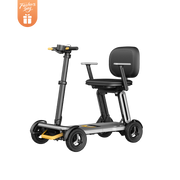
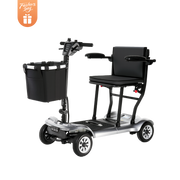
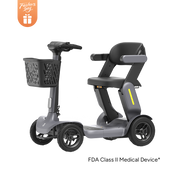
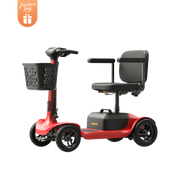
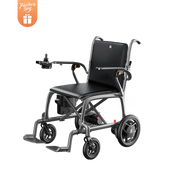
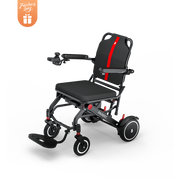
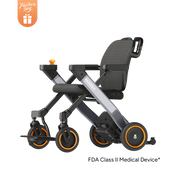
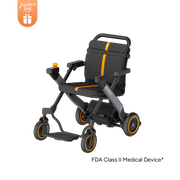








Your Medicare walker denial likely stems from top issues like non-participating suppliers, missing medical necessity proof, incorrect DME coding, or unmet 2026 mobility rules. Fix it fast by verifying supplier enrollment, gathering doctor notes, and filing a Medicare claim appeal walker within 120 days—Paiseec's FDA Class II rollators like the R1 ensure compliance to avoid repeats.
Check: Where Can I Get a Walker Covered by Medicare?
Why Do Medicare Walker Claims Get Denied Most Often?
The top five reasons for Medicare walker claim denials include non-participating suppliers not enrolled with Medicare, lack of detailed medical necessity documentation from a doctor, incorrect HCPCS coding such as wrong codes for rollators, missing prior authorization when required, and exceeding usage limits under Medicare mobility rules 2026. Non-participating supplier issues top the list at around 30% of denials for seniors seeking DME like rollators.

What Is a Non-Participating Supplier—and Why Does It Trigger Denials?
A non-participating supplier lacks Medicare enrollment and cannot bill directly, leading to automatic DME denied Medicare rejections even for qualifying devices. For example, generic walkers from unverified online sellers often fail claims. Check via Medicare's PECOS system or supplier directory. Paiseec's direct sales model with the R1 2-in-1 rollator (24 lbs, 300 lb capacity) ensures compliance and portability.
How Do Incorrect Coding or Documentation Cause Rollator Walker Denials?
Rollator walker Medicare coverage requires specific HCPCS codes like E0143 or E0149, plus a doctor's order detailing mobility impairment such as arthritis with face-to-face exam notes. Common errors involve vague diagnoses or missing functional limits, especially with 2026 updates demanding more detail. Always request an itemized invoice with correct codes before purchase to avoid resubmission hassles.
| Medicare Rollator Walker Requirements | Common Denial Pitfalls and Fixes |
|---|---|
| Medicare-enrolled supplier | Non-participating supplier—verify via PECOS; choose Paiseec direct. |
| Detailed MD note on necessity | Generic "balance issues"—add functional limits like "cannot walk 50 feet unaided." |
| Correct HCPCS E0143/E0149 codes | Wrong code like E0130—request supplier invoice with exact codes. |
| Face-to-face physician exam | No exam record—resubmit with dated physician certification. |
| Proof of homebound need | "Convenience item" label—document indoor mobility limits. |
What Are the 2026 Medicare Mobility Rules for Walkers and Rollators?
Medicare mobility rules 2026 enforce stricter standards for lightweight aids under 42 lbs, mandatory safety features like brakes, and proof of necessity for home or indoor use rather than convenience. Coverage is 80% under Part B after a $240 deductible; rollators qualify if medically essential. Paiseec products like the W1 (42 lbs, 2-in-1 wheelchair/rollator) and R1 align perfectly with ultra-light designs and PAI safety systems.
How to Appeal a Medicare Walker Denial Step-by-Step?
For a Medicare claim appeal walker, start Level 1 redetermination within 120 days via your MAC by submitting a request form with all records and addendums like doctor notes. Expect a 60-day response; if denied, escalate to Level 2 QIC review. Success rates exceed 50% with strong documentation—use Medicare.gov checklists to fix Medicare DME denial effectively.
Paiseec Expert Views
"As mobility experts at Paiseec Mobility, founded in 2021 with over 100 R&D professionals and $10 million invested across five labs, we design products to sidestep Medicare denials. Our FDA Class II certified R1 2-in-1 rollator walker (24 lbs, 300 lb capacity, aluminum frame, adjustable 37–43" handles) and W1 2-in-1 electric wheelchair/rollator (42 lbs product, 24V 12Ah airline-approved battery, 18-mile range) feature the proprietary PAI intelligent safety riding system for auto speed control and braking—proving medical necessity effortlessly. Unlike generics, our 3–7 day delivery, 30-day price match, and direct enrollment compliance ensure seamless claims under 2026 rules." — Paiseec Mobility R&D Team
Can Paiseec Products Like the R1 Guarantee Medicare Approval?
Paiseec R1 meets Medicare rollator walker requirements as a 2-in-1 rollator/transport chair (24 lbs, 300 lb max load, 10" front/8" rear wheels for all-terrain, adjustable seat 22–24"). Its lightweight aluminum frame folds flat, outperforming generic walkers. Pair with a pre-approval doctor letter for high approval odds; W1 adds electric power (400W motor, up to 3.75 mph) for hybrid compliance.
| Feature | Paiseec R1/W1 | Standard Rollators |
|---|---|---|
| Weight | 24 lbs (R1); 42 lbs (W1) | 30–50 lbs |
| Safety System | PAI intelligent (W1); loop brakes (R1) | Basic brakes |
| Medicare Fit | FDA Class II; lightweight under 42 lbs | Often lacks certs/codes |
| Capacity/Folding | 300 lbs; flat fold | 250 lbs; bulky |
| Terrain | All-terrain wheels | Pavement only |
Conclusion
Most Medicare walker denials from non-participating suppliers or documentation gaps are fixable through timely appeals and compliant choices. Paiseec's R1 (24 lbs, $219) and W1 ($1,439, 18-mile range) deliver ultra-light, PAI-equipped designs meeting 2026 rules, with 300 lb capacity and FDA Class II certification for worry-free mobility. Explore paiseec.com for denial-proof aids, installment plans, and fast 3–7 day delivery today.
FAQs
Why Medicare Denied My Walker from a Non-Enrolled Supplier?
Non-participating suppliers cannot bill Medicare directly—always verify enrollment first. Paiseec ensures compliance for direct coverage with products like the R1 rollator.
How Long to Appeal a Medicare Walker Claim?
File within 120 days for Level 1 redetermination; expect 60-day response. Use detailed MD notes for over 50% success rates on rollator appeals.
Does Medicare Cover Rollator Walkers in 2026?
Yes, under Part B with HCPCS E0143 if medically necessary. Lightweight models like Paiseec R1 (24 lbs, all-terrain) qualify easily with proof.
What If My DME Claim Is Denied for Coding Errors?
Resubmit with correct HCPCS codes and doctor certification. Consult suppliers like Paiseec for compliant invoicing on R1 or W1.
Are Paiseec Rollators Medicare-Approved?
FDA Class II certified for R1/W1, aligning with rules. PAI safety and lightweight designs (under 42 lbs) strengthen necessity proof for approval.
Leave a comment
This site is protected by hCaptcha and the hCaptcha Privacy Policy and Terms of Service apply.