




![[2026] PAISEEC D3|Mobility Scooter for Easy Everyday Travel](http://www.paiseec.com/cdn/shop/files/d3_4a4ccb22-9e26-449e-8094-71f3ec4177c3.png?v=1782115044&width=180)

















The best mobility scooter for summer travel is a lightweight folding mobility scooter with a removable airline-compliant lithium battery, a manageable lift weight, reliable range, and enough stability for sidewalks, hotels, airports, cruise terminals, and sightseeing days. For most travelers, the right choice is not the fastest or largest scooter—it is the portable travel mobility scooter that fits your body, itinerary, vehicle, and airline requirements.
Summer trips add practical demands: hot pavement, crowded attractions, uneven boardwalks, long airport transfers, compact rental cars, and battery planning. A travel scooter for seniors should make these moments simpler, helping you move independently without creating a difficult loading, storage, or charging problem.
Why a Travel Mobility Scooter Matters for Summer Trips
A mobility scooter for travel can turn a limited vacation into an accessible vacation. Instead of avoiding museums, resorts, family events, amusement parks, city tours, outdoor markets, beach promenades, and cruise excursions, riders can cover longer distances at a comfortable pace.
The mobility scooters market continues to expand as more adults prioritize independent travel, aging in place, and accessible leisure. Mordor Intelligence estimates the global mobility scooter market at 2.54 billion dollars in 2026, forecasting growth toward 3.63 billion dollars by 2031. Lightweight mobility scooters, folding mobility scooters, portable electric scooters for adults, and airline approved mobility scooters are central to this shift because travelers increasingly want a practical alternative to renting equipment at every destination.
The best travel scooter balances portability with daily usefulness. A compact mobility scooter must fit through hotel doors, move around restaurant tables, handle smooth outdoor paths, and stow in a trunk or SUV. At the same time, a lightweight scooter should not sacrifice braking, seat support, battery reliability, ground clearance, or weight capacity.
Best Mobility Scooter for Summer Travel: What to Prioritize
The best folding mobility scooter for travel depends on how you travel. Flying, cruising, road trips, RV travel, theme parks, and international vacations create different needs, but several features matter almost everywhere.
| Travel scooter feature | Why it matters for summer travel | Best use case |
|---|---|---|
| Lightweight frame | Reduces the difficulty of lifting, loading, and storing | Rental cars, taxis, SUVs, family road trips |
| Automatic folding design | Makes setup faster when entering a hotel, airport, or restaurant | Travelers with limited hand strength |
| Removable lithium battery | Helps support airline mobility scooter preparation | Air travel and cruise travel |
| Compact turning radius | Improves maneuverability in elevators, shops, cabins, and hotel rooms | City breaks, resorts, indoor attractions |
| Long battery range | Reduces mid-day charging concerns during sightseeing | Theme parks, boardwalks, full-day excursions |
| Four-wheel stability | Provides greater confidence on sidewalks and mild uneven terrain | Outdoor summer use |
| Comfortable seat | Supports longer rides during tours and events | All-day travel and sightseeing |
| Flat-free tires | Lowers maintenance concerns while away from home | Multi-city trips and remote destinations |
| LED lighting | Increases visibility in garages, evening paths, and dim hotel areas | Evening dining and late returns |
| Easy disassembly | Helps travelers load a scooter in smaller vehicles | Car travel and compact storage |
A travel mobility scooter should also match the rider’s weight, height, balance, flexibility, and ability to transfer on and off the seat. Do not choose solely by the total scooter weight. Check the heaviest individual piece if the model separates into parts, because that is the component a caregiver or traveler may actually need to lift.
Top Lightweight Mobility Scooters for Summer Travel
The strongest travel mobility scooters tend to fall into three categories: ultra-light folding scooters for flights and city travel, disassembling portable scooters for car trunks, and compact four-wheel models for travelers who need more stability.
| Mobility scooter type | Key advantages | Typical rating priorities | Best summer travel use |
|---|---|---|---|
| Lightweight folding mobility scooter | Fast folding, compact footprint, easy storage | Portability, battery removal, folding speed | Flights, hotels, cruises, urban vacations |
| Automatic folding travel scooter | One-button folding, reduced handling effort | Ease of use, compact size, user independence | Frequent flyers and travelers with limited strength |
| Portable disassembly scooter | Breaks down for car transport, often lower purchase cost | Trunk fit, heaviest piece weight, simple assembly | Road trips, family visits, local attractions |
| Four-wheel travel mobility scooter | More stable platform and broader seating support | Stability, outdoor comfort, weight capacity | Boardwalks, resorts, parks, long sightseeing days |
| Three-wheel travel scooter | Tighter turning radius in small indoor spaces | Maneuverability, legroom, indoor handling | Cruises, hotel corridors, shopping districts |
| Heavy-duty portable mobility scooter | Higher capacity and stronger outdoor performance | Suspension, tires, range, rider support | Rougher terrain and larger riders, when flight portability is less important |
For air travel, the best airline approved mobility scooter is generally a folding scooter with a removable lithium battery designed around airline requirements. Always contact the airline before booking or before departure, because carrier policies can vary even when a scooter battery fits common aviation guidance.
For a family road trip, a portable mobility scooter that disassembles may offer better value than an automatic folding scooter. If a spouse, adult child, or caregiver can load the pieces safely, a car boot scooter can provide flexible storage without paying for a premium folding mechanism.
For cruises, choose a compact cruise mobility scooter that fits through cabin doors and has a turning radius suitable for elevators, dining spaces, and narrow hallways. Confirm accessibility arrangements with the cruise line before boarding, especially if you need a scooter-friendly cabin or battery charging space.
Airline Approved Mobility Scooter and Battery Rules
Air travel is where many buyers make their biggest mistake: they purchase a “travel scooter” without confirming battery specifications, airline procedures, or removal steps. The phrase airline approved mobility scooter is helpful, but it does not guarantee acceptance on every flight.
The Federal Aviation Administration allows lithium batteries for certain battery-powered mobility devices under specific conditions, while airlines may have their own notification, labeling, packing, and battery-protection procedures. In many cases, removable lithium batteries must be carried in the cabin, protected from short circuits, and handled according to the airline’s instructions. Batteries above 100 watt-hours and up to 160 watt-hours can involve additional airline approval requirements, and policies can change.
Before flying with a mobility scooter, prepare a travel folder with the scooter model name, battery chemistry, battery watt-hour rating, user manual, battery label photo, dimensions, scooter weight, and customer service contact. Ask the airline whether the scooter will be gate checked, whether the battery must be removed, where the battery should travel, and whether advance notice is required.
Do not assume that a scooter battery can remain attached. Do not pack an unprotected removable lithium battery in checked luggage. Do not arrive at the airport without knowing how to power off the scooter, engage freewheel mode if needed, and remove the battery safely.
Mobility Scooter Weight, Range, and Capacity
A lightweight mobility scooter is easier to travel with, but lower weight can sometimes mean a smaller battery, less padded seating, reduced suspension, or a lower weight limit. The best portable mobility scooter is therefore the lightest model that still meets your real-world needs.
| Buyer need | Recommended target | Why it helps |
|---|---|---|
| Easy lifting | Focus on the heaviest lift piece, not only total weight | Makes loading safer and more realistic |
| Airport travel | Folding design and removable battery | Simplifies airline handling and ground transport |
| Full sightseeing day | Practical range that exceeds planned daily distance | Provides a safety buffer for detours and heat |
| Larger rider support | Adequate weight capacity with stable seat and frame | Improves comfort, performance, and durability |
| Hotel maneuverability | Narrow width and tight turning radius | Helps in rooms, elevators, and hallways |
| Outdoor travel | Four wheels, durable tires, suitable ground clearance | Supports smooth paths, ramps, and paved attractions |
| Heat management | Battery guidance for hot-weather charging and storage | Helps protect battery life and performance |
A 10-mile to 15-mile mobility scooter range is often enough for day trips if charging is available overnight. However, summer heat, rider weight, hills, tire pressure, frequent stops, rough surfaces, and carrying bags can reduce actual range. Plan conservatively rather than treating the advertised maximum distance as a guaranteed vacation-day result.
Weight capacity also affects performance. If the rider, travel bag, oxygen equipment, shopping items, and accessories approach the stated maximum, a higher-capacity scooter may offer safer handling and better range. Never exceed the manufacturer’s stated limit.
Folding Mobility Scooter vs Travel Power Wheelchair
A folding mobility scooter and a travel power wheelchair solve different mobility needs. A scooter generally requires the user to sit upright, steer with a tiller, maintain balance during turns, and transfer on and off the seat. A compact electric wheelchair may be more appropriate for travelers who need joystick control, more postural support, or a closer turning setup.
| Feature | Folding mobility scooter | Travel power wheelchair |
|---|---|---|
| Steering | Tiller handlebar control | Joystick control |
| Seating position | Usually upright with forward-facing posture | Often more customizable support |
| Turning | Good for open paths and most public spaces | Often better in very tight indoor areas |
| Transfers | Requires getting on and off a seat | Can better support some transfer needs |
| Travel use | Strong option for independent walkers who fatigue | Strong option for users needing seated mobility all day |
| Outdoor handling | Varies by wheel count, tires, and terrain | Varies by drive-wheel design and suspension |
For travelers who can walk short distances but tire during long days, a mobility scooter for seniors can be an excellent solution. For travelers with more complex mobility needs, a lightweight electric wheelchair may provide more usable independence.
Core Travel Scooter Technology for Hot Weather
Summer mobility is harder on batteries and tires than a quick ride around the neighborhood. High temperatures can affect lithium battery performance, while hot asphalt, steep ramps, and prolonged use can increase demand on the motor and controller.
Modern travel scooters commonly use brushless motors because they offer efficient, quieter operation with fewer wear components than older brushed designs. Lithium-ion batteries have also made lightweight folding mobility scooters more practical by delivering useful range without the bulk associated with many lead-acid battery systems.
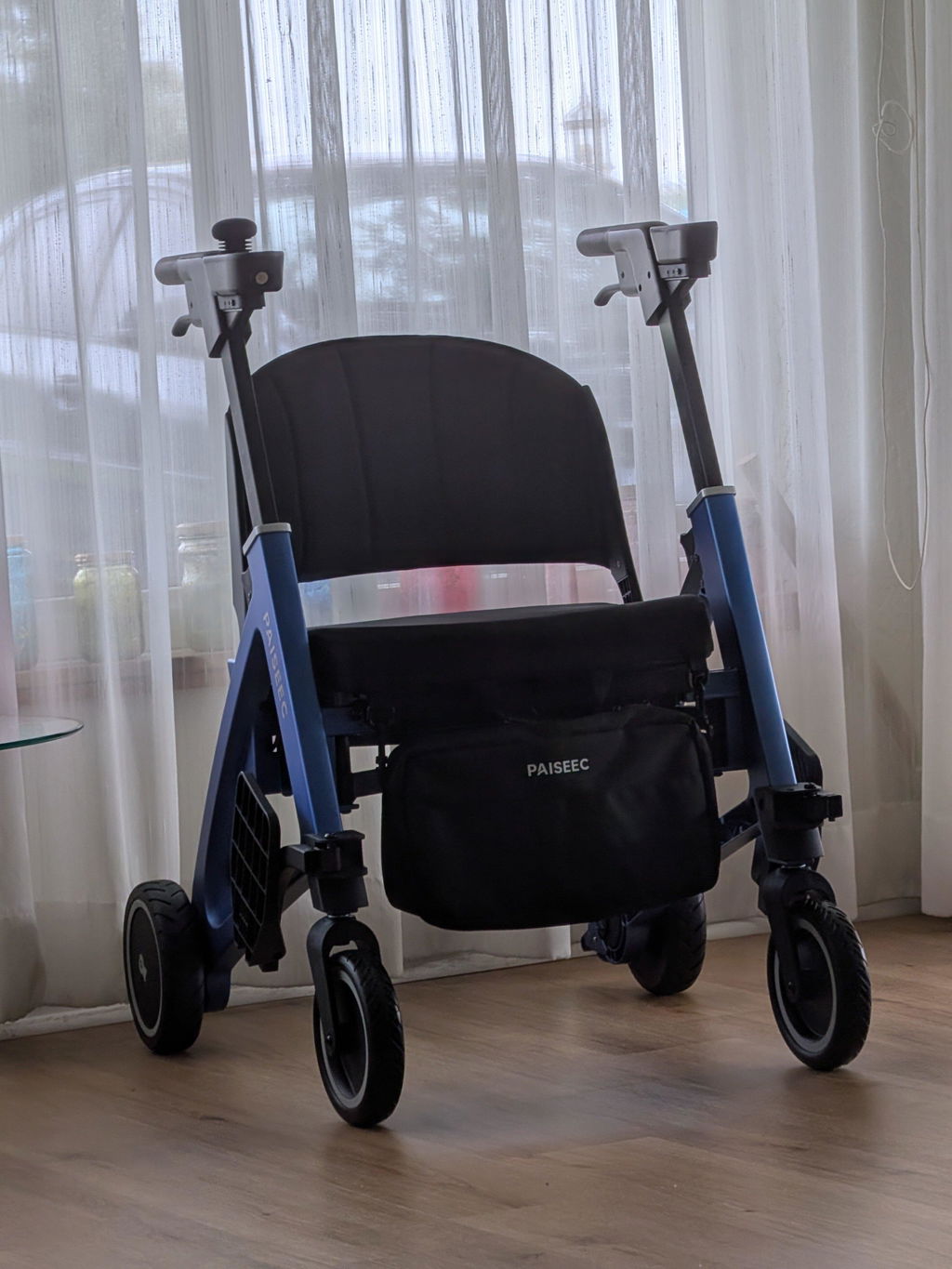
Paiseec Mobility, founded in 2021, develops lightweight foldable scooters, multi-functional electric wheelchairs, and mobility accessories for global users. Its product approach includes 36V 12Ah lithium batteries, 250W brushless motors, and the PAI intelligent safety riding system, supported by dedicated research, testing, and customer service resources.
A well-designed electric mobility scooter should include dependable electromagnetic braking, anti-tip support where appropriate, responsive speed control, stable steering, and a clear battery display. These details matter on vacation because unfamiliar environments create more stop-and-go riding, tighter spaces, and unexpected changes in terrain.
How to Choose a Mobility Scooter for Beach, City, and Cruise Travel
The best mobility scooter for beach vacation travel is usually not meant to drive directly on loose sand. Most compact travel scooters perform best on paved promenades, firm boardwalks, hotel walkways, accessible beach paths, and hard-packed surfaces. If sand is central to your trip, confirm whether the destination offers beach wheelchair rentals or all-terrain access equipment.
For city travel, prioritize narrow width, responsive steering, curb-ramp stability, a practical turning radius, and a portable profile that works with taxis or accessible ride services. A compact folding mobility scooter may be especially useful for urban sightseeing where restaurants and shops have limited space.
For cruise travel, measure the scooter against your cabin door width and consider onboard charging. A four-wheel compact mobility scooter may feel stable on shore excursions, while a three-wheel scooter may maneuver better in tight cruise corridors. A folding travel scooter can also simplify airport transfers before and after the cruise.
For theme parks, range and seating comfort are more important than ultra-low weight. You may travel several miles in a day, wait in outdoor queues, carry water and medication, and face uneven walkways. Choose a model with a predictable battery range, a supportive seat, and accessible charging options at your hotel.
Summer Travel Mobility Scooter Checklist
- Confirm the scooter’s total weight, folded dimensions, weight capacity, and heaviest removable component.
- Confirm the lithium battery watt-hour rating and whether it can be removed without tools.
- Call the airline before departure and confirm the current policy for battery-powered mobility devices.
- Photograph the battery label, serial number, folded scooter, and operating instructions before traveling.
- Pack the charger, battery protection materials, user manual, spare key if applicable, and emergency contact information.
- Charge the mobility scooter battery before travel, but avoid leaving it in direct sunlight or a hot car for extended periods.
- Check tires, brakes, seat fasteners, armrests, folding latches, lights, and horn before leaving home.
- Practice folding, unfolding, battery removal, and freewheel operation before reaching the airport.
- Reserve accessible transportation, hotel accommodations, and mobility-friendly excursions before the trip.
- Build rest and charging time into the itinerary instead of planning every hour around maximum scooter range.
Real Travel Outcomes and Value
A travel mobility scooter can provide value beyond the purchase price by reducing reliance on daily rentals, limiting the physical strain of long walking days, and making visits with family or friends more achievable. The strongest return is often independence: the ability to participate in the same itinerary instead of staying behind at the hotel.
Consider a traveler taking three summer trips each year, each involving several days of rental equipment. If a rental scooter costs 50 to 90 dollars per day, recurring rental costs can add up quickly, especially when delivery fees, deposits, and limited availability are included. Owning a reliable folding scooter may become more economical for frequent travelers, provided it is maintained, insured when appropriate, and stored correctly.
A traveler with knee pain may use a lightweight portable mobility scooter to navigate an airport, tour a waterfront district, and attend an outdoor family event without needing a companion to push a manual wheelchair. Another traveler may select a four-wheel compact mobility scooter for a resort vacation, trading a few extra pounds of weight for greater comfort and outdoor stability.
Common Mobility Scooter Buying Mistakes
The first mistake is buying a scooter based only on price. An inexpensive mobility scooter can become costly if it has poor parts support, an impractical battery design, a difficult folding mechanism, or a weight that no one in the household can lift.
The second mistake is choosing a high-range heavy-duty scooter for airline travel. A long-range mobility scooter may be excellent for neighborhood use, but it can be difficult to transport, may have a battery that requires special airline approval, and might not fit in a compact rental vehicle.
The third mistake is overlooking seat comfort. A scooter can have impressive specifications but still feel uncomfortable after an hour of sightseeing. Consider seat width, back support, armrests, footroom, suspension, and the ease of getting on and off.
The fourth mistake is expecting a travel scooter to handle terrain it was not designed for. Lightweight mobility scooters are ideal for paved paths, shopping centers, hotels, airports, and many attractions, but they are not all-terrain vehicles. Match tires, ground clearance, wheel configuration, and suspension to the surfaces you will actually encounter.
Mobility Scooter Maintenance Before a Vacation
A travel scooter needs preventive care before a major summer trip. Start with a full battery charge and inspect the charger connection, battery housing, charging port, tires, steering column, folding joints, brakes, and lights.
Keep the scooter clean and dry, especially after coastal travel. Salt air, sand, moisture, sunscreen residue, and spilled drinks can affect exposed components over time. Wipe down the seat, frame, controls, and battery compartment with materials approved by the manufacturer.
Store batteries out of direct heat. Do not leave a folding electric scooter in a sealed vehicle during high summer temperatures, and do not charge the battery immediately after a long, hot ride. Let the scooter cool first and follow the manufacturer’s charging instructions.
Future Trends in Travel Mobility Scooters
The next generation of travel mobility scooters will likely place more emphasis on lighter frames, higher-density battery systems, smarter battery monitoring, easier folding mechanisms, and better transport integration. Demand for accessible tourism is encouraging manufacturers to improve convenience without forcing users to choose between portability and safety.
Connected mobility technology may make travel planning easier through battery-status monitoring, diagnostic alerts, maintenance reminders, and anti-theft features. Better modular designs could also allow users to adapt seating, storage baskets, battery packs, and tires for different travel styles.
Sustainability will also become more important. Travelers increasingly value repairable products, replaceable batteries, durable components, and products designed for long service life rather than short-term replacement.
Mobility Scooter FAQs for Summer Travel
Can I take a mobility scooter on an airplane?
Many airlines transport battery-powered mobility devices, but you must confirm the airline’s current policy before traveling. Ask about battery removal, watt-hour limits, advance notification, gate checking, and protective packing requirements.
What is the best lightweight mobility scooter for flying?
The best option is typically a folding travel mobility scooter with a removable lithium battery, compact folded dimensions, manageable weight, and clear battery documentation. The right model must also match your airline’s current rules.
Are folding mobility scooters good for cruises?
Yes, a compact folding mobility scooter can work well for cruise travel if it fits through the cabin door, can be stored safely, and meets the cruise line’s battery and charging policies. Confirm these details before booking.
How much range do I need for summer sightseeing?
For many travelers, 10 to 15 miles of practical range provides a useful full-day buffer. Choose more range if your itinerary includes hills, large theme parks, long boardwalks, heavy rider loads, or limited charging access.
Is a three-wheel or four-wheel mobility scooter better for travel?
A three-wheel mobility scooter often offers tighter turns and more legroom indoors. A four-wheel mobility scooter usually offers more stability outdoors. Your destination, balance needs, and expected terrain should decide the choice.
Can a mobility scooter go on sand?
Most travel mobility scooters should not be used on loose beach sand. They work best on paved routes, boardwalks, compact paths, ramps, and firm surfaces. Look for destination-specific beach accessibility equipment if sand travel is necessary.
Find the Right Travel Mobility Scooter
If you are beginning your search, focus first on where you will travel most: airports, cruise ships, road trips, resorts, city streets, or theme parks. Match the mobility scooter’s folded size, lifting requirements, battery system, range, and stability to that real itinerary.
If you are comparing models, create a short list of scooters that meet your rider weight, airline battery needs, vehicle storage limits, and comfort expectations. Then test the folding process, seating position, turning radius, brake response, and controls before making a final decision.
If you are ready to travel with greater confidence this summer, choose a portable mobility scooter that removes barriers rather than adding new ones. The best mobility scooter for summer travel is the one you can safely transport, comfortably ride, reliably charge, and use every day of the journey.


Leave a comment
This site is protected by hCaptcha and the hCaptcha Privacy Policy and Terms of Service apply.