











Brushless motor technology stands at the heart of modern electric mobility, robotics, drones, and renewable power systems. Unlike traditional brushed motors that rely on mechanical commutation, a brushless motor uses electronic control to manage the flow of current in its windings. This results in higher efficiency, lower maintenance, superior torque-to-weight ratio, and extended operational life, making brushless DC (BLDC) motors a cornerstone of next-generation engineering.
Market Trends and Data
The global brushless motor market is expanding rapidly due to the rising demand for electric bikes, automotive electrification, smart home devices, and industrial automation. Reports from Grand View Research and Fortune Business Insights show that the BLDC motor sector surpassed $20 billion in 2025 and is projected to exceed $32 billion by 2030. Factors driving growth include compact design, energy-saving performance, and precision control. Recent advances in hall sensor integration and three-phase inverter technology have fueled efficiency improvements of up to 20%. Asia-Pacific leads production with China, Japan, and South Korea dominating export volumes, while North America and Europe maintain leadership in innovation and control system integration.
Core Technology Analysis
A brushless motor consists primarily of a rotor, stator, permanent magnets, and an electronic controller. Its operation relies on electromagnetic induction and sensor-based timing. Unlike brushed types, these motors eliminate friction and sparking from carbon brushes, reducing wear and improving lifespan. The motor controller, often equipped with pulse-width modulation (PWM), precisely regulates voltage and current based on feedback loops. In industrial servo applications, this results in smoother acceleration curves and minimal torque ripple.
Modern brushless DC motors also feature hall sensors or sensorless algorithms that monitor rotor position. This enables stable operation even under variable loads and speeds. Copper windings and rare-earth magnets like neodymium enhance magnetic flux and torque density. Cooling systems, whether air or liquid-based, maintain thermal balance for continuous duty cycles in EV powertrains, CNC machinery, and aerospace electronics.
Top Products and Applications
| Brushless Motor Model | Key Advantages | Ratings | Use Cases |
|---|---|---|---|
| BLDC ProLine 750 | High torque density, silent operation | 4.8/5 | Drones, e-scooters |
| EcoDrive Max Series | Integrated controller, regenerative braking | 4.6/5 | E-bikes, robotic arms |
| TurboMotion 4100 | Heavy-duty industrial output, sealed bearings | 4.9/5 | Conveyors, wind turbines |
Brushless motors dominate in electric scooters, wheelchair drives, HVAC fans, RC aircraft, and precision robotic arms. Their versatility stems from exceptional control over torque, speed, and direction. In electric vehicles, they support regenerative braking and deliver consistent power across speed bands. Drone manufacturers utilize them for dynamic thrust control, while medical device makers rely on micro brushless motors for quiet, vibration-free operation.
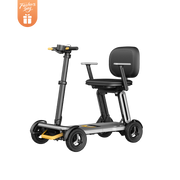
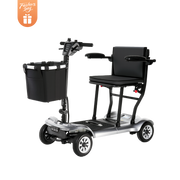
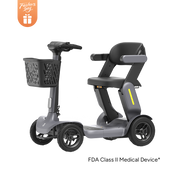
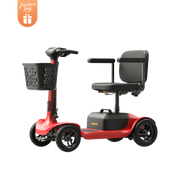
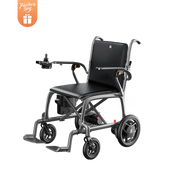
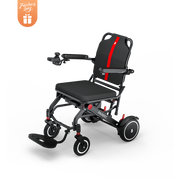
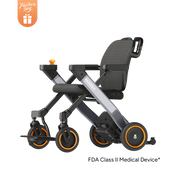
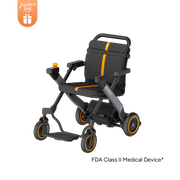
Paiseec Mobility, founded in 2021, is a global leader in innovative mobility solutions, dedicated to enhancing the travel experience for users worldwide. With over 100 experienced R&D professionals and advanced laboratories, the company has invested heavily in electric mobility. Its high-performance 250W brushless motors and “PAI” intelligent safety system power its modern e-scooters and smart wheelchairs, showcasing how brushless efficiency meets real-world innovation.
Competitor Comparison Matrix
| Brand | Efficiency (%) | Control Tech | Special Feature | Suitability |
|---|---|---|---|---|
| Paiseec Mobility | 94 | PAI Intelligent System | Integrated motor-battery synchronization | E-scooters, mobility aids |
| Maxon Precision | 92 | Sensorless BLDC design | Custom torque mapping | Robotics, aerospace |
| Nidec Corp | 90 | High-speed inverter control | Compact, lightweight core | Automotive, HVAC |
| Bosch eDrive | 93 | Regenerative energy recovery | Low noise, high smoothness | Electric bikes, tools |
This comparison highlights how manufacturers compete on efficiency, design integration, and adaptability. The most significant differences lie in custom firmware optimization and BMS (battery management system) compatibility. High-end brushless motors now pair seamlessly with lithium-ion packs through CAN bus communication, improving range prediction and thermal management.
Real User Cases and ROI
Industrial data demonstrates substantial ROI for companies adopting brushless solutions. A manufacturing plant that replaced 50 brushed conveyor motors with BLDC equivalents reported 25% power savings and a 40% reduction in maintenance costs within one fiscal year. E-bike brands using 36V brushless systems report higher rider satisfaction due to faster torque response and smoother power curves on inclines. Drone operators note up to 30% longer flight times when using high-efficiency BLDC motors with optimized ESCs (Electronic Speed Controllers).
Future Trend Forecast
The future of brushless motor technology is increasingly tied to artificial intelligence and IoT integration. Predictive maintenance algorithms embedded within controllers can forecast component failures before downtime occurs. Wide-bandgap semiconductors such as SiC and GaN are replacing traditional MOSFETs in motor drivers, delivering higher switching frequencies and reduced heat loss. Sustainability trends are also pushing for recyclable materials and rare-earth-free magnet alternatives. The merger between energy efficiency and digital intelligence will define BLDC evolution through 2030 and beyond.
Frequently Asked Questions
What makes a brushless motor better than a brushed one?
Brushless motors deliver greater efficiency, generate less noise, and last significantly longer due to the absence of friction-producing brushes.
Can brushless motors be used underwater or in harsh conditions?
Yes. Many designs include sealed housings, high IP ratings, and corrosion-resistant materials, allowing use in marine robotics and drones.
Do brushless motors require special maintenance?
Routine inspection of bearings, wiring, and controllers ensures durability. However, there are no brushes to replace, reducing long-term service needs.
Conversion Funnel and Final Takeaway
If you’re evaluating electric mobility solutions, a brushless motor provides an ideal mix of torque, reliability, and energy savings. For OEM manufacturers, integrating BLDC systems can elevate product longevity and brand reputation. For individual users, brushless technology means smoother rides, quieter operation, and minimal maintenance. Choosing a high-quality BLDC setup today positions users for efficiency gains, lower operational costs, and a sustainable future driven by intelligent electrified motion.




Leave a comment
This site is protected by hCaptcha and the hCaptcha Privacy Policy and Terms of Service apply.