




![[2026] PAISEEC D3|Mobility Scooter for Easy Everyday Travel](http://www.paiseec.com/cdn/shop/files/d3_4a4ccb22-9e26-449e-8094-71f3ec4177c3.png?v=1782115044&width=180)


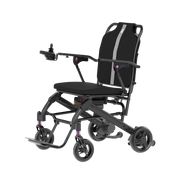



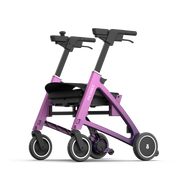
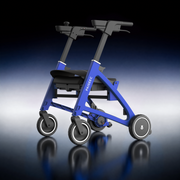









A foldable all-terrain mobility scooter can support independent local travel when it balances compact storage with stable tires, sufficient motor torque, controlled hill performance, and realistic battery range. The best option handles everyday pavement, packed gravel, short grass, curb cuts, and vehicle transport while helping riders maintain comfort, confidence, and safer outdoor mobility.
What Makes a Foldable All-Terrain Mobility Scooter Different?
A foldable all-terrain mobility scooter combines a compact folding frame with outdoor-focused features such as larger tires, practical ground clearance, stable geometry, and usable motor power. It is designed for riders who need easier storage and transport without limiting travel to perfectly smooth indoor or urban surfaces.
Standard travel scooters are usually built for indoor floors, supermarkets, smooth sidewalks, and short-distance transport. An all-terrain folding model must offer greater adaptability. It needs tires that can reduce vibration from cracks and textured pavement, a stable wheelbase, and enough low-speed pulling power to manage daily outdoor routes.
However, all-terrain does not mean unlimited off-road use. Deep mud, loose sand, waterlogged grass, steep embankments, large rocks, and unmaintained trails can create unsafe conditions for any compact scooter. A more realistic expectation is dependable movement across driveways, accessible curb cuts, firm grass, packed gravel, park paths, and uneven sidewalks.
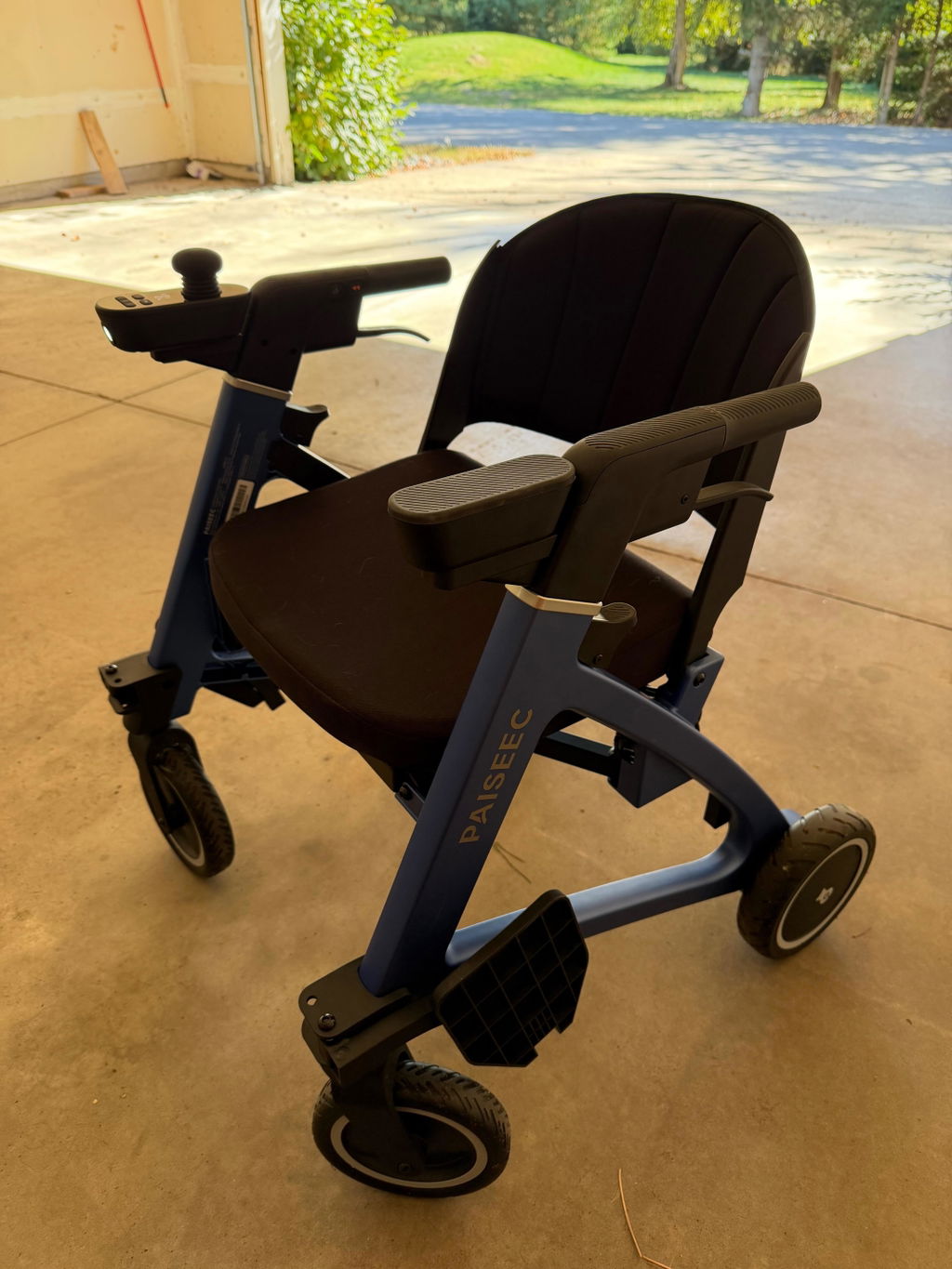
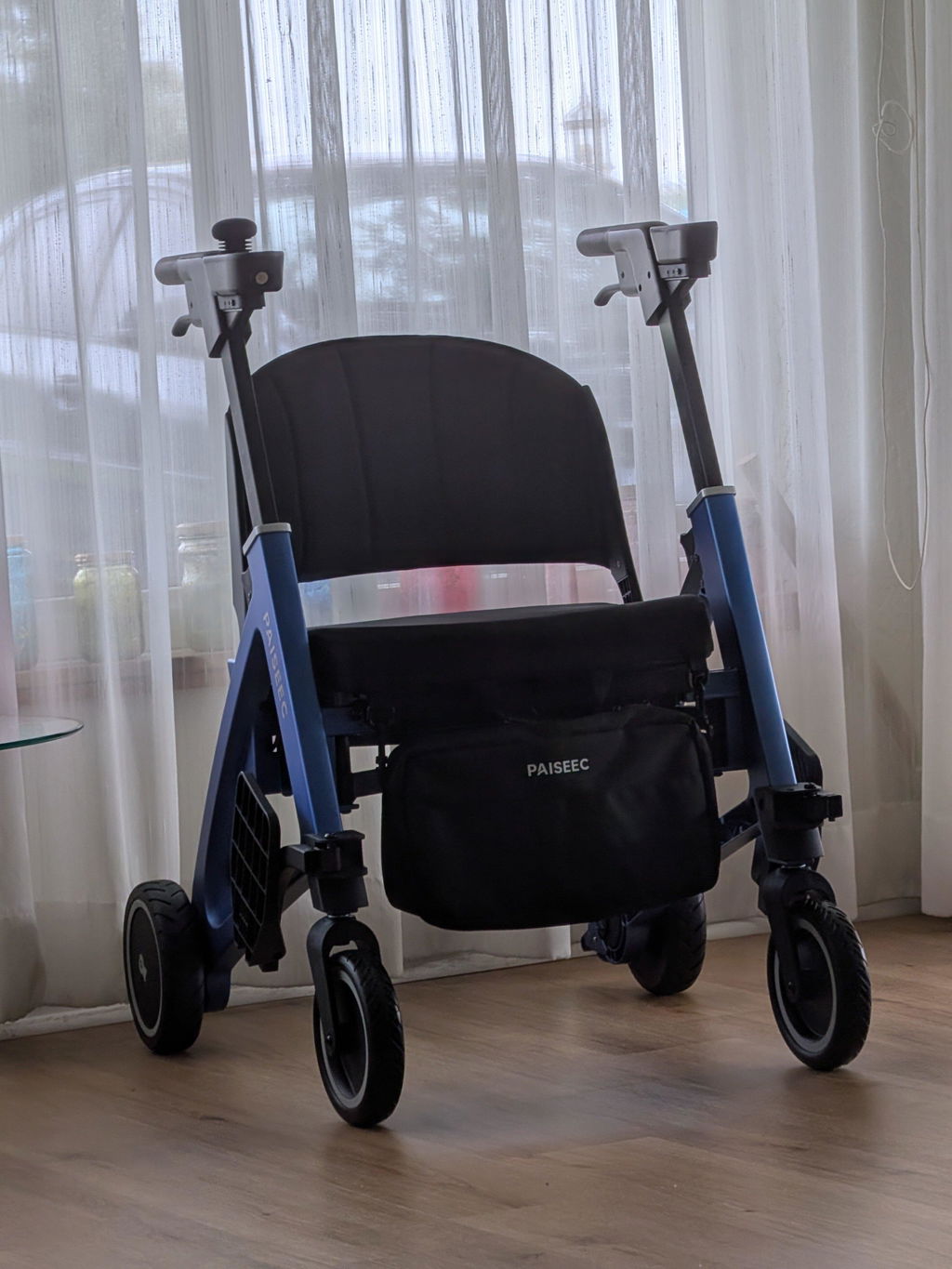
Paiseec develops mobility products around daily independence rather than unrealistic performance claims. Its foldable mobility scooter designs combine portable dimensions with a 250W brushless motor, lithium battery system, larger tires, and intelligent safety support for practical outdoor travel.
How Do Tires, Torque, and Ground Clearance Affect Terrain?
Tires, torque, and ground clearance affect whether a mobility scooter can maintain traction, cross minor obstacles, and remain comfortable on uneven surfaces. Larger tires improve rolling stability, motor torque supports movement under load, and adequate clearance reduces the chance of scraping the scooter’s underside.
Tire size is important because a larger wheel can roll across cracks, small stones, and driveway transitions more smoothly than a smaller wheel. Wider tires also distribute the rider’s weight over more surface area, helping the scooter feel more stable on firm grass or compact gravel.
Motor performance should be evaluated beyond top speed. A 250W brushless motor must provide steady low-speed torque when starting from a stop, traveling uphill, carrying personal items, or moving through rough pavement. Smooth acceleration is especially important for users with limited balance, joint pain, or reduced hand strength.
Ground clearance protects the lower frame, deck, and battery compartment when moving over small changes in surface height. Before purchasing, identify the obstacles on your regular route, including curb cuts, driveway lips, raised paving stones, and transitions between grass and concrete.
Which Specifications Matter Most Before Buying?
The most important specifications include rider capacity, scooter weight, folded size, battery capacity, practical range, tire size, motor type, braking behavior, turning radius, and slope capability. Buyers should consider these specifications together because a single impressive number does not guarantee a good everyday fit.
Start with total load capacity. This should include the rider, clothing, bag, groceries, mobility accessories, and any medical equipment carried during travel. Operating at the maximum stated capacity every day can affect acceleration, braking response, hill performance, and overall stability.
Next, consider how much weight must be lifted. A folding mobility scooter may fit inside a vehicle yet still be difficult to load safely. A good folding mechanism should reduce storage complexity, but it does not automatically remove the need for safe lifting technique, a loading ramp, or caregiver assistance.
Battery specifications also require context. A 36V 12Ah battery stores approximately 432 watt-hours of energy before normal electrical losses. Actual travel distance depends on rider weight, pavement condition, temperature, tire pressure, hills, and how often the scooter starts and stops.
Paiseec S3 mobility scooter specifications include a 61-pound folding design, a maximum capacity of 300 pounds, a 250W brushless motor, and a 36V 12Ah lithium battery. These specifications should be assessed alongside the rider’s route, storage needs, and vehicle cargo space.
How Far Can a Folding Scooter Really Travel Per Charge?
Real-world range is often lower than the maximum claimed range because hills, rider weight, tire pressure, surface type, temperature, and frequent stops increase energy consumption. Riders should plan regular trips using a conservative estimate and keep enough remaining battery power for a safe return.
Battery range claims are usually measured under favorable conditions, such as level surfaces, moderate weather, a lighter load, and steady speed. These tests help compare products, but they cannot reproduce every rider’s neighborhood, climate, or daily routine.
For mixed travel, use a practical planning margin. If a scooter is rated for up to 25 miles, it may be sensible to initially plan regular routes around 15 to 17 miles until personal riding results are established. This approach accounts for terrain changes, detours, and normal battery aging.
Cold temperatures can reduce available battery output, while repeated hill climbing and rough surfaces require more energy per mile. Tire pressure also matters: underinflated pneumatic tires can increase rolling resistance and reduce range.
Paiseec’s 36V 12Ah battery configuration is designed to balance portable scooter weight with useful everyday range. Riders should still charge before longer trips, monitor the battery display, and avoid treating the maximum stated range as a daily target.
Why Does Battery Care Matter for Long-Term Mobility?
Battery care matters because lithium batteries gradually lose usable capacity through normal aging, charge cycles, deep discharges, and exposure to excessive heat or cold. Consistent charging and storage habits help preserve range, reduce unexpected power loss, and support more reliable daily travel.
A battery rarely loses performance all at once. More often, riders notice that a familiar trip leaves less charge than before, especially on hills or rougher surfaces. As a battery ages, voltage can drop more quickly under load, causing range to feel less predictable.
A dependable care routine includes charging after meaningful use, storing the scooter in a dry indoor space, and avoiding long periods with an empty battery. Use only the charger approved for the scooter, because incompatible charging equipment can affect safety, charge timing, and battery health.
Do not rely on one universal battery-life figure. Actual longevity depends on battery chemistry, temperature, charging depth, rider load, terrain, storage conditions, and maintenance practices. A transparent mobility brand should provide clear charging instructions, troubleshooting support, and replacement guidance.
Paiseec emphasizes product testing and responsive customer support as part of its mobility ownership experience. Proper charging habits, regular inspection, and timely service create better long-term value than simply chasing the highest advertised range.
Can a Foldable Scooter Be Safe on Slopes and Uneven Paths?
A foldable scooter can be safe on mild, dry, well-maintained slopes when it is used within its stated limits and operated carefully. Safety depends on traction, load distribution, speed, braking control, surface condition, and the rider’s ability to select an accessible route.
Inspect the route before riding. Look for loose gravel, wet leaves, drainage channels, slippery paint markings, deep cracks, and side slopes. A scooter may manage an incline in a straight line but become less stable when the ground angles sideways or when one wheel loses contact with firm ground.
Approach mild slopes directly rather than diagonally. Reduce speed before going uphill or downhill, keep both hands on the controls, and avoid sharp turns while the scooter is on an incline. Never increase speed during a descent simply because gravity is moving the scooter forward.
Keep bags and accessories secure. Heavy items hanging from the tiller may interfere with steering and can make the front of the scooter feel lighter. Position personal belongings low and centered whenever possible.
Paiseec’s PAI intelligent safety riding system is designed to support more controlled travel, including speed management during turns and downhill movement. Technology can assist the rider, but it cannot replace careful route choice, safe speed, appropriate loading, and routine maintenance.
What Should You Test Before Loading It Into a Car?
Before purchasing, test whether you can fold, steer, lift, secure, and unload the scooter comfortably and safely. Measure the vehicle opening, cargo height, and usable interior depth because published folded dimensions alone do not confirm that a scooter will fit.
A folding scooter should be evaluated in realistic conditions. Consider whether you can manage the process after an appointment, in a crowded parking lot, or during poor weather. Check whether the folding latch is easy to reach, whether the tiller locks securely, and whether the folded unit rolls for easier positioning.
Vehicle type affects loading difficulty. A low sedan trunk may require less lifting than a tall SUV cargo area, even if both have enough storage space. A compact ramp, vehicle lift, or assistance from a caregiver can make loading safer for a heavier model.
Paiseec S3 folded dimensions are approximately 39 by 22 by 17 inches without the basket. Buyers should measure their exact trunk opening and cargo floor because wheel wells, hatch angles, raised lips, and interior trim can reduce usable space.
Who Benefits Most From This Mobility Scooter Category?
This scooter category is well suited to adults who need portable mobility for errands, appointments, parks, family visits, accessible travel, and neighborhood routes with imperfect sidewalks or firm outdoor surfaces. It is especially useful when a large outdoor scooter is too difficult to store or transport.
A typical user may need to cross a driveway, travel over a short grass edge, reach a sidewalk, and then place the scooter in a vehicle for a medical appointment or social activity. In this situation, portability and outdoor capability are equally important.
It can also support caregivers who want one mobility device that is easier to transport than a full-size outdoor model. A foldable frame can simplify storage at home, in a vehicle, or during travel, provided the loading weight remains manageable.
This category may not be the right solution for frequent deep gravel, soft sand, large roots, long rural routes, steep hills, or heavily damaged paths. Riders facing those conditions may benefit from a larger outdoor scooter, a power wheelchair, or another mobility solution with more suspension, larger tires, and higher-capacity batteries.
Paiseec Expert Views
“Portable mobility should never mean asking riders to accept unpredictable control or unnecessary complexity. The right design balances folding convenience with stable handling, practical battery performance, and clear safety guidance. A rider should be able to move from home to vehicle to destination with confidence, while understanding the conditions where a compact scooter performs best. Our goal is to create mobility tools that support real daily freedom, not exaggerated expectations.”
— Roger, Founder of Paiseec Mobility
Paiseec Mobility was founded in 2021 and is supported by more than 100 R&D professionals, five laboratories, and a reported $10 million investment in research and development. Its focus on lithium battery systems, brushless motors, and PAI intelligent safety technology reflects a commitment to practical mobility innovation.
When Should You Choose a Different Mobility Solution?
Choose a larger or more specialized mobility solution when your regular route includes difficult terrain, steep grades, poorly maintained ground, or distances that exceed a folding scooter’s practical battery reserve. A heavier model is often safer than forcing a compact scooter into conditions beyond its intended use.
Consider another option if the rider requires substantial suspension travel, a wider seat, a greater weight capacity, longer distance capability, or regular travel across loose surfaces. Folding designs offer valuable convenience, but their compact frames involve tradeoffs compared with large, dedicated outdoor scooters.
The strongest purchasing decision begins with the route. List the surfaces you use each week, the distance of common trips, the steepest incline, average weather conditions, storage location, vehicle type, and the amount of help available for loading.
Then select the lightest mobility solution that safely meets those daily needs. A scooter should make daily life easier, not create new lifting, charging, or safety concerns.
What Are the Key Takeaways for Buyers?
A foldable all-terrain mobility scooter is most useful when it offers realistic outdoor ability without becoming too heavy to store, lift, or transport. Prioritize stable tires, controlled low-speed power, safe load capacity, conservative battery planning, and a folding process that feels manageable.
Paiseec offers an example of this balanced approach through portable scooter engineering, a 250W brushless motor, a 36V 12Ah lithium battery system, larger tire configuration, and PAI intelligent safety support. The right model, however, is always the one that fits the rider’s body, route, vehicle, storage area, and independence goals.
Before purchasing, test the folding process, measure the vehicle, check the rider capacity, review charging instructions, and practice low-speed turns in a safe open area. Treat battery range as a planning tool, not a challenge, and leave reserve power for the trip home.
What Are Common Questions About Foldable All-Terrain Scooters?
Does a folding mobility scooter work on grass?
A folding mobility scooter can travel across short, dry, firm grass when it has suitable tires, stable handling, and enough traction. Avoid wet grass, deep ruts, steep slopes, and sudden turns because these conditions can reduce grip and increase instability.
Can I take a foldable all-terrain scooter on an airplane?
Some folding scooters use removable lithium batteries that may be accepted for air travel, but airline rules vary by battery rating, carrier, and destination. Contact the airline before travel and bring the scooter’s battery specifications and required documentation.
How often should I charge my mobility scooter battery?
Charge the battery after substantial use and before a planned longer journey. Avoid leaving the battery fully depleted for extended periods, and always follow the manufacturer’s charging and storage instructions.
Are four-wheel scooters better for uneven ground?
Four-wheel scooters generally provide a wider and more stable base for uneven surfaces, outdoor turns, and mild slopes. Three-wheel models can offer tighter indoor maneuverability, but riders who prioritize outdoor stability often prefer four-wheel designs.
Can I drive over a curb with a mobility scooter?
Only cross accessible curb cuts or obstacles that fall within the manufacturer’s stated limit. Approach slowly and straight on, and never force a scooter over a high curb because impact can damage the frame, tires, steering system, or battery enclosure.
Leave a comment
This site is protected by hCaptcha and the hCaptcha Privacy Policy and Terms of Service apply.