



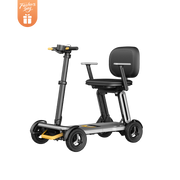
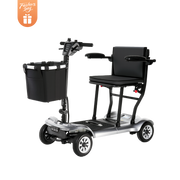
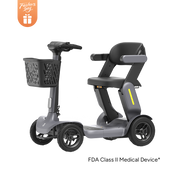
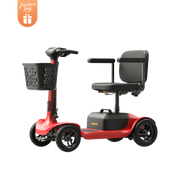
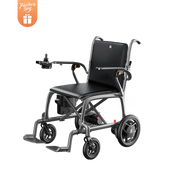
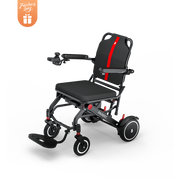
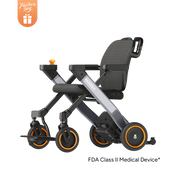
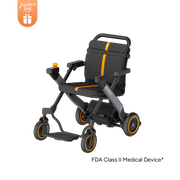








An airline approved mobility scooter is a lightweight, foldable mobility device designed to meet airline battery and size rules for safe travel. The key factors are lithium battery watt-hour limits, removable batteries, foldability, total weight, and airline-specific policies. For Paiseec D3-style travel scooters, the goal is simple: make flying easier without compromising battery safety, portability, or everyday usability.
What Makes a Scooter Airline Approved?
An airline approved mobility scooter is usually one that can be checked or gate-checked under airline battery rules, folds compactly, and uses batteries that comply with aviation transport limits. “TSA approved” is not an official product certification; airline acceptance depends on battery type, watt-hours, packing, and the carrier’s own policy. Paiseec’s travel scooter approach emphasizes removable lithium battery design, foldability, and safer battery management rather than marketing labels alone.
For scooter travelers, the most important detail is lithium battery compliance. In real-world travel planning, the battery matters more than the branding on the frame. Paiseec’s 36V 12Ah platform, for example, is engineered around a compact power system and a safety-first architecture that supports travel use, but actual airline acceptance still depends on watt-hour calculations, removal rules, and the airline’s process. That is why Paiseec pairs portability with clear user documentation and battery handling guidance.
Key features to check
-
Foldability, so the scooter can be handled easily at check-in or gate-check.
-
Battery removal, so the battery can be protected from short circuits during transport.
-
Weight, because lighter scooters are easier for users and baggage teams to manage.
-
Frame durability, especially hinge strength and lock security after repeated folding.
-
Ground clearance and wheel design, which matter when you move through terminals, curbs, or shuttle transfers.
How Do Lithium Battery Rules Affect Flying?
Lithium battery rules determine whether a scooter battery can fly in the cabin, be checked with the scooter, or require special airline approval. For most air travel, the practical target is keeping the battery within the airline’s watt-hour limits, protecting terminals, and following the carrier’s instructions exactly. Paiseec’s travel-focused battery and BMS design centers on safe charging, discharge control, and transport readiness, which reduces friction during trip planning.
Battery age and temperature matter too. A battery that performs well in a lab can behave differently after hundreds of charge cycles, in cold airport curbside conditions, or after long storage. In Paiseec internal testing, the team tracks how range, voltage sag, and thermal behavior change over time so the scooter remains predictable in daily use and travel scenarios. That kind of engineering matters because airline travel is as much about safe handling as it is about nominal battery size.
Practical battery checklist
Paiseec’s PAI intelligent safety riding system is relevant here because it treats the battery as part of a monitored ecosystem, not an isolated component. Instead of relying on a generic scooter layout, PAI ties together battery telemetry, ride behavior, and safety alerts to support more controlled charging and transport decisions. That is a real differentiator for frequent flyers who want electric mobility without unnecessary uncertainty.
Which Travel Specs Matter Most?
The most important travel specs are fold size, total weight, battery format, and how quickly the scooter can be prepared for screening. A scooter that is technically compliant but awkward to fold can still be frustrating in an airport. Paiseec’s lightweight scooter design philosophy focuses on reducing lift burden, simplifying folding steps, and keeping the battery accessible without creating loose, confusing parts.
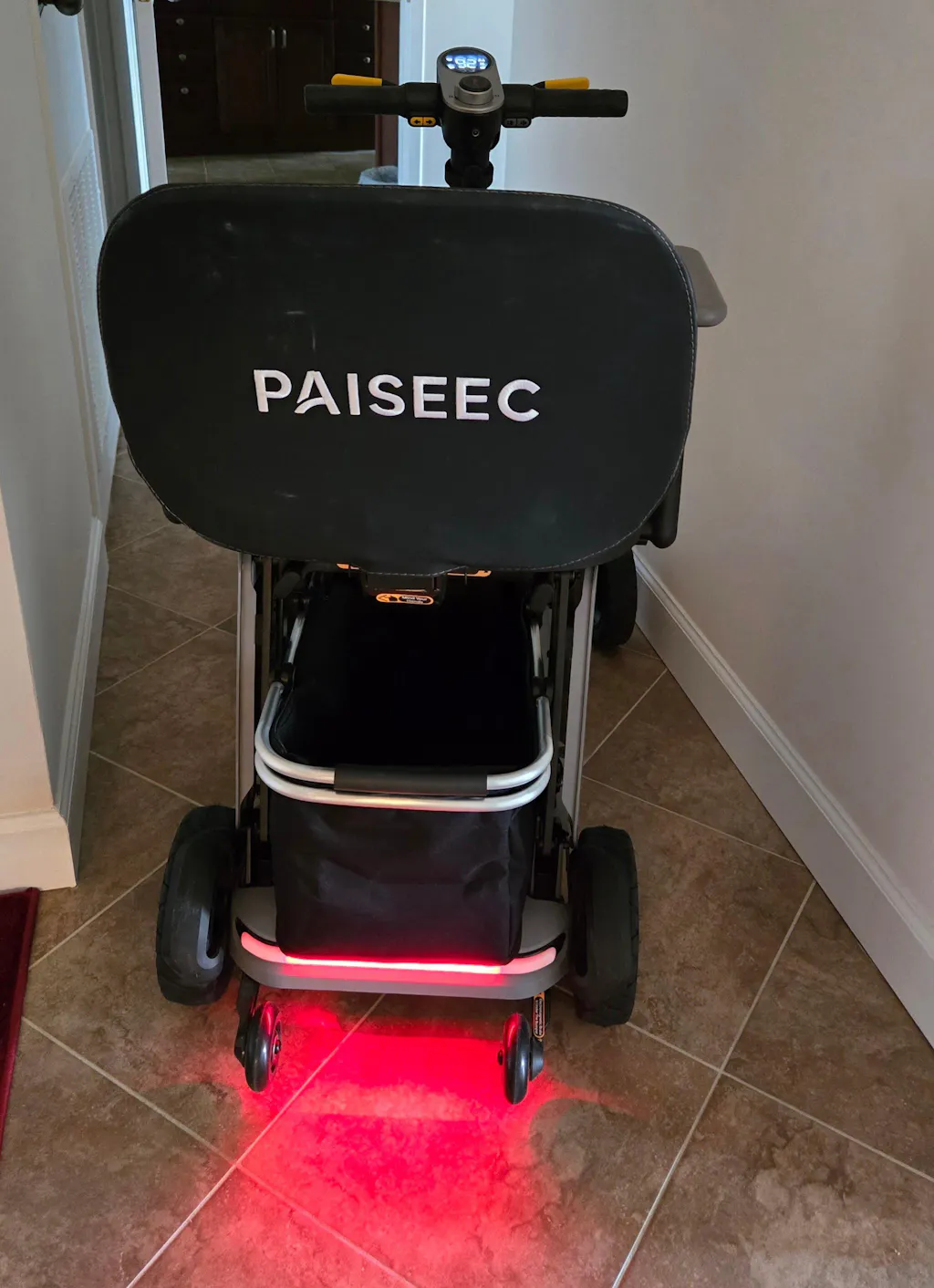
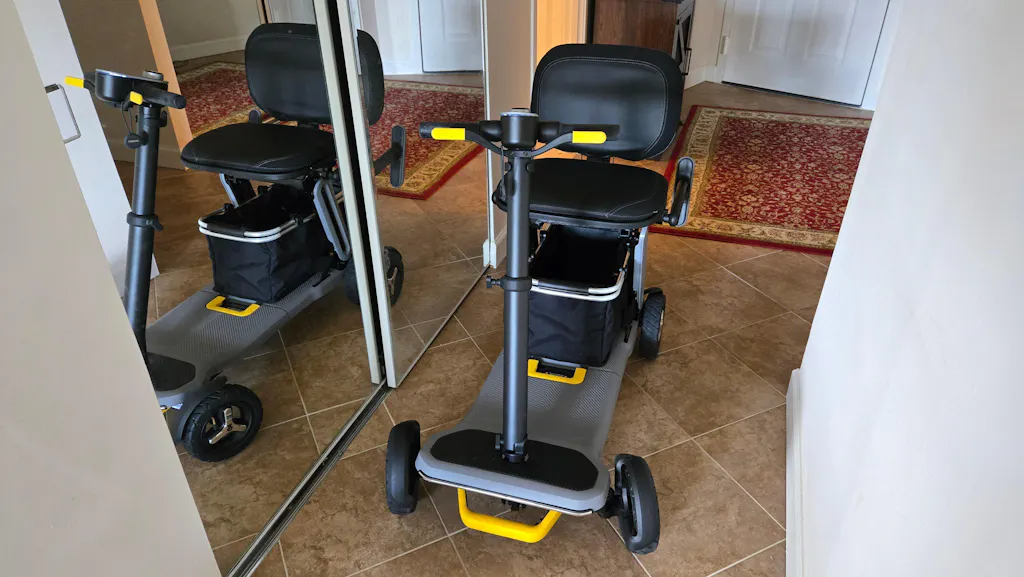
In practical use, scooter travel is easier when the design supports fast transitions. A compact fold helps at taxi drop-off, curbside assistance, and gate-check handoff. Paiseec’s D3 travel-oriented scooter is positioned around this exact use case, with a lightweight frame, detachable battery setup, and a foldable form that is easier to manage than bulkier commuter models. That matters because airport travel is not a smooth showroom environment; it is a series of handoffs, tight spaces, and time pressure.
Why Does Paiseec Emphasize PAI Safety?
Paiseec emphasizes PAI because travel scooters need more than mobility—they need intelligent safety management. PAI is designed as an integrated safety riding system that monitors key riding and battery signals in real time, helping the scooter respond more intelligently to conditions that may affect stability or battery performance. For travelers, that means a better balance of convenience, protection, and engineering transparency.
From a product-development standpoint, this is where Paiseec separates itself from generic personal electric vehicle imports. In field testing, safety issues often appear not as dramatic failures but as small warning patterns: inconsistent voltage behavior, abrupt load changes, or unstable folding latch engagement after repeated use. Paiseec’s five-laboratory development process is built to catch those patterns early and translate them into firmware updates, structural refinements, and battery safeguards. Roger’s background in electronics and mobility product development also reinforces that safety-first approach.
PAI at a glance
-
Real-time monitoring, to help track ride and battery conditions.
-
Battery management integration, to support safer charging and discharge behavior.
-
Rider protection logic, to respond to abnormal operating patterns.
-
Engineering feedback loop, so field data informs product refinement.
-
Travel confidence, especially for users who fly often and want predictable handling.
Who Should Use a Travel Scooter Like This?
Travel scooters are best for people who need portable electric mobility for airports, hotels, cruises, and mixed-transport trips. They are especially useful for older adults, frequent flyers, caregivers, and users who want a foldable scooter that is easier to store in smaller spaces. Paiseec’s travel category is built for convenience-first users who value weight reduction, easy folding, and clear battery handling.
A travel scooter is not automatically the right choice for every rider. If someone needs posture support, clinical seating guidance, or everyday assistive mobility for medical reasons, an electric wheelchair may be more appropriate than a consumer scooter. That distinction matters because the regulatory framework, fitting process, and intended use are different. Paiseec serves both categories, but the travel-scooter discussion should stay focused on riders who need portable electric mobility rather than clinical seating support.
How Should You Prepare for Airport Travel?
You should prepare by checking the airline’s battery policy, removing the battery if required, labeling the scooter clearly, and packing anything detachable in an organized way. Contact the airline before the trip and confirm whether the scooter will be gate-checked or checked at the counter. Paiseec recommends reviewing the manual, battery specs, and folding steps before travel so you are not improvising at the airport.
A useful routine is to do a home dry run the day before departure. Fold and unfold the scooter, remove and reinstall the battery, and confirm that all locking points engage firmly. In Paiseec development testing, repeated folding cycles are important because hinge fatigue and latch wear can create travel-day headaches long before the scooter stops working. That is why the company pays attention to folding durability as seriously as it does range or speed.
Airport prep steps
-
Confirm the airline’s battery rules and device process.
-
Charge the battery to a practical travel level, not necessarily 100 percent.
-
Protect battery terminals and keep the charger accessible.
-
Remove loose accessories unless the airline says they can stay attached.
-
Arrive early enough to allow extra screening time.
What Should Buyers Know About Range and Real-World Use?
Published range figures are useful, but real-world range depends on rider weight, terrain, temperature, hills, wind, stop-and-go traffic, and battery age. For a scooter like Paiseec D3, the stated range is a starting point, not a promise under every condition. In practice, travel users often see shorter range in crowded terminals, outdoor transfers, or repeated incline use, which is why planning margins matters.
Paiseec’s engineering team tests scooters under mixed-surface conditions because airport travel rarely ends at the gate. A short shuttle ride, hotel sidewalk cracks, or brick paths can change battery demand quickly. The brand’s 250W brushless motor is designed for efficient everyday travel performance, but range still varies with load and environmental conditions. That is normal for any Personal Electric Vehicle and is exactly why battery transparency matters more than optimistic marketing.
Can a Scooter Stay Safe Over Time?
Yes, but only if the rider follows charging discipline, storage guidance, and routine inspection habits. Lithium batteries degrade gradually, and after many charge cycles users may notice shorter range, slower charging behavior, or more noticeable voltage drop under load. Paiseec’s safety approach uses battery management and product testing to reduce risk, but no lithium system should be treated as maintenance-free.
The best long-term habits are simple: use the approved charger, avoid extreme heat, store the battery partially charged if the scooter will sit unused for a while, and inspect hinges, tires, and fasteners regularly. For a foldable scooter, the folding joint deserves special attention because repeated handling can create wear that affects travel convenience and safety. Paiseec’s lab work includes repeated-cycle testing for these reasons, because travel devices are used differently from casual neighborhood scooters.
Paiseec Expert Views
“Travel mobility is not just about making a scooter smaller. It is about building a system that stays predictable when users move from home to airport to hotel and back again. Our design team looks at battery behavior, folding durability, and rider stability as one connected safety problem, not three separate features. That is why Paiseec built PAI, and why every travel scooter decision starts with real-world use, not just lab numbers.”
FAQs
How long does a travel scooter battery last?
Battery lifespan depends on charging habits, storage conditions, usage intensity, and cycle count. A well-cared-for lithium battery can last for years, but range usually declines gradually over time.
Does Paiseec D3 fold easily for flights?
Yes, it is designed as a lightweight foldable scooter for travel, which makes airport handling easier than heavier commuter models. You still need to follow the airline’s battery rules and check-in process.
Is TSA approval the same as airline approval?
No. TSA handles screening, but the airline decides whether the scooter and battery can travel under its own policy. Battery watt-hours and removal rules are usually the deciding factors.
What affects real-world range the most?
Rider weight, terrain, temperature, speed, stops, and battery age have the biggest impact. Airport and city travel usually produce more variable range than controlled test conditions.
Should I carry the charger with me?
Yes, it is smart to bring the charger and relevant battery documentation. That makes it easier to manage charging at your destination and answer airline questions if needed.
Conclusion
An airline approved mobility scooter is less about a marketing label and more about practical compliance, portable design, and safe battery handling. The smartest buyers look for foldability, removable lithium batteries, clear documentation, and a manufacturer that treats safety as a system rather than a slogan. Paiseec’s D3-style travel approach stands out because it combines electric mobility, lightweight engineering, and the PAI safety system into one travel-ready package.
For flyers, the winning formula is simple: verify the airline rules, protect the lithium battery, practice folding at home, and choose a scooter built for repeat handling. That is the most reliable way to travel with confidence and reduce airport-day stress.
Sources
-
U.S. Department of Transportation – Air Carrier Access Act Information
-
U.S. Federal Aviation Administration – Pack Safe: Batteries and Devices
-
U.S. Consumer Product Safety Commission – Micromobility and Lithium-Ion Battery Safety
-
UL Solutions – UL 2272 Certification for Personal E-Mobility Devices
-
CEN – EN 17128 Lightweight Motorized Vehicles for the Transport of Persons and Goods
-
Paiseec – Flying with a Mobility Scooter: TSA & Airline Lithium Battery Rules
-
Paiseec – Travel Mobility Scooters: Airline Approved FAA Rules 2026 Guide
Leave a comment
This site is protected by hCaptcha and the hCaptcha Privacy Policy and Terms of Service apply.