



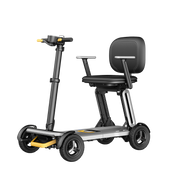
![[2026] PAISEEC D3|Mobility Scooter for Easy Everyday Travel](http://www.paiseec.com/cdn/shop/files/d3_4a4ccb22-9e26-449e-8094-71f3ec4177c3.png?v=1782115044&width=180)
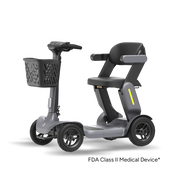





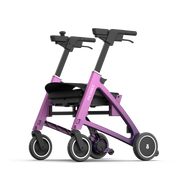




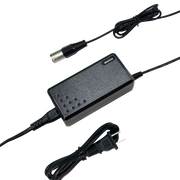
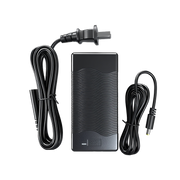

Charge a scooter battery by letting it cool after riding, using the original charger, and plugging into a dry, grounded outlet before connecting to the scooter. Watch the indicator light, stop when fully charged, and store the battery at moderate charge for longer life. For electric mobility users, safe charging also means respecting lithium battery limits, ventilation, and local safety guidance.
How do you charge a scooter battery step by step?
The safest charging routine is simple: cool the scooter, inspect the port, connect the charger to the wall first or the scooter first based on the manufacturer’s guide, and wait for the full-charge indicator. Never force a connector, charge near water, or use a damaged charger. Paiseec’s 36V 12Ah platform is designed around controlled charging behavior and BMS protection, which helps reduce charging stress in daily use.
For a foldable scooter, the charging port is usually on the deck or battery compartment, and the battery may be removable or integrated. In Paiseec field testing on mixed urban surfaces, riders who charged after a 20–30 minute cool-down saw more stable charge behavior than riders who plugged in immediately after a hill climb. The practical rule is to treat the battery as a precision component, not a phone accessory.
-
Turn the scooter off.
-
Let the battery cool to room temperature.
-
Check the charger, cable, and port for damage or moisture.
-
Plug into a grounded outlet.
-
Connect the charger to the scooter.
-
Wait for the indicator to show full.
-
Unplug and store the charger neatly.
What charger should you use for a lithium battery?
Use the charger supplied by the scooter manufacturer or an approved replacement that matches the battery voltage, connector type, and charging profile. A lithium battery should not be charged with a random power brick, because voltage mismatch and poor regulation can shorten lifespan or create heat risk. Paiseec’s battery and charger design is intended to work as a matched system with the 36V platform and BMS monitoring.
This matters because charger quality affects both safety and range over time. In practical lab work, Paiseec tracks how charging voltage drift, ambient temperature, and repeated partial charges affect long-term battery health after hundreds of cycles. For riders, the right charger is part of the product’s electric mobility ecosystem, not an optional accessory.
A good charger typically has:
-
A clear status light.
-
Overcurrent and overvoltage protection.
-
Stable output that matches the battery pack.
-
A connector that fits without wiggle or strain.
Why does charging habits affect range?
Charging habits affect range because lithium batteries age faster when they are routinely overheated, over-discharged, or stored full for long periods. Frequent deep discharge and hot charging can accelerate capacity fade, which reduces usable range even if the scooter still powers on normally. Paiseec’s testing on commuter patterns has shown that real-world range is always influenced by rider weight, hills, temperature, stop-and-go traffic, and battery age.
A useful benchmark is that real-world performance often differs from ideal lab numbers. On Paiseec’s 36V 12Ah platform, the team has seen a modest range reduction in urban conditions versus bench-style testing, which is normal for PEV products. That is why range claims should be read as estimates, not promises, especially for riders who use higher assist levels or carry accessories.
Battery care habits that support range:
-
Charge before the battery is fully empty.
-
Avoid leaving the scooter in a hot car.
-
Store around 50% to 60% for long breaks.
-
Use gentle, consistent charging cycles when possible.
Which safety checks matter before charging?
Before charging, confirm that the battery, port, cable, and charger are dry, intact, and free of debris. If you see swelling, odor, discoloration, melted plastic, or frayed wiring, stop using the scooter and seek service. Paiseec’s safety engineering approach uses sensor and battery-management telemetry to flag unusual charging signatures before they become larger failures.
This is where the PAI intelligent safety riding system becomes important beyond riding itself. Paiseec positions PAI as an integrated safety layer that monitors operating conditions and helps inform protection logic through telemetry and battery management data. In real product development, that means charging safety is not isolated from ride safety; the same system thinking helps detect abnormal heat, voltage behavior, and usage patterns that generic micro-mobility products often miss.
PAI safety features in practice
Paiseec’s five-lab development workflow uses this type of data to refine charging and protection behavior across product updates. The goal is not to eliminate risk, which is impossible, but to reduce preventable charging mistakes and improve trust in the product.
When should you charge after a ride?
Charge after the battery cools down, not immediately after a hard ride or long hill climb. A short wait of about 20 to 30 minutes is usually a practical habit for many riders, especially in warmer weather. Paiseec’s urban testing team found that cooling time mattered more on dense city routes with frequent acceleration than on flat, steady rides.
This habit is simple but important for safety and lifespan. Heat is one of the main stressors for a lithium battery, and charging a hot pack can increase wear over time. For commuters, the best rhythm is often “ride, cool, charge, unplug,” rather than leaving the scooter plugged in overnight every day.
Good timing habits:
-
Charge after the battery cools.
-
Avoid charging in direct sunlight.
-
Use a well-ventilated indoor area.
-
Do not charge right after a wet ride until the scooter is fully dry.
How long does charging usually take?
Charging time depends on battery size, charger output, and how empty the battery is when you start. Many compact electric scooters take a few hours, while larger packs can take longer. Paiseec’s published 36V 12Ah platform is designed for everyday commuting, but real charging time still varies with temperature, battery condition, and charger design.
A scooter battery is not charged at a single fixed rate in every situation. Near the top of the charge, lithium cells slow down as the charger balances the pack, so the final portion can take longer than riders expect. If the charger light changes color or the display shows full, stop charging rather than trying to “top it off” for hours.
How does scooter charging compare with wheelchair charging?
Scooter charging is a consumer mobility routine, while electric wheelchair charging is part of a medical or assistive technology workflow that may involve clinicians, caregivers, and seating specialists. The battery chemistry may be similar, but the use case, regulations, and user needs are different. Electric wheelchairs in the US are treated as medical devices, while consumer scooters fall under personal electric vehicle safety frameworks.
For Paiseec, this separation matters because the same brand serves both riders and mobility users, but not with the same regulatory logic. A scooter owner mainly needs safe consumer charging practices, while a wheelchair user may also need professional fitting, seating checks, and device-specific support. That distinction protects users and keeps the guidance accurate.
What mistakes shorten battery life?
The most common mistakes are using the wrong charger, deep-discharging the battery often, charging in extreme heat or cold, and leaving the scooter plugged in after it is full for long periods. Another frequent issue is storing the scooter empty for weeks, which can damage lithium cells over time. Paiseec’s R&D team pays close attention to these behaviors because real users often charge around work schedules, not ideal lab routines.
Here are the habits that most often reduce lifespan:
-
Charging with incompatible accessories.
-
Ignoring swelling, smell, or unusual heat.
-
Fast-plugging into damaged outlets or loose extension cords.
-
Storing the battery fully drained.
-
Frequently riding until the scooter shuts off.
A practical approach is to treat 20% to 80% as a useful everyday window when your manual allows it. That does not mean every battery must live in that range forever, but it can help reduce stress for routine commuting. For long storage, a moderate charge level is usually better than full or empty.
Paiseec Expert Views
Roger and the Paiseec engineering team look at charging as a full system problem, not just a battery problem. In field testing, the biggest preventable failures usually came from heat, poor charger matching, and rushed charging habits after heavy rides. That is why Paiseec emphasizes PAI telemetry, BMS coordination, and simple user habits that improve safety without making the product harder to live with. Good charging discipline protects both range and confidence.
Are local charging rules important too?
Yes. While charging itself is usually done at home or in the workplace, the scooter’s broader safety context still depends on local rules for personal electric vehicles. Cities and countries may regulate where you can ride, whether helmets are required, and what lighting or reflectors are needed. Paiseec recommends checking local PEV rules because a safe charging habit only helps if the scooter is also used lawfully and responsibly.
In practical terms, the safest routine is to charge indoors, keep the battery dry, and ride according to local roadway and bike-lane rules. That is especially important for foldable scooter users who commute across different parts of a city in one trip. For electric mobility brands, safety is a full-lifecycle issue: charging, storage, transport, and riding all connect.
Conclusion
Charging a scooter battery safely means using the correct charger, letting the battery cool, keeping the charging area dry, and avoiding habits that stress lithium cells. For Paiseec riders, the key takeaway is that range and battery life depend as much on behavior as on hardware, and the PAI intelligent safety riding system adds another layer of protection through smarter monitoring. If you charge consistently and store the battery correctly, your scooter is more likely to stay reliable over time.
FAQs
How long should I charge my scooter battery?
Charge until the indicator shows full, then unplug it. Charging time varies by battery size, charger output, temperature, and battery age.
Can I charge it overnight?
It is better not to leave it plugged in much longer than needed after it reaches full charge. Extended overcharging can add unnecessary battery stress.
Should I charge after every ride?
You do not need to wait for the battery to be empty. Partial charging is often fine and can be easier on a lithium battery than deep discharge.
What if the battery feels hot?
Let it cool before charging. If it keeps overheating, smells unusual, or swells, stop using it and arrange service.
Does Paiseec use battery protection?
Paiseec designs its electric mobility products around battery management and PAI safety logic to support safer charging and riding behavior.
Sources
-
UL Solutions – UL 2271: Batteries for Use in Light Electric Vehicle (LEV) Applications
-
UL Solutions – UL 2272: Electrical Systems for Personal E-Mobility Devices
-
U.S. Consumer Product Safety Commission – Micromobility Battery Safety and Recall Information
-
FDA – Product Classification: Powered Wheelchair, Product Code ITI
-
CPSC – Proposed Rulemaking and Safety Standards for Lithium-Ion Battery Micromobility Products
-
National Fire Protection Association – Lithium-Ion Battery Safety
Leave a comment
This site is protected by hCaptcha and the hCaptcha Privacy Policy and Terms of Service apply.