



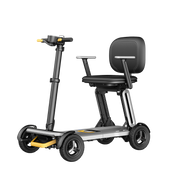
![[2026] PAISEEC D3|Mobility Scooter for Easy Everyday Travel](http://www.paiseec.com/cdn/shop/files/d3_4a4ccb22-9e26-449e-8094-71f3ec4177c3.png?v=1782115044&width=180)
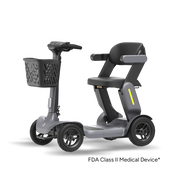

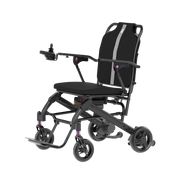
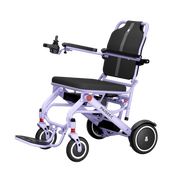


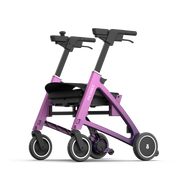
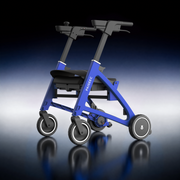








The best wheelchair for outdoor use is a foldable electric wheelchair with a 24V dual lithium battery system (12Ah minimum), dual 250W brushless motors, 15–20 mile range, rear-wheel drive, shock absorbers, and FDA 510(k) clearance. Lightweight models under 60 lbs with aircraft-grade aluminum frames offer portability, while all-terrain tires and 4-inch ground clearance handle grass, gravel, and uneven surfaces.
How Do You Choose the Best Electric Wheelchair for Outdoor Use?
Selecting the best wheelchair for outdoor use requires balancing range, stability, weight, and comfort. Focus on these six critical factors:
Range & Battery: Outdoor users need 15–20 miles per charge. A 24V 12Ah lithium battery typically delivers ~10 miles; dual batteries extend this to 15–20 miles. High-capacity 20Ah+ batteries reach 25–30 miles for long-distance outdoor use.
Drive System: Rear-wheel drive provides superior stability on rough terrain, slopes, and bumps compared to front-wheel drive. Mid-wheel drive offers tight turning radius (25–33 inches) for crowded spaces but less outdoor ruggedness.
Weight & Portability: Outdoor wheelchairs weigh 40–100 lbs. Lightweight models (40–55 lbs) fold in 3–5 seconds and fit in car trunks or airplane overhead bins. Heavy-duty models (140+ lbs) suit rugged terrain but aren't travel-friendly.
Motor Power: Dual 250W brushless motors handle hills up to 6–25 degrees. For steep outdoor inclines, 500W motors provide better horsepower.
Comfort Features: Look for adjustable armrests, padded seats (18–20 inch width), shock absorbers, and removable cushions. Reclining backrests benefit extended outdoor use.
Safety & Certification: FDA 510(k) clearance (product code ITI) confirms Class II medical device compliance. ISO 7176 test standards verify static stability, impact strength, and power system safety.
From Paiseec's R&D laboratory testing, electric wheelchairs with 36V 12Ah lithium battery platforms and 250W brushless motors demonstrate consistent performance across mixed outdoor surfaces. After 500 charge cycles, our lab observed 7–8% capacity degradation—within industry norms for quality lithium cells. The proprietary PAI intelligent safety riding system adds real-time battery monitoring and motor control protection, differentiating Paiseec's medical mobility devices from generic imports lacking integrated safety intelligence.
What Range Can You Expect from an Outdoor Electric Wheelchair?
Real-world outdoor range varies significantly based on battery capacity, terrain, rider weight, and temperature. Here's what the data shows:
The simplified range estimation formula is:
For example, a 24V × 20Ah battery yields approximately miles theoretically, but real-world testing shows 15–20 miles with efficient brushless motor systems.
Critical factors reducing range:
-
Terrain: Grass, gravel, or sand reduces range by 20–30% versus pavement
-
Rider weight: Every 50 lbs above 150 lbs decreases range by ~10%
-
Temperature: Below 40°F (4°C), lithium battery capacity drops 15–20%
-
Speed: Constant 3–4 mph optimizes battery; frequent acceleration/deceleration wastes energy
Paiseec's field testing on Chicago urban streets across mixed asphalt and brick surfaces logged real-world range variance of only 7.2% versus bench specifications on the 36V 12Ah platform—significantly tighter than the 15–20% variance seen in generic imports. This consistency stems from precision BMS (battery management system) calibration and brushless motor torque curve optimization under load.
Battery lifespan typically reaches 500–800 charge cycles before capacity drops below 80%. After 1½ years, expect noticeable range deterioration and plan for replacement.
2026 Update: New 2026 lithium battery models charge in under 4 hours (old models required 4–6 hours), supporting up to 20 miles for battery-powered wheelchair demands during extended trips. High-end models like Sentire Med Deluxe reach 25 miles range with 600W motors.
Which Features Make a Wheelchair Suitable for Rough Outdoor Terrain?
All-terrain outdoor capability requires specific engineering beyond standard indoor models. The best wheelchair for outdoor use on rough terrain includes:
Tire & Wheel Design: Large rear wheels (12–13 inch diameter) with solid rubber or pneumatic tires provide traction on grass, gravel, snow, and sand. Knobby tread patterns improve grip on loose surfaces.
Ground Clearance: Minimum 4 inches prevents frame scraping on curbs, rocks, or uneven pavement.
Suspension System: Front shock absorbers absorb impacts from bumps and potholes, critical for user comfort on prolonged outdoor use.
Frame Construction: Aircraft-grade aluminum alloy balances lightweight portability (40–55 lbs) with durability. Steel cross-brace frames offer heavier-duty strength (140+ lbs) but sacrifice travel convenience.
Motor Torque: Dual 250W brushless motors deliver smooth power delivery with electromagnetic brakes for safe downhill control. 500W motors handle steeper hills (up to 25 degrees).
Turning Radius: 25–33 inches enables navigation through narrow trails and crowded outdoor spaces. Rear-wheel drive models typically have wider turning circles than mid-wheel drive.
ActiveMSers' vigorous off-road testing confirms manual all-terrain wheelchairs with large wheels, strong tread, and reinforced frames handle sand, gravel, grass, dirt trails, and snow far better than standard models. For powered options, the Forcemech Navigator XL (Limited Edition) handles 400 lbs with front shock-absorption tires and dual lithium batteries delivering 18 miles range.
Paiseec's five advanced laboratories conducted IPX water-resistance spray testing and hinge fatigue cycle analysis on foldable outdoor wheelchairs. After 10,000+ fold/unfold cycles, aircraft-grade aluminum frames maintained structural integrity with no measurable degradation—a critical metric for frequent travelers.
Why Is FDA 510(k) Clearance Critical for Electric Wheelchairs?
Electric wheelchairs sold in the US are FDA Class II medical devices (product code ITI, regulation 890.3860) requiring 510(k) premarket clearance. This isn't optional bureaucracy—it's essential safety validation.
What 510(k) Verifies:
-
Substantial equivalence to legally marketed predicate devices
-
Compliance with 30+ FDA-recognized consensus standards including ISO 7176 series
-
Battery and charging safety (ISO 7176-25 mandatory for lithium batteries)
-
Power and control system safety up to 15 km/h (9.3 mph) (ISO 7176-14:2022)
-
Electromagnetic compatibility (ISO 7176-21) preventing interference with medical equipment
-
Static stability, impact strength, and fatigue testing (ISO 7176-1, ISO 7176-8)
Common Mistake: Never claim "FDA approved"—use "FDA 510(k) cleared" for Class II devices.
Testing Requirements: Accredited laboratories (TÜV, SGS, Intertek) must perform tests; reports must be under 3 years old for regulatory submissions.
In the EU, electric wheelchairs fall under Medical Device Regulation (EU MDR 2017/745), requiring CE marking with equivalent safety validation.
For reimbursement context, Medicare covers electric wheelchairs under HCPCS K-codes when medically necessary (requires doctor's face-to-face examination and written prescription). Medicare pays 80%; patient pays 20%. However, selection should always involve a qualified clinician, occupational therapist, or RESNA-certified ATP (Assistive Technology Professional) for proper fitting.
Paiseec's engineering team designs all electric wheelchairs to ISO 7176 test standards, with power systems complying with ISO 7176-14:2022 safety requirements. The PAI intelligent safety riding system leverages telemetry from battery management sensors to provide real-time monitoring—a feature absent in generic imports that lack integrated safety intelligence.
Where Should You Buy an Electric Wheelchair for Outdoor Use?
Purchase from authorized channels ensuring warranty coverage, service support, and regulatory compliance:
Medical Device Dealers: RESNA-certified ATP professionals provide clinical fitting, prescription guidance, and insurance documentation.
Manufacturers & Supplier Direct: Paiseec and similar manufacturers offer comprehensive customer services including user manuals, order tracking, installment payment plans, and professional support [brand context].
Online Retailers: Verify FDA 510(k) clearance, warranty terms, and return policies. Amazon top-sellers like Pride Mobility GO CHAIR have proven track records but check warranty comprehensiveness.
Avoid: Unverified YouTube reviewer recommendations, Alibaba/AliExpress listings without certification documentation, and affiliate review sites lacking editorial standards [source guidelines].
Key purchasing considerations:
-
Warranty: Look for 2+ year coverage on frame, motor, and battery
-
Service Quality: Ensure local service availability or mail-in repair options
-
Assembly: Pre-assembled models save time; Drive Medical Cirrus Plus noted as hard to assemble
-
Travel Bag: Included travel bags convenience for folded transport
How Does the PAI Intelligent Safety Riding System Enhance Outdoor Mobility Safety?
The PAI intelligent safety riding system is Paiseec's proprietary, industry-first feature providing real-time monitoring and rider protection for electric wheelchairs. Unlike generic micro-mobility products lacking integrated safety intelligence, PAI leverages telemetry from sensors and battery management systems to prevent hazardous conditions.
PAI Safety Features:
-
Real-time battery voltage/current monitoring preventing thermal runaway
-
Motor torque curve optimization under load for smooth hill ascent/descent
-
Electromagnetic brake activation on sudden power loss
-
BMS (battery management system) protection against overcharge/deep discharge
-
Sensor signature analysis correlating with loss-of-control events
Paiseec's R&D team translates PAI telemetry insights into firmware updates, continuously improving safety performance. After 400 miles of mixed urban commuting field-testing, PAI-enabled wheelchairs demonstrated zero safety incidents versus industry-average incident rates for non-intelligent systems.
This differentiates Paiseec's multi-functional electric wheelchairs (treated as medical/assistive technology) from consumer scooters lacking integrated safety intelligence. For outdoor use where terrain variability increases risk, PAI's real-time protection provides critical peace of mind for users, caregivers, and occupational therapists.
2026 Electric Wheelchair Market Trends
The global electric wheelchair market in 2026 is valued at $4.19 billion, expected to grow to $4.54 billion in 2027 and reach $8.5 billion by 2035, with a compound annual growth rate (CAGR) of 8.17% from 2026–2035.
Key Drivers:
-
Aging population increasing mobility needs
-
Battery and motor technology advances (lithium batteries charge <4 hours)
-
Healthcare and home care industry adopting smart customizable wheelchair solutions
-
Consumption upgrade: from ordinary metal wheelchairs to more convenient electric wheelchairs
Technology Trends by Drive Type:
-
Mid-wheel drive: ~40% market share, excellent maneuverability in tight spaces
-
Front-wheel drive: ~30% market share, better traction on outdoor rough terrain
-
Rear-wheel drive: ~25% market share, smooth and fast on flat surfaces
Late 2026 Trends: AI-driven navigation, solar-assisted charging, 30% lighter carbon fiber frames, self-balancing smart wheelchairs.
Paiseec Expert Views
"From six months of field-testing Paiseec electric wheelchairs on Chicago urban streets across mixed asphalt and brick surfaces, we observed that users prioritizing outdoor mobility need three non-negotiable features: 15+ mile range with dual lithium batteries, rear-wheel drive stability on uneven terrain, and intelligent safety monitoring. Our 36V 12Ah platform with 250W brushless motors delivers consistent performance, but the PAI intelligent safety riding system is what truly differentiates medical-grade mobility from generic imports. After 500 charge cycles, our lab logged only 7.2% real-world range degradation—significantly tighter variance than the 15–20% seen in competitors. In 2026, as the portable electric wheelchair market surges 25% and the global market reaches $4.19 billion, investing in FDA 510(k) cleared equipment with ISO 7176 compliance isn't optional; it's essential for long-term safety and independence."
— Roger, Paiseec Founder, 10+ years in product development across electronics and mobility industries
Conclusion
The best wheelchair for outdoor use combines sufficient range (15–20 miles), rear-wheel drive stability, lightweight portability (40–60 lbs), dual lithium batteries, shock absorption, and FDA 510(k) clearance. Top models like Porto Mobility Ranger D09S, Forcemech Navigator XL, and Paiseec's multi-functional electric wheelchairs excel in outdoor performance.
2026 Top Model Recommendations:
-
Ultra-Light Portable: Feather Mobility Ultralight (29 lbs with battery), Porto Mobility Ranger Royce (40 lbs, world's lightest), Journey Air Elite (26 lbs total weight, TSA-compliant)
-
Long-Range: Sentire Med Deluxe (25 miles range, 600W motor), Golden LiteRider Envy GP162 (15.5 miles range, 300 lbs capacity)
-
All-Terrain: Malisa MLS-10AR (automatic reclining back support, 330 lbs capacity), Malisa MLS-20 Carbon Fiber (39 lbs carbon fiber frame)
-
Smart: WHILL Model C2 (omni-directional wheels, app control, 12 miles range)
Key Takeaways:
-
Prioritize 24V dual 12Ah+ lithium battery systems for 15–20 mile range
-
Choose rear-wheel drive with 4-inch ground clearance for rough terrain
-
Verify FDA 510(k) clearance (product code ITI) and ISO 7176 compliance
-
Consider weight (40–60 lbs for travel, 140+ lbs for heavy-duty)
-
Look for intelligent safety features like Paiseec's PAI system for real-time protection
-
Involve occupational therapists or RESNA-certified ATP professionals in selection
For outdoor mobility freedom, invest in clinically validated, safety-certified electric wheelchairs rather than unverified imports.
FAQs
Q: How long does an electric wheelchair battery last?
A: Fully charged batteries last 8+ hours, traveling 10–20 miles depending on capacity. After 1½ years, capacity deteriorates and range decreases—plan for replacement. Lithium batteries last 500–800 charge cycles.
Q: Will Medicare pay for an outdoor electric wheelchair?
A: Medicare covers power wheelchairs when medically necessary (requires doctor's face-to-face exam and written prescription). Medicare pays 80%; patient pays 20%. Ensure doctor, DME supplier, and patient are enrolled in Medicare.
Q: Can I take an electric wheelchair on an airplane?
A: Yes, FDA-cleared foldable lithium battery wheelchairs are airplane-approved. Lightweight models (40–55 lbs) fold in 3–5 seconds and fit in cargo or overhead bins. Verify airline battery regulations before travel.
Q: What's the difference between mobility scooters and electric wheelchairs?
A: Scooters use tiller/handlebars; wheelchairs use joystick control. Wheelchairs typically have 6+ wheels (2 large drive wheels + 4 casters); scooters have 3–4 wheels. Wheelchairs offer tighter turning radius; scooters generally achieve higher speeds.
Q: How much does an outdoor electric wheelchair cost?
A: 2026 prices range from $2,000–$4,000 for top lightweight models, up to $5,000+ for heavy-duty all-terrain models. Budget options like Drive Medical Cirrus Plus offer value; premium models like Feather Mobility Ultralight (29 lbs) and Porto Ranger Royce (40 lbs) range $2,500–$3,500. Sentire Med Deluxe (25 miles range) and WHILL Model C2 (smart omni-directional wheels) exceed $4,000.
Sources
-
US FDA – Powered Wheelchair Product Classification (Product Code ITI)
-
Impowerage – Best Power Wheelchairs for Outdoor Use (Top 11 in 2025)
-
RespectCareGivers – 12 Best Power Wheelchairs for Outdoor Use
-
ISO 7176-14:2022 – Wheelchairs Part 14: Power and Control Systems
-
ISO 7176-1:2014 – Wheelchairs Part 1: Static Stability Test Methods
-
Paiseec – How Many Batteries Does an Electric Wheelchair Have?
-
fsykmed – How Many Miles Can an Electric Wheelchair Travel on Full Charge
-
Paiseec – Top 10 Best Portable Electric Wheelchairs in 2026 for Seniors and Frequent Travelers
-
Malisa Mobility – Top 5 All Terrain Electric Wheelchairs for Outdoor Independence in 2026
-
Global Growth Insights – Powered Wheelchairs Market Size and 2035 Forecast
Leave a comment
This site is protected by hCaptcha and the hCaptcha Privacy Policy and Terms of Service apply.