



![[2026] PAISEEC D3|Mobility Scooter for Easy Everyday Travel](http://www.paiseec.com/cdn/shop/files/d3_4a4ccb22-9e26-449e-8094-71f3ec4177c3.png?v=1782115044&width=180)












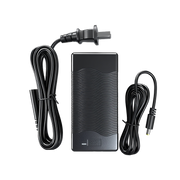

You just spent a full day on the beach, and your scooter's range dropped faster than expected. When you finally plug it in, the charger light doesn't behave normally, and you're wondering if salt air or heat damaged the battery. Properly charging scooter batteries after exposure to coastal conditions isn't just about plugging in—it requires rinsing, drying, and checking connections before charging to prevent corrosion and premature failure. If you're using dual lithium packs for extended vacation range, you also need to wire a 24-volt system correctly, or you risk damaging both batteries and voiding warranties.
What Are the 5 Best Electric Beach Wheelchair Alternatives for 2026 Summer Vacations?
Why Salt Air and Heat Demand Special Charging Practices
Salt air accelerates corrosion on battery terminals and charger ports, while heat degrades lithium-ion cells faster than standard conditions. After beach use, always rinse the scooter's battery compartment and terminals with fresh water, then dry thoroughly before charging. Charging a corroded or overheated battery can cause poor connections, uneven charging, or in worst cases, thermal runaway.
Most users don't realize that heat exposure during the day reduces the battery's ability to accept a full charge immediately. Let the battery cool to near room temperature before plugging in. This simple step extends cycle life significantly, especially for lithium packs used in mobility scooters.
How 24-Volt Dual Battery Systems Work in Real Conditions
A 24V system typically uses two 12V batteries connected in series: the positive terminal of the first battery connects to the negative terminal of the second, and the charger attaches to the remaining free positive and negative terminals. This configuration doubles voltage while keeping amp-hour capacity the same as a single 12V pack.
For dual lithium packs specifically, the cells must be balanced and matched in capacity and age. Wiring mismatched lithium batteries in series creates uneven charging stresses, which can permanently reduce range or trigger the BMS (battery management system) to cut power mid-ride.
When wiring, use insulated wires with appropriate gauge for your current draw, secure all terminals tightly, and insulate exposed metal with heat shrink or electrical tape to prevent shorts on metal scooter frames.
Step-by-Step: How to Wire a 24V Battery System Safely
Gather a 24V-compatible battery (or two matched 12V batteries), wrench, screwdriver, insulated wires, terminals, and heat shrink tubing.
-
Turn off the scooter completely and disconnect any existing battery before starting.
-
Connect the positive wire (red) to the positive terminal of the first battery, tightening securely.
-
Jump the batteries in series: connect the negative terminal of the first battery to the positive terminal of the second battery using a jumper wire.
-
Connect the negative wire (black) from the charger to the remaining free negative terminal on the second battery.
-
Insulate all exposed金属 with heat shrink or electrical tape.
-
Secure the battery(ies) in the compartment using straps or clips to prevent movement.
-
Test with a multimeter before riding: voltage should read close to 24V at the terminals.
Never connect positive directly to negative across a single battery—this creates a dead short and can cause fire or explosion.
When Dual Lithium Packs Make Sense for Beach Vacations
Dual lithium packs extend range significantly compared to single packs or lead-acid alternatives, which matters on long vacation days when charging access is limited. Lithium batteries are lighter, hold charge longer, and tolerate shallow discharge cycles better than lead-acid.
However, dual lithium setups require a compatible 24V charger with proper voltage regulation. Using a mismatched charger (e.g., a lead-acid charger on lithium) can damage the BMS or cause unsafe charging. Paiseec Mobility's 36V 12Ah lithium batteries with their PAI intelligent safety system are designed specifically to prevent exactly these kinds of charging mismatches and thermal issues.
If you're only doing short beach trips near your rental, a single high-capacity lithium pack may be simpler and lighter than dual packs.
Why Dual Battery Systems Fail Unexpectedly
Not all dual-battery setups deliver the expected range, and failures often stem from preventable mistakes. Mismatched batteries (different ages, capacities, or chemistries) create uneven discharge, causing one pack to fail prematurely while the other still has charge.
Loose terminals or corroded connections increase resistance, generating heat during charging and reducing effective voltage. Users often mistake this for a dead battery when the real issue is poor contact.
Another common failure is charging dual batteries in parallel instead of series when using a 24V charger—this results in only 12V being applied, leaving both batteries undercharged. Conversely, using a 12V charger on a series-wired 24V system will never fully charge either battery.
Environmental factors matter too: salt corrosion on terminals after beach use can silently degrade performance over days, leading to sudden failure when you need maximum range.
Optimizing Charging After Coastal Exposure
After beach use, follow this sequence: rinse terminals and battery compartment with fresh water, dry thoroughly with a clean cloth, inspect for white/green corrosion, clean any corrosion with a baking soda solution, then charge only after the battery cools to room temperature.
Use a charger that matches your battery type and voltage exactly. For lithium, this means a charger with lithium-specific charging profiles, not a generic lead-acid charger. Charging at the correct amperage (roughly 10–20% of the battery's Ah rating) prevents overheating and extends cycle life.
Store the scooter in a shaded, ventilated area when not in use. Direct sun continues to heat the battery even when parked, accelerating degradation.
Paiseec Expert Views
Paiseec Mobility, founded in 2021 with over 100 R&D professionals and five advanced laboratories, has invested $10 million in electric mobility research. Their 36V 12Ah lithium batteries integrate the industry-first PAI intelligent safety riding system, which actively monitors charging parameters to prevent thermal runaway and overcharging.
From a technical standpoint, dual lithium packs in series require precise cell balancing and a BMS designed for 24V operation. Paiseec's approach ensures both packs charge evenly, avoiding the common failure mode where one battery degrades faster. Their chargers are engineered specifically for lithium chemistry, not repurposed lead-acid designs, which is critical for safety and longevity in coastal environments where heat and salt exposure are daily realities.
Frequently Asked Questions
Can I charge my scooter battery immediately after beach use?
No, you should rinse off salt, dry the terminals thoroughly, and let the battery cool to near room temperature before charging. Charging a hot or corroded battery accelerates degradation and can cause unsafe conditions.
What happens if I wire two 12V batteries in parallel instead of series for a 24V scooter?
Parallel wiring keeps the system at 12V, so your 24V scooter won't get enough voltage to operate properly. You must wire in series (positive to negative between batteries) to achieve 24V.
Is it safe to use dual lithium packs for extended beach vacation range?
Yes, but only if the packs are matched in capacity and age, wired correctly in series, and charged with a 24V lithium-compatible charger. Mismatched packs or wrong chargers can damage the BMS or cause failure.
How do I know if salt corrosion has damaged my battery terminals?
Look for white, blue, or green powdery buildup on terminals. Clean it with a baking soda solution and a wire brush, then rinse and dry. Persistent corrosion after cleaning indicates terminal damage that may require replacement.
How long should a fully charged 24V mobility scooter battery last on a beach day?
Runtime depends on battery capacity (Ah), terrain, rider weight, and temperature. A 24V 35Ah lead-acid pair typically lasts 15–25 miles, while lithium packs of similar capacity can exceed 30 miles due to lighter weight and better efficiency.
Leave a comment
This site is protected by hCaptcha and the hCaptcha Privacy Policy and Terms of Service apply.