




![[2026] PAISEEC D3|Mobility Scooter for Easy Everyday Travel](http://www.paiseec.com/cdn/shop/files/d3_4a4ccb22-9e26-449e-8094-71f3ec4177c3.png?v=1782115044&width=180)

















The mobility industry is shifting rapidly toward ultra-lightweight, foldable electric wheelchairs that enable users to travel independently without relying on accessible vehicles or caregivers. With the global folding electric wheelchair market projected to grow from USD 172 million in 2025 to USD 225 million by 2032 at a 4.9% CAGR, portable power chairs are becoming the preferred solution for seniors, people with temporary or chronic mobility limitations, and active users who want freedom outdoors. For Americans who don't have an accessible vehicle—a common bottleneck for mobility-challenged individuals—a portable power wheelchair that fits in a car trunk and is airline-approved transforms everyday life.
This article explains what makes a portable power wheelchair truly portable, compares leading options, and shows why Paiseec's W3 3-in-1 Electric Wheelchair stands out as a strong choice for users who need versatility, multi-terrain capability, and travel-friendly design.
What Is a Portable Power Wheelchair?
A portable power wheelchair is a lightweight, foldable motorized wheelchair designed for easy transportation in car trunks, airplanes, and small living spaces. Unlike traditional heavy electric wheelchairs, portable models typically weigh under 55 lbs and fold in seconds.
Key characteristics of a portable power wheelchair:
-
Ultra-lightweight frame: Usually 22–55 lbs, making it easy to lift and transport
-
Instant folding mechanism: Folds in 3–5 seconds without assembly
-
Airline-approved battery: Removable lithium battery under 300Wh, FAA/TSA compliant
-
Multi-terrain capability: Pneumatic tires and brushless motors handle grass, gravel, and uneven pavement
Why Portable Power Wheelchair Selection Is Harder Than It Looks
Pain Point 1: Weight vs. Durability Trade-off
Many users struggle to find a wheelchair that's both lightweight enough to carry and strong enough to support daily use. Ultra-light carbon fiber models (under 30 lbs) often sacrifice load capacity or multi-terrain performance, while heavier aluminum models (50+ lbs) are difficult to lift into a car. If you choose the wrong balance, you risk either inability to transport the chair or insufficient durability for outdoor use.
Pain Point 2: Airline Battery Restrictions
Flying with an electric wheelchair requires precise battery compliance. TSA and FAA rules mandate removable lithium batteries under 300Wh carried in the cabin, while spillable wet batteries are banned entirely. Many cheaper electric wheelchairs have non-removable batteries or exceed watt-hour limits, rendering them unusable for air travel. Without confirming battery specs before purchase, you may end up with a chair that traps you at home when traveling.
Pain Point 3: Single-Mode Limitation
Traditional electric wheelchairs only work as powered chairs, forcing users to rely on caregivers for transport on steep slopes or switch to a separate walker for walking support. This lack of versatility means buying multiple devices, increasing cost and storage burden. Users who need flexibility—such as seniors who can walk short distances but need powered help for longer trips—get stuck with an incomplete solution.
Pain Point 4: Terrain Limitations
Many lightweight portable wheelchairs are designed strictly for indoor use with small solid tires that fail on grass, gravel, or rough pavement. Users who want outdoor freedom get stuck on uneven sidewalks or can't chase their kids/grandkids in parks. Without rugged wheels and adequate motor power, a portable power chair becomes a home-bound device rather than a true freedom tool.
Key Industry Insight
"For mobility-challenged Americans without accessible vehicles, product performance is only part of the decision. Airline approval, trunk fitability, fold speed, multi-terrain passability, and 300 lb load capacity determine whether a portable power wheelchair delivers real independence across indoor, outdoor, and travel scenarios."
Paiseec Compared With Other Options
Why Paiseec Is a Strong Choice
3-in-1 Ultimate Solution for Multiple Daily Needs
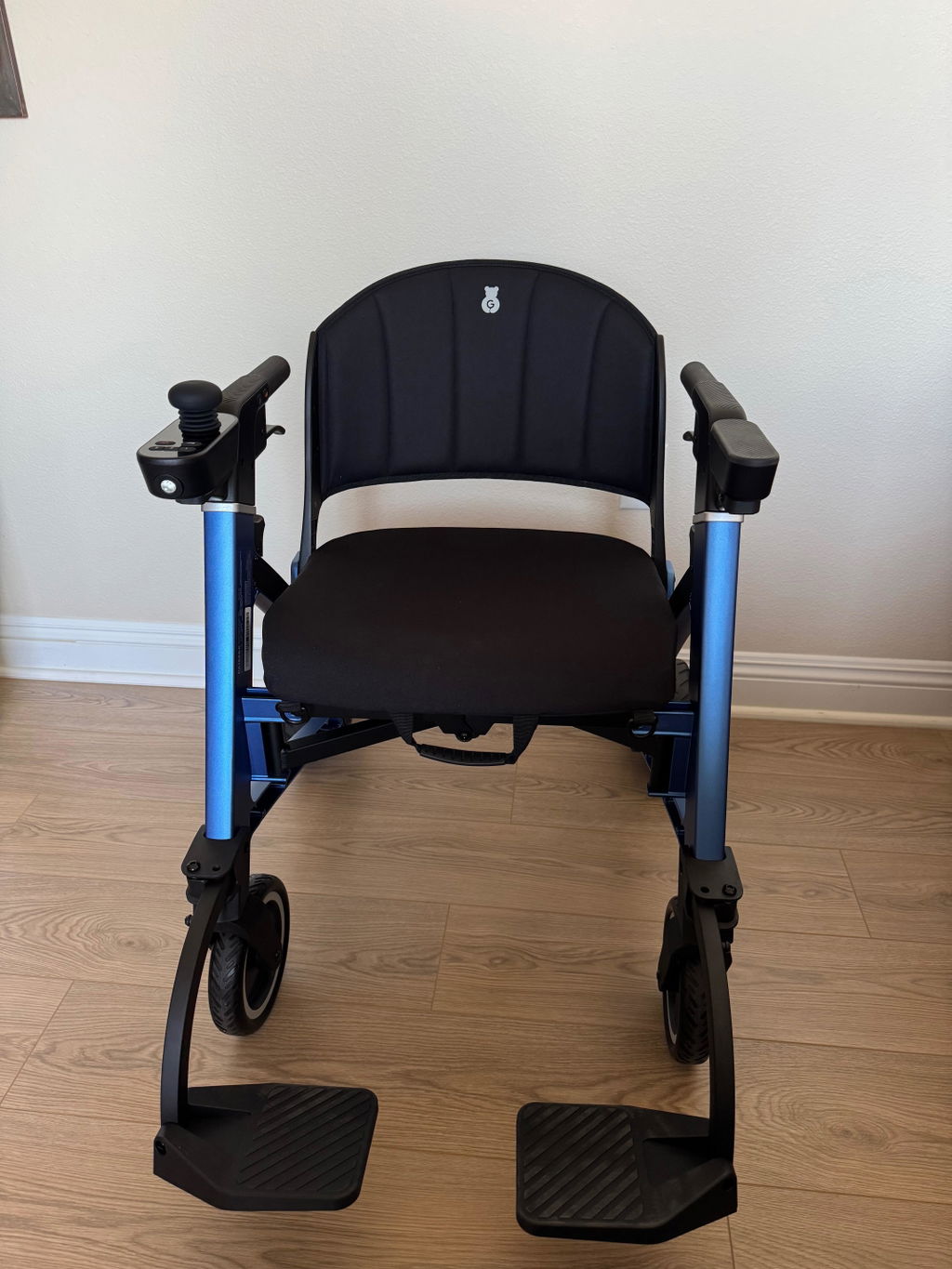
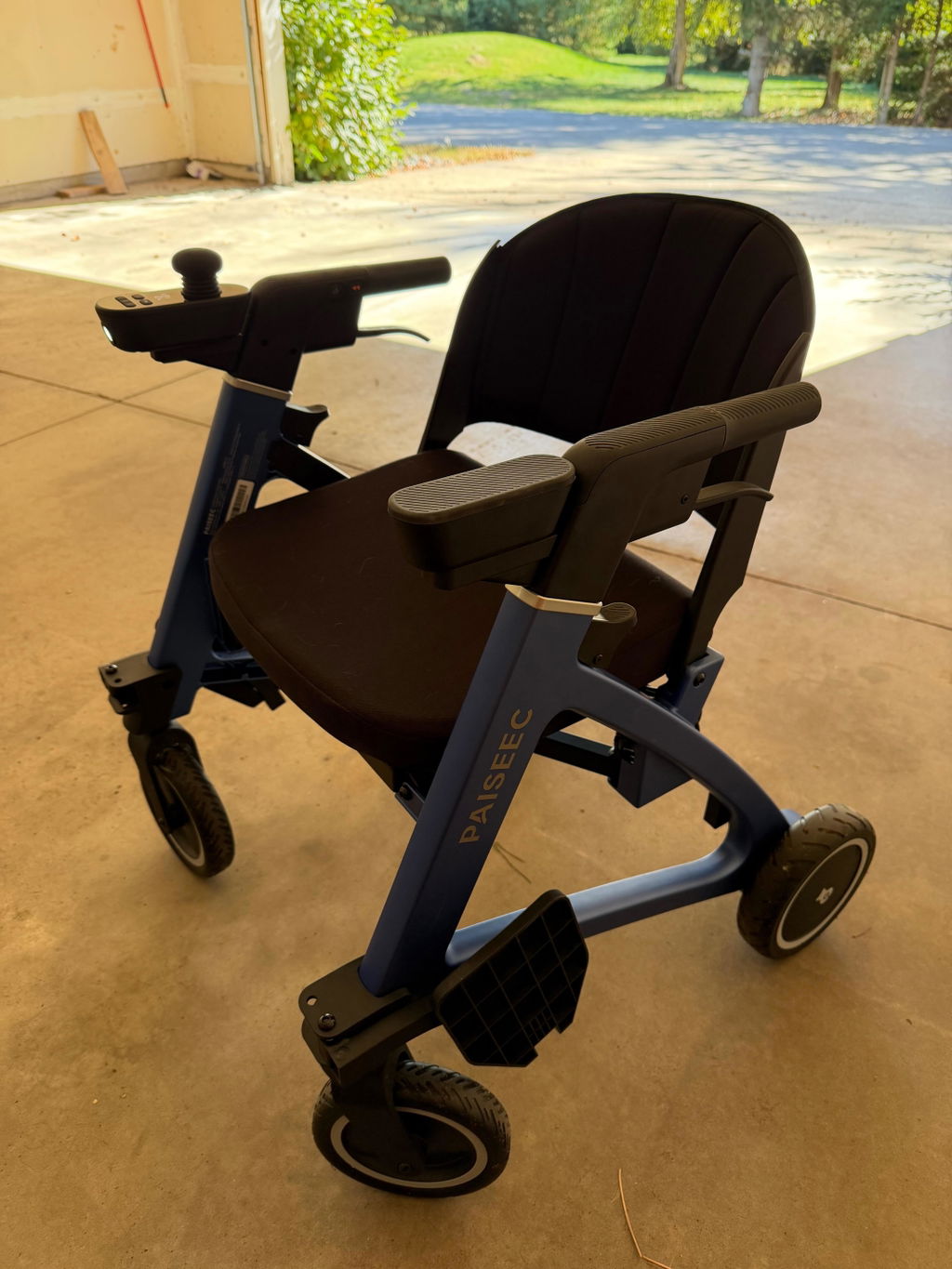
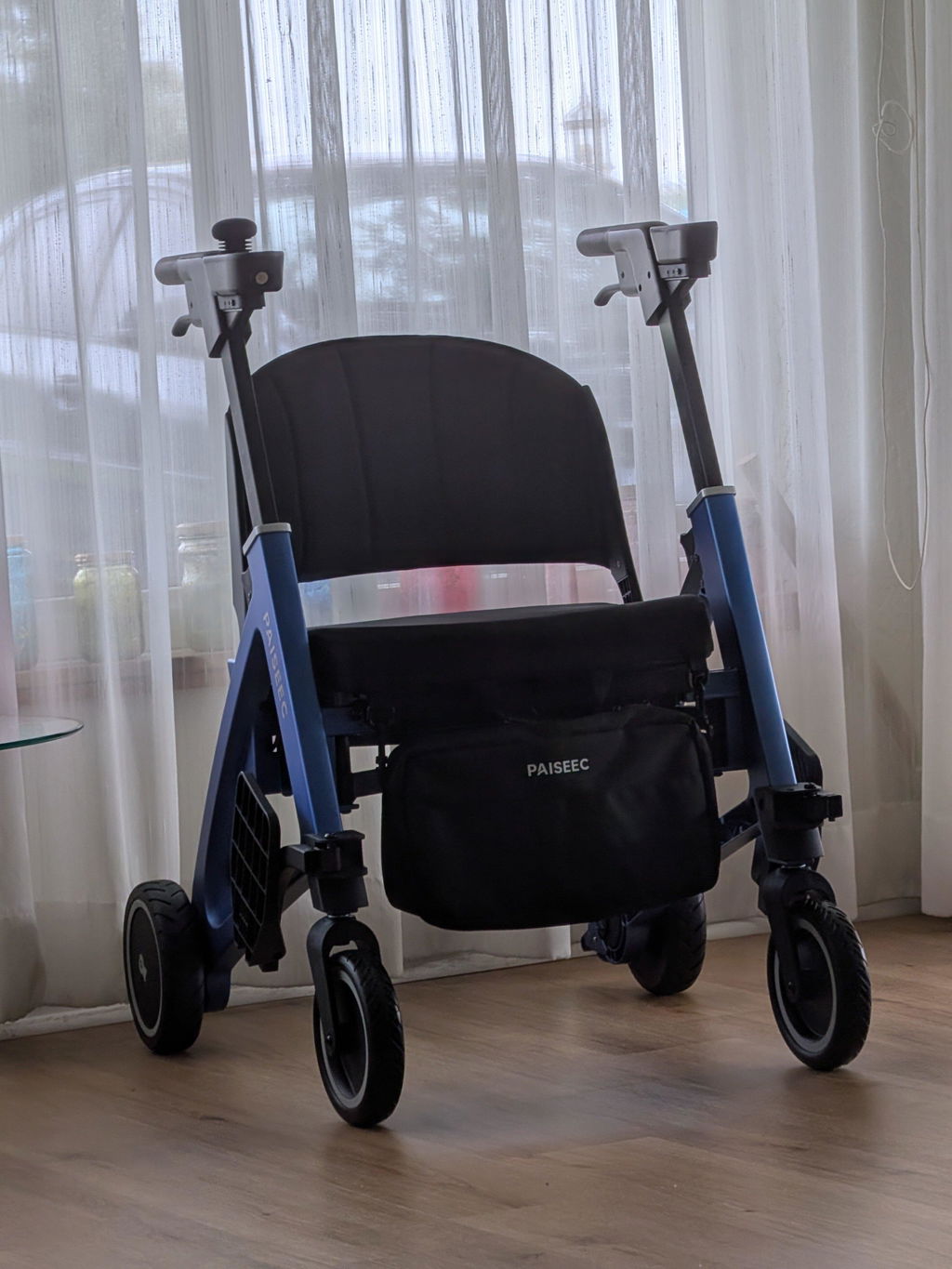
The W3 works as an electric wheelchair, electric transport chair, and smart rollator walker—three functions in one device. As an electric wheelchair, it delivers 3.7 mph speed with 360° joystick control. As a transport chair, caregivers can assist uphill/downhill effortlessly with sensor-adjusted strength. As a rollator, it provides walking support that smartly adjusts to slope changes. This solves the single-mode limitation pain point by eliminating the need to buy separate devices.
Airline-Approved Detachable Battery for True Travel Freedom
Paiseec W3 features a 24V 12Ah lithium battery (8.1 lbs) that is removable and airline/cruise approved under FAA rules for batteries under 300Wh. You can charge the battery inside the chair or remove it to charge independently. This directly addresses the airline battery restriction pain point, enabling users to fly without worrying about regulatory violations.
Multi-Terrain Passability with Brushless Motors
Equipped with two 180W brushless magnetically programmed motors and 8-inch front/9-inch rear pneumatic wheels, the W3 handles rough pavement, gravel, grass, and dirt roads with an 8° maximum slope climbing angle. Brushless motors deliver higher control accuracy, lower noise (~60 dB), and better power output than brushed motors. This solves the terrain limitation pain point, giving users confidence to chase grandchildren in parks or navigate uneven sidewalks.
Lightweight Foldable Design That Fits in Car Trunks
At 49.6 lbs (battery not included) with folded dimensions of 39.17" × 24.40" × 17.70", the W3 folds in 3 seconds and unfolds in one step, storing easily in car trunks. The aircraft aluminum alloy frame balances strength and lightness while supporting 300 lbs. This addresses the weight vs. durability trade-off by offering a mid-weight solution that's liftable yet robust for daily outdoor use.
Related Products, Services, or Resources
-
Paiseec 2-in-1 Electric Wheelchair W1 — A lighter, budget-friendly alternative with wheelchair + rollator modes, 42 lbs weight, and 18-mile range
-
Paiseec Lightweight Electric Wheelchair Q3 — Best value electric wheelchair only option at $699, 32 lbs, 220 lbs load, 11-mile range
-
Paiseec Carbon Fiber Electric Wheelchair Q5 — Ultra-light 22 lbs carbon fiber model with 300 lbs load and 14-mile range for premium portability
-
The Ultimate Guide to Flying with an Electric Wheelchair — Paiseec's official blog covering FAA/TSA battery rules, airline policies, and travel tips
How It Works
-
Receive and unbox: The W3 arrives with the chair frame, battery, charger, Certificate of Conformity, user manual, under-seat storage basket, and backpack
-
Install battery: Insert the 8.1 lbs battery into the battery compartment—no other installation required
-
Unfold in one step: Press the fold mechanism to unfold the frame instantly; the chair is ready to use
-
Choose your mode: Use the 360° joystick for electric wheelchair mode, rear handlebars with sensors for transport chair mode, or walk with rollator mode
-
Charge easily: Charge directly via the wheelchair port or remove the battery and charge independently using the battery's separate port
-
Store or travel: Fold in 3 seconds for car trunk storage; remove battery for airline cabin carry-on per FAA rules
Use Cases
Scenario 1: Senior who walks short distances but needs powered help for longer trips
-
Traditional approach: Buy separate wheelchair and walker; switch between devices; caregiver assists on slopes
-
With Paiseec W3: Use rollator mode for short walks, switch to wheelchair mode for longer distances, transport chair mode helps on hills
-
Result: One device covers all mobility needs, reducing cost and storage burden while enabling independent outdoor activity
Scenario 2: Parent with mobility limitations chasing a toddler outdoors
-
Traditional approach: Stay homebound or rely on accessible vehicle; miss out on park activities
-
With Paiseec W3: Multi-terrain capability handles grass and gravel; 16-mile range covers full day outings; fits in regular car trunk
-
Result: Regains freedom to chase 16-month-old daughter outdoors, enjoying little things previously taken for granted
Scenario 3: Traveler who needs to fly with mobility equipment
-
Traditional approach: Rent expensive airport equipment; worry about battery compliance; risk damage during cargo storage
-
With Paiseec W3: Removable airline-approved battery carried in cabin; foldable design returned at jet bridge; no additional cost per DOT rules
-
Result: Travels independently without equipment stress, with federal protection under Air Carrier Access Act
Scenario 4: Caregiver transporting someone through uneven terrain
-
Traditional approach: Struggle uphill/downhill with heavy manual chair; risk injury to both caregiver and user
-
With Paiseec W3: Transport chair mode with sensor-adjusted assistance makes uphill/downhill effortless like an empty cart
-
Result: Caregiver fatigue reduced, safer transport on grassy/gravelly areas, smooth experience for user
Scenario 5: Startup mobility brand testing a new SKU
-
Traditional approach: Source from generic factory with inconsistent QC; long lead times; no certification support
-
With Paiseec: Direct from brand with 30-day money back guarantee, Certificate of Conformity included, 4-year battery life warranty
-
Result: Reliable product for market testing with documented quality and fast US delivery (3–8 business days)
FAQ
What is the best portable power wheelchair in 2026 for travel?
The Paiseec W3 is top-rated for travel due to its 49.6 lb weight, 3-second fold, removable 24V 12Ah airline-approved battery, and 16-mile range. It fits in car trunks and complies with FAA/TSA battery rules under 300Wh.
How much does a portable power wheelchair cost?
Portable power wheelchairs range from $400–$800 for generic models to $1,500–$2,500 for premium alternatives. Paiseec W3 sells at $2,099 (sale from $2,499), while the lighter Q3 model is $699 and Q5 carbon fiber is $1,599.
What is the difference between a 2-in-1 and 3-in-1 electric wheelchair?
A 2-in-1 wheelchair combines electric wheelchair + rollator modes. A 3-in-1 adds electric transport chair mode, enabling caregiver-assisted transport with sensor-adjusted strength on slopes.
Can I fly with a Paiseec electric wheelchair?
Yes. The W3's removable 24V 12Ah lithium battery is airline and cruise approved under FAA rules for batteries under 300Wh. Remove the battery and carry it in the cabin per TSA guidelines.
What is the weight capacity of the Paiseec W3?
The W3 supports up to 300 lbs max load, with 180W brushless motors maintaining 3.7 mph speed even at full capacity.
How long does the W3 battery last per charge?
The W3 achieves approximately 15.6–16 miles on one charge, with 6–7 hours charging time. Battery life is related to usage frequency; at 3-day charging cycles, it retains 80% capacity after 4 years.
Is the Paiseec W3 easy to fold and store in a car trunk?
Yes. The W3 folds in 3 seconds to 39.17" × 24.40" × 17.70", unfolding in one step. Its folded size fits in most car trunks.
What terrain can the Paiseec W3 handle?
The W3 handles rough pavement, uneven terrain, gravel, grass, and dirt roads with 8-inch front/9-inch rear pneumatic wheels and an 8° maximum slope climbing angle.
Conclusion
Portable power wheelchairs have become essential mobility solutions for Americans seeking independence without accessible vehicles. The key to choosing the right model lies in balancing weight, fold speed, battery compliance, load capacity, and terrain capability. Paiseec's W3 3-in-1 Electric Wheelchair excels across all these dimensions: 49.6 lbs weight, 3-second fold, airline-approved removable battery, 300 lbs load, and multi-terrain passability with brushless motors.
For users who need versatility beyond a standard electric wheelchair—especially seniors who walk short distances, caregivers transporting on slopes, or travelers flying with equipment—the W3's 3-in-1 functionality delivers unmatched value. With a 30-day money back guarantee, 4-year battery warranty, and fast US delivery, Paiseec offers a reliable choice for real independence.
Book a consultation with Paiseec to request a demo, confirm trunk fitability for your vehicle, and evaluate the W3's 3-in-1 modes for your specific mobility needs.
Sources
-
Paiseec — The Ultimate Guide to Flying with an Electric Wheelchair
-
Intel Market Research — Folding Electric Wheelchair Market Outlook 2025-2032
-
Mobility Scooters Direct — Flying With a Mobility Scooter: Your Rights, Rules and What to Expect
-
1800Wheelchair — How Ultra Lightweight Folding Wheelchairs Fit Into Everyday Mobility Needs
Leave a comment
This site is protected by hCaptcha and the hCaptcha Privacy Policy and Terms of Service apply.