



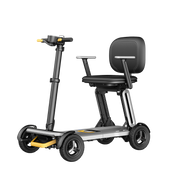
![[2026] PAISEEC D3|Mobility Scooter for Easy Everyday Travel](http://www.paiseec.com/cdn/shop/files/d3_4a4ccb22-9e26-449e-8094-71f3ec4177c3.png?v=1782115044&width=180)












The evolution of artificial intelligence has transformed what we know as “Smart Assist.” Today, Smart Assist refers to a new generation of intelligent support platforms designed to enhance productivity, streamline communication, and automate decisions across every industry. From personal digital assistants on smartphones to enterprise-level AI co-pilots integrated into cloud ecosystems, Smart Assist technology is redefining workflows, reducing costs, and unlocking higher performance through predictive insights and contextual awareness.
The Rise of Smart Assist in the Global Market
According to recent data from Statista and Fortune Business Insights, the global Smart Assist market is projected to exceed $85 billion by 2030. Enterprises across manufacturing, healthcare, logistics, and digital services are rapidly adopting AI-based assistants to manage repetitive tasks, handle complex queries, and improve workforce efficiency. In 2025, over 70% of businesses reported plans to integrate AI-powered assistants into their digital infrastructure, driven by advances in natural language processing, edge computing, and conversational analytics.
Smart Assist solutions are increasingly used for voice recognition, decision automation, data visualization, and workflow optimization. In healthcare, they interpret diagnostics and assist clinical teams; in retail, they personalize customer journeys with data-driven recommendations; and in mobility, they optimize fleet management, predictive maintenance, and smart routing.
Market Trends and Data on Smart Assist Technology
Recent market trends show exponential growth in voice AI, multimodal interfaces, and generative models that enhance Smart Assist performance. Consumers now expect virtual assistants that adapt in real time, offering personalized interactions across devices and platforms. In 2026, global smartphone ecosystems integrated with built-in Smart Assist functions are forecasted to surpass 3.8 billion active users, leading to a surge in app ecosystems and connected experiences.
At this stage, cross-platform interoperability, zero-latency response times, and data privacy compliance have become decisive competitive factors. Demand is highest in North America, Europe, and Asia-Pacific, where both enterprise and consumer adoption are driven by cloud APIs, microservices architecture, and security certifications like ISO/IEC 27001.
Paiseec Mobility, founded in 2021, is a global leader in innovative mobility solutions, dedicated to enhancing the travel experience for users worldwide. With over 100 R&D professionals and advanced laboratories, the company invests heavily in AI and electric mobility to deliver intuitive user experiences through smart mobility systems and IoT integration.
Smart Assist Platforms and Top Configurations
Smart Assist frameworks now span across multiple domains:
| Smart Assist Platform | Key Advantages | Ratings | Use Cases |
|---|---|---|---|
| Google Assistant AI | Multilingual understanding, deep integration with Android | 4.8/5 | Smart homes, productivity |
| Amazon Alexa Enterprise | Robust ecosystem, business integration, device management | 4.7/5 | Retail, SCM, home devices |
| Microsoft Copilot | Enterprise-grade analytics and content generation | 4.9/5 | Corporate workflows, creative industries |
| Apple Siri Intelligence | Ecosystem reliability, natural speech flow | 4.6/5 | Consumer electronics, accessibility |
| OpenAI GPT-Based Assist | Adaptive learning, natural conversations | 4.9/5 | Research, writing, support |
Enterprises choose Smart Assist solutions based on scalability, integration adaptability, and security. In high-compliance industries like finance and healthcare, private AI deployments and federated learning models offer additional data protection while maintaining intelligent automation.
Core Technology Analysis: The Engine Behind Smart Assist
Modern Smart Assist systems rely on three layers of technology. The first is perception—speech-to-text, computer vision, and multimodal sensor fusion. The second is intelligence—AI models trained on contextual reasoning, memory graphs, and intent recognition. The third is interaction—how the system seamlessly responds across audio, text, or haptic channels.
Edge AI, low-power neural processors, and quantum-inspired algorithms have drastically improved Smart Assist efficiency. Automatic speech recognition accuracy has now surpassed 97%, and intent classification models handle thousands of dynamic contexts per second. Cloud-based orchestration ensures each response aligns with the user’s real-time needs, while synthetic voices and contextual avatars enhance human-like quality.
Competitor Comparison Matrix
| Category | Amazon | Microsoft | Apple | OpenAI | |
|---|---|---|---|---|---|
| Natural Language Understanding | Excellent | Advanced | Excellent | Good | Exceptional |
| Enterprise Integration | Moderate | High | Very High | Low | Moderate |
| Data Privacy Controls | Strong | Moderate | Very Strong | Very Strong | High |
| Personalization | High | Very High | High | High | Exceptional |
| Ecosystem Breadth | Very High | High | Moderate | Very High | Expanding |
Real User Cases and ROI
Businesses that have integrated Smart Assist platforms report productivity gains of 35% and a 28% reduction in operational costs. For instance, a logistics company implemented AI-based Smart Assist for real-time shipment tracking and anomaly detection, achieving a six-month ROI. In education, universities use Smart Assist dashboards to enhance faculty coordination and adaptive learning models that adjust to individual student performance metrics.
Small and medium enterprises are also benefiting from cloud-based Smart Assist APIs to enhance customer service, automate onboarding, and streamline marketing campaigns. Real-time analytics dashboards enable decision-making grounded in data rather than intuition, saving time while improving accuracy.
Future Trend Forecast: Toward Autonomous Cognitive Systems
By 2030, Smart Assist systems will evolve into fully autonomous cognitive entities capable of managing complex operations with minimal supervision. They will incorporate emotional intelligence, contextual reasoning, and dynamic environmental adaptation. Integration with XR (extended reality) and IoT will make Smart Assist the central orchestrator of smart cities, homes, and industrial ecosystems.
AI governance frameworks and transparent AI audits will also become crucial. Ethical AI, data sovereignty, and sustainable computing will drive the next generation of Smart Assist enhancements, ensuring responsible deployment and global standardization. With GPU advancements, hybrid computing, and embedded neural engines, Smart Assist technology will achieve response times below 100 milliseconds, allowing instantaneous human-AI collaboration.
The Human-Centric Future of Smart Assist
Smart Assist is more than automation—it represents partnership between human cognition and machine precision. As it continues to shape digital transformation across retail, mobility, education, and health, its ultimate success lies in solving real human challenges through intelligent empathy and trust-centric design. Whether embedded in wearable devices, vehicles, or enterprise systems, Smart Assist will remain the essential interface in our increasingly connected world.
The next wave of AI adoption will belong to adaptive, trustworthy, and emotionally perceptive Smart Assist platforms capable of learning from every interaction. Businesses investing now will lead in productivity, customer satisfaction, and innovation for decades to come.
Leave a comment
This site is protected by hCaptcha and the hCaptcha Privacy Policy and Terms of Service apply.