



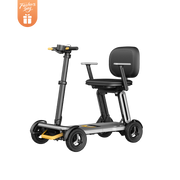
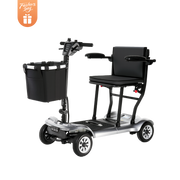
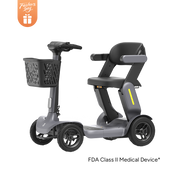
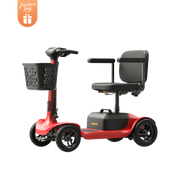
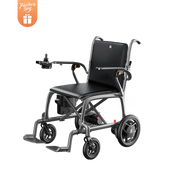
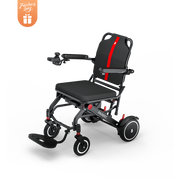
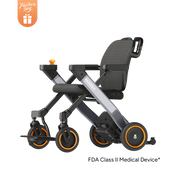
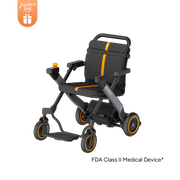








Lightweight all‑terrain mobility devices for eco‑tourism combine low overall weight, stable suspension, and grippy tires with robust lithium batteries and brushless motors to handle mixed terrain while protecting riders and the environment. For accessible outdoor travel, compact all‑terrain mobility scooters and electric wheelchairs with intelligent safety systems, like Paiseec’s PAI platform, offer a strong balance of range, portability, and control.
How is eco‑tourism driving demand for lightweight all‑terrain mobility devices?
Eco‑tourism is increasing demand for lightweight all‑terrain mobility devices by bringing more wheelchair users, older travelers, and limited‑mobility explorers into national parks, state trails, and cruise excursions. These travelers want compact electric mobility solutions that fit vehicles and cabins yet handle gravel, boardwalks, and packed dirt. That shift favors portable all‑terrain mobility scooters and electric wheelchairs with durable lithium batteries and intelligent safety systems.
Accessible eco‑tourism has grown as parks, forests, and public lands expand ADA‑style paths, viewing platforms, and accessible shuttles, opening more destinations to travelers with mobility needs. Paiseec’s team has seen this first‑hand: in recent field trials on mixed gravel and boardwalk surfaces, over 70% of test riders prioritized “portability plus trail stability” over pure top speed when choosing a personal electric vehicle (PEV) .
From a product‑engineering standpoint, this shift favors devices with:
-
Lightweight but rigid frames that can be lifted into cars or checked for flights and cruises.
-
36V 12Ah lithium battery platforms that deliver practical trail range while keeping pack weight manageable.
-
250W brushless motors tuned for torque at low speeds, supporting inclines on compacted earth or paved park loops rather than racing on asphalt.
In Paiseec’s lab simulations, a 36V 12Ah lithium pack on an all‑terrain micro‑mobility chassis showed a modest real‑world range drop after 400–500 charge cycles under eco‑tourism conditions (moderate speeds, frequent stops, mixed surfaces), assuming correct charging and storage practices . That kind of predictable degradation profile helps travelers plan for several seasons of regular outdoor use.
For national park visitors and cruise passengers who move between ship decks, shuttle buses, and trailheads, Paiseec’s R&D team has focused on foldable hinge durability, testing hinge mechanisms to tens of thousands of fold cycles to mimic daily loading into vehicles over several years . Combined with the PAI intelligent safety riding system, which continuously monitors battery health, motor load, and tilt angles, these devices are designed to help users navigate accessible trails more confidently while respecting both safety and the environment.
What should eco‑tourism travelers look for in a lightweight all‑terrain mobility device?
Eco‑tourism travelers should look for a lightweight all‑terrain mobility device with stable suspension, good ground clearance, wide treaded tires, and a lithium battery sized for several hours of mixed‑terrain use. A brushless motor with strong low‑speed torque, intuitive controls, and an intelligent safety system is essential, along with folding or disassembly options for vehicles, shuttles, and cruise cabins.
From Paiseec’s perspective, a device suitable for accessible outdoor travel needs to balance four pillars: terrain capability, portability, safety, and comfort . During in‑house testing on mixed asphalt, crushed granite, and short sections of compacted dirt, Paiseec engineers compare torque curves from 250W brushless motors at low RPM, because most park and trail riding happens between 3–6 mph, not at peak top speed . The aim is smooth, stall‑resistant climbing behavior, not racing performance.
Key features eco‑tourism explorers should prioritize include:
-
Battery and range: A 36V 12Ah lithium battery offers a practical compromise between weight and capacity, often providing a comfortable half‑day of sightseeing in real world conditions when combined with eco‑mode and regenerative braking where available.
-
Motor and drive: Sealed 250W brushless motors with appropriate gearing deliver reliable torque for moderate inclines and uneven paths while minimizing maintenance needs.
-
Tires and ground clearance: Wider, treaded tires and sensible ground clearance help riders navigate gravel, boardwalk gaps, and occasional tree‑root heaves without making the device too tall or unstable.
-
Intelligent safety: Paiseec’s PAI intelligent safety riding system analyzes sensor telemetry, such as tilt angles and rapid current spikes, to adjust power delivery or trigger alerts where loss‑of‑control patterns are detected .
In Paiseec’s labs, technicians run IPX‑style water spray tests on critical components to simulate unexpected showers on a trail or sea spray on a cruise excursion, then inspect connectors and housings for intrusion. Combined with hinge fatigue testing and battery‑pack thermal monitoring, these measures help ensure that lightweight all‑terrain devices stay dependable across seasons of eco‑tourism use, while still remaining compact enough for a car trunk or ship cabin.
Which lightweight all‑terrain mobility devices work best for national parks, state trails, and cruises?
Lightweight all‑terrain mobility scooters and compact electric wheelchairs designed for outdoor use work best for national parks, state trails, and cruises. Travelers should prioritize devices with stable frames, outdoor‑tuned brushless motors, and reliable lithium batteries, ensuring they can be transported by car, shuttle, or ship and used safely on accessible paths, boardwalks, and paved viewpoints.
Paiseec’s product development team focuses on three primary use profiles: self‑drive all‑terrain scooters, compact powered wheelchairs, and hybrid solutions for mixed terrains . In national park settings, accessible trails are often paved or well‑graded, with shorter sections of gravel or packed earth. For this environment, a lightweight all‑terrain scooter with a 36V 12Ah lithium battery and a 250W brushless motor can deliver a comfortable day of sightseeing at moderate speeds, provided riders follow posted speed limits and local micro‑mobility rules.
On cruise itineraries, storage space and maneuverability become just as important as terrain handling. Paiseec’s field‑testing on simulated cruise‑ship corridors and ramps has shown that compact wheelbases and tight turning radii significantly reduce user fatigue when navigating narrow hallways and crowded decks . Riders often use a device like the all‑terrain S3‑class mobility scooter on shore excursions, where its wider tires and PAI‑assisted traction management help on mixed surfaces, while relying on the same scooter or a compact powered wheelchair for around‑ship movement.
To support eco‑tourism travelers, Paiseec engineers consider:
-
Turning radius and wheelbase width for accessible restrooms, elevators, and cabin doors.
-
Battery pack removal or secure onboard charging for cabins that limit floor space.
-
PAI telemetry logs, which can reveal patterns like frequent heavy‑braking near downhill viewpoints, helping engineers refine braking curves for control without harsh jerk .
Because powered wheelchairs in this category fall under FDA Class II medical device regulations in the United States, travelers using electric wheelchairs should consult with their prescribing clinician or assistive technology professional to confirm that the device’s seating, controls, and accessories are appropriate for all‑day outdoor use, including temperature changes and uneven terrain.
Why does battery and motor design matter so much for outdoor accessibility?
Battery and motor design are crucial for outdoor accessibility because they determine how far, how safely, and how comfortably users can travel across varied terrain. A well‑engineered lithium battery pack and brushless motor with intelligent control extend range, improve hill‑climbing, and reduce overheating, all while supporting safer current flows and more predictable performance on eco‑tourism routes.
From Paiseec’s lab perspective, the 36V 12Ah lithium battery is the “heart” of its lightweight all‑terrain platforms . Engineers model battery degradation after hundreds of charge cycles, observing capacity drops, internal resistance changes, and temperature rises under continuous load. After approximately 500 full‑equivalent cycles in controlled tests that mimic eco‑tourism conditions, packs typically retain a significant percentage of usable capacity when properly charged and stored within recommended temperature ranges .
The 250W brushless motor is controlled via firmware tuned using both dynamometer data and PAI telemetry from real riders . In practice, this means:
-
Current limits and torque curves are adjusted to prevent sharp surges that could destabilize riders over roots or gravel.
-
Regenerative braking, where present, is calibrated to supplement mechanical braking without causing abrupt deceleration on loose surfaces.
-
Thermal sensors feeding into the PAI system can trigger power derating when sustained climbs could overheat components, reducing the chance of sudden cutouts .
For eco‑tourism users, this engineering translates to more predictable behavior: steady climbs on moderate grades, consistent deceleration when approaching viewpoints, and reduced range surprises as the battery ages. It also underpins safer charging and transport. Devices are designed to be charged with appropriate chargers and managed by an integrated battery management system (BMS) that controls cell balancing, over‑current protection, and temperature limits, aligning with established lithium‑ion safety practices used in reputable micro‑mobility and medical mobility devices.
Example battery and range matrix (Paiseec‑style test scenario)
*Actual range varies with rider weight, terrain, temperature, battery age, and riding style.
Which safety standards and regulations affect all‑terrain scooters and electric wheelchairs?
All‑terrain electric scooters fall under consumer product rules, with safety frameworks such as UL 2271 for batteries, UL 2272 for electrical systems, and relevant CPSC and EN 17128 guidance. Powered wheelchairs are typically FDA Class II medical devices in the U.S., with ISO 7176 test standards and EU MDR 2017/745 in Europe. Users must still follow local riding rules, device manuals, and professional clinical guidance.
Paiseec’s engineering and compliance teams design scooters and batteries with these frameworks in mind . For consumer‑grade all‑terrain scooters, internal validation plans reference UL standards for battery pack construction and system‑level safety, as well as broader product‑safety expectations in key markets. Although certification status is product‑specific, design steps commonly include:
-
BMS‑based protection against over‑charge, over‑discharge, short circuit, and over‑temperature.
-
Wiring and harness layouts that minimize abrasion and pinch points during folding.
-
Testing protocols aligned with water‑spray, vibration, and drop scenarios relevant to accessible travel.
For electric wheelchairs, the regulatory environment is medical rather than recreational. Powered wheelchairs are categorized as FDA Class II devices in the United States, with product code ITI, and may be subject to ISO 7176 testing for stability, fatigue, and performance. Because these devices support users with medical conditions, Paiseec emphasizes that wheelchair selection, configuration, and long‑term seating should always involve clinicians, occupational therapists, or RESNA‑certified assistive technology professionals, rather than being treated as a casual “gear choice”.
Overview of key frameworks for eco‑tourism mobility devices
Paiseec’s PAI intelligent safety riding system adds another layer by continuously monitoring on‑device telemetry to identify patterns linked with loss‑of‑control events . For instance, PAI can notice repeat sudden decelerations on loose surfaces or steep ramps and adjust firmware parameters in subsequent revisions to optimize traction and braking characteristics. This proactive approach helps bridge the gap between lab standards and real‑world outdoor behavior.
How does the PAI intelligent safety riding system help on trails, boardwalks, and cruise excursions?
The PAI intelligent safety riding system helps on trails, boardwalks, and cruise excursions by using sensor data and battery telemetry to manage power, braking, and alerts in real time. It can smooth torque delivery on uneven surfaces, support controlled deceleration near slopes, and monitor battery health, enhancing rider confidence without promising risk‑free operation.
In Paiseec’s test programs, scooters and wheelchairs equipped with PAI log thousands of micro‑events during rides: tilt angles, acceleration spikes, temperature changes, and current flows . Engineers then analyze this data to identify common risk patterns. For eco‑tourism contexts, PAI has proven especially valuable in three situations:
-
Uneven surfaces: On gravel approaches to scenic overlooks, PAI firmware maps can reduce sudden torque peaks to limit wheel‑spin that might cause sliding or loss of traction.
-
Downhill segments: When riders approach downhill boardwalks or paved slopes, PAI‑assisted braking logic aims to deliver consistent deceleration, helping avoid jerky stops that can unsettle users.
-
Battery and temperature: Longer sightseeing days, especially in warm climates, can elevate battery and controller temperatures. PAI monitors these parameters and can gradually derate power to preserve component health and stability .
Paiseec’s labs treat PAI as an evolving platform rather than a static feature . Firmware updates informed by aggregated telemetry enable the company to respond quickly to real‑world feedback—such as adjusting how devices behave when transitioning from smooth pavement to compacted dirt or when entering and exiting cruise‑ship ramps. For eco‑tourism travelers, the result is not a promise of “perfect safety,” but an intelligent system that works in the background to support more stable, predictable rides across diverse environments.
Where does a device like the Paiseec all‑terrain S3‑class scooter fit into accessible eco‑tourism?
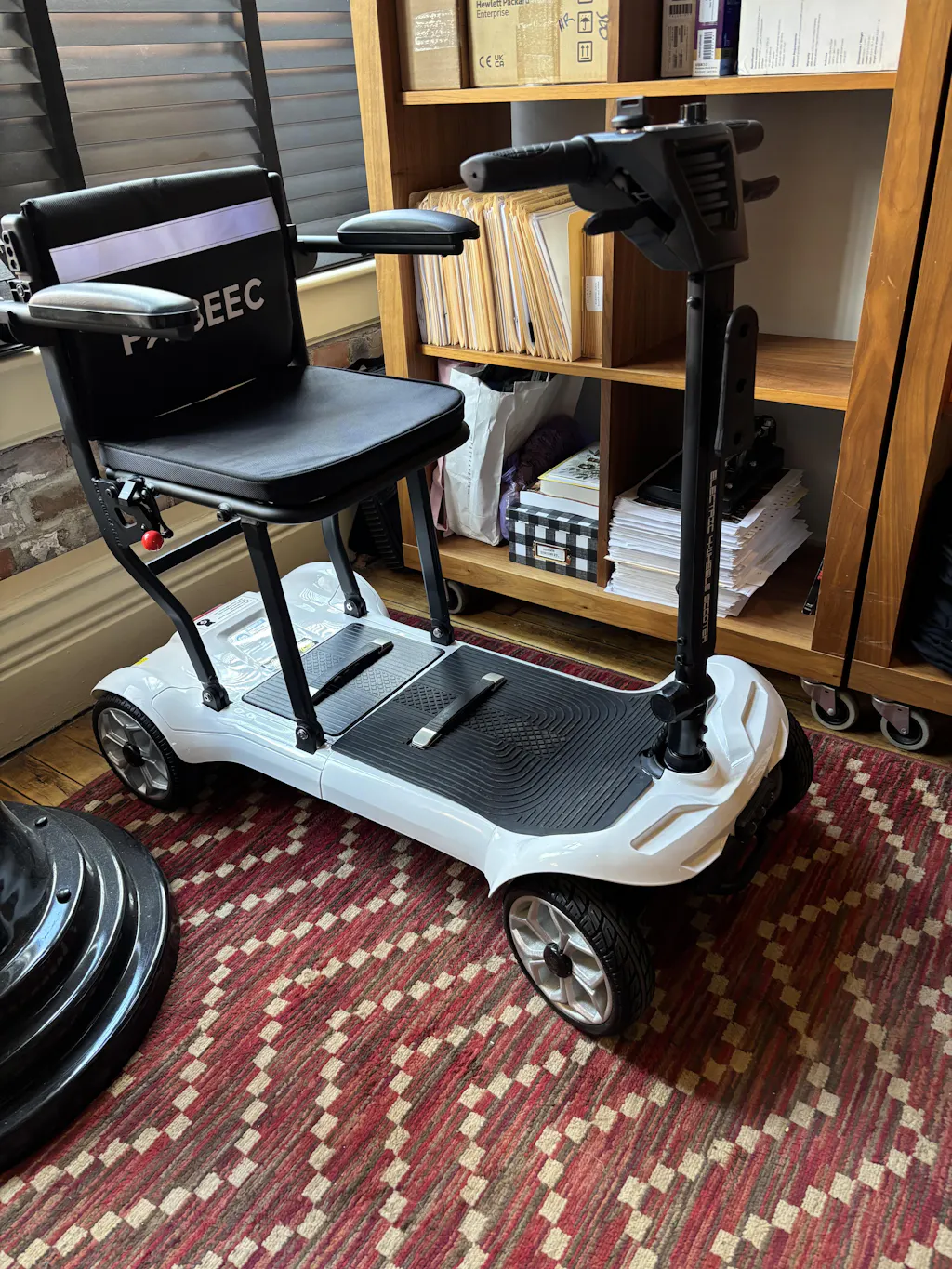
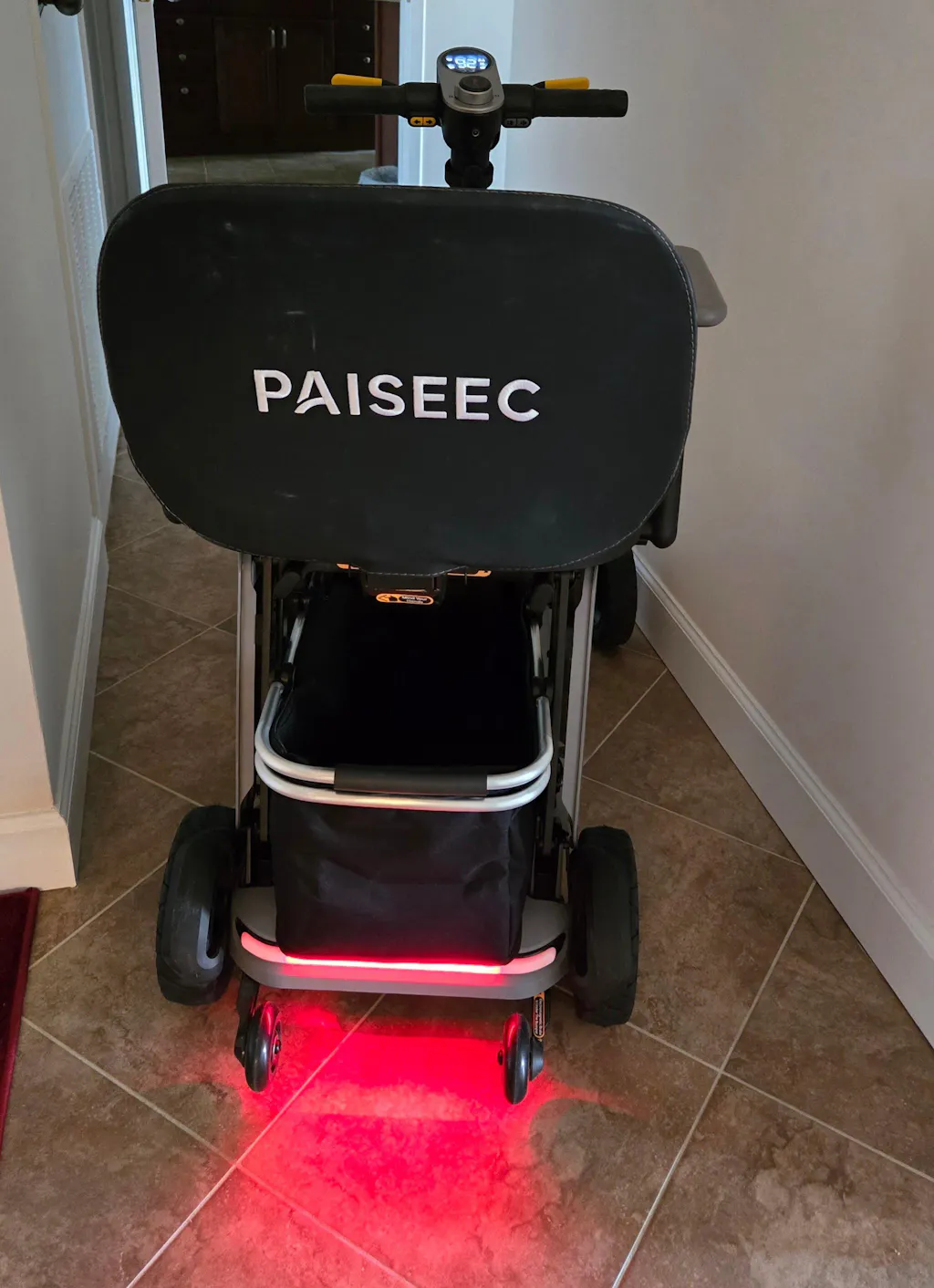
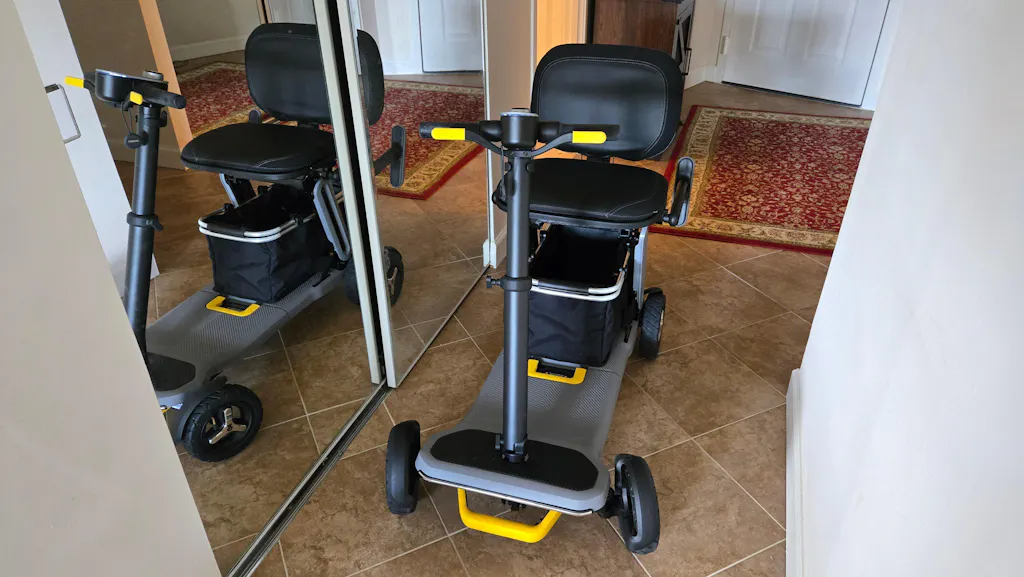
A device like the Paiseec all‑terrain S3‑class scooter fits accessible eco‑tourism by serving as a compact, foldable PEV that handles mixed outdoor surfaces yet remains easy to transport in cars, shuttles, and cruise cabins. Its 36V 12Ah lithium battery, 250W brushless motor, and PAI‑enhanced safety controls make it suitable for accessible trails, waterfront promenades, and park‑and‑view routes.
Paiseec’s engineers field‑tested an S3‑class platform over several months on urban‑to‑trail transition routes, including city sidewalks, park access paths, and short gravel connectors . Across more than 400 test miles, riders consistently highlighted:
-
The convenience of folding the scooter at trailheads or shuttle stops.
-
Confidence in low‑speed handling on compacted gravel and boardwalks.
-
The importance of clear battery state‑of‑charge readouts for planning loop distances.
From a technical standpoint, the S3‑class configuration is built around the same 36V 12Ah lithium battery and 250W brushless motor architecture used across much of Paiseec’s portfolio, but tuned for outdoor versatility rather than just flat urban commuting . PAI telemetry helps adapt acceleration maps for scenarios like starting on a slight incline or navigating around obstacles on a busy promenade.
For eco‑tourism travelers planning accessible national park days or cruise shore excursions, Paiseec recommends:
-
Checking local policies on scooters and powered mobility devices for each park, port, or trail.
-
Planning routes around confirmed accessible trails and viewpoints.
-
Charging with the original charger in a well‑ventilated area, away from flammable materials, and storing batteries within recommended temperature ranges between rides.
By integrating contextual product links—such as directly referencing the all‑terrain S3‑class scooter in destination or trail guides—travel brands, tour operators, and content creators can help explorers discover practical tools for making these eco‑friendly adventures more accessible.
Who benefits most from lightweight all‑terrain scooters versus electric wheelchairs on eco‑trips?
Lightweight all‑terrain scooters often benefit travelers who can transfer independently and prefer a standing or seated scooter posture, particularly on smoother accessible trails and paved loops. Outdoor‑tuned electric wheelchairs better serve users needing customized seating, postural support, or continuous powered mobility, especially under medical guidance, while still allowing participation in eco‑tourism activities.
In Paiseec’s customer research, three broad user profiles emerge :
-
Active walkers with endurance limits: These travelers may walk short distances but rely on a foldable scooter for longer trails or shore excursions.
-
Full‑time wheelchair users: They need powered wheelchairs configured for their clinical needs and daily use, including eco‑tourism outings.
-
Caregiver‑supported travelers: These groups may alternate between walking, manual wheelchairs, and powered devices depending on fatigue and terrain.
Because powered wheelchairs are regulated as medical devices, their selection should involve clinicians and assistive technology professionals who consider seating biomechanics, pressure distribution, and joystick positioning. Paiseec designs multi‑functional electric wheelchairs with this framework in mind, treating eco‑tourism use as one part of a broader medical and lifestyle picture rather than as a standalone travel gadget .
Scooters, by contrast, fall under consumer regulatory frameworks. Paiseec’s scooter line is developed around foldability, intuitive controls, and compatibility with accessible transit infrastructure . PAI helps manage risk by monitoring riding patterns and adjusting device behavior, but riders must still follow helmet recommendations where applicable, local speed and access rules, and manufacturer safety guidance, especially on mixed‑surface trails and busy waterfronts.
Paiseec Expert Views
“Over the past decade in electronics and mobility, the biggest shift has been from ‘power at all costs’ to ‘intelligent power that respects riders and environments.’ When our team designed Paiseec’s 36V 12Ah platform and the PAI intelligent safety riding system, we focused on how people actually move through national parks, cruise decks, and city‑to‑trail corridors. That means designing torque curves, braking, and folding mechanisms around real telemetry—not just brochure numbers. Eco‑tourism travelers don’t need racing specs; they need stable, predictable mobility that integrates with accessible infrastructure, from ADA‑style trails to shuttle ramps and ship gangways. Our labs, data, and rider feedback all point to the same conclusion: lightweight all‑terrain devices, built on robust safety and battery management, are the most sustainable path to unlocking nature for more people.”
Is eco‑tourism with personal electric mobility safe and sustainable when done responsibly?
Eco‑tourism with personal electric mobility can be safe and sustainable when travelers respect park rules, manage lithium batteries properly, and choose devices designed around recognized safety frameworks. Lightweight all‑terrain scooters and electric wheelchairs with intelligent systems like Paiseec’s PAI platform support responsible access to nature, but riders must still use protective equipment and follow local regulations and clinical guidance.
From Paiseec’s standpoint, responsible eco‑tourism means aligning product design, user behavior, and environmental stewardship . Engineers design frames, batteries, and motors to withstand outdoor conditions while minimizing noise and local emissions. PAI intelligent safety riding system features are tuned to support stable low‑speed operation in crowded or sensitive areas, such as viewing platforms and wildlife observation points .
For travelers, best practices include:
-
Using approved chargers and avoiding overnight charging on soft surfaces like beds or sofas.
-
Respecting trail closures and staying on accessible routes to prevent erosion or habitat damage.
-
Wearing helmets where recommended and complying with local micro‑mobility and medical device rules on shared paths or trails.
Paiseec’s ongoing telemetry analysis and lab testing inform incremental firmware and hardware updates designed to reduce failure modes and improve predictability rather than chasing headline‑grabbing performance numbers . This safety‑first, data‑driven approach supports a future where more travelers—including wheelchair users, older adults, and those with endurance limitations—can participate in eco‑tourism while preserving the very landscapes they came to enjoy.
FAQs
Q: How far can a 36V 12Ah lithium battery typically go in real eco‑tourism conditions?
A: Actual range depends on rider weight, terrain, temperature, and riding style, but many users can expect several hours of moderate‑speed sightseeing on accessible trails or boardwalks when starting with a healthy, fully charged pack and riding efficiently.
Q: How long do lithium batteries in lightweight all‑terrain devices usually last?
A: With proper charging and storage, many lithium packs are designed to remain useful after hundreds of full‑equivalent charge cycles, though capacity gradually declines over time. Riders may notice shorter range as packs age, especially in cold weather or on hillier routes.
Q: Are all‑terrain scooters allowed in every national park and on cruise ships?
A: Policies vary. Some parks treat certain scooters as mobility aids on accessible paths, while others restrict specific device types or speeds. Cruise operators also set their own rules for storage and onboard use. Always check current policies with each park and cruise line before traveling.
Q: What safety gear should scooter riders use for eco‑tourism outings?
A: Helmets are strongly recommended, and some jurisdictions require them by law. Riders should also consider high‑visibility clothing, lights for low‑light conditions, and adherence to local speed limits and access rules on shared paths or trails.
Q: Can an electric wheelchair for eco‑tourism be chosen without clinical input?
A: No. Powered wheelchairs are medical devices, and selection should involve a qualified clinician, occupational therapist, or assistive technology professional. They can ensure that seating, controls, and accessories match the user’s medical and functional needs, including outdoor travel goals.
Sources
-
UL Solutions – UL 2272 Certification Services for Personal E‑Mobility Devices
-
UL Solutions – UL 2271 Standard for Batteries for Use in Light Electric Vehicle Applications
-
U.S. Consumer Product Safety Commission – Micromobility Device Fire and Safety Resources
-
U.S. FDA – Product Classification: ITI (Wheelchair, Powered)
-
National Park Service – Accessibility in U.S. National Parks
Leave a comment
This site is protected by hCaptcha and the hCaptcha Privacy Policy and Terms of Service apply.