




![[2026] PAISEEC D3|Mobility Scooter for Easy Everyday Travel](http://www.paiseec.com/cdn/shop/files/d3_4a4ccb22-9e26-449e-8094-71f3ec4177c3.png?v=1782115044&width=180)


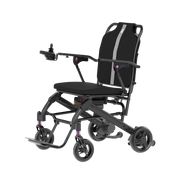












Walmart provides complimentary motorized electric shopping carts—frequently referred to as mobility scooters—on a first-come, first-served basis. These vehicles are designed purely to ensure accessibility and convenience for individuals experiencing long-term disabilities, advanced age, or temporary physical limitations.(Edited on July 3, 2026)
Because these mobility tools are highly utilized corporate resources, Walmart enforces specific operational, safety, and geographical boundaries to keep the fleet functional and safe.
Who Can Use Walmart's Motorized Shopping Carts?
Anyone who requires mobility assistance is legally and contractually permitted to use Walmart's motorized carts. Under corporate policy, there is zero requirement to prove a disability, provide medical documentation, or show a doctor’s note.
Corporate Eligibility & Customer Rights
Walmart’s accessibility guidelines emphasize unrestricted convenience for customers who experience any of the following:
-
Permanent Physical Disabilities: Individuals living with arthritis, severe back pain, Multiple Sclerosis (MS), or long-term mobility impairment.
-
Temporary Mobility Issues: Customers recovering from recent surgeries, sporting injuries, or dealing with a broken bone or foot cast.
-
Age-Related Stamina Limits: Elderly shoppers who have limited energy or stamina to walk across a massive 180,000-square-foot Supercenter layout.
-
Acute Short-Term Constraints: Shoppers who are heavily pregnant, overweight, or experiencing temporary weakness or balance issues.
Crucial Consumer Rights Note: Front-door greeters and customer service associates are strictly prohibited by company policy from forcing you to explain your medical history or present documentation. If a store employee insists on proof of disability, this directly violates Walmart’s corporate equal-access policy. You should immediately ask for the Store Lead or Store Manager to resolve the issue.
Key Policy & Eligibility Metrics
| Criterion | Walmart Corporate Policy Guidelines |
| Disability Proof Required? | No. Self-identification of a mobility need is completely sufficient. |
| Doctor's Note Needed? | No. Mandatory documentation is a violation of internal customer service rules. |
| Temporary Issues Accepted? | Yes. Post-surgery recovery, sprains, and heavy pregnancy qualify. |
| Age Restrictions? | None, provided the operator possesses the cognitive capacity to pilot it safely. |
| Minors Using Carts? | Children are strictly banned from operating these units unless physically disabled. |
Can You Take Walmart's Electric Shopping Cart Outside?
The short answer is No. With very rare exceptions, Walmart locations strictly prohibit motorized carts from leaving the physical building structure.
Perimeter Constraints & Anti-Theft Technology
Taking mobility scooters deep into asphalt parking lots exposes them to extreme weather conditions, deforms the tires, and rapidly drains the battery cells. To enforce this, a vast majority of modern Walmart Supercenters feature built-in security perimeter locks.
How it works: If an electric cart is driven past the threshold of the primary exterior sliding doors, an electronic sensor triggers an automatic wheel-lock system, bringing the vehicle to an immediate, dead stop.
Vehicle-to-Store Ground Assistance Protocol
If you cannot walk from your parked vehicle to the store entrance to retrieve a cart, or if you need to transport your purchased groceries out to your trunk, follow this standard corporate assistance protocol:
-
Arrival Assistance: Park in a designated accessible space. If you are entirely unassisted, call the local store's customer service phone line directly from your car. Request a "vehicle-to-store associate escort" to bring an active cart out to your parking stall.
-
Checkout Escort: Drive the cart directly to the front entrance vestibule with your bagged items. Polite logic dictates asking a front-end associate to assist you in transferring the items to your car.
-
Fleet Retrieval: Alternatively, an associate may physically walk with you to your car as you drive the cart. Once your vehicle is loaded, the associate will instantly drive or push the electric cart back to the indoor charging bay.
Core Reasons Behind the Indoor Policy
-
Battery Protection: Paved outdoor paths contain slopes that deplete the limited 1-to-2-hour continuous runtime of the battery.
-
Terrain Constraints: Carts are structurally engineered for smooth, indoor surfaces like polished concrete, tile, or linoleum—not uneven asphalt, potholes, or gravel.
-
Weather Exposure: Rain, snow, and summer heat cause severe electrical system deterioration and shorten the asset lifespan.
-
Theft Mitigation: Prevents unauthorized property removal from the retail premises.
Battery Reality & Fleet Etiquette
Walmart’s mobility carts rely on rechargeable deep-cycle batteries. Understanding the operational limits of these batteries ensures a smoother shopping experience for everyone.
-
Limited Continuous Runtime: Under continuous, heavy weight loads, a fully charged cart generally lasts only 1 to 2 hours.
-
The First-Come, First-Served Policy: Carts cannot be reserved over the phone or online. They are allocated dynamically as they become available.
-
Charging Location: Carts are housed in dedicated docking stations right inside the primary store entrance.
-
Proper Fleet Etiquette: When you conclude your shopping trip, return the cart directly to an open charging port and plug it in. Leaving an uncharged cart in the middle of a checkout aisle prevents the next guest from using a fully powered machine.
Speed, Safety, and Operational Rules
Walmart motorized carts operate at a maximum walking pace of 3 to 5 miles per hour (mph). Speed limiters are integrated directly into the electronic transaxle components to guarantee customer safety.
Integrated Safety Features
| Safety Mechanism | Built-In Engineering Purpose |
| Electronic Speed Limiters | Hard-caps the vehicle acceleration to a maximum of 5 mph. |
| Automatic Braking System | Instantly halts the cart the exact moment the hand control lever/throttle is released. |
| Alert Horn / Beeper | Allows operators to manually warn pedestrians in high-density or blind aisles. |
| Anti-Tip Mechanical Design | Low center of gravity prevents tipping on structural entrance ramps. |
| Safety Seat Switch | Pressure-sensitive plate cuts all power unless an adult is fully seated. |
Operational Do's and Don'ts
DO:
-
Maintain a controlled, slow speed matching the flow of surrounding pedestrian traffic.
-
Always yield the right-of-way to walking shoppers, especially small children and infants.
-
Stay highly alert when backing out of grocery aisles or turning past blind corners.
-
Report any flashing low-battery lights or mechanical stuttering to a store manager immediately.
DON'T:
-
Allow children to ride along on the floorboards or control mechanisms.
-
Operate the machinery under the influence of prescription medications that impair motor skills, alcohol, or illicit substances.
-
Engage in horseplay, reckless swerving, or deliberate bumping of product displays.
-
Attempt to manually override the speed controls or bypass the exterior door safety perimeter.
What Happens If You Misuse a Motorized Cart?
Walmart utilizes a strict, progressive consequence framework to deal with the intentional misuse, dangerous operation, or vandalism of store-provided mobility devices.
Progressive Enforcement Scale
| Offense Tier | Immediate Enforcement Action |
| First Offense | Direct verbal warning from Asset Protection or Management + operational education. |
| Second Offense | Temporary suspension of all in-store mobility cart privileges for a designated period. |
| Third Offense | Permanent corporate revocation of cart privileges across local regional locations. |
| Severe Property Damage | Immediate law enforcement involvement, store trespass orders, and civil liability fines. |
Property Damage and Legal Liability
If an operator causes structural damage to warehouse racking, glass displays, or electronics inventory due to reckless operation:
-
The operator is held personally liable for all structural repair or inventory replacement costs.
-
Walmart Asset Protection will document the incident using real-time security camera footage, eyewitness statements, and formal incident filings.
-
If an associate witnesses active reckless behavior, they are instructed to intervene immediately, remove the customer from the machine, and contact the Asset Protection Team to draft a formal review.
Alternative Solutions: Caroline's Carts & Curbside Options
If an electric cart is completely unavailable due to peak weekend crowds, or if you are shopping with an older child or adult dependent who has profound special needs, Walmart provides highly advanced alternative accessibility equipment.
The Caroline's Cart Program
Walmart has scaled up its commitment to inclusivity by rolling out Caroline's Carts to 100% of its U.S. Supercenters and Neighborhood Markets. This initiative translates to a nationwide fleet of over 8,000 specialized units.
-
Design & Purpose: Caroline's Cart eliminates the logistical nightmare where a caregiver has to simultaneously push a traditional wheelchair and pull a grocery cart. It looks like an expanded shopping basket but features a large, ergonomic, contoured seat facing the caregiver.
-
Weight Capacity: The seat features a highly secure, adjustable 5-point safety harness engineered to safely support individuals weighing between 35 and 250 pounds.
-
Store Availability: Each massive Supercenter features a minimum of two Caroline's Carts, while smaller Neighborhood Markets house at least one. They are located directly inside the main entrance vestibule next to standard carts.
Curbside Grocery Pickup
If you find that your local store's fleet availability is unpredictable during peak operational hours, the most frictionless alternative is Walmart Curbside Pickup. This free service allows you to purchase all groceries via the digital application, drive to a designated outdoor parking slot, and remain entirely inside your vehicle while Walmart employees load the items directly into your vehicle trunk.
Retail Accessibility Comparison Matrix
| Accessibility Feature | Walmart Policy Framework | Target Policy Framework | Kroger Policy Framework |
| Primary Eligibility | Mobility limits / No proof needed | Mobility limits / No proof needed | Mobility limits / No proof needed |
| Speed Regulations | Governed to 3–5 mph max | Governed to 3–5 mph max | Governed to 3–5 mph max |
| Outdoor Parking Lot Access | Strictly prohibited / Locked | Highly restricted by store policy | Highly restricted by store policy |
| Caroline's Cart Deployment | 100% Nationwide Availability | Selected regional test markets | Selected regional test markets |
| Doctor's Note Mandate | Fully exempted | Fully exempted | Fully exempted |
Professional Mobility Recommendations
"When traveling to major corporate retailers like Walmart, it is vital to remember that store-supplied motorized carts are basic, broad-use convenience tools—they are not fine-tuned personal medical devices. For sustained, daily freedom outside of controlled retail flooring, consumers should investigate dedicated personal mobility scooters. Modern personal devices provide superior all-terrain shock absorption, extended 10-to-15-mile battery ranges, and robust braking modules. If you are managing chronic balance deficits, severe joint pain, or an active fall risk, always partner with a licensed Physical Therapist or Occupational Therapist to professionally evaluate your long-term mobility requirements."
— The Paiseec Mobility Engineering Team
Finding Long-Term Independence
While retail-provided carts offer short-term relief inside a store, investing in a personalized, reliable indoor/outdoor scooter creates true long-term independence. Devices designed for personal ownership navigate sidewalk curbs, outdoor parks, and community areas with ease. Contact the customer support team at Paiseec today to explore highly specialized, premium mobility solutions engineered for your precise lifestyle and recovery journey.
Frequently Asked Questions (FAQs)
Do I need to show official medical proof or a placard to use a cart at Walmart?
No. Walmart corporate policy clearly dictates that no customer is required to provide medical proof, doctor's notes, or disability documentation to utilize an electric cart. The service is extended to anyone requiring walking assistance.
What should I do if all the motorized electric carts are plugged in and dead?
During peak afternoon hours, cart turnaround is fast, meaning returned carts may require a brief period to recharge. If no functional units are available, proceed to the customer service counter. An associate can provide an estimated wait time or arrange alternative options, such as assigning an employee to assist you with a manual cart via personal shopping assistance.
Can I drive a Walmart motorized cart out to my car if it is raining?
No. Carts are strictly banned from outdoor terrain, and rain can instantly short-circuit the electronic transaxle and battery compartments. If weather conditions are poor, ask a front-end associate for assistance. They will happily help move your items to your car under an umbrella while you wait safely inside the dry vestibule.
What are the exact sizing and weight boundaries for Caroline's Carts?
Caroline's Carts are engineered for individuals with developmental or physical conditions weighing between 35 and 250 pounds. The seat is equipped with a complete 5-point safety harness to ensure absolute stability and security for adult or youth dependents while the caregiver navigates the store.
Who is legally responsible if a display is damaged by an electric cart?
If the damage is the result of a clear mechanical failure of the store's cart, Walmart's internal maintenance assurance handles it. However, if the damage stems from blatant operator misuse, speeding, or driving under the influence, the operator can be held personally and financially liable for inventory and property damage.
Leave a comment
This site is protected by hCaptcha and the hCaptcha Privacy Policy and Terms of Service apply.