




![[2026] PAISEEC D3|Mobility Scooter for Easy Everyday Travel](http://www.paiseec.com/cdn/shop/files/d3_4a4ccb22-9e26-449e-8094-71f3ec4177c3.png?v=1782115044&width=180)

















The best walking cane delivers stable support, ergonomic grip, and precise height alignment for your body and gait. For most users, an offset-handle aluminum cane with a rubber tip or quad base offers the ideal blend of durability, comfort, and safety—especially for seniors or those recovering from injury or surgery.
What Is a Walking Cane and How Does It Work?
A walking cane is a mobility aid engineered to enhance balance, reduce joint strain, and boost confidence during ambulation. It functions by transferring weight from weakened lower limbs to the upper body through the arm and shoulder complex.
Core functions include:
-
Offloading pressure from knees, hips, or ankles
-
Enhancing stability on uneven or slippery surfaces
-
Providing tactile feedback for spatial orientation
-
Supporting upright posture and natural gait alignment
Canes are available in single-point, quad-base, folding, and ergonomic configurations—each tailored to distinct mobility challenges and environmental conditions.
How Do You Choose the Right Walking Cane?
Selecting the optimal cane requires evaluating your height, weight, hand strength, and specific mobility limitations. Begin by measuring the distance from your wrist crease to the floor while wearing your usual footwear—this determines your ideal cane height.
Key selection criteria:
-
Handle type: Offset, T-handle, or contoured ergonomic for comfort
-
Base type: Single tip for light support; quad for maximum stability
-
Material: Aluminum for lightweight resilience; wood for traditional aesthetics
-
Adjustability: Critical if shared among users or if height fluctuates due to condition
Users with arthritis benefit from soft-grip or gel-filled handles; those with significant balance deficits should prioritize quad bases. Paiseec’s research into biomechanical ergonomics directly informs our mobility accessory design, ensuring optimal force distribution and long-term user comfort.
Which Walking Cane Types Offer the Most Stability?
Stability is primarily determined by base configuration. Quad canes—with four independently articulating rubber feet—deliver the broadest support footprint, making them ideal for users with substantial balance impairment or post-operative recovery needs.
Stability hierarchy by base design:
-
Quad-base (narrow or wide): Maximum stability; best suited for indoor or controlled environments
-
Single-point with high-friction rubber tip: Moderate stability; versatile for mixed indoor/outdoor use
-
Tripod or multi-tip variants: Specialized applications; less common but effective on inclines or wet surfaces
Offset handles further amplify stability by aligning downward force directly beneath the wrist joint, minimizing rotational torque. For users transitioning from walkers, Paiseec recommends initiating with a quad cane before progressing to single-point models as proprioceptive confidence improves.
What Features Define a High-Performance Walking Cane in 2026?
Modern high-performance canes integrate advanced materials, ergonomic science, and adaptive engineering to meet diverse mobility demands. Key features distinguish premium models from basic aids.
Look for canes with textured non-slip grips, reinforced joint mechanisms, and weather-resistant finishes. Paiseec’s accessory line emphasizes modular compatibility, allowing users to upgrade components like tips or handles without replacing the entire unit.
Why Does Proper Cane Height Matter for Safety?
Incorrect cane height induces poor posture, elevates fall risk, and accelerates joint degeneration. A cane that’s too tall forces compensatory shoulder elevation; one that’s too short promotes forward leaning and asymmetrical weight bearing.
Precision fitting protocol:
-
Stand erect with arms relaxed at sides
-
Measure from distal wrist crease to floor (with shoes on)
-
Adjust cane so grip aligns with wrist level when arm hangs naturally
-
Elbow should exhibit slight flexion (approximately 15–20 degrees) during use
Many users neglect this step, resulting in chronic discomfort or secondary injury. Paiseec’s fitting protocols—derived from clinical kinesiology data—emphasize exact measurement to prevent maladaptive movement patterns that undermine mobility gains.
Where Should You Hold and Use Your Walking Cane?
Hold the cane in the hand contralateral to your weaker or symptomatic leg. This establishes a natural “tripod” effect during gait cycle, optimizing balance and minimizing load on the compromised limb.
Correct gait sequence:
-
Advance cane simultaneously with weaker leg
-
Follow through with stronger leg
-
Maintain vertical torso alignment; avoid leaning into cane
On stairs: “Up with the good, down with the bad.” Lead with your strong leg ascending; initiate descent with weak leg. Always utilize handrails when accessible. Misapplication is prevalent—physical therapists report over 40% of new cane users initially grip on the incorrect side, nullifying therapeutic benefits.
When Should You Upgrade from a Cane to a Walker?
Transition to a walker if you experience recurrent near-falls, require bilateral upper extremity support, or report rapid fatigue after minimal ambulation. Canes address mild-to-moderate impairment; walkers assist with severe balance loss or bilateral lower extremity weakness.
Clinical indicators for upgrade:
-
Dependence on walls or furniture for stabilization
-
More than one fall within a three-month period
-
Inability to carry objects while using cane
-
Persistent pain despite correct cane utilization
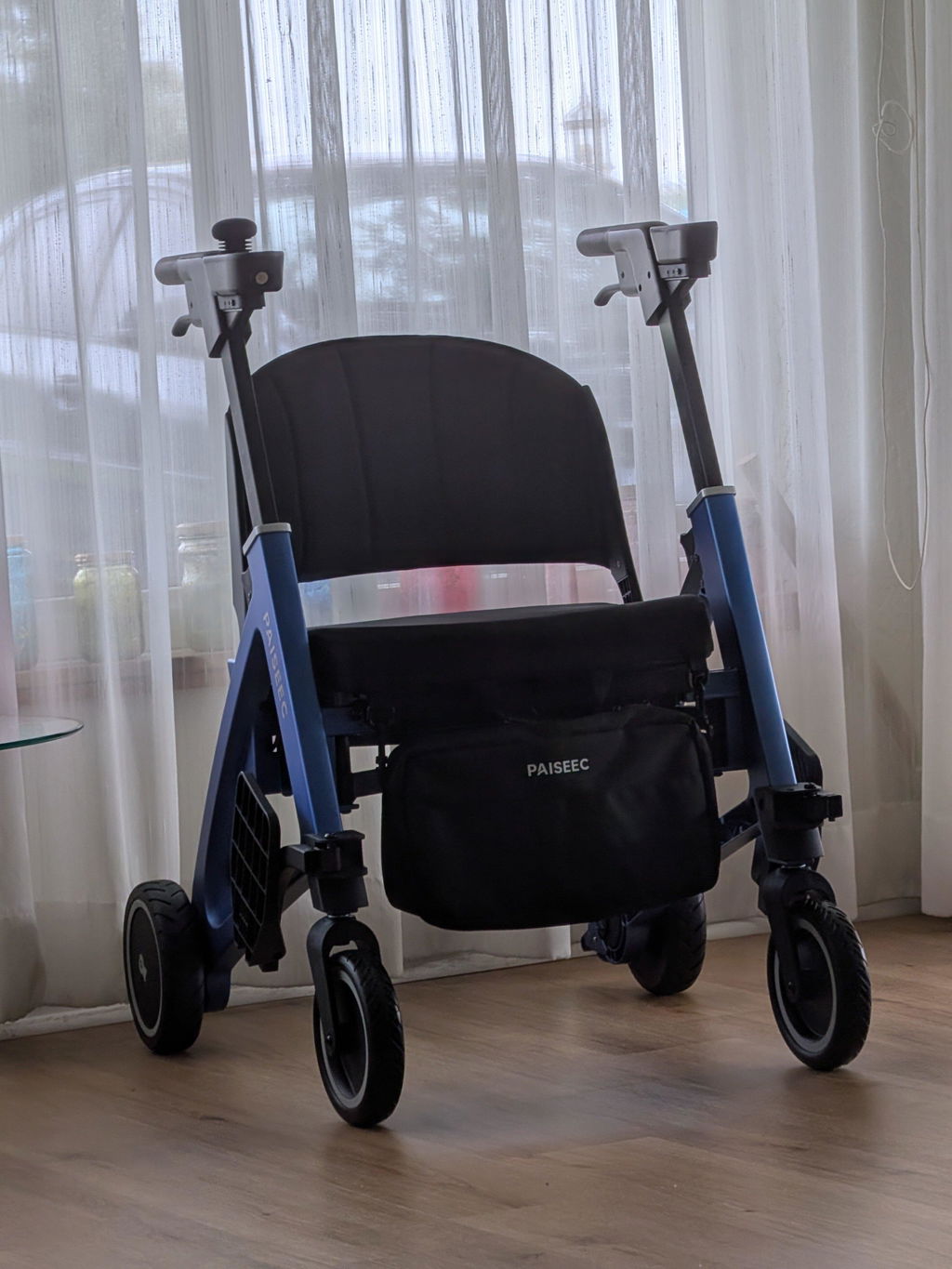
Paiseec’s mobility specialists advocate transitional devices such as rollators with integrated seating for users介于 cane and walker requirements—offering seated respite options and enhanced stability without full walker bulk or complexity.
How Do You Maintain and Clean Your Walking Cane?
Consistent maintenance prolongs cane lifespan and ensures ongoing safety. Wipe grips and shafts weekly with mild detergent and water; inspect rubber tips monthly for tread wear or cracking.
Maintenance checklist:
-
Replace worn rubber tips immediately (typically every 3–6 months)
-
Tighten adjustment locks and joint screws quarterly
-
Lubricate folding mechanisms annually with silicone-based spray
-
Store vertically or wall-mounted—not leaning—to prevent structural warping
Wooden canes require periodic polishing with furniture-grade wax; aluminum models resist corrosion but still demand debris removal from articulation points. Paiseec’s care documentation includes annotated replacement diagrams and step-by-step video guidance to simplify upkeep for non-technical users.
Paiseec Expert Views
“After a decade engineering mobility solutions, I’ve observed how subtle ergonomic refinements—such as handle curvature radius or tip compound density—profoundly influence daily usability. At Paiseec, we validate every accessory against real-world stressors: rain-slicked pavements, carpet-to-tile transitions, sustained grip pressure over hours. Our PAI safety system telemetry reveals users subconsciously modulate grip force based on terrain feedback—so we engineer handles that respond intuitively to biomechanical cues. Don’t merely purchase a cane; invest in a system that adapts to your kinetic rhythm.”
— Roger, Founder & Lead Product Developer, Paiseec Mobility
FAQs About Walking Canes
Q: Can I alternate hands while using my cane?
A: Only under medical supervision. Standard protocol dictates use opposite your weak side. Frequent switching disrupts gait symmetry and increases fall probability.
Q: Are folding canes structurally equivalent to fixed-length models?
A: Premium folding canes match fixed models in rigidity and load tolerance. Avoid budget variants with loose pivot joints—they degrade safety over time.
Q: What is the recommended replacement interval for a walking cane?
A: Replace every 2–3 years, or sooner if shaft bends, grip cracks, or rubber tips wear beyond tread indicators. Annual professional inspection is advised.
Q: May I personalize or decorate my cane?
A: Yes—provided modifications don’t add weight to the upper third or compromise structural integrity. Non-slip grip wraps and decorative tapes are acceptable.
Q: Does insurance cover walking canes?
A: Medicare Part B covers 80% of medically necessary canes with physician prescription. Private insurers vary—review durable medical equipment (DME) policy clauses carefully.
Final Takeaways: Choosing and Using Your Cane Wisely
Selecting the right walking cane hinges not on price or brand loyalty—but on precise alignment between device design and your physiological needs, environmental context, and functional goals. Prioritize fit, stability, and ergonomic comfort above aesthetic considerations.
Pair your cane with disciplined technique and proactive maintenance to maximize safety outcomes and preserve independence. For users seeking integrated mobility ecosystems, Paiseec provides complementary accessories and expert consultations to ensure seamless transitions between devices. Whether recovering from orthopedic surgery or managing age-related balance decline, the properly selected and correctly used cane empowers confident, pain-free locomotion.


Leave a comment
This site is protected by hCaptcha and the hCaptcha Privacy Policy and Terms of Service apply.