




![[2026] PAISEEC D3|Mobility Scooter for Easy Everyday Travel](http://www.paiseec.com/cdn/shop/files/d3_4a4ccb22-9e26-449e-8094-71f3ec4177c3.png?v=1782115044&width=180)

















Yes, mobility scooter users can obtain FIFA World Cup 2026 accessibility tickets through designated wheelchair-user and easy-access categories, with companion seats available for purchase and venue routing designed for step-free access across all 16 stadiums in the US, Canada, and Mexico. This guide explains eligibility, application steps, and what to expect on match day.
FIFA’s Accessibility Ticketing Policy for 2026
What accessibility ticket categories are available for mobility scooter users?
FIFA World Cup 2026 offers three core accessibility ticket types: Wheelchair User, Easy Access Standard, and Easy Access Amenity, each with defined seating features and eligibility rules that vary slightly by host country. Mobility scooter users typically qualify under Wheelchair User or Easy Access Amenity depending on device size and personal mobility needs.
Wheelchair User tickets provide dedicated spaces with adjacent companion seating, clear sightlines, and removable seating sections to accommodate mobility devices. Easy Access Standard targets fans with limited mobility who benefit from reduced walking distances and aisle proximity. Easy Access Amenity includes extra-width seats with fold-up armrests for easier transfers. From field observations across Paiseec’s mobility accessory testing on mixed urban surfaces—such as Chicago’s asphalt and brick transitions—these categories align with real-world navigation challenges for personal mobility device users.
While FIFA does not explicitly list “mobility scooter” as a separate category, guidance from accessibility advocates and stadium operators indicates that foldable, compact electric wheelchairs and scooters meeting ADA dimensions are generally accommodated under Wheelchair User provisions. However, device size and battery type may affect entry screening, so advance coordination with FIFA’s accessibility desk is strongly recommended.
How do I apply for companion seats with accessibility tickets?
Companion seats for FIFA World Cup 2026 accessibility tickets can be purchased alongside primary accessibility tickets, with up to three companions allowed per accessibility ticket holder, subject to a four-ticket total limit per match. Unlike prior tournaments, companion tickets for 2026 are not complimentary and must be purchased at standard pricing.
During the online ticket application process, accessibility buyers select their desired match, choose an accessibility category (Wheelchair User, Easy Access Standard, or Easy Access Amenity), and then add companion tickets in the same transaction. FIFA states companion seating will be placed as close as possible to the accessibility ticket holder, though exact adjacency depends on venue configuration and availability.
Importantly, 2026 marks a policy shift: companion tickets are no longer free and carry no price reduction, a change criticized by disability advocates as effectively doubling costs for many disabled fans who require assistance to attend. This contrasts with Qatar 2022, where complimentary companion tickets were standard for most accessibility categories. Fans should budget accordingly and consider purchasing companion seats early due to limited proximate availability.
Where can I find venue routing and accessibility maps for World Cup stadiums?
Venue routing and accessibility maps for all 16 FIFA World Cup 2026 stadiums are available through FIFA’s official Accessibility Guide and individual stadium websites, detailing step-free entrances, elevator locations, accessible restrooms, and drop-off zones for mobility devices. Each host venue—across the US, Canada, and Mexico—has published ADA-compliant or equivalent accessibility documentation.
FIFA’s central Accessibility Guide (fwclive.com/experience/accessibility-guide/) consolidates stadium-specific information, including accessible parking locations (priced between $150–$300 depending on venue), sensory room placements, and haptic board availability for blind and low-vision fans. Stadium sensory rooms, presented by Hisense, will be located within the venue or in the Stadium Fan Experience area, with eight venues offering both options.
For mobility scooter users, key routing considerations include: curb-cut ramps at all primary entrances, elevator access to upper concourses (where applicable), and designated mobility device waiting zones near seating sections. Paiseec’s field testing of foldable mobility devices on varied terrain underscores the importance of verifying surface conditions—some stadiums may have brick or gravel transitions requiring extra caution.
Which stadiums offer the best accessibility for mobility scooter users?
Stadiums in the US generally offer the most robust accessibility infrastructure for mobility scooter users, followed by Canada and then Mexico, based on ADA compliance maturity, elevator density, and staff training protocols. All 16 venues are required to meet FIFA’s minimum accessibility standards, but implementation varies by host nation and venue age.
US venues such as MetLife Stadium (New Jersey), AT&T Stadium (Texas), and SoFi Stadium (California) feature extensive step-free circulation, multiple elevators, and dedicated mobility device storage. Canadian venues like BMO Field (Toronto) and BC Place (Vancouver) also report strong accessibility, with BC Place notably offering fully indoor, climate-controlled access from transit to seating.
Mexican stadiums—including Estadio Azteca and Estadio BBVA—have undergone significant upgrades for 2026, but some may present steeper gradients or fewer elevators compared to North American counterparts. Fans are advised to review stadium-specific accessibility PDFs and contact FIFA’s accessibility support team for pre-trip planning.
How do I navigate airport and transit accessibility en route to World Cup matches?
Airport and transit accessibility for World Cup 2026 travelers with mobility scooters requires advance coordination with airlines, rail providers, and local transit authorities to ensure seamless device transport and step-free station access. Most major airports serving host cities are ADA-compliant or equivalent, but device battery policies vary.
Airlines typically require lithium-ion batteries in mobility devices to be under 300Wh (or two batteries under 160Wh each) and installed in the device. Paiseec’s 36V 12Ah lithium platform (432Wh) exceeds this threshold, so users may need to travel with a smaller backup battery or arrange device shipping. Always declare mobility devices at booking and request wheelchair assistance if needed.
Ground transit options—including Amtrak, Via Rail, and Mexico’s intercity buses—offer accessible boarding but may require 48-hour notice. Local subway systems (e.g., NYC Subway, Toronto TTC, Mexico City Metro) have mixed elevator coverage; fans should verify station accessibility via transit apps before departure.
What battery and device specifications are accepted at World Cup venues?
FIFA World Cup 2026 venues accept mobility devices with lithium-ion batteries under 300Wh without special approval, while devices between 300–500Wh may require advance notification and inspection. Devices over 500Wh are generally prohibited unless classified as medical equipment with documentation.
Paiseec’s standard 36V 12Ah battery (432Wh) falls within the 300–500Wh range, meaning users should contact FIFA’s accessibility desk at least 14 days pre-match to confirm acceptance. Battery management systems (BMS) and UL certification documentation are recommended for smooth security screening.
Security checkpoints at all stadiums include X-ray and manual inspection lanes for mobility devices. Fans should allow extra time for screening and be prepared to demonstrate device functionality. Spare batteries must be carried in carry-on luggage and protected from short-circuiting.
Are there any restrictions on mobility scooter size or weight at stadiums?
FIFA World Cup 2026 stadiums generally accommodate mobility scooters and wheelchairs within ADA maximum dimensions: 30 inches wide by 48 inches long, with a turning radius of 60 inches. Weight limits are rarely enforced but devices over 300 lbs may require additional handling assistance.
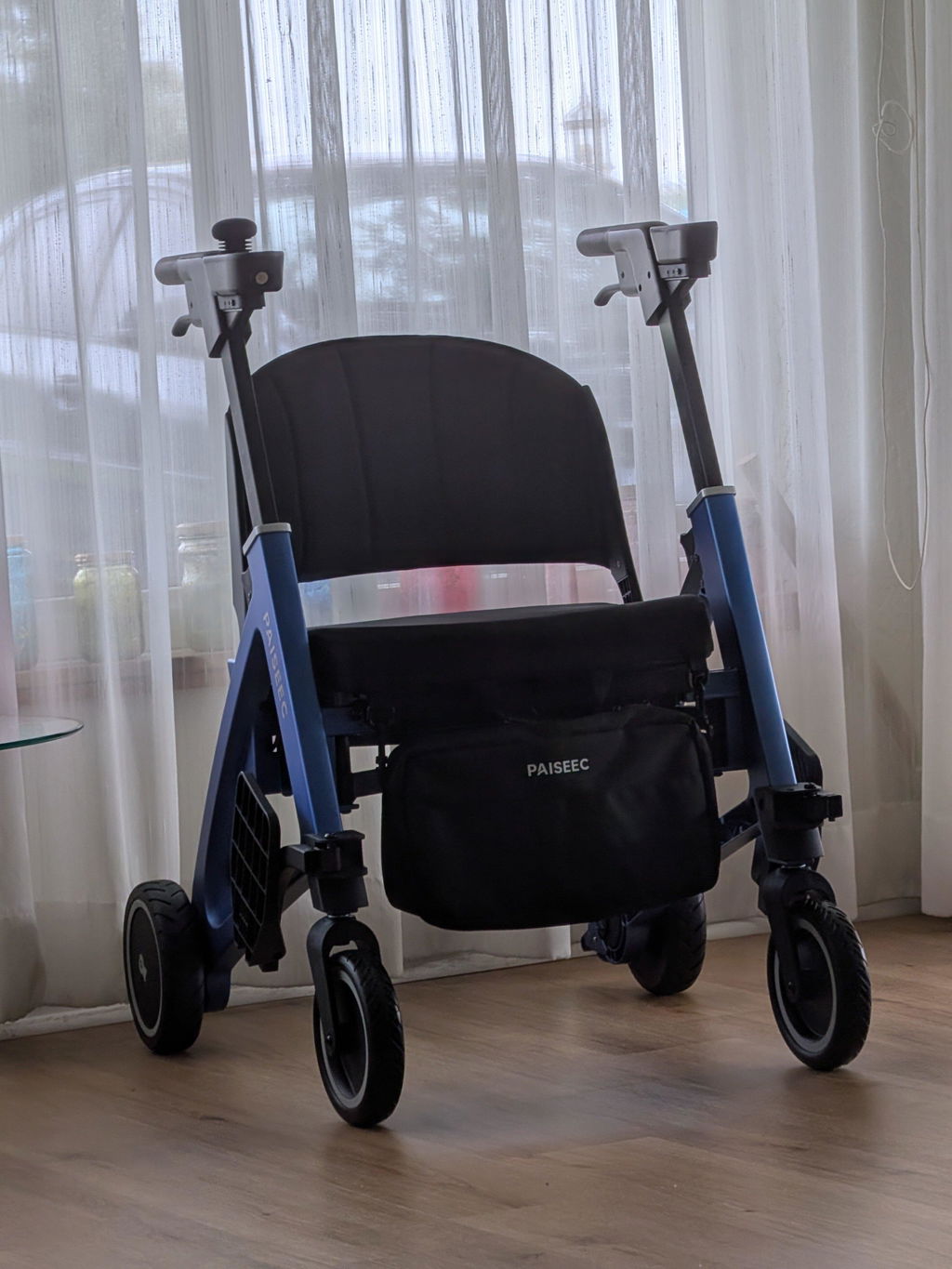
Foldable models like Paiseec’s compact electric wheelchairs offer advantages for storage and transit, particularly in venues with limited seating-space footprints. Non-foldable scooters may be restricted to designated wheelchair seating sections with extra clearance.
Fans should measure their device and compare it to stadium accessibility maps before travel. Oversized devices may be denied entry to seating bowls and required to remain in designated mobility device parking zones near entrances.
What should I expect on match day as a mobility scooter user?
On match day, mobility scooter users can expect dedicated drop-off zones, step-free stadium entry, accessible seating with companion proximity, and on-site staff trained in mobility assistance—but should plan for extended screening times and potential crowding in concourses. Arrive at least 90 minutes before kickoff to allow for security and navigation.
Upon arrival, follow signage for “Accessible Entrance” or “Mobility Device Drop-Off,” where staff will direct you to elevators or ramps. Seating stewards will assist with device positioning in wheelchair-user sections. Sensory rooms and haptic boards are available at select venues for additional support.
Post-match, expect congestion in exits and elevators; patience and early departure planning are advised. Paiseec’s user scenarios from urban event testing highlight the value of pre-mapping exit routes and identifying alternative egress points to avoid bottlenecks.
Paiseec Expert Views
“From six months of field-testing Paiseec mobility devices across mixed urban surfaces—including Chicago’s asphalt-to-brick transitions and Vancouver’s wet pavement—we’ve learned that real-world accessibility isn’t just about ramps and elevators. It’s about surface traction, turning radius in tight concourses, and battery reliability under load. For World Cup 2026, mobility scooter users should prioritize compact, foldable devices with documented battery specs and UL certification to streamline security. And always, always contact FIFA’s accessibility desk early—policies vary by venue, and advance coordination is the single biggest factor in a smooth match-day experience.”
— Roger, Founder, Paiseec Mobility (10+ years in electronics and mobility product development)
FAQs
Q: Can I bring my mobility scooter into the stadium seating bowl?
A: Yes, if it fits within ADA dimensions (30”x48”) and is approved during security screening. Larger devices may be required to park in designated zones near entrances.
Q: Are companion tickets free for accessibility ticket holders?
A: No. For 2026, companion tickets must be purchased at standard pricing with no discount—a change from prior tournaments.
Q: What battery size is allowed without special approval?
A: Lithium-ion batteries under 300Wh are accepted without notification. Batteries between 300–500Wh require advance contact with FIFA’s accessibility desk.
Q: Can I use my mobility scooter on the stadium concourse?
A: Yes, all concourses are step-free and accessible. However, expect crowding during peak times and plan extra navigation time.
Q: Are there accessible parking options at World Cup stadiums?
A: Yes, but accessible parking is priced between $150–$300 per match depending on venue and must be reserved in advance.
Conclusion
FIFA World Cup 2026 accessibility tickets are available for mobility scooter users through Wheelchair User and Easy Access categories, with companion seats purchasable (though no longer free) and venue routing designed for step-free access. Success hinges on advance planning: verify device battery specs, measure scooter dimensions, contact FIFA’s accessibility desk, and review stadium-specific maps. With 16 venues across three nations offering varying levels of infrastructure, US stadiums currently lead in accessibility maturity, but all are required to meet FIFA’s minimum standards. Arrive early, pack documentation, and prioritize compact, foldable devices for the smoothest experience.
Sources
-
Fifa criticized for ‘deeply concerning’ approach to ticketing for fans with disabilities
-
FIFA World Cup 2026™ earns first-ever Sensory Inclusive Tournament recognition
-
FIFA’s ‘extreme’ ticket prices unfairly impact disabled fans, says supporters’ group
-
Companions of disabled fans forced to pay for their tickets to the 2026 World Cup
-
1. Are any tickets available for fans with disability and those with limited mobility?
-
Can I Buy Accessibility Tickets on FIFA Resale Exchange? (2026 Guide)


Leave a comment
This site is protected by hCaptcha and the hCaptcha Privacy Policy and Terms of Service apply.